
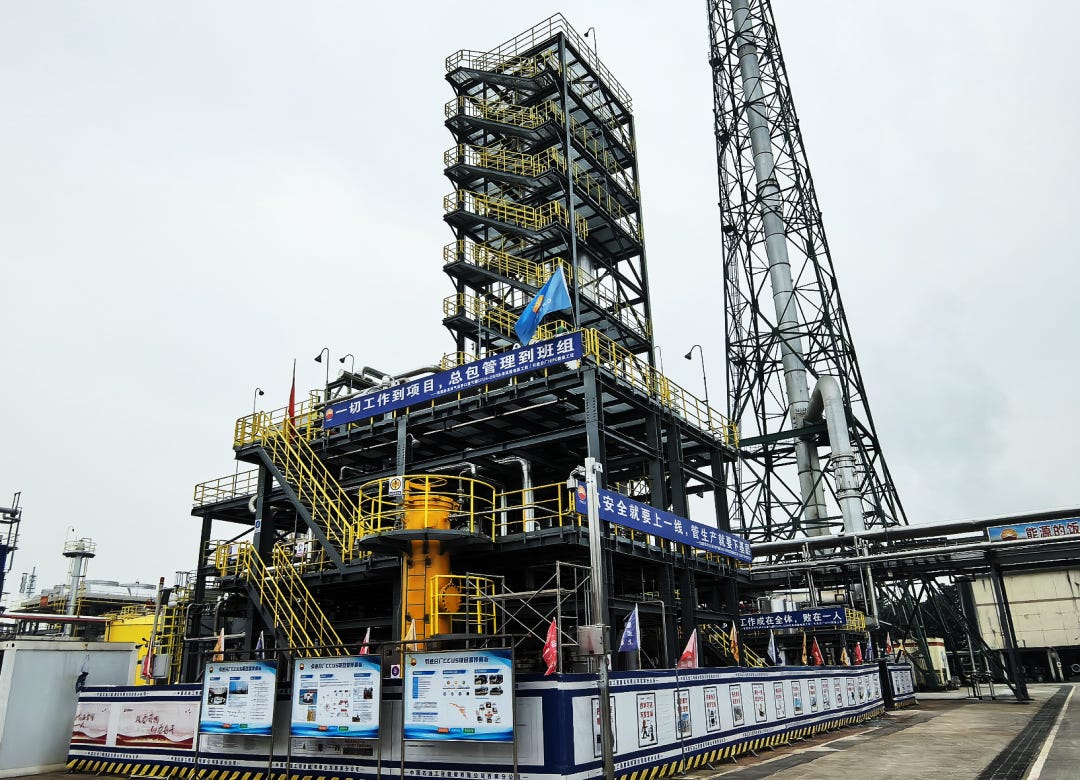
Since 2026, China’s carbon capture, utilization and storage (CCUS) industry begins to accelerate.
In February 2026, China’s State Administration for Market Regulation approved 12 national standards covering the full CCUS value chain, including carbon capture from coal-fired power plants, long-distance CO₂ pipeline transportation, saline aquifer storage and CO₂-enhanced oil recovery (CO₂-EOR). The standards came into effect on July 1, providing a more unified technical framework for the development of China’s CCUS industry.
Meanwhile, in another important policy move, China’s National Energy Administration (NEA) released the first batch of demonstration projects under the country’s new power system initiative. Notably, some next-generation coal power demonstration projects have reserved interfaces for future CCUS facilities at the design stage. This suggests that China is beginning to prepare for CCUS deployment on a much larger scale.
In this article, I look at the factors driving the acceleration of China’s CCUS industry and where are near-term priorities.
China’s Comparative Cost Advantages on CCUS
Comments
Nothing yet. Say the first thing.
Sign in to join the conversation.