
Every family historian eventually encounters a name that refuses to let go.
This is the story of one such name.
It began with a discarded probate ledger and became an investigation that led through archives, newspapers and official records, gradually revealing the life of a woman who had almost disappeared from history.
More than anything, it reminded me that genealogy isn’t simply about discovering our own ancestors. Sometimes it’s about restoring someone else’s story.
I hope you enjoy the journey.
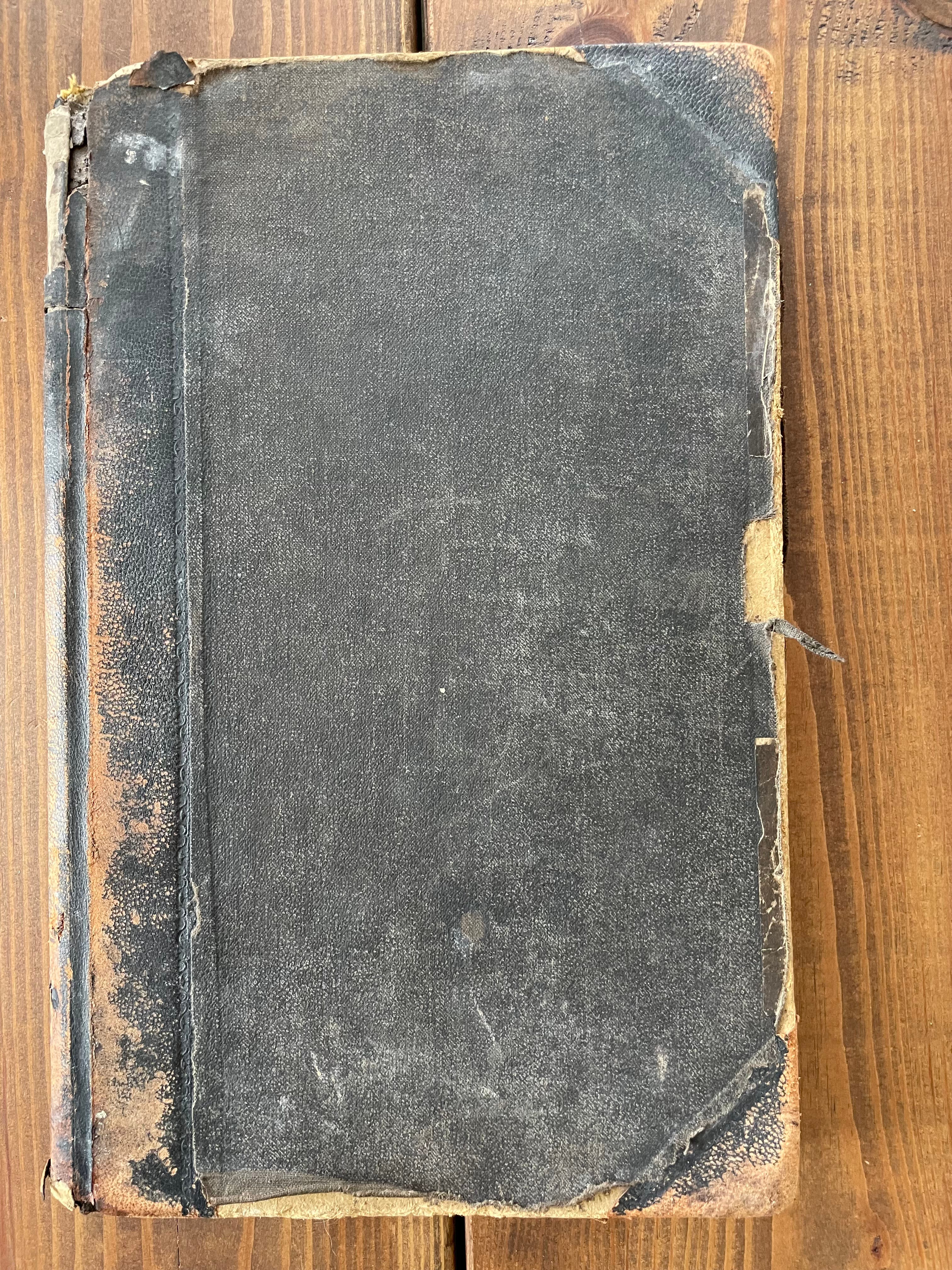
Some books are treasured. Others are simply lucky to survive. This was one of them.
It was rescued from a skip when an old solicitor’s office in Cheshire was being cleared. To most people it would have looked like just another unwanted ledger, too old to be useful and too worn to be worth keeping.
My friend saw something different.
He had no idea what was inside. He simply couldn’t bear to see an old book thrown away. So he picked it up and took it home. Some time later, he passed it on to me. It joined the other old books on my shelves and, for a while, stayed there untouched.
When I picked it up, it was heavier than I expected, bound in dark leather that had softened with age. The corners were worn smooth from years of handling, and the spine had begun to crack where it had been opened thousands of times before. When I lifted the cover, the familiar smell of old paper drifted out. Anyone who has spent time around old books knows it instantly. It is the smell of paper, dust and time. The pages had yellowed with age, their edges darkened by years of use.
It wasn’t an official probate register. It was a solicitor’s working ledger, its pages filled with handwritten drafts prepared before the final probate documents were typed. I wondered who had opened it before me.
Solicitors.
Clerks.
For years it must have sat on a desk within easy reach, opened and closed almost every day as solicitors drafted probate documents by hand. Then, somehow, it had outlived the people who wrote in it, survived the office that housed it and found its way into a skip.
Eventually, I opened it.
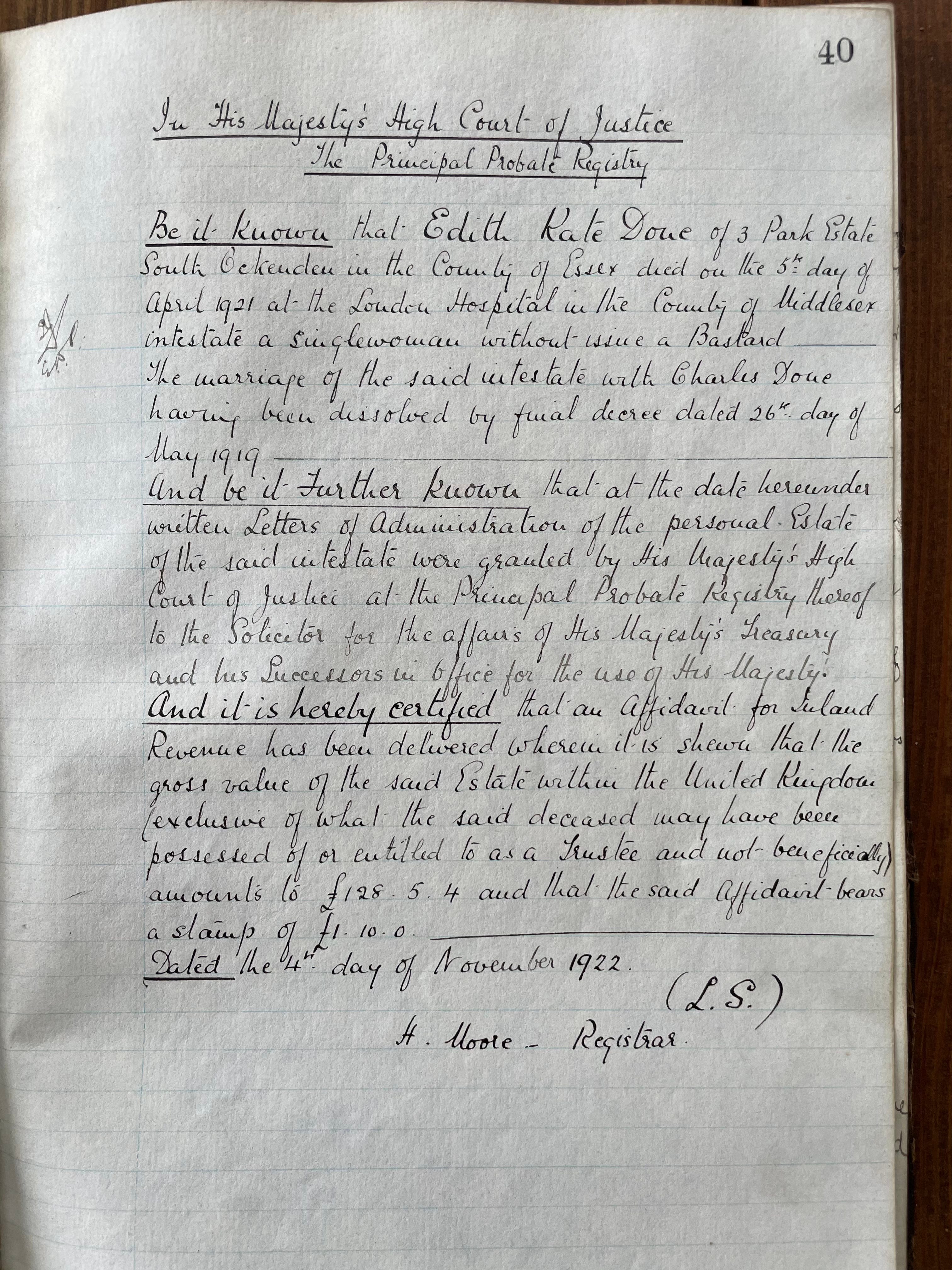
I wasn’t looking for anyone in particular. I simply wanted to see what had been preserved inside. The book fell open on a page, it was a handwritten draft dated 5 April 1921. My eyes drifted down the page. It wasn’t the name that caught my attention.
It was the address.
3, Park Estate, South Ockendon, Essex.
I recognised it immediately.
South Ockendon wasn’t just another village on a map. Although I had never lived there, I knew it well. My Chiddicks ancestors had lived there for more than 150 years.
Over the years I had spent countless hours researching its families, its streets and its history. I had even worked there for a time. It was hard to believe that I was sitting in Cheshire with a solicitor’s ledger rescued from a skip, staring at an address more than two hundred miles away in a village I knew so well.
Only then did my eyes return to the top of the page. The name was Edith Kate Done. I had never heard of her. Yet somehow she was connected to a village I knew so well.
I needed to find out who she was.
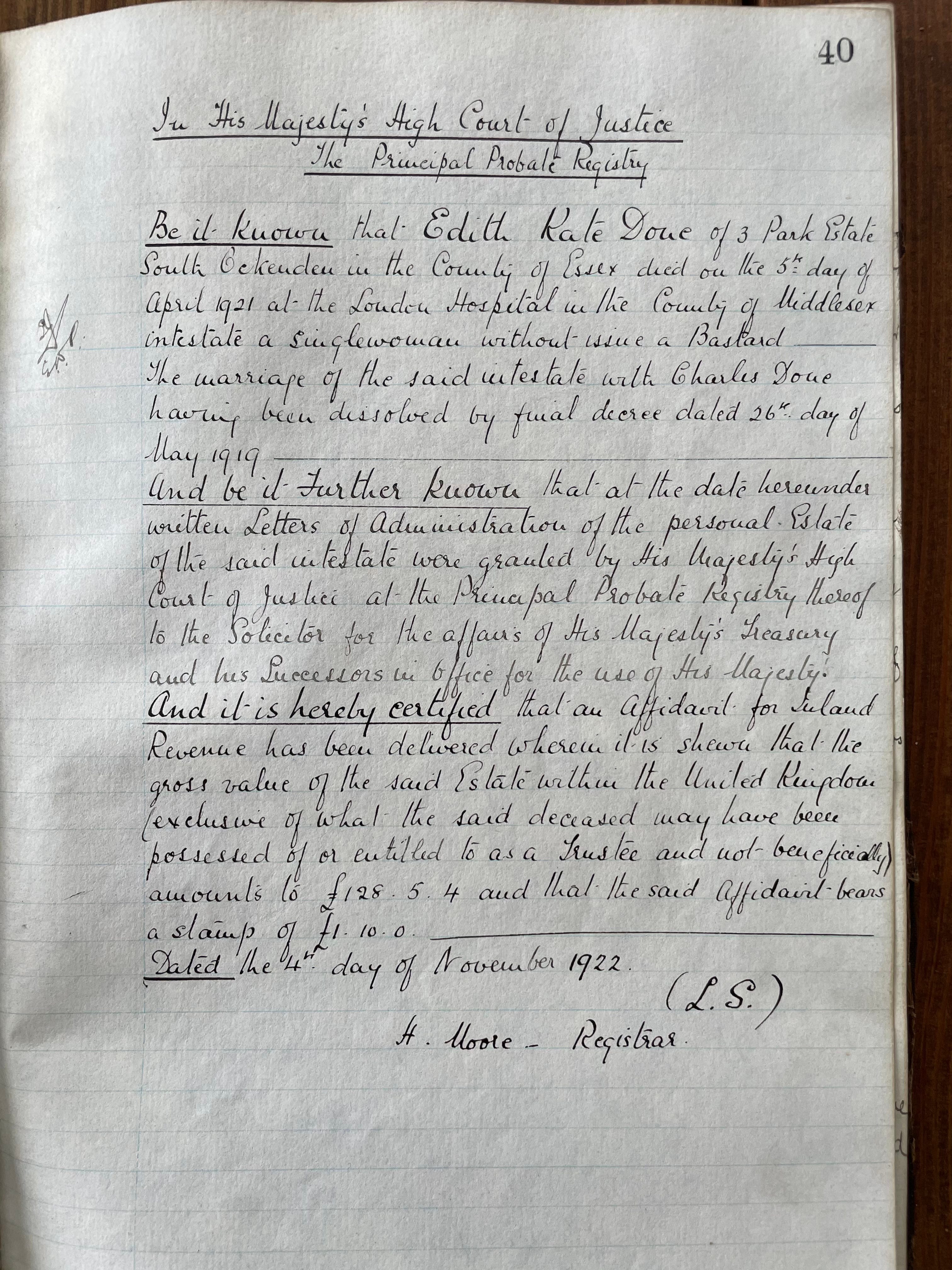
The probate draft had given me very little to work with. A name. An address. A date. It was enough.
My first step was to order Edith’s death record from the General Register Office. I ordered her birth record as well. Between those two records lay an entire lifetime.
It wasn’t long before both records were available to download. I opened the birth record first. If I was going to understand Edith’s life, it seemed the obvious place to begin.
She had been born on 15 January 1883 in Bettisfield, Flintshire. The surname Done wasn’t hers at birth. Somewhere between the day she was born and the day she died, her life had taken another path. To understand Edith, I first needed to discover who she had married.

The birth record told me that Edith Kate Done had been born Edith Kate Huxley. The obvious next step was to find her marriage.
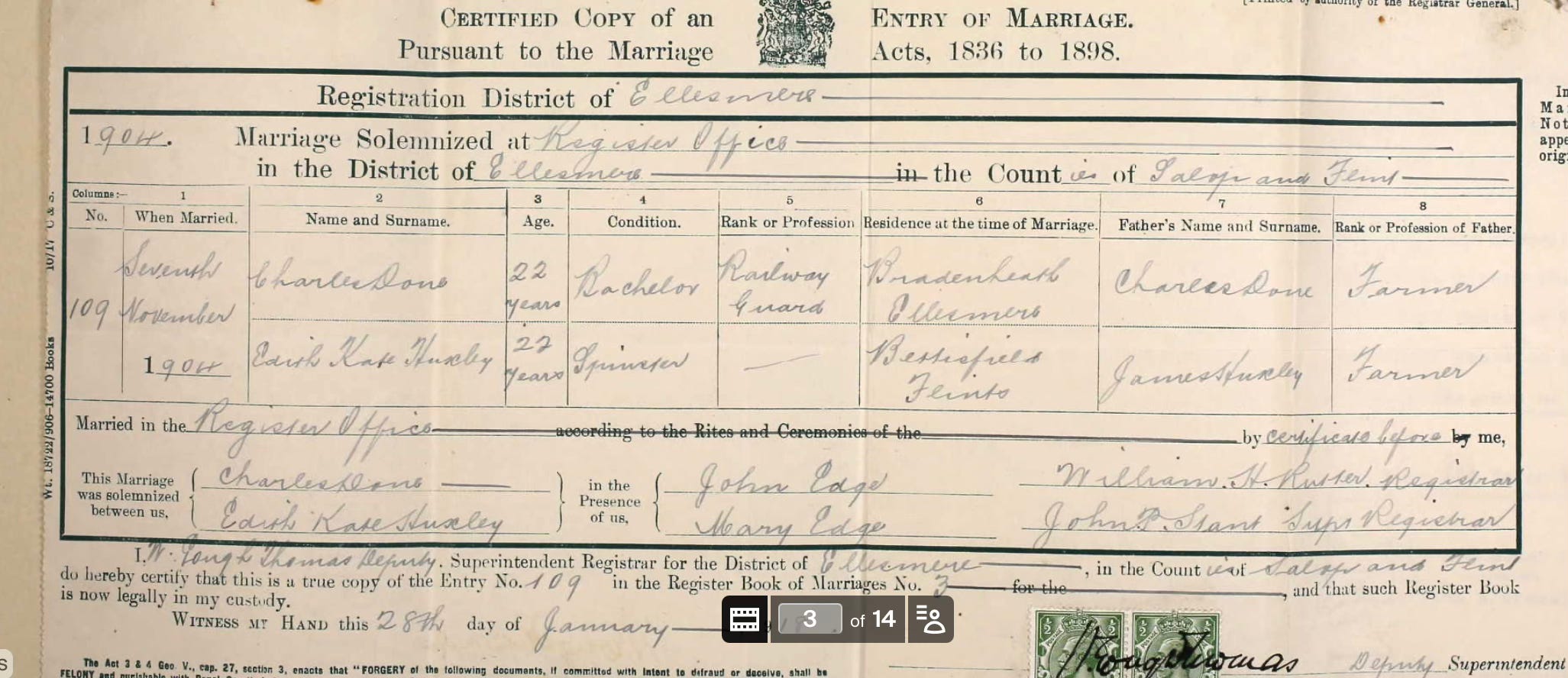
On 7 November 1904, at Ellesmere Register Office, Edith Kate Huxley married Charles Done. Charles was no longer just a name on a certificate. He was about to become part of Edith’s story. I knew almost nothing about him.
Who was he?
Where had he come from?
What kind of life had he and Edith built together?
The marriage certificate provided the first few clues. Charles was a labourer, living in Ellesmere. Edith was twenty-two years old. Like thousands of other young couples at the beginning of the twentieth century, they stood together before the registrar and began married life with every reason to believe the future lay ahead of them. On paper, there was nothing to suggest that their marriage would be anything other than ordinary.
The records would soon tell a very different story.
Until that point, everything I knew about Edith and Charles came from the usual family history records.
Births.
Marriage.
Census returns.
Each added another small piece to the puzzle, but none hinted that their lives had been anything other than ordinary. Then I discovered something I hadn’t expected. There had been divorce proceedings.
I managed to obtain the divorce papers. At first, I assumed they would do little more than confirm that the marriage had ended.
I was wrong.
Instead, they opened a window into a life that had been hidden for more than a century. The bundle contained petitions, affidavits and witness statements. These weren’t simply legal documents. They were the voices of the people who had lived through the marriage.
As I began reading, one thing became immediately clear. The marriage certificate had recorded the day Edith and Charles’s life together began. These papers explained how it unravelled.
I began reading the papers slowly. Each page added another piece to the story. Taken individually, they seemed little more than statements made in support of a divorce. Together, they painted a very different picture. This was no ordinary marital disagreement.
As I worked through the papers, names, dates and places began to emerge. I unfolded the petition and began to read. At first it followed the familiar language of legal documents, setting out names, dates and addresses. Then the allegations began.
The petition stated that Charles Done had treated Edith “with great unkindness and cruelty.”
Those few words prepared me for what followed. The formal language could not disguise the violence it described. One allegation claimed that Charles had “violently assaulted and kicked the Petitioner and pushed her out of the house.”
Another alleged that he had “habitually assaulted your Petitioner, blackening her eyes and bruising her body.”
I stopped reading for a moment.
Until now, Edith had existed only through certificates, census returns and official records. Now, for the first time, I was hearing her voice through the legal system. This was no longer simply a family history. It was the story of a woman who had endured years of violence behind closed doors.
Among all the allegations, one in particular was difficult to read.
“...dragged your Petitioner out of bed by her hair... stood over her with a razor and threatened to cut her throat.”
Even after more than a century, the words retained their power. The petition revealed that the violence was only part of the story. It also alleged repeated adultery.
One passage stated that Winifred Florence Cornes had been:
“...delivered of a child... of which the said Charles Done is the father.”
The marriage certificate I had found only a short time earlier had marked the beginning of Edith and Charles’s life together. The divorce petition revealed just how completely that promise had been broken.
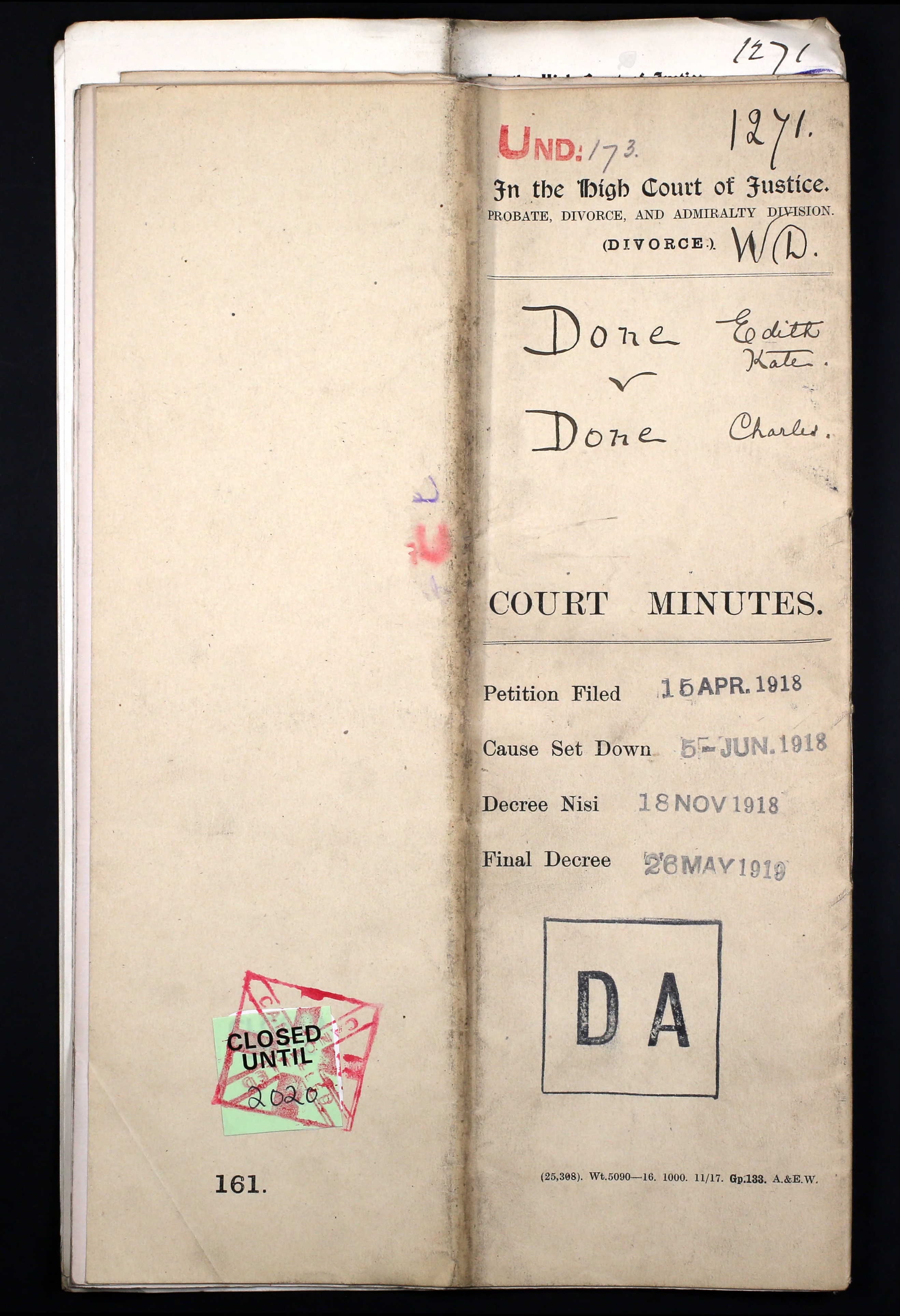
The divorce petition revealed what Edith had alleged. I wanted to know how those allegations had been reported at the time.
A search of the local newspapers soon uncovered several accounts of the case. Reading them felt very different from reading the legal papers. The petition had spoken in the measured language of the law. The newspapers told the story through the voices of the people who had witnessed it. For the first time, I could follow the events as they had unfolded more than a century earlier.
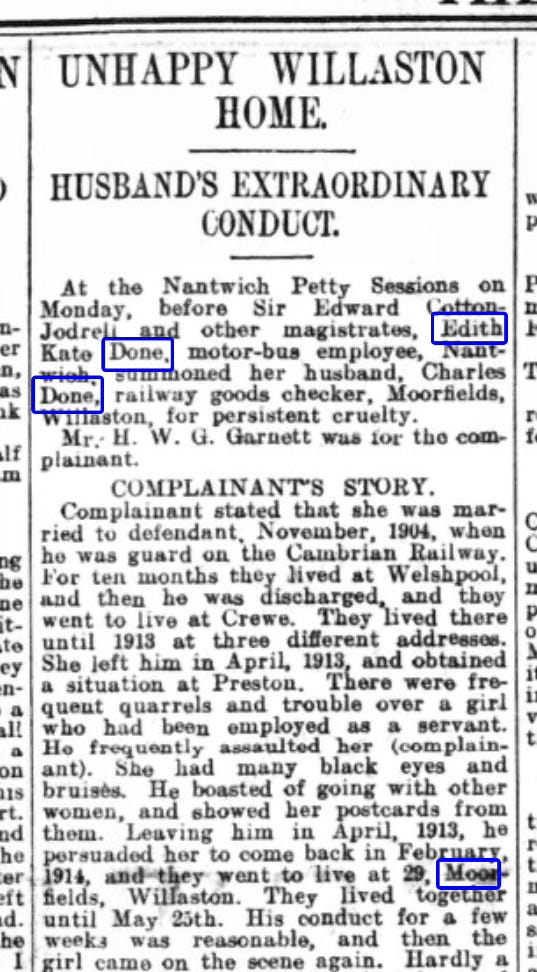
The first report appeared in the Nantwich Guardian on 22 June 1917 beneath the striking headline:
Unhappy Willaston Home
Husband’s Extraordinary Conduct
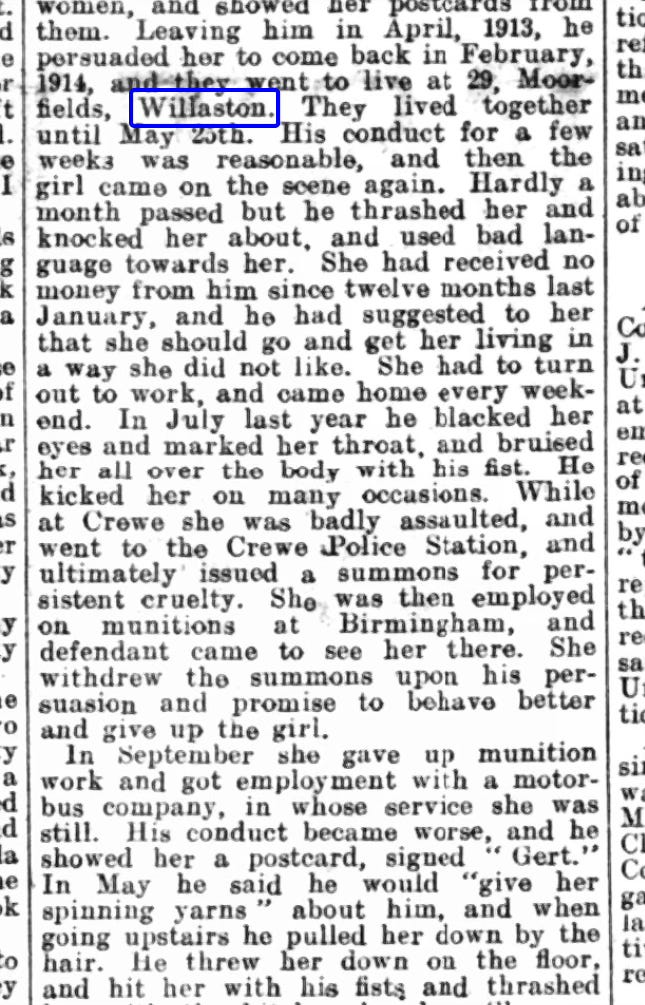
The report echoed many of the allegations contained in the divorce petition but added detail that only a newspaper reporter could provide. Edith described years of violence, black eyes, bruises and repeated assaults. She spoke of leaving Charles, only to return after promises that he would change. Those promises, she explained, were quickly broken.
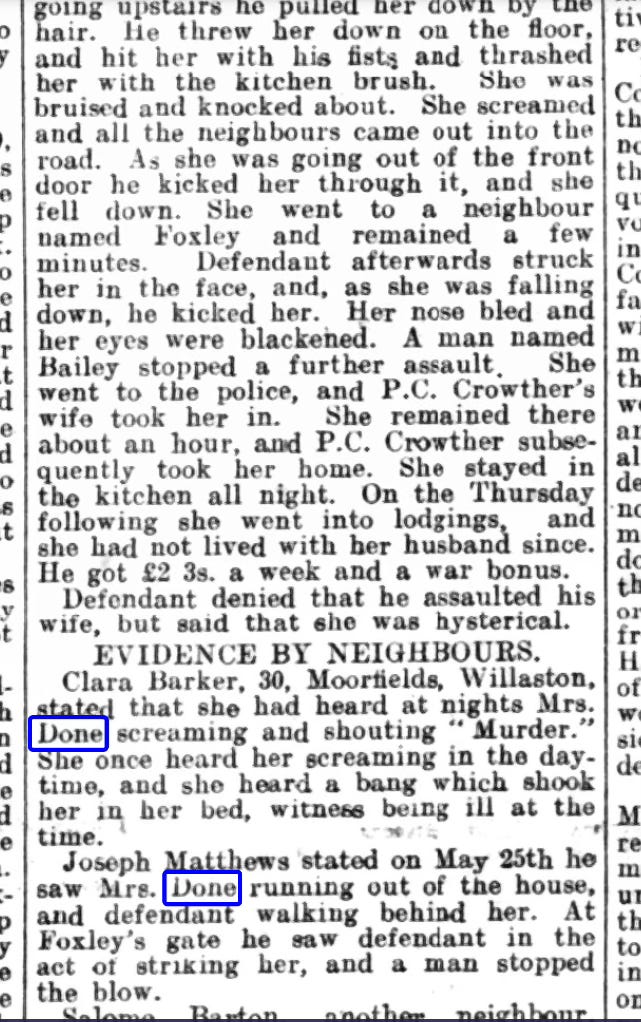
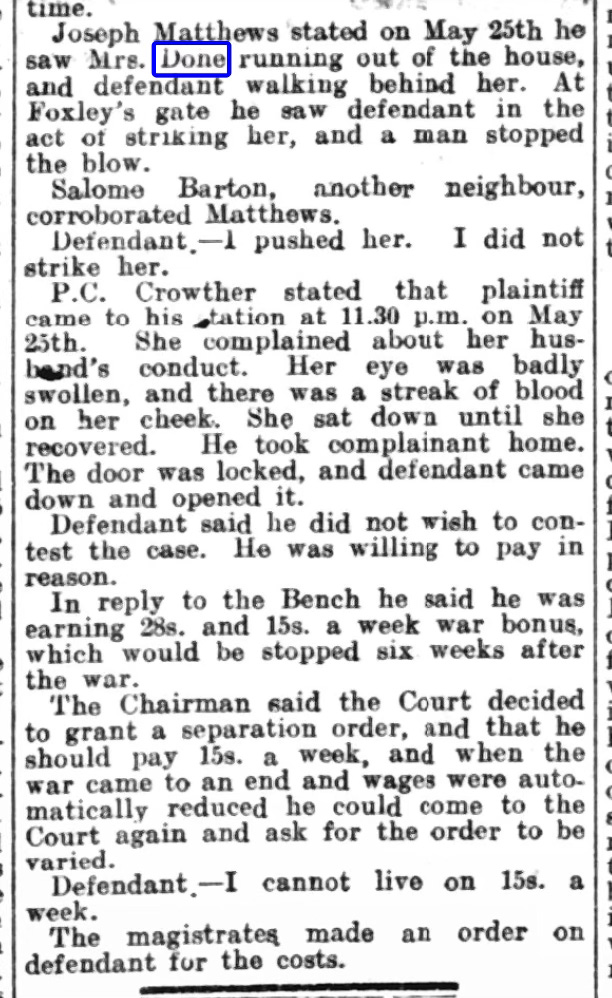
The newspaper also introduced new voices. Neighbours described hearing screams of “Murder” coming from the house in Moorfields. One recalled seeing Edith running into the street as Charles followed behind her. Another witness described seeing a man intervene to stop a further assault.
Finally came the evidence of Police Constable Crowther, who found Edith with a badly swollen eye and blood on her cheek after she sought refuge at the police station late one evening.
Reading the newspaper, I realised I was no longer relying solely on Edith’s petition. Her account was being supported by neighbours, police officers and other witnesses who had appeared before the magistrates. One detail in the report caught my attention for a very different reason.
The events were said to have taken place at 29 Moorfields, Willaston.
I stopped reading.
Moorfields wasn’t simply another address on another historical record. It was the road where I now live.
Of all the places Edith’s story might have led me, I never expected it to arrive quite so close to home. For a moment, the distance between past and present seemed to disappear.
The Nantwich Guardian reported the separation proceedings in 1917. More than a year later, another newspaper carried the final chapter. The national newspaper The People, published on 24 November 1918, reported that Edith had petitioned for divorce on the grounds of cruelty and misconduct. Many of the details were familiar. But one sentence stood above all the others.
“A decree nisi was pronounced.”
After years of violence, broken promises and public court hearings, Edith’s marriage to Charles Done was finally coming to an end. The newspapers had done more than report a court case. They had restored Edith’s voice. For the first time since opening the probate ledger, I no longer felt I was researching a name. I was following the life of someone I had come to know.
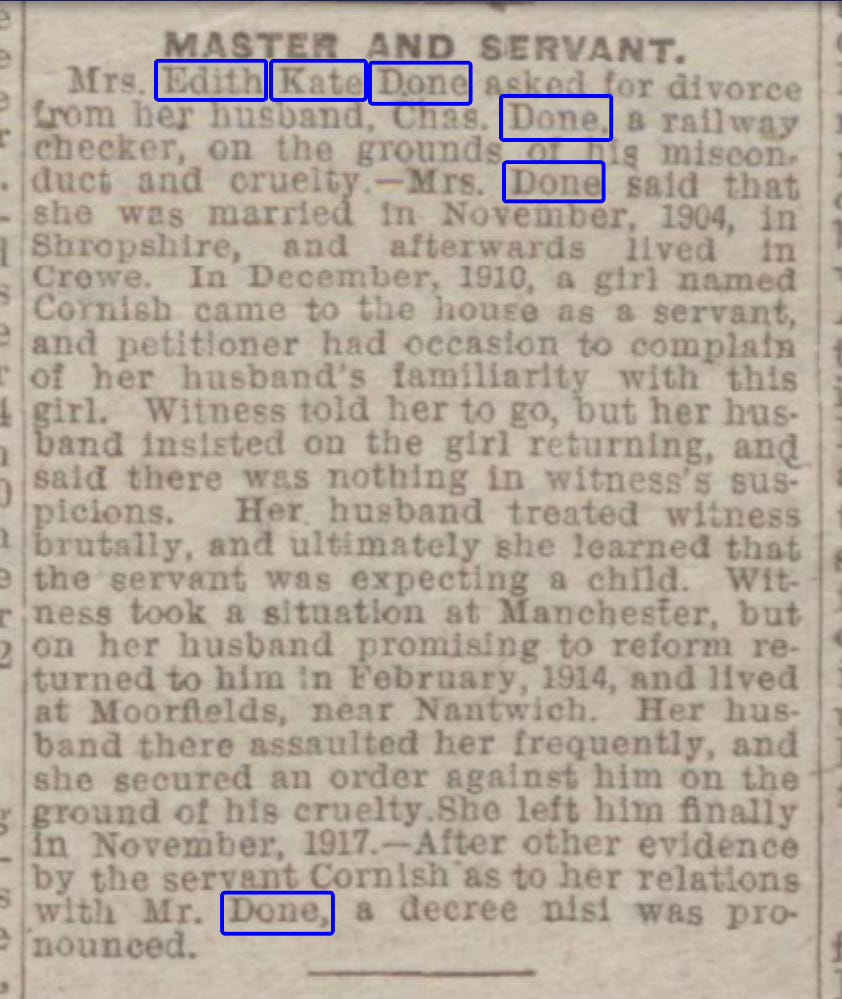
The newspapers marked the end of Edith’s marriage. They did not mark the end of her story. Once the divorce proceedings were over, I found myself asking a simple question.
What happened next?
I expected Edith to remain close to the places that had shaped so much of her life Crewe, Willaston, Nantwich.
Instead, the trail led somewhere I never expected. The next record I discovered showed that Edith had left Cheshire altogether. She had moved more than two hundred miles away. It was a surprising discovery. People certainly moved in the early twentieth century, but after spending so long following Edith through the familiar streets of Crewe and Willaston, I had almost assumed her story would continue there.
It didn’t.
I looked again at the address to make sure I had read it correctly. South Ockendon. I stared at the address for a moment. The village name was instantly familiar.
Not because of Edith. Because of my own family.
Long before I ever discovered Edith Kate Done, my own ancestors had lived there for more than a century. Of all the places her story could have taken me after leaving Cheshire, it had arrived in a village that already formed part of my own family history.
South Ockendon was a long way from the places Edith had called home. Nothing I had discovered so far suggested any obvious connection with Essex. There were no known relatives, no familiar addresses and no clues to explain why she had travelled there. The move raised more questions than it answered.
Why had she travelled so far?
Was she starting again?
Had she gone there alone?
Or was someone waiting for her?
Whatever had brought Edith to South Ockendon, it soon became clear that she hadn’t simply moved. She had started again.
The next records revealed that Edith had begun training as a midwife at the Plaistow Maternity Hospital in London. It was an unexpected discovery. After everything I had learned about her troubled marriage, I had assumed the years that followed would simply be a struggle to survive. Instead, Edith had chosen a profession dedicated to helping others.
For the first time, she seemed to be charting her own path, away from the darkness of her marriage and towards a life filled with new possibilities.
The hospital records, preserved by Barts Health NHS Trust, provided an extraordinary glimpse into this new chapter of her life. Thanks to the help of their archivist, Kate Jarman, I was able to follow Edith’s progress through her training.
She began her basic training on 13 March 1919, initially based at 17 Howards End, which formed part of the Plaistow Maternity Hospital. Training was demanding. The records show that Edith sat her Central Midwives Board examination in November 1919 but did not pass on her first attempt.
She tried again.
On 14 February 1920, she successfully passed the examination and was awarded her Central Midwives Board certificate in Midwifery. I smiled when I read that entry. After everything Edith had endured, it would have been easy to overlook what those few words represented. This wasn’t simply an examination result.
It was proof that she had rebuilt her life.
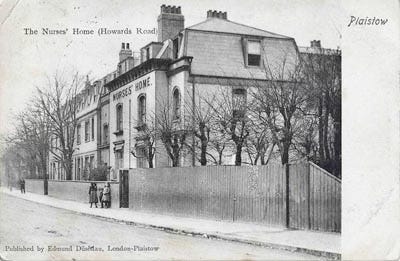
Edith’s future finally seemed to be taking shape. She had left Cheshire. Qualified as a midwife. Built a new life for herself. I couldn’t help wondering where that new beginning might lead. The next record answered the question.
It wasn’t the one I was expecting. It was Edith’s death certificate. She died on 5 April 1921 at The London Hospital. She was just thirty-five years old. The cause of death was recorded simply as diabetes.
I’d spent the previous chapter watching Edith rebuild her life. Now, without warning, it had come to an end. The certificate held one detail I couldn’t explain. The informant wasn’t a relative or a friend.
It was K. Mansfield, whose address was given as Canning Town Police Station. Immediately, more questions emerged.
Why was a police officer, or someone connected with the station, present?
Had Edith died alone?
Had there been an incident beforehand?
Or was K. Mansfield simply the official who happened to be there?
The records offer no answers. Some mysteries remain exactly that. Five days later, Edith was buried in South Ockendon Cemetery, section 2, Plot 56. The plot has no headstone, nothing marks the place where she was laid to rest.
Edith died intestate. Without leaving a will, which meant her affairs passed into the hands of the Probate Registry.
It was a strangely fitting discovery. The very record that had first introduced me to Edith was now there at the end of her story too.
The book had, quite literally, come full circle.
When I first opened that discarded probate ledger, Edith Kate Done was little more than a name. A few words in fading ink.
Since then, the records had revealed a daughter.
A wife.
A victim of abuse.
A woman determined to start again.
A qualified midwife.
Her life had been brief. Much of it will always remain beyond our reach. But she is no longer just another forgotten entry in an old book. She has her story back.

By the time I reached the end of Edith’s story, I realised something had changed. Not the records. Not the faded ink on the pages of an old probate ledger.
Me.
The records never answered every question. They never could. Some mysteries always remain.
Why South Ockendon?
Why was K. Mansfield the informant?
What was Edith thinking during those final months of her life?
History is often like that. We inherit fragments, not certainty. But the records gave me something more valuable than answers. They gave Edith back her voice.
I closed the probate ledger where the journey had begun. Edith’s name was still there, written in the same fading ink. Nothing on the page had changed.
But everything behind it had.
I spend a lot of time researching and sharing these family connections, so if this post helped you uncover part of your family story, you can support my ongoing research here:

If you’d like to follow more of my research and stories, you can explore more here:
No posts
Comments
Nothing yet. Say the first thing.
Sign in to join the conversation.