

A few years back, my husband and I were listening to an Australian radio show. The topic was something the host called “tiny rage,” and people were calling in to discuss everything from neighbors blasting their radios to people who tailgate.
Suddenly, I couldn’t stop thinking about my husband’s socks.
Most nights he goes to bed with them on and, somewhere in the middle of the night, he takes them off. The problem is that he keeps them tangled up in the sheets, so that when I make the bed in the morning I often have to unmake a certain section after an unsightly bulge reveals the hidden socks underneath.
Stupid? Sure.
Rage inducing? Absolutely.
Thus I discovered … my own tiny rage. “Tiny rage comes down to losing perspective,” David J. Lieberman, Ph.D., author of Never Get Angry Again: The Foolproof Way to Stay Calm and in Control in Any Conversation or Situation, told me in an interview for a pitch I sent around a while back. “If our perspective is off-center, we won’t respond accurately.”
“Unfortunately, tiny rage is getting more common. It’s a sign of the times, since our emotional health is less and less important. As our emotional health goes, so too goes our ability to see clearly and respond appropriately.”
While tiny rage might seem, well, tiny, it actually takes a lot of our energy — both physical and emotional — to overcome. In that same interview, Dr. Lieberman provided background on what tiny rage is, and some simple ways to avoid it.
[Edited for clarity]
DL: Whatever you want to call it, it’s making mountains of molehills. Tiny rage comes down to losing perspective. If our perspective is narrow, skewed, off center, we won’t respond accurately.
DL: It’s becoming more prevalent. Tiny rage — more than any other type — is probably a symptom of the times. As our emotional health becomes less stable, so goes our ability to see clearly and respond appropriately. So, when a person gets upset over minor infractions, this is an example of tiny rage, and a symptom of losing sight of the big picture.
DL: One reason is that people don’t realize how much energy it takes to refocus. If you’re upset about a small thing and need to get back to business, the amount of energy, psychologically speaking — including your brain shutting down and reactivating brain cells — may appear seamless, but a whole host of psychological things happen that we aren’t even aware of. It takes time to recover.
It also interferes with the quality of our lives. The more animated and excited and bothered you get by little things, the more you focus on them.
There’s a saying in biology: Cells that fire together wire together. In other words, you strengthen connection every time you fire those cells. The more we find ourselves getting angry and enraged over small things, the more we are literally wiring ourselves to continue doing that. In the short term, you may lose control over the ability to maintain your calm after a slight infraction. It’s actually more troublesome than the term “tiny rage” might elicit, because it becomes more encompassing.
DL: As the saying goes, the best defense is a good offense.
A person would do well to frame their mindset in a way that allows them to enter situations with the widest, healthiest perspective possible.
After all, it’s harder to recover from being upset than to not be bothered in the first place. The first thing to do is to remind yourself of what’s important. Focus on being grateful and appreciative, your real values, absent of what’s easy to get caught up in, which is typically minutia and nonsense.
If you’re already in the situation that tends to enrage you, the second best thing to do would be to buy yourself time. Physiologically, the emotion takes over and your thought process shuts down. Breathing is always recommended. Plus, time heals all wounds, in part because when you have space between the event and your perception of it, you look at it much differently. By breathing, even just for a couple of seconds, you provide yourself with invaluable time to reclaim your emotional self.
[EDIT NOTE: In my meditation video the other day, the instructor talked about something called “box breathing.” That’s breathing in for a count of four, hold for a count of four, out for a count of four, hold for a count of four. Do that at least three to four times to bring awareness to your body and breath and to slow your heart rate and racing thoughts.]
Thanks, Dr. Lieberman, for your input! As far as my own tiny rage goes, I certainly haven’t mentioned it to my husband, like a mature person would. I can only hope that he reads this newsletter and finds out about my sock rage along with all of you.
Love you, honey ;)
My stepdad sent me the below photo, which was in my elementary school’s Annual Budget Review. It’s from the Literacy Night event that I did with them back in New York in April. It was such a cute — and much-needed — reminder that what I’m doing matters.

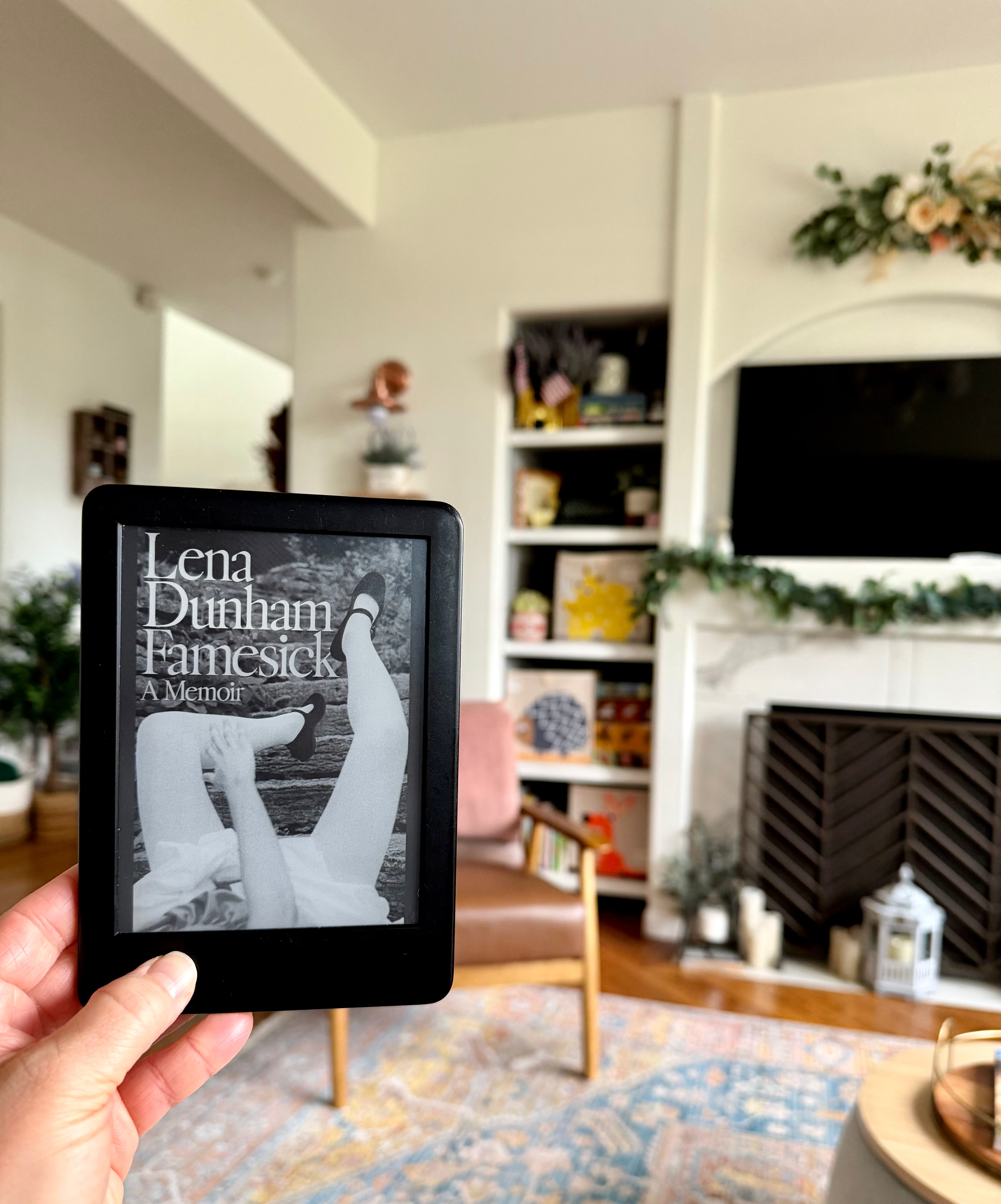
I’m reading Lena Dunham’s memoir. Who’s read it!?
You might recall that the woman who illustrated my soon-to-be-third book — “Purple Potatoes Will Turn You into a Witch!” — crocheted me an actual purple potato.

Well, she crocheted more for my girls, and we are smitten.

I’m taking a bit of time off in May to juggle the end-of-the-school-year insanity.
It’s, like, literally insane, friends. Am I right?
But I can’t wait to see you in June! First up is the Lowry Bazaar at Denver Beer Co. I’ll be there Saturday, June 6th, from 1 to 7. Stop by for a beer and a book.
What could be better?

We’ll also be at the Little Blue Pigeon, a gorgeous new bookstore on Larimer Street in Denver. Stop by and join us on June 18th at 9:30 for a story time and book signing!

More self-help newsletter articles for your reading pleasure:
Until next week … bis bald, friends!
No posts
Comments
Nothing yet. Say the first thing.
Sign in to join the conversation.