
A few weeks ago, we briefly lost power. This caused my aquarium’s filter to “run dry,” which is basically the worst thing a filter can do. I didn’t notice the malfunction for over half a day, at which point I unplugged the (by then very hot) filter, let it cool down, and began googling how screwed I was.

The internet said I was totally fucked, that after as little as 30 minutes(!) without water, your filter media starts losing the precious bacteria that makes your tank a functioning ecosystem. Apparently I’d have to restart my carbon cycle and expect to lose a significant number of shrimp.
I revived the filter, tested the nitrite levels, and waited. I hoped that maybe there were enough plants in my tank and slightly damp sludge left in the filter to keep the cycle alive, and that any bacteria still present was the good kind, whatever that is, but I couldn’t say for sure. It’s hard to compartmentalize that kind of thing, especially in an established, decade-old tank. This is what Glory, the seventh album from Perfume Genius, is about.
For the unfamiliar: Perfume Genius is one guy, Mike Hadreas, whose posting sensibilities and now-defunct Substack are a major influence here at Cherub Microplastics. He has a reputation as this purveyor of whispery twink invocations, which was only ever partly accurate. Hadreas is 44 now, and making more straight-up bangers than ever, without shying away from the big sexy questions.
This is especially true in Glory. On the opening track, “It’s a Mirror,” Hadreas asks: “What do I get out of being established?” The rest of the album attempts to answer this, with songs that very much sound like the album cover:

A wood-paneled room, some weird carpet, an unreadable pose, faceless figures, unaesthetic stuff on the floor. This mix of lived-in memory with unsettling stillness is like if home videos turned into an exhibit at a natural history museum, which is exactly what both listening to these songs and visiting the place you grew up feel like.

“It’s a Mirror” is a skillful opener, a sort-of anthem for hurtling into middle age, when your formative years are neither nostalgic nor fresh, and your gender and sexuality are now hopefully the least interesting things about you, and you’ve moved on but keep coming back to painful spots in a ritualistic loop. The song never reveals its whole hand—despite ample description, we’re never sure what the titular “it” is. But the rest of the album lets us blow on various game cartridges and see what comes out, in hopes of maybe playing them all at once and winning.
Look, a lot of these songs are giving Skinamarink, and I mean that in the best way possible. In “It’s a Mirror,” Hadreas insists: “Something was making you sick in our home.”

Despite the giant window on the album cover, the songs on Glory feel like windowless found footage ripped out of time and space. These are some of Hadreas’s folksiest, most stripped-down tracks, even if “stripped-down” for Perfume Genius is still pretty lush by most standards. But this is an album extremely aware of walls and doors. We get lots of acoustic or acoustic-ish instrumentation, echoes, footstep-like beats. Lyrically, the strongest theme is that of capturing and being captured: in a reflection, a video, a memory, the trunk of a car.
Every song is a box,1 and something in each box is wrong. In “No Front Teeth,” we get parquet floors, a camera, a grin of unknown origin, and, well, the missing teeth. The surprising spareness and violence of “Full On” seems like it belongs on a muted VHS. Dirgefugue “Dion” reads like a memorial slideshow you have to hack back into your old Facebook account to watch. “In a Row” is literally a kidnap victim fantasy.

So what good does stepping into these memoryholes do us? This kind of captive time under one’s belt is a key part of making a life, of becoming established. What do we get out of it? At the start of the album, in a convincing rendition of Dude Who Doesn’t Want to Go to Therapy, Perfume Genius resists:
Can I get off without reliving history
And let every echo just sing to itself?
And later, in the final song, either acquiesces or gets exorcised (more on that later):
Loosened, roving stray
Guest of body
Now in quiet glory
Finding shade
Between these two bookends, Hadreas digs up old memories, worries about new ones, and makes some up, all with the fervent exactitude of someone playing Operation in a house with black mold.
When this album’s not Skinamarink, it’s Hereditary. Specifically, the dioramas. The bizarre, loving precision with which we can ruminate, and the draw of rotating pain in our mind like a prized miniature.

Similar to Hereditary Mom, whose daughter becomes Paimon due to a car accident or whatever, Hadreas creates and recreates traumatic vignettes with curiosity and sharp tools. What does a quarterback’s body look like as it crumples? Did your loved one hear singing when they died? What goes through your head as you’re being abducted? Hadreas explores all these questions and more!

We’re not glossing over details here, we’re laying them out on the carpet and organizing them into stilted tableaus. On Glory, the sense of removal isn’t an act of dissociation but of artisanal, small-batch emotional processing.

This eerie calm takes a front seat in “Full On,” a restrained siren song that appears to be about a medical emergency during a high school football game? It’s one of the most ethereal-sounding tracks and most violent:
I saw him go
Limp as a veil
Thrown in a cruel fashion
In “Left for Tomorrow,” we’re suspended in time attempting to talk to a dead person on a phone. “Capezio” presents a clinical recounting of the maladaptive threesome that’s a rite of passage for every closeted theatre kid. Then, in “Hanging Out,” we get out-of-body descriptions of what I’m interpreting as rough, postapocalyptic backyard sex.
Hadreas pummels us with quiet but visceral images: teeth in a hand, breath in an ear, a “jaw hanging loose like circuitry,” an athlete “nodding like a violet” on the ground. Unlike my shrimp tank, which became its own dynamic ecosystem, these song-dioramas exhibit a stillness that underscores the uncanny. Pain is weird, and weird stuff warrants revisiting. Much of this album’s conflict is wrestling with how many times, and how closely, to look again.

As Glory fixates on the uncanniness of pain, it frames the passage of time as the underlying big bad. This is most apparent on “Clean Heart,” a halting meditation that sounds like a stethoscope mixed with a music box. In it, Hadreas ambivalently suggests time “makes a clean heart” by virtue of violently washing you down its river.
Pulled downstream
Held from beneath
Until the body rebels
This is a refreshing counterpoint to the typical time-heals-all-wounds horseshit. Linear time is the ultimate compartmentalization, relentlessly depositing the human experience into snug crates of beginning, middle, and end that dissolve as quickly as they form.

It makes sense these songs are heavy on narrative but skeptical of it, often establishing linearity while undermining it in the same breath. The boundaries of the present tense are consistently up for debate here. In one of the most memorable refrains, collaborator Aldous Harding casts this time-defying, fae-ass mist over us:
Better days
Nothing touch me
Light it breaks on the wings of a dove
Better days
Nothing touch me
Let it take everything that I love
What timeframe is “better days” is referring to? The past? The future? Doesn’t matter, really:
It’s in the palm of my hand
I feel something
My entire life
If we do a good enough job at maintaining our memory-miniatures, at holding them in our hand, maybe that becomes the mirror Hadreas warned us about at the start, some “holy terror / taking focus off the horizon.” But should we focus on the horizon if linear time is such a manipulative bitch? Should we just go Arrival mode? And do we even want a “clean” version of the organ that’s supposed to be full of blood at all times?
All these dueling ideas about the ROI of pain and time come to a head on “In a Row,” a triumphantly masochistic kidnap fantasy: “Take me the long way round,” Perfume Genius tells his captors. “Think of all the poems I’ll get out.”

“In a Row” explores this central irony of making art—appreciating the past, which means appreciating pain like a little diorama freak, while wrestling with the violence of time, which then offers its own bonus pain. But unlike (sorry ugh) Proust, Hadreas isn’t trying to find lost time. He’s trying to dig a hole to let time barrel through and maybe string him along.
This song captures that sick allure of being at the mercy of unstoppable forward motion. As Hadreas half-recounts, half-engineers his ideal kidnapping, there’s a palpable relief at the loss of agency:
Finally a show
With lines for me
Set them up all nice
And in a row
Also, if we take these lyrics literally, which Perfume Genius is always daring us to do anyway, the song ends with him getting cooked alive.

Despite this appeal of hurtling through space with people who wish you ill, “Clean Heart” warns that collecting fucked-up shit for future stories doesn’t save you, and neither does narrativizing the past:
It’s only dust
kicked up and lost
finding an end in itself
The final track, “Glory,” confirms this perspective, painting time or memory or maybe trauma as a wispy thread, a parasite that admittedly looks cool under a microscope, a fleeting “guest of body.” So is this an exorcism? Does the glory come from surviving, or from examining the memories, or from allowing them to exit you? Perfume Genius, ever the art-hoe maximalist, says yes.
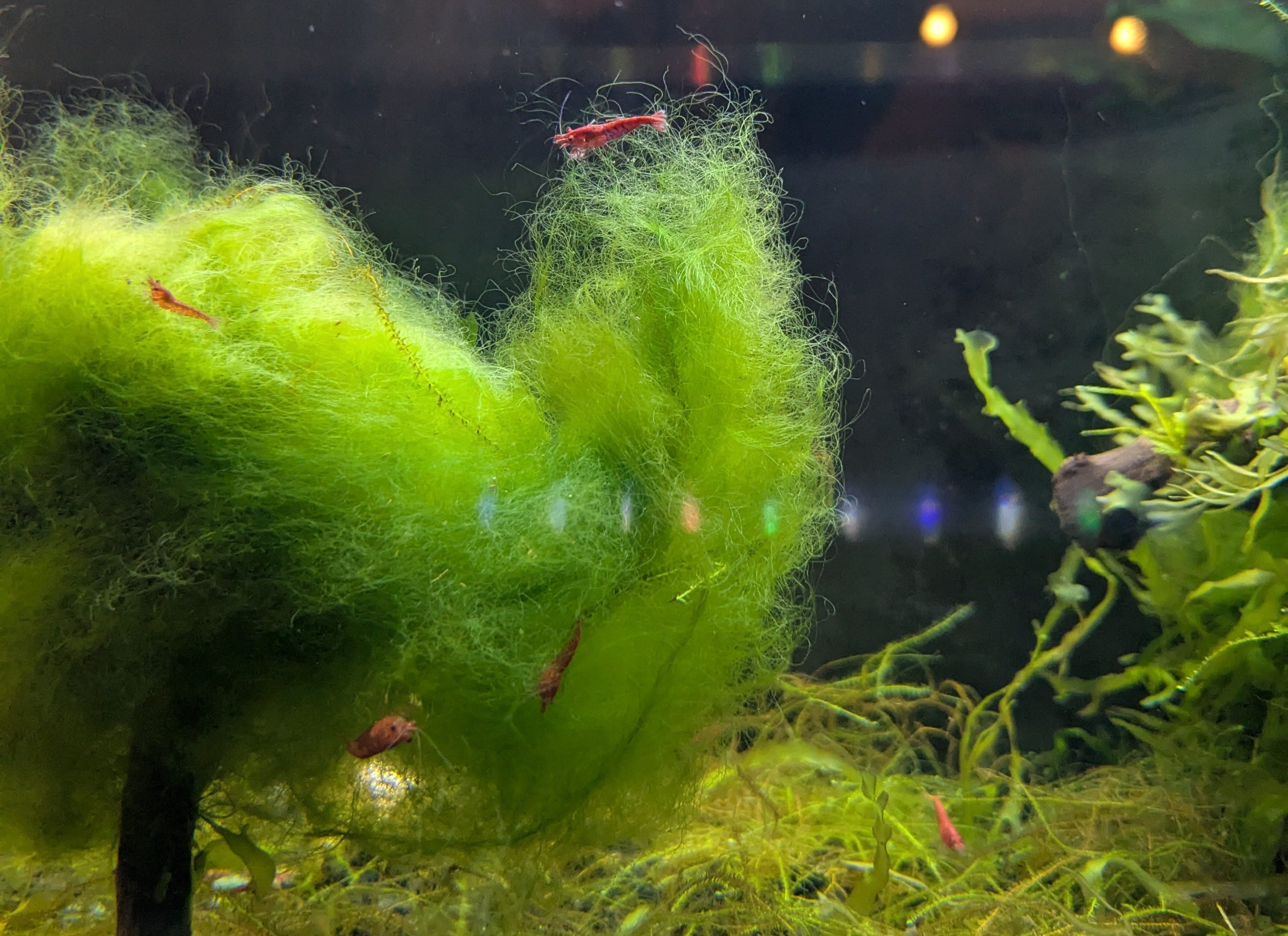
My shrimp are fine. All the filter sludge did its job, retaining enough bacteria to keep the ecosystem healthy. I don’t visit my hometown for Thanksgiving.
The one exception here is the album’s most hopeful track, “Me & Angel,” about finding shelter without walls, which makes everything else feel more boxed-in by contrast.
Comments
Nothing yet. Say the first thing.
Sign in to join the conversation.