
The Audio version of this article is full of a lot more detail, I highly recommend listening to it especially if you are left with any questions.
Content note: this episode discusses severe child abuse, trauma, and grief.
If you suspect a child is being abused or neglected, you can call the Childhelp National Child Abuse Hotline at 1-800-422-4453, available 24 hours a day, seven days a week.
Our neighbor, Mrs. Carpenter, made that call. Without her, there is no complaint, no judgment, no record that any of this happened. Jonah and I stay in that house. I don't let myself think too long about what comes after that.
"Some experiences are so big they change your DNA."
— Dexter Morgan, Dexter (Season 5)
There is a woman I have been afraid of for forty years, and until recently, I couldn’t even tell you why.
She didn’t even have a face.
That’s the strange part. When I try to picture her, I don’t see a person. I see a shape. Something dark, something that takes up space in a doorway. A figure holding a glass of red wine. A presence my body learned to track before I had language for what tracking meant. I know her name — the nickname, anyway, the one my family spat out like something they’d accidentally put in their mouths — but even saying it out loud still does something to my heart rate that I can’t entirely explain away.
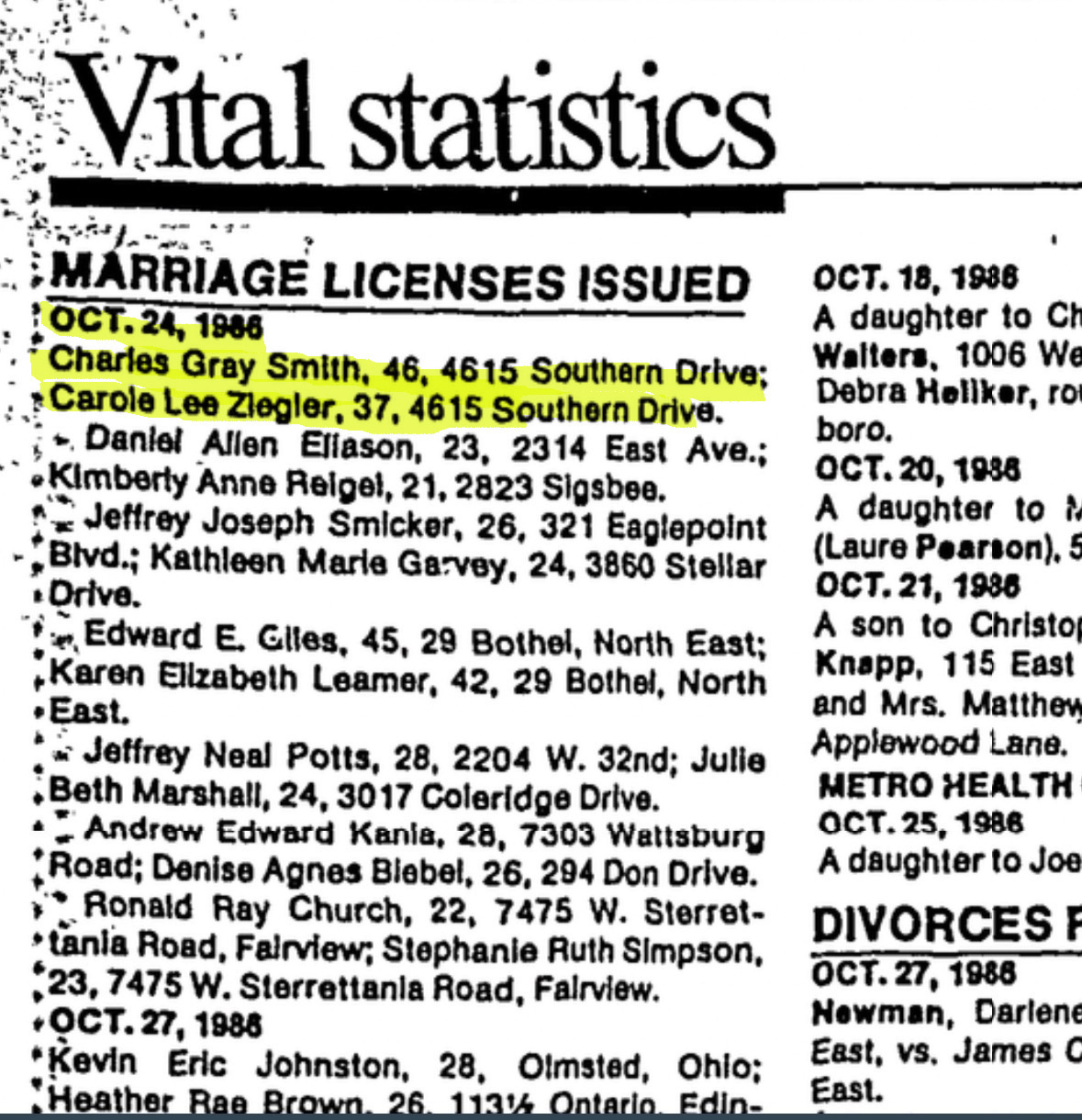
Her name is Mugsy. She is the woman Chuck married four months after my mother died. They stayed together until August 25th 1994. Where they had a clean cut divorce where Chuck paid Mugsy 80k. As a “Property Settlement” That is all in the documents below this post.
I’ve been investigating my mother’s death for a while now. Kathleen Smith. Kathy. She died July 15, 1986, in Erie, Pennsylvania. I was two years old. My brother Jonah was four. The death certificate is vague in ways that have always bothered me. There was no autopsy. Chuck — our biological father, Kathy’s husband — told different stories to different people about what happened. He moved on fast. I mean that in every sense of the word: he moved us geographically, he moved on emotionally, he moved another woman into the story so quickly that the ink on my mother’s death was barely dry before there was a marriage license with someone else’s name on it.
I knew about Mugsy the whole time I was building this investigation. She was always there in the background, attached to Chuck, attached to the timeline, impossible to fully ignore.
But I ignored her anyway. I told myself she was a side character. The aftermath. Not the story itself.
What I didn’t let myself say — what I’m only just now able to say — is that Mugsy is everywhere in me. She is the reason I spent years trying to earn my Aunt C’s approval, contorting myself to be likable enough, good enough, easy enough to love. She is the reason I have stood in front of every mother figure in my life with something that felt like audition nerves. Because Mugsy was the first woman put in my mother’s place, and what she taught me — not in words, but in the way she looked at me, the way she didn’t — was that no mother figure would ever love me. That I was not the kind of child who got that.
She is not a side character. She is the head of the snake. And I have been living downstream of her my entire life without fully understanding why.
The marriage license is what broke it open for me.
Chuck and Mugsy applied for a marriage license in Erie County. It was issued October 24, 1986. They were married November 7th — on her birthday, which is a detail I find almost unbearably strange. My mother died July 15th and was buried three days later. That means less than four months passed between my mother going into the ground and Chuck standing up to marry someone else.
I’ve sat with that number a lot. Less than four months.
But the date isn’t even the part that got me. It was the address. On that marriage license, Mugsy lists the same address as Chuck: the house on Southern Drive. My mother’s house. The house where my mother died. The house where Jonah and I were still living when she died, where we were still living when whatever happened to our family in those weeks afterward began to happen.
I know there are practical explanations someone could offer. Maybe it was just a mailing address. Maybe it was paperwork. But I need to tell you what that address looks like from where I’m sitting. My mother died in that house. Her father — my grandfather — had hired a private detective to find us because Chuck had disappeared with Kathy’s children and nobody knew where we were. My grandfather was not passively wondering. He was actively searching. And in the middle of all of that, this other woman — the woman who would become Chuck’s wife before the year was out — was using my mother’s address like it was hers now.
Like the space had opened up. Like she could just step into it.
On the same license, Chuck lists his marriage to my mother as ending in one word: death. Not illness. Not unexplained. Just death, checked in a box, and then a new name beside it. My mother’s entire existence in that marriage — her pregnancy, her years with him, her children, her life — reduced to a single administrative word. And right next to that word: Mugsy.
Here is what I know from the records about where Jonah and I were during all of this.
The child abuse documents — and I’ll get there — state that we had been living in Ohio since August 1986. August, the month after my mother died in July. So within weeks of her death, Chuck had already moved us out of Erie. But to legally get married in Pennsylvania, you have to be physically present in the state. Which means that when Chuck and Mugsy went back to Erie on November 7th to get married, there is a real question about where we were.
Were we in Ohio? Did they leave us somewhere? Were we with them, being moved back across state lines while my grandfather’s private detective was actively looking for us? I don’t know the answer to that. But I find myself going back to it in a way that feels less like curiosity and more like my body asking a question it already knows the shape of. Because I have always had hypervigilance around knowing where people are. I have always had something that functions like alarm when people disappear or when I can’t account for where I am in relation to the people who are supposed to be keeping me safe.
I used to think that was just my personality.
I have to tell you something about how I remember Mugsy, and I want to be careful about how I say it.
This is not a document. This is my memory. I was three years old, and three-year-olds do not store experiences the way adults do. We don’t file them in narrative order with context and explanation. We store them in the body — in flashes, in feelings, in the physical memory of fear. So what I am about to tell you is what I remember. It is not what I can prove. But it is also not nothing, and the reason I know it is not nothing is because eventually, the documents caught up.
I remember being put on a high tree branch and left there. Just placed on a limb and walked away from. I remember the specific quality of that fear — not just scared, but the kind of scared where your whole body receives a lesson it will carry forever. Do not move. Do not cry. Do not make it worse. Freeze. I think that is the moment I learned to freeze. I think that is when some part of my nervous system decided that going still and silent and small was how you survived. I am forty-two years old and that response is still in me. There are still moments when danger arrives and my body’s first instinct is to disappear from the inside out, to stop taking up space, to make myself so quiet that whatever is coming won’t notice me.
I remember them telling Jonah they were going to take me away and kill me. I remember Jonah — five years old, a little boy who had already lost his mother — crying with his whole body. The kind of crying that looks like it might break something. And I remember being put in a van. Chuck driving. A field. Being left there.
I was three years old.
I know how that sounds. I have sat with how that sounds for a long time. But I also know what I remember, and I know what it felt like in my body to understand — not in words, because I didn’t have words yet, but in the way children understand things before language — that the adults around me had the power to make me disappear.
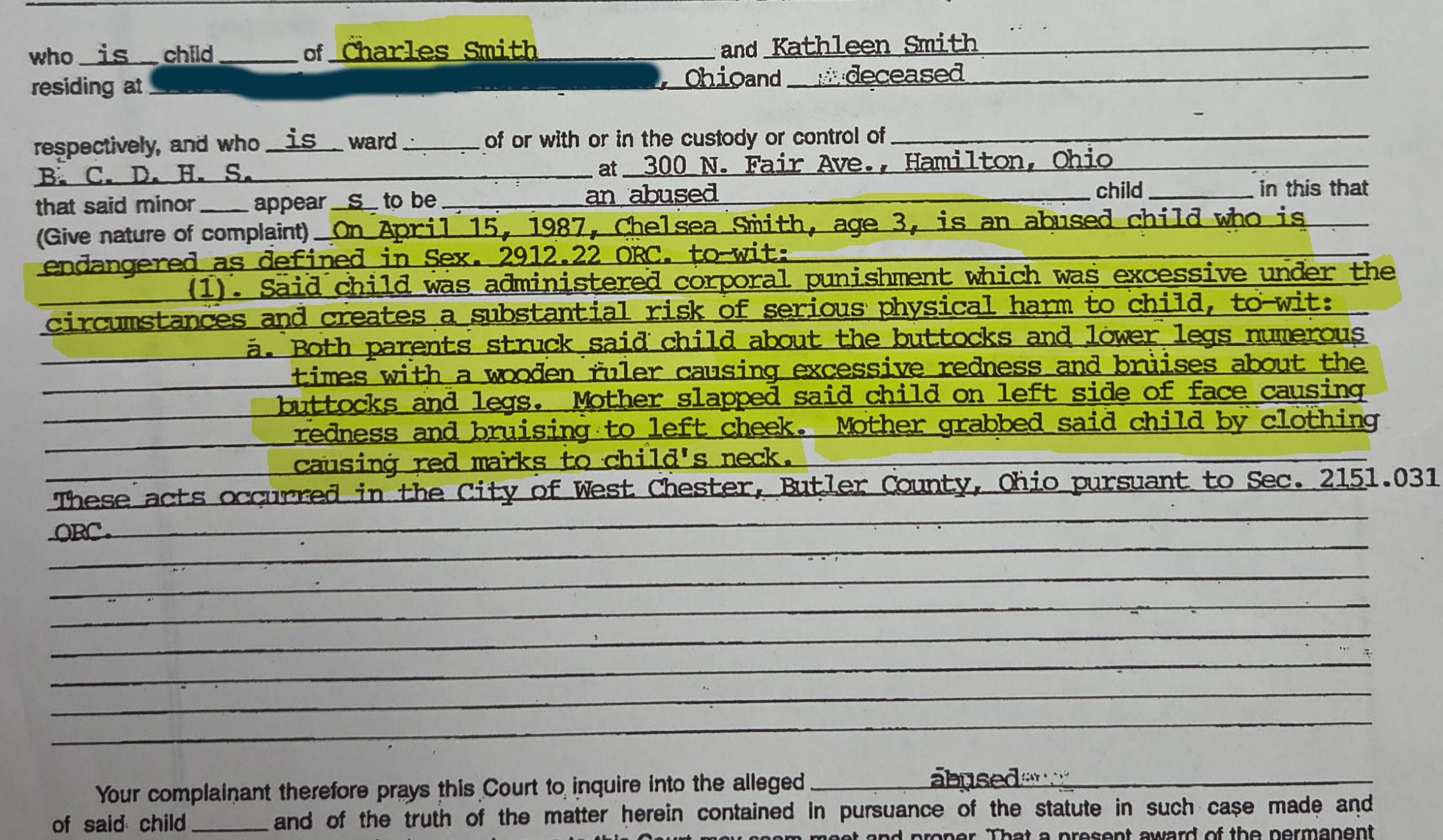
The abuse complaint has my name at the top. Re: Chelsea Smith. Abused.
It says I was three. It lists me as a child of Charles Smith and Kathleen Smith, and beside my mother’s name it says Deceased. And then it goes on to describe what was alleged to have happened to me. Corporal punishment excessive under the circumstances, creating a substantial risk of serious physical harm. Both parents admitted to striking me in the buttocks and lower legs numerous times with a wooden ruler, causing excessive redness and bruising. Mother slapped me on the left side of my face. Mother grabbed me by my clothing and caused red marks on my neck.
This account lines up with my memory of that morning. I was trying to use the bathroom, but with the stress I was so constipated it was a real issue. I was snatched off the toilet for being there too long and Mugsy slapped me so hard on my leg that I lost feeling and could not walk, so she dragged me by the collar of my shirt down the hallway, just as the doorbell rang and two officers were standing there. Chuck said both him and Mugsy were our biological parents.
But Mugsy was not my mother.
My mother was Kathleen. Listed right there, one line above, with the word Deceased beside her name. Kathy was buried. Kathy was in the ground. Kathy was not in Ohio hitting me with a ruler or grabbing me by the neck of my shirt or punching me in the face.
So when that document says mother, it means Mugsy. The woman who had been installed in the mother role. The woman my body had been trying to warn me about since I was old enough to sense danger.
When I read the judgment — that I had been adjudicated an abused child, and so had Jonah — I did not feel relief. I want to be honest about that. I felt rage. Because why did it have to get that far? My mother could have just been alive. We could have just stayed in Erie with our grandfather. We could have been any version of a family that didn’t end with a court document calling a three-year-old an abused child.
I avoided making this essay for a long time for the same reason I avoided looking at Mugsy directly for forty years: because some part of me still believes that if I speak, something worse will happen. That is the lesson the tree branch taught me. That is the lesson the field taught me. Freeze. Be quiet. Make yourself small. Don’t make it worse.
But I’m not three anymore. And I am so tired of protecting the adult in this story at the expense of the child who lived through it.
A three-year-old cannot explain danger in legal language. She cannot file a complaint or leave or make choices about where she sleeps. What she can do is feel it. What she can do is store it in the only place available to her, which is her body, and carry it forward into every room she ever enters for the rest of her life. She can learn to go quiet at exactly the wrong moments. She can spend decades wondering why she flinches at certain sounds or why she cannot look certain people in the face or why the word mother has always felt complicated to her in a way she couldn’t explain.
She can do all of that, and she can survive it, and eventually — if she’s lucky — the paper catches up to what her body already knew.
The documents don’t let Mugsy stay in the background. The timeline doesn’t let her stay there. And my body, which has been keeping this record since 1986, will not let her stay there either.
She was not background. She was in the address. She was in the mother role. She was in the abuse complaint with her hands on a wooden ruler. She was the reason a little girl learned to freeze and go silent and make herself disappear, and that little girl was me, and she deserved someone to say it out loud.
So: that was not your mother. That was not love. That was not normal. And you were not wrong to be afraid.
Cold & Blue is an ongoing investigation into the 1986 death of Kathleen Smith in Erie, Pennsylvania. New episodes are available wherever you listen to podcasts. Court documents referenced in this essay — including the marriage license, abuse complaint, and judgment entries — are available in full to paid subscribers.
Special thanks to Jamie for her help locating documents, Kate for her detective skills, Dale for filling in missing details and Lisa for believing in me from day 1.
Below is The Marriage License
School Yearbook photo of Mugsy
The House
The Door to the basement
The Basement.
A more recent pic of the sperm doner.
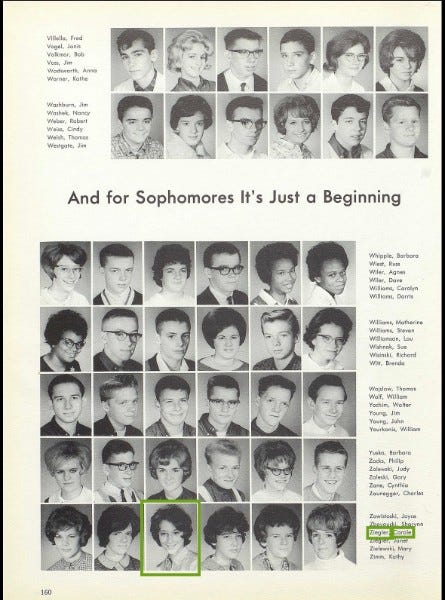
I tried to make the image bigger and clearer but this is the best I can do. That creepy smile runs ice down my spine.
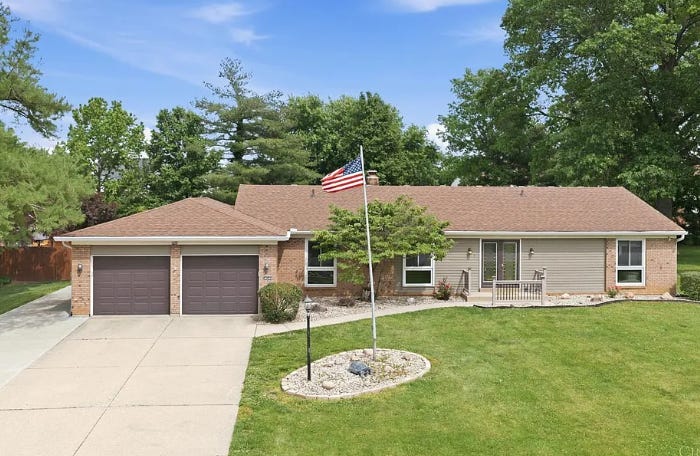
This is the house I forgot about. I think that the other Ohio house perhaps belonged to Mugsy because I clearly remember knowing that it had a cul de sac it was only when I saw this address on the police report and saw the door in the kitchen before I knew it had a basement I said, that is the door Jonah shoved food under the door for me.
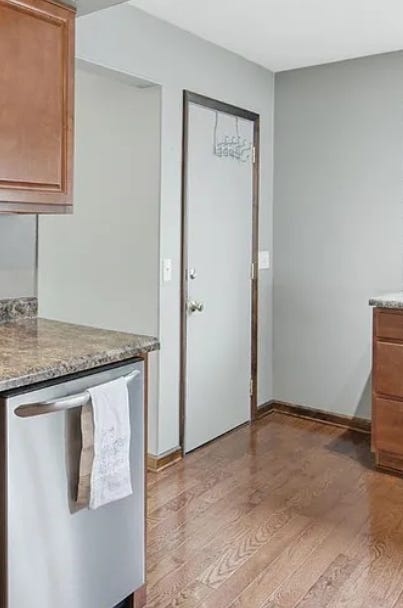
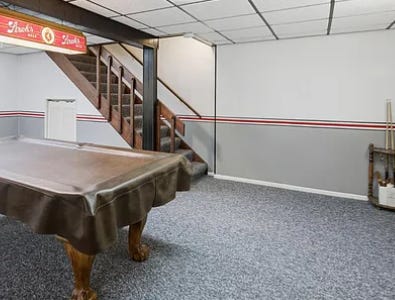
The Basement has been redone obviously. I don’t remember the basement as anything other than cold, dark and quiet.
Jump Scare ahead! Below is a more recent photo of the Sperm Doner.
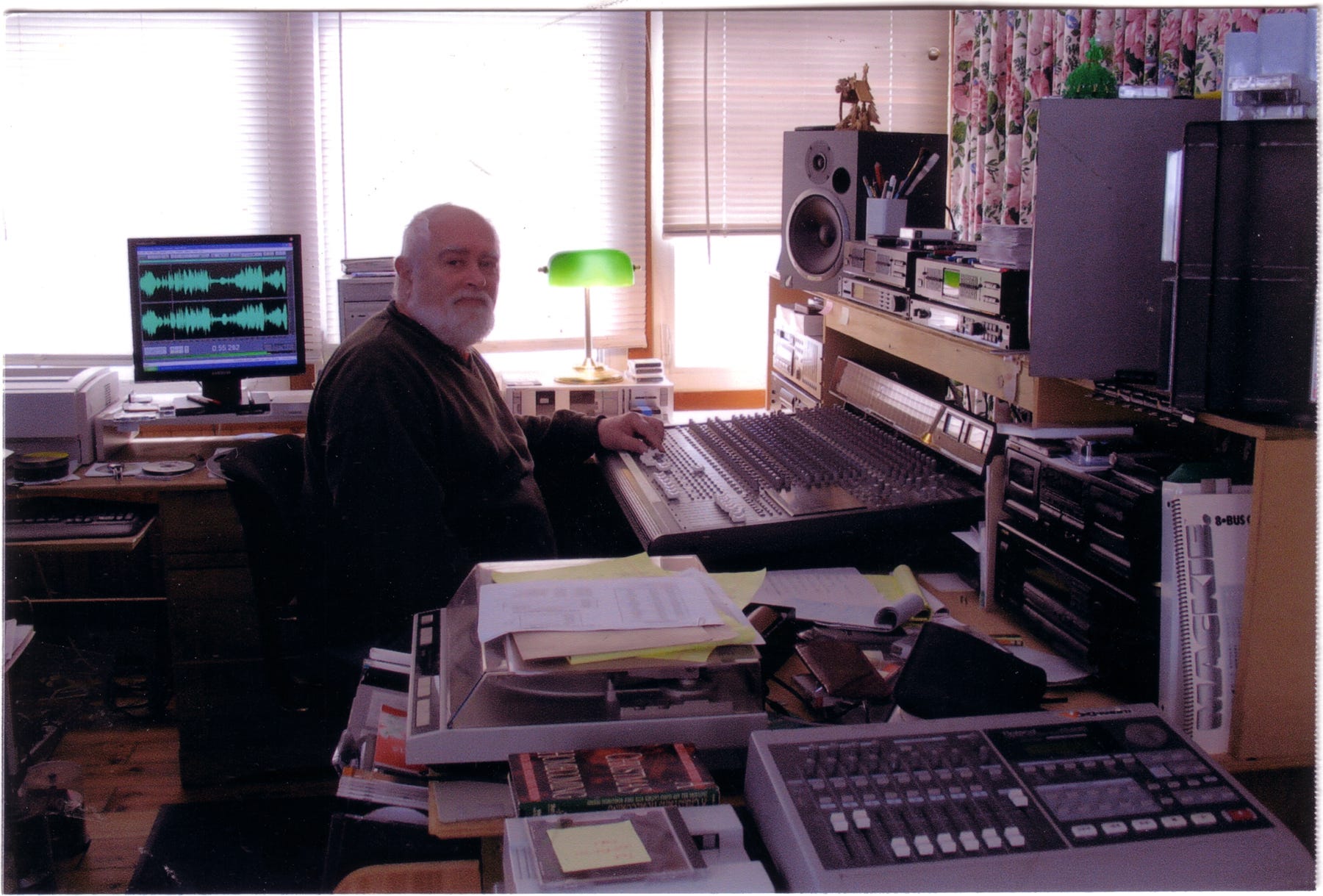
This POS is still alive 85 years old living in Erie. He will turn 86 the day I leave Erie this summer.
This photo is his PUBLIC photo on Ancestry where he says he lives in Canada.
Comments
Nothing yet. Say the first thing.
Sign in to join the conversation.