
The time has finally come. My new book comes out this week.
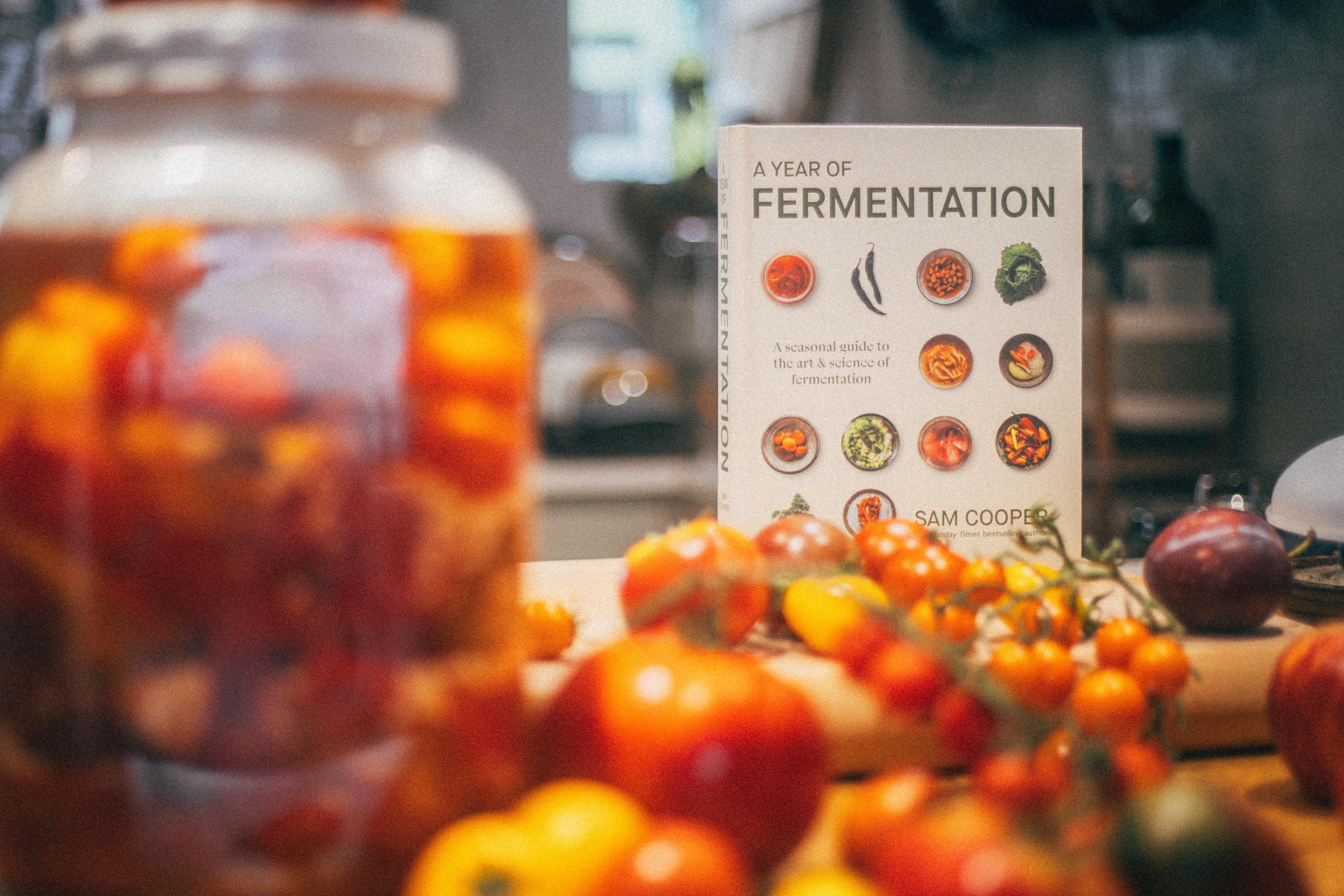
What took over a year to research, develop, grow and write – and for so long felt so far away – is suddenly here. And some lucky people have started receiving their pre-orders already!
So I thought I’d share a more detailed look at the book and everything it contains: the complete recipe list and contents (which isn’t published anywhere else) and an excerpt from the book itself, to whet your appetite.
But before I do, I would like to share my sincere thanks. In the back of the book there is an acknowledgements paragraph, and at the bottom of it is my thanks to my online community. Honestly, I doubt this book could ever have happened without you. Some of you I spoke with personally for advice and cultural insight; others pushed and tested my ideas in new and interesting ways; and some simply come back each week and read my articles here. It all makes a huge difference, so thank you.
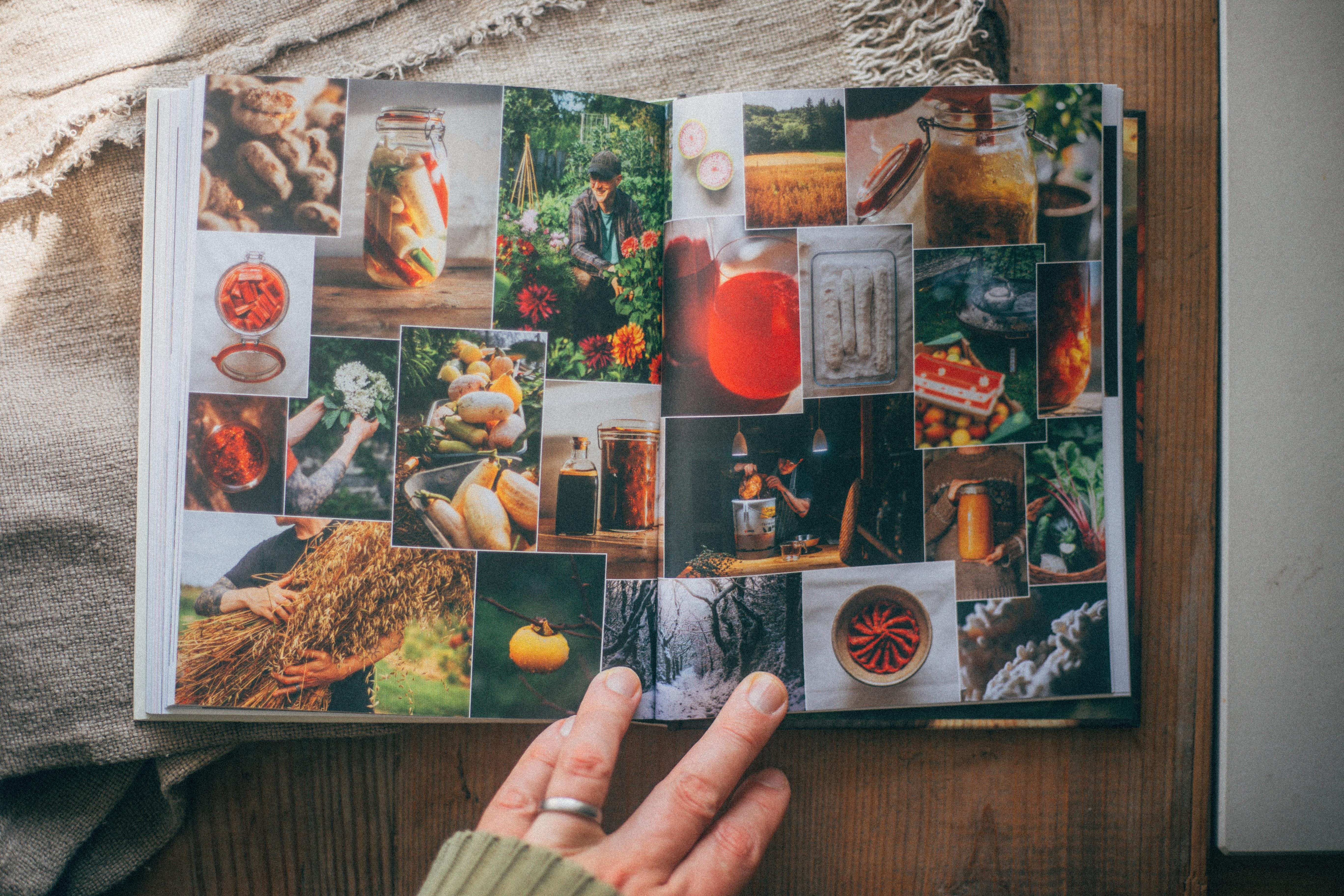
And, before we jump into what’s actually in the book, if I could ask one additional favour: if you plan to buy a copy of this book for yourself or as a gift, and happen to be in a position to do so, please consider ordering it this week. Opening-week sales make a huge difference to the lifespan and reach of a book, and tell a publisher that this is an author worth taking seriously.
Thank you.
“I became a chef by accident, a gardener by necessity, and a fermenter the same way you become a regular at a very good café: slowly, then suddenly. I’ve always been obsessed with food, having spent most of my life either cooking, eating, or thinking about what to eat next (apart from a short blip as a kid when all I’d eat was tomato soup).
Back when I cheffed, fermentation was my dirty little secret, often treated with suspicion or morbid curiosity by my peers. And who could blame them? For my entire life, and the lives of our parents and grandparents, microbes have been labelled as germs, public enemy number one, and out to get us the moment we let our guard down. All trust was to be placed in that which could be sterilized, stabilized, and standardized. But, if you’ll excuse the pun, something in my gut told me otherwise. And you’re the same as me, I think. Why else would you have picked up this book?
For me, it all started shortly after my tomato soup era, with my first true love, cheese. Cheese – and I mean real cheese: feral, floral, and brutally ripe – taught me to love bold, challenging flavours. Each piece represents a history, a region, the people who make it, and the landscape that shapes it. Sure, wine may be a better-known example of terroir, but cheese is terroir with opinions. And so, a long time ago now, I started to explore the secrets that lay behind such flavours.
Since then, fermentation has burst into the mainstream through two distinct avenues. The old guard – wine, vinegar, sourdough, and yoghurt – have been joined by chefs who are whisking miso into caramel, kōji-curing root vegetables in the way you would cure salami, and reducing kombucha into syrups and jellies. It’s even appeared in supermarkets, where they have learned to say “kimchi” and, for the most part, mean it.
Many products found in supermarkets today are made on a large scale using refined techniques designed for consistency, shelf stability, and speed. The microorganisms used are standardized, the environments tightly controlled, and, in many cases, the final product is pasteurized – killing off the very microbes that made it in the first place. These processes are tailored for global distribution and long storage, but they strip fermented food of much of its wildness and flavour, along with its sense of place.”
This is the first page from the book.
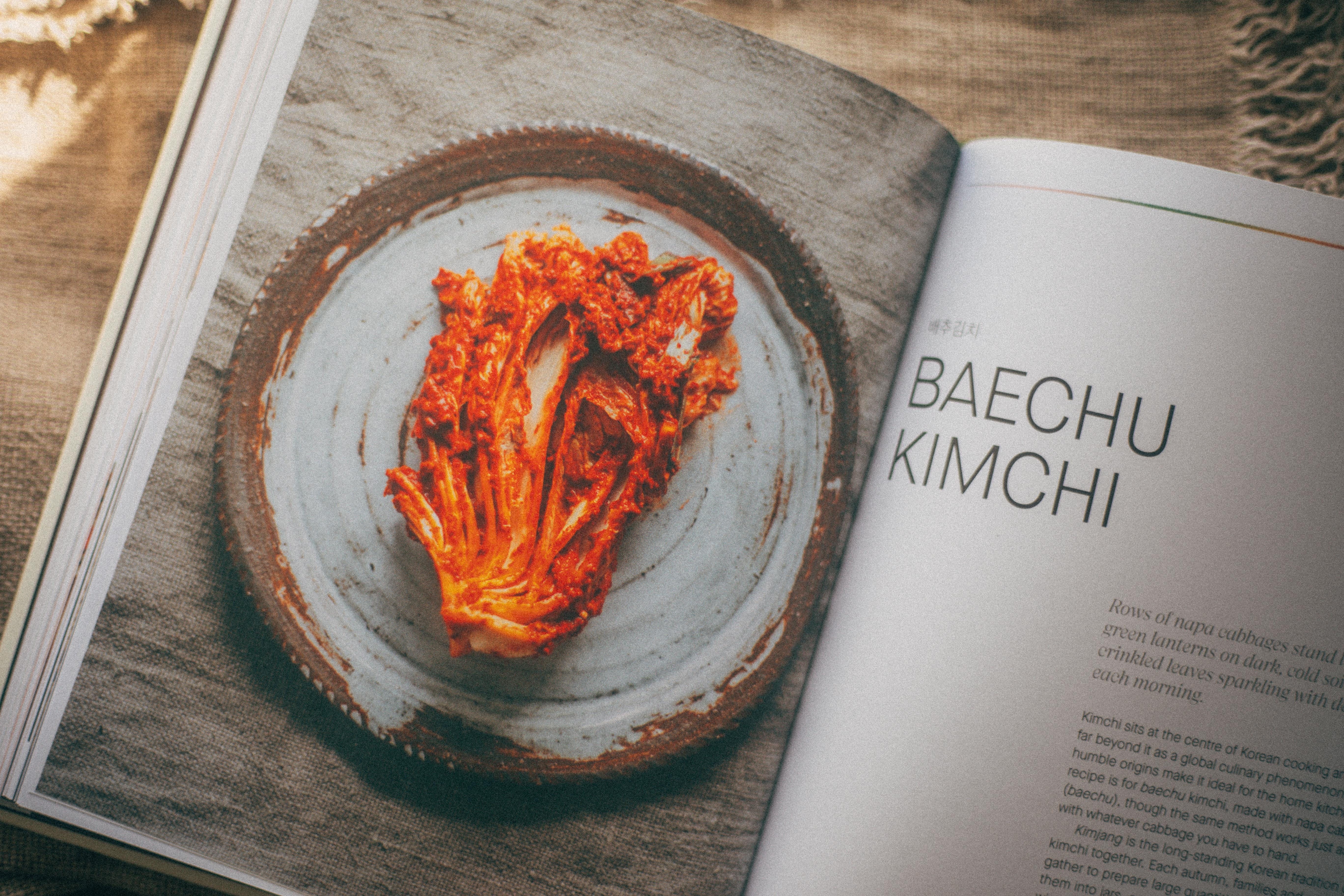
A few people have asked for a proper contents list for the book, because the short contents page doesn’t really show how much is tucked into each chapter.
So, here it is:
45 core techniques · 162 recipe ideas · 50+ seasonal variations · safety & troubleshooting · salt-percentage charts · flavour theory · harvest calendars · substrate guides · equipment & terminology
I’ve kept the count fairly strict too. Jun and water kefir, for example, are taught as variations within the kombucha section rather than counted as separate core recipes. Black chilli is also included separately below because, although it uses the same spirit of controlled transformation and preservation, it isn’t technically a fermentation.
Rhubarb Cheong
Kombucha
Whey-Fermented Wild Garlic
Kanji
Lacto Spring Onions
Nettle Oxymel
Shoyu-Fermented Brassica Buds
Yoghurt
Cultured Butter
Milk Kefir
Mugolio – Pine Cone Syrup
Lacto Elderflower & Strawberries
Apple Cider Vinegar
Lacto Gooseberries
Umeboshi
Honey-Fermented Garlic
Ivan Chai
Doubanjiang
Lacto Tomatoes
Lacto Courgette Slaw
Hobak Kimchi
Apricot Mead
Kanzuri
Fermented Hazelnut Paste
Lacto Onions
Sourdough
Sowans
Siljo
Fermented Hot Sauce
Turşu
Kōji
Miso
Lacto Chilli Oyster Mushrooms
Shoyu
Apple Cider
Baechu Kimchi
Nukazuke
Dongchimi
Suāncài
Persimmon Vinegar
Amazake
Salt-Preserved Citrus
Fermented Radish with Schmaltz
Kōji-Cured Root Vegetables
Magnolia Honey
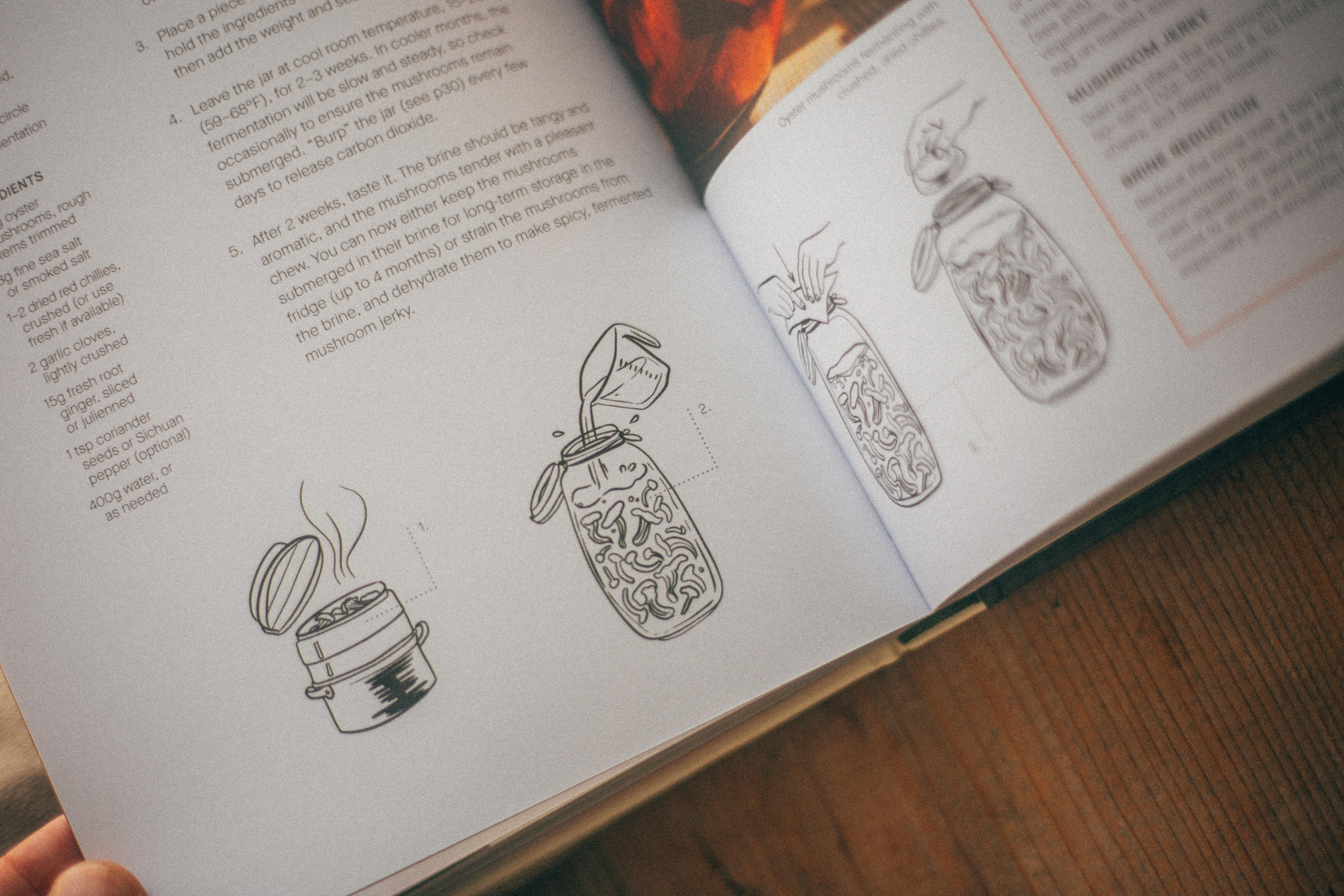
One of the things I wanted to avoid was writing a fermentation book that teaches you how to fill your cupboards with jars, then leaves you wondering what to do with them. But equally, if I picked up a book on fermentation and more than half of its pages were dedicated to meals, I’d feel short changed.
So throughout the book, each technique branches out into ways of cooking, seasoning, preserving and building dishes with the finished ferment.
Tea
Sugar alternative
Beurre monté
Pan sauce
Marinade
Deglazing liquid
Sourdough
Reduction
Granita
Spread
Filling
Topping
Wild garlic granules
Cure
Seasoning powder
Doughs
Potato topping
Leek tart
Spring greens
Fried rice
Pasta
Lamb shoulder
Pancakes or crêpes
Panna cotta
Gelato or semifreddo
Soups
Smoothies
Fresh kefir cheese
Marinade
Drizzle
Glaze
Dressing
Granola and flapjacks
Secondary fermentation
Using the leftover pine cones
Drizzle
Cocktails
Glaze
Cakes and desserts
Vinaigrettes
Fish topping
Sauces or reductions
Cheese accompaniment
Garnish
Ochazuke
Onigiri
Umeboshi butter
Bloody Mary
Neri ume
Pickling with umezu
Straight from the jar
Salad dressing
Drizzle
Glaze
Marinade
Compound butter
Dip
Tea
Sauces
Smoking
Tea dashi
Ground seasoning
Chilli paste
Marinade
Yu xiang
Hong shao
Yoghurt or clotted cream
Straight from the jar
Dried fermented tomatoes
Bruschetta
Soups and sauces
Brine-poached vegetables
Tomato-brine hollandaise
Seasoning with the brine
Toastie
Side dish
Dip
Filling
Emulsifier
Dehydrated hazelnut shards
Aromatic base
Sandwich filling
Preserves
Mackerel
Fermented onion powder
Brine glaze
Purée
Beer-battered mushrooms
Mushroom tapenade
Toast topper
Miso soup or ramen
Dumplings
Mushroom XO butter
Mushroom jerky
Brine reduction
Kōji flour
Shio kōji
Kōji-assisted lacto ferments
Miso soup
Marinade
Broth
Pickling base
Glaze
Rice balls
Savoury porridge
Caramel sauce
Miso butter
Parmesan alternative
Savoury ice cream
Dipping sauce
Broth seasoning
Tsukemono pickling brine
Shoyu butter sauce
Shoyu caramel sauce
Cured egg yolks
Shoyu glaze
Kimchi jjigae
Kimchi jeon
Toastie
Fried rice
Tacos
Bloody Mary
Kimchi cure
Stir-fry
Soup
Dumplings
Marinade
Natural sweetener
Porridge
Smoothies and milkshakes
Ice cream or sorbet
Daily tonic
Kimchi booster
Korean-style pickles
Shrub
Vinaigrette
Drizzle
Sorbet or granita
Dips
Gremolata
Tagine
Dressing
Marinade
Shellfish
Open sandwich
New potatoes
Eggs
Soup
Warm grains
Garnish
Infusion
Plant-based charcuterie
Glazed oyster mushrooms
Spring blossom pavlova
Sticky aubergines
Hot toddy
Roasted carrots
Glazed charred cabbage
That makes 162 recipe ideas without counting every individual suggestion inside them. A single entry such as “chilli purée”, for example, might then suggest using it in a jus, glaze, beurre blanc, consommé or caramel – but I’ve still only counted that as one idea.

The recipes are also deliberately designed to be adapted as the year goes on.
The book begins with rhubarb, but the same technique can move through the seasons:
Gooseberry & ginger
Strawberry & elderflower
Hedgerow berries
Pear
Apple
Leftover apple pulp from cider pressing
Citrus
Unripe plum
Rose petals
Cherry blossom
There’s also a cumulative cheong method for gradually adding trimmings such as strawberry hulls, apple cores and beetroot peel rather than throwing them away.
Seasonal secondary ferments include:
Spring: elderflower, rhubarb and lemon balm
Summer: raspberry, blackcurrant, mint and wild strawberry
Autumn: crab apple, quince, spruce tips, pine needles and rose hips
Winter: ginger, cinnamon and orange peel
The kombucha section also branches into:
Jun – a lighter tea ferment made with green tea and honey
Water kefir – a non-dairy sparkling ferment particularly suited to fruit and flowers
Natural bottle carbonation
Maintaining a SCOBY hotel
Existing live-yogurt starter
Wild black-pepper-stalk starter
Wild green-chilli-stem starter
Honourable mentions of Viili, Matsoni, and Filmjölk
Strained yogurt
Starter-cultured pasteurised cream
Naturally cultured raw cream
Wild-herb cultured butter
Edible-flower cultured butter
Plus a whole section on using the cultured buttermilk left behind after churning.
As well as drinking it fresh, the book includes draining it into a thick cultured fresh cheese.
Whey-inoculated version
Salt-only lacto version
Black carrot kanji
Şalgam suyu variation
The same idea can move through the year with:
Nettle flowers
Meadowsweet
Elderflower
Thyme
Rose
Other fragrant herbs
Whole fermented spring onions
Lacto spring onion powder
Fermented and dried sprouted leek-seed powder
Green
Amber
Blushed or red varieties
Ume
Apricots
Damsons
Wild plums
Cherries
Korean aehobak
Courgettes and marrows
Fresh yuzu
Lemon and orange
Fresh kōji and dried kōji
Fresh or green hazelnuts
Mature cured hazelnuts
Alongside the main loaf:
Making your own rye and wheat starters
Brühstück/scalding
Caraway
Fennel
Anise
Coriander
Sunflower seed
Pumpkin seed
Sourdough discard pancakes
Sourdough crackers
Cakes made with discard
Cracked barley
Barley flakes
Oats
Rich milk or cream sowans
Chilled moulded sowans
Toasted spent fermented grain tea
A year-round fermentation built around whatever is coming from the garden:
Spring: young radish, fennel and wild garlic
Summer: green beans, chillies and baby cucumbers
Autumn: cauliflower, beetroot and green tomatoes
Winter: red cabbage, daikon and Jerusalem artichoke
Mustard greens
Napa cabbage
Lemon
Orange
Kumquat
Long-aged citrus
Chicken schmaltz
Duck fat
Butter
Oil
Carrot
Beetroot
Other root vegetables
Smoked
Charred
Spice-marinated
Vinegar-marinated
Alongside the 45 core techniques are quite a few smaller methods and offshoots that I haven’t counted as separate headline recipes:
Jun
Water kefir
Natural kombucha carbonation
SCOBY hotel and culture maintenance
Black chilli peppers – a controlled blackening technique rather than fermentation
Blackening apples, garlic, shallots, pears and chestnuts
Cultured buttermilk cookery and reuse
Strained kefir cheese
Spicy fermented onion chutney
Lacto onion ketchup
Fermented onion powder
Lacto onion jam
Kōji flour
Shio kōji
Kōji-assisted lacto fermentation
Dehydrated shoyu-mash seasoning
Lacto spring onion powder
Sprouted leek-seed seasoning
Şalgam suyu
Wild yogurt starters
Cumulative seasonal cheong
Using fermented brines as seasonings, cures, poaching liquids and reductions
Using spent grains, fruit, kōji mash and other fermentation by-products rather than throwing them away
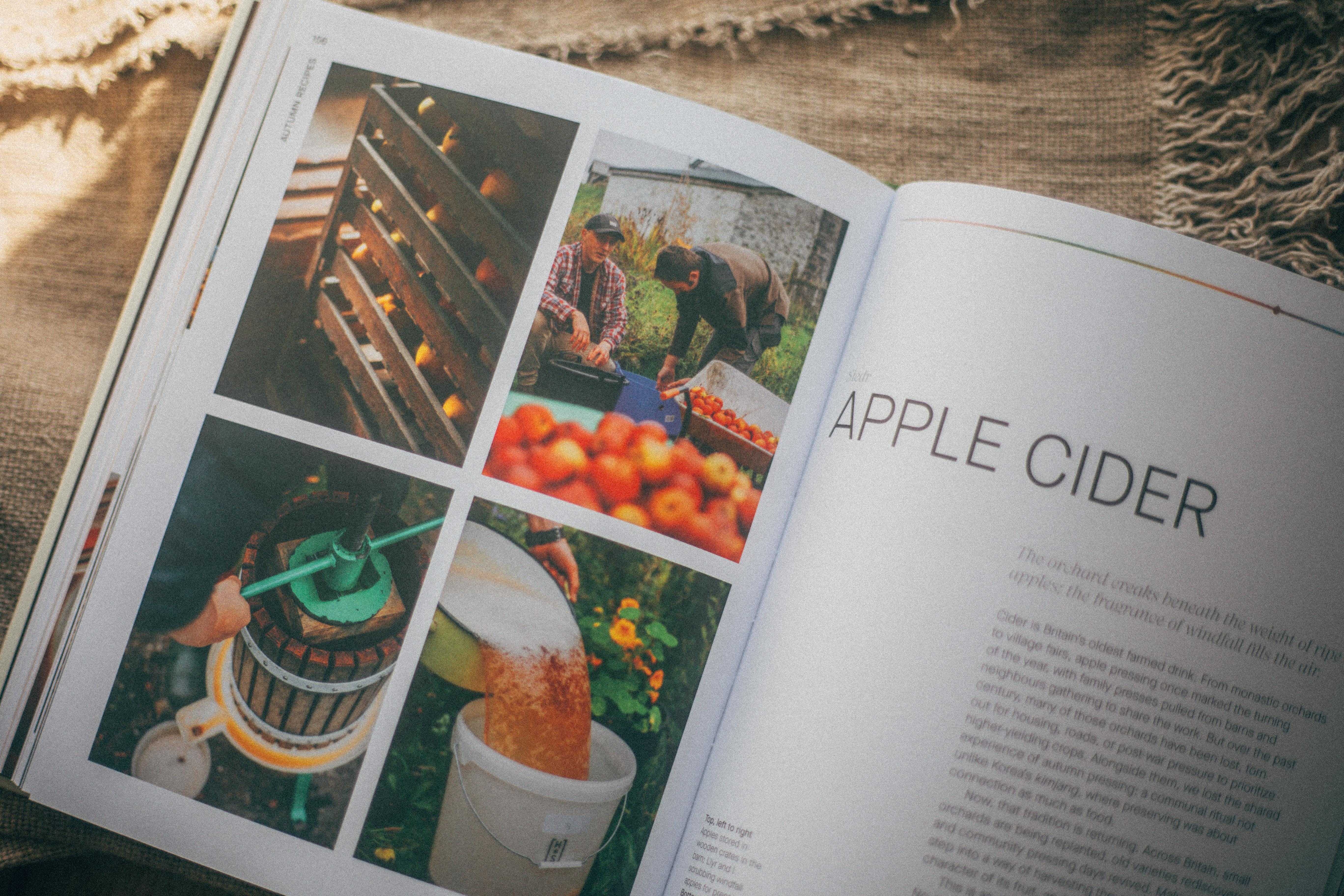
A large part of the end of A Year of Fermentation is about giving you enough understanding to eventually stop following recipes and start getting creative.
My aim was never to teach just 45 individual ferments, but to explain the principles behind them: how salt, acidity, temperature, microbes, time and ingredients interact; how to recognise when something is progressing normally; and how to start developing ferments of your own with enough knowledge to keep them safe.
There’s a dedicated safety section covering the practical things I think every home fermenter should understand, including:
How to calculate salt percentages correctly
Salt-percentage charts for lacto ferments
Separate salt-percentage charts for miso
Typical final pH ranges
Storage temperatures
Approximate storage and ageing times
Acidity and pH
Alcoholic and vinegar ferments
Measuring alcohol with a hydrometer
Cleaning and preparing jars and crocks
Labelling and keeping useful fermentation records
The salt charts are there to make recipes easier to adapt, and give an impression of the upper and lower limits. Rather than simply telling you that one particular jar needs a certain number of grams of salt, they give you a framework for understanding how changing the salt percentage affects fermentation rate, flavour, and storage.
There’s also a full troubleshooting section.
Fermentation can look, smell and behave strangely even when everything is working perfectly, so I wanted to distinguish between the weird things that are normal and the things that should actually make you throw a ferment away.
It covers:
False starts and stalled ferments
Foul or putrid smells
Coloured mould
Slime or mucilaginous textures
Insects, larvae and unusual fuzzy growth
Unexpected colour changes
Unexpected cloudiness
Ferments that simply taste wrong
Likely causes of each problem
When something can be corrected and when it should be discarded
The idea is to remove some of the uncertainty that stops people fermenting in the first place.
There’s a practical equipment guide, but one of the principles of the book is that fermentation shouldn’t require a laboratory’s worth of specialist kit.
It covers things such as:
Clip-top jars
Ceramic and glass crocks
Fermentation weights
DIY weights
pH meters
Hydrometers
Temperature and humidity probes
Heating mats
Insulated fermentation boxes
Dehydrators
Alongside guidance on when these things are genuinely useful and when they’re just overkill.
There’s also a terminology section for the language that tends to crop up once you start reading about fermentation.
This includes microbial terms such as: Lactic acid bacteria, acetic acid bacteria, wild fermentation, and inoculation, as well as flavour and chemistry terms including: Umami, kokumi, brine, pH, enzymes, and amino acids. And practical fermentation language such as: Anaerobic and aerobic, backslopping, racking, and primary / secondary fermentation.
So you don’t need to arrive already knowing the vocabulary.
One of my favourite parts of the introductory material is a flavour chart looking at the relationships between:
Sweet, salty, acidic, bitter, spicy and umami.
Rather than thinking about these tastes separately, it looks at the way one can suppress, amplify or balance another.
That leads into a broader section about using fermented ingredients as part of seasoning.
Miso doesn’t have to mean miso soup. A fruit ferment doesn’t have to become a drink. Fermented tomato brine can supply the acidity and seasoning in a sauce, whilst cheong can soften bitterness. Miso brings salt, sweetness and umami simultaneously, as well as fruity notes. And vinegar can provide the final lift that makes everything else taste clearer.
As a hobby, fermentation can easily become a collection of jars gathering dust, so my intention here is to show you how ferments can become another tool in the language of cooking.
There’s guidance throughout the book on how to take a finished ferment and explore beyond its obvious use. That means learning to think about:
Brines as seasoning liquids
Fermented fruit syrups in sauces and marinades
Miso and shoyu in desserts
Fermented vegetables as ingredients rather than side dishes
Fermented liquids for poaching
Reducing brines into glazes
Drying ferments into powders and seasonings
Turning fermentation by-products into entirely new ingredients
Combining fermentation with roasting, smoking, drying, curing and other kitchen techniques
Many of the 162 Recipe Ideas exist for exactly this reason: they show what each ferment can become once you stop seeing the jar as the finished dish.
There’s also a section specifically about experimenting with ingredients and designing ferments for yourself, which looks at how changing the substrate can affect the result, and how to make those changes deliberately rather than simply throwing unusual ingredients into a jar and hoping for the best.
For example:
Swapping one root vegetable for another
Changing the legumes used in miso
Using different grains for kōji
Combining grains and legumes
Choosing ingredients according to their protein, starch and fat composition
Altering aromatics while leaving the underlying fermentation system intact
Understanding which parts of a recipe are flexible and which are there for safety
There are dedicated legume and grain substrate tables showing the approximate protein, starch and fat composition of different ingredients.
The legume information includes things such as beans, peas, lentils and chickpeas, while the grain tables compare substrates such as rice, barley, wheat, rye, maize, oats, millet, sorghum, spelt and others. These are there to help explain why changing a substrate changes fermentation, rather than simply giving you a list of substitutions.
Most importantly, the creative sections sit alongside the safety material, to highlight which variables you can play with while keeping conditions within sensible boundaries and not poisoning yourself.
Because the whole book follows the seasons, there are also harvest calendars showing roughly when ingredients are likely to be at their best, covering:
Vegetables
Fruit
Herbs
Foraged ingredients
Grains
Dairy
The charts aren’t intended as rigid dates, as seasons move according to geography and weather, so I’ve avoided tying everything down to specific months and a British-only view on seasonality. But instead as a way of understanding what is likely to be abundant, affordable or at peak flavour at different points in the year.
So you can look at spring and see things like young greens, radishes, rhubarb, herbs and early flowers coming into their own; move through berries, tomatoes and courgettes in summer; into apples, chillies, mushrooms and roots in autumn; and then towards stored crops, citrus and long-ageing ferments through winter.
For me, that relationship between fermentation and seasonality is really the heart of the book.
At the end of the book there’s also a resources and further-reading section for anyone who wants to go deeper into the microbiology, history, food traditions and techniques behind the recipes.
And finally, there are the acknowledgements, because a book that moves through Korean, Japanese, Chinese, Turkish, British, Eastern European, Indian and many other food traditions inevitably rests on a great deal of knowledge that existed long before I arrived, and which was shared with me by a handful of generous and knowledgeable people.
So the full picture is:
45 core fermentation and preservation techniques
162 named recipe ideas and ways to use them
50+ seasonal and ingredient variations
Plus:
Safety and salt-percentage charts
Troubleshooting and spoilage identification
Equipment guidance
Fermentation terminology
Flavour theory and seasoning
Guidance for creating your own ferments safely
Legume and grain substrate tables
Seasonal harvest calendars covering the garden, shops and wild ingredients
Resources and further reading
Acknowledgements
If you’re interested in ordering a copy of my book, you can click here to find it on Amazon, or here, to find out where else it can be ordered from. Or, you can order it via your local bookshop.
Thank you for joining me in celebrating this momentous occasion, the publication week of A Year of Fermentation.
Comments
Nothing yet. Say the first thing.
Sign in to join the conversation.