
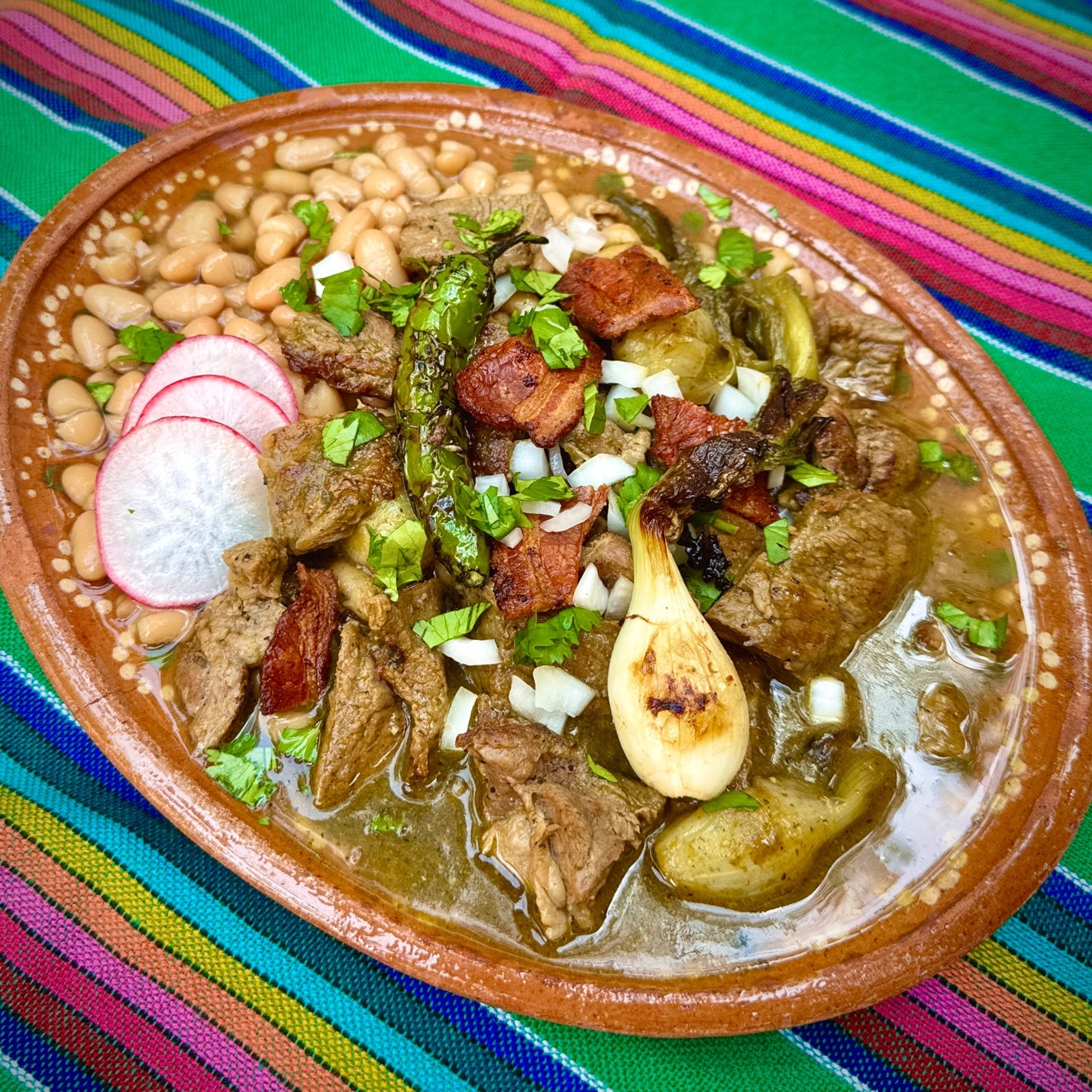
I’m so incredibly excited about this week’s recipe, carne en su jugo (beef cooked in its own juices). It’s an iconic dish from Guadalajara, Jalisco made with thinly sliced beef and bacon simmered in a rich and savory tomatillo and green chile broth. It’s usually served over or with beans and topped with onions, cilantro, radishes, and lime.
This dish became famous in the city’s restaurant scene during the 1960s and ’70s. In 1963 at El Gallo restaurant, the first documented carne en su jugo was added to their menu. During the next 12 years, five other restaurants began selling their own versions and the dish became so popular across the city that home cooks started trying to replicate it in their own kitchens.
Now five decades later, it’s an iconic part of tapatío (Guadalajara) culture and cuisine, alongside tortas ahogadas, another local classic.
Like any dish that becomes wildly popular, there are a million different variations. This was the fun part for me, researching all the ways this dish is made around the city and across Mexico to create the version that I want to eat. And I have to tell you, I’m pretty happy with the result.
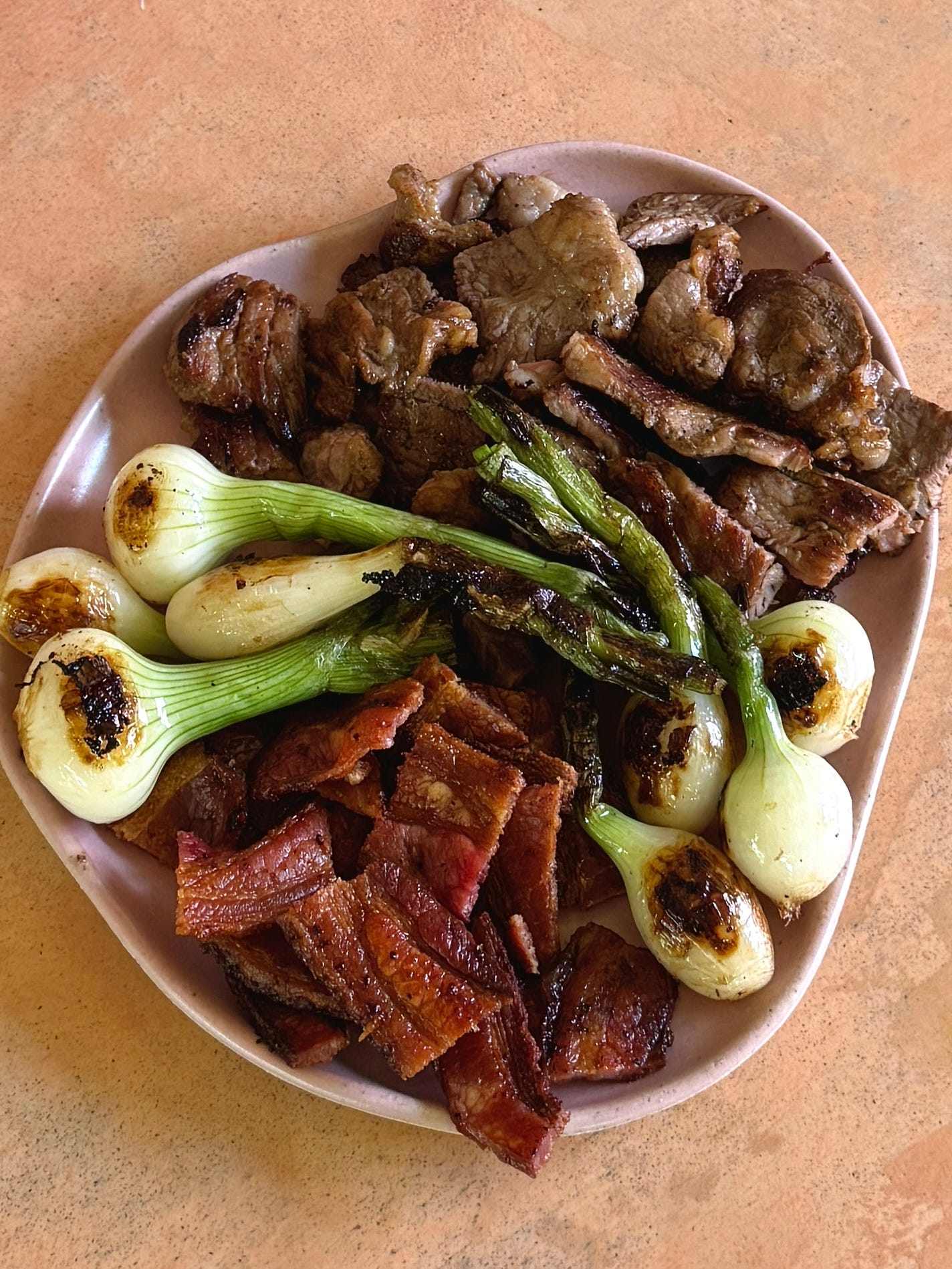

The first thing we need to talk about is the beef. Oftentimes when you see recipes for carne en su jugo, or watch videos or reels about it, the cooks call for bistec de res, which is literally beef steak, usually thinly sliced.
In Mexico, you to go to your butcher at the mercado and ask for bistec de res. They’ll ask you questions like: Are you going to grill it? Are you going to stew it? And then they’ll recommend the ideal cut for how you are going to cook it.
For carne en su jugo, the preferred cuts are pulpa negra (top round or inside round), diezmillo (chuck roll), aguayón (top sirloin), and sirloin. I decided to use diezmillo because it’s one of my favorite cuts of beef. It’s a group of muscles from the chuck with a lot of marbling and incredible chuck-roast flavor.
Diezmillo can be a little harder to find outside of Mexican markets. You can ask your butcher for chuck roll or just ask them to thinly slice a boneless chuck roast for you into ¼-inch slices.
For the bacon, I like thick-cut smoked bacon both for this dish and generally in life. I’m not crazy about sweet bacon. I don’t mind a maple or brown sugar glaze, but I don’t want sugar-cured bacon. Smoked, thick-cut bacon is my go-to for everything from BLTs to coq au vin. But use the bacon you have. Don’t go to the store and buy special bacon for this dish.
If you have bacon fat, definitely use that. If you have manteca, great. If you don’t have either, olive oil is totally fine. Depending on how fatty your bacon is, you’ll only need about a tablespoon to start it off. Then you’re going to use the rendered fat to cook everything else.
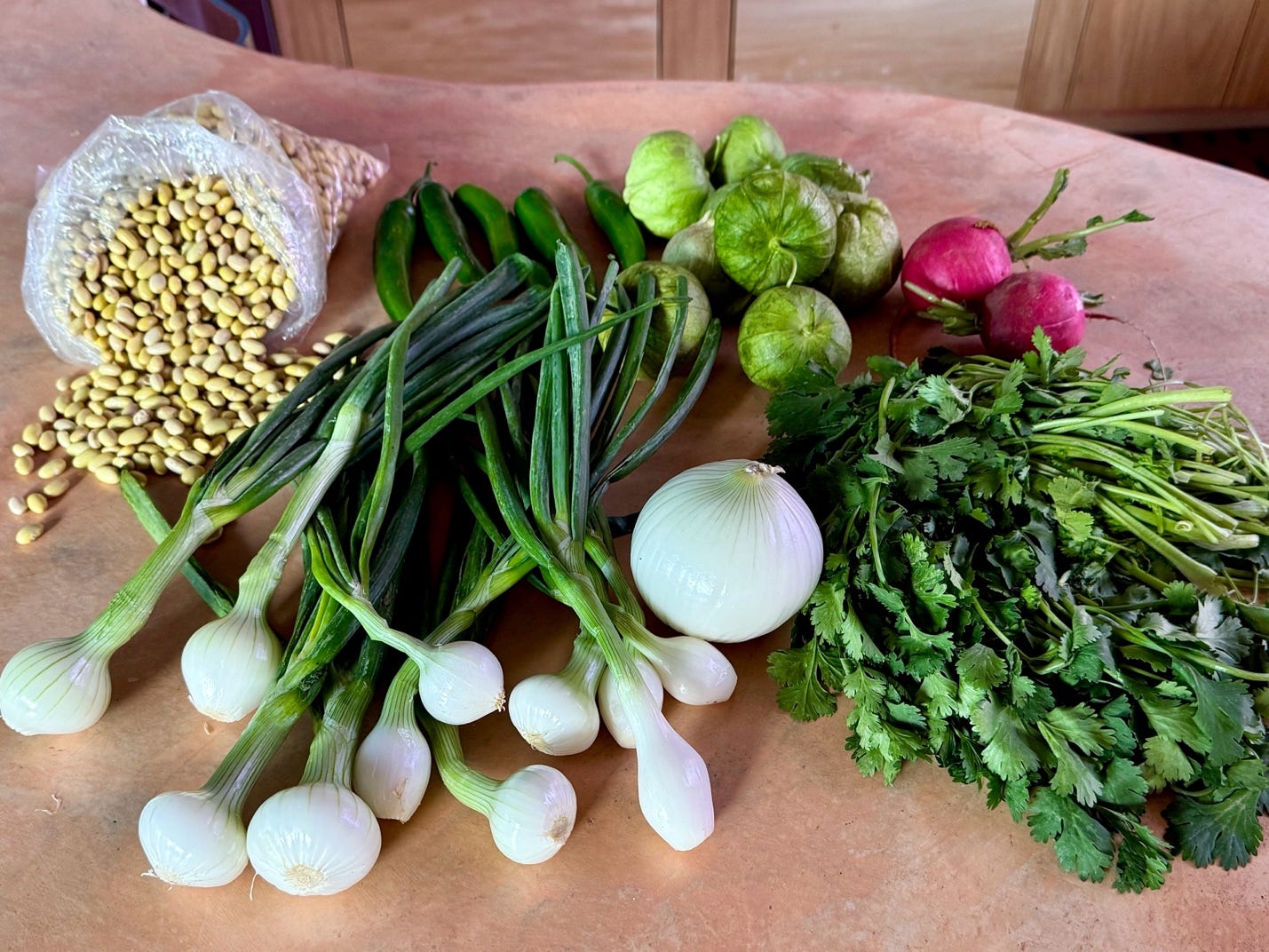

The broth is usually made from tomatillos, green chiles, onion, garlic, and cilantro. For the green chiles, jalapeños and serranos are the most common. I really love the flavor of jalapeños, so that’s what I decided to use. I also think they are a good choice if you’re heat-averse. They’re typically less spicy than serranos. If you enjoy heat like I do, you can up the quantity, which will increase both the jalapeño flavor and the heat level. Or use both. You’ll get the heat and the flavor.
A lot of recipes I read called for boiling the vegetables in water, blending them, and then pouring that into the meat to simmer and stew. I also saw a few that called for charring the vegetables, blending, and using that as the base of the dish. I came very close to doing that, but in the end, I decided to cook everything in the bacon fat.
Bacon is a key flavor component in this dish. We’re using half a pound of bacon to two pounds of beef. And one of the byproducts of that much bacon is rendered fat. It’s already there, so why waste it? The whole vegetables are tossed in the hot fat until they’re deep golden brown. They get tender and sweeter and pick up that rich bacon-y flavor.
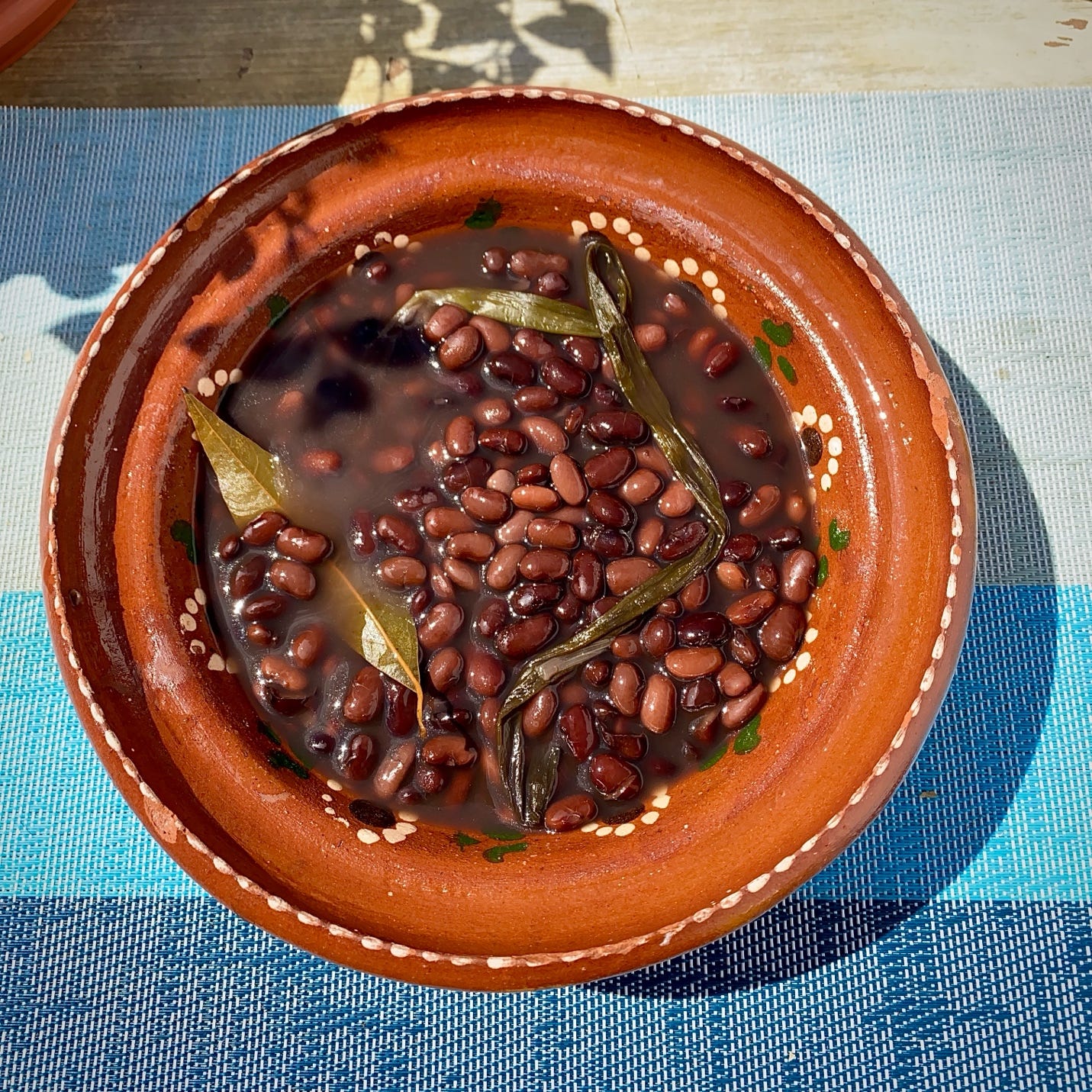

For the beans, my tried-and-true frijoles de olla recipe never disappoints. I use Mayocoba beans because I love them and because they’re grown here in Sinaloa. You can use whatever beans you have, like, or want to use. I’ve included the link my frijoles de olla recipe below in case you want to try it.
Recipes
Frijoles de Olla (Homestyle Black Beans)
·
September 14, 2025
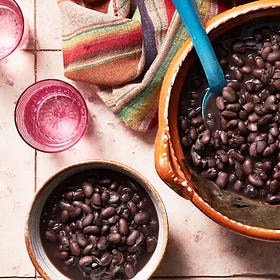
This beloved dish often starts with unsoaked dried beans, which are traditionally cooked in an olla, earthenware pot, or other types of clay pots, such as a cazuela de barro. Any pot works and the seasonings are generally simple — usually onion, garlic, her…
If you have beans that you’ve already cooked and frozen, those will definitely work. You can use canned beans as well. Just remember that you want a fairly neutral flavor so it doesn’t compete with or overpower the green chile broth.
If you use canned beans, taste the liquid. If it tastes good to you, use the liquid as well. Just reheat the beans in their cooking liquid and serve them together. If it doesn’t taste good, discard it, drain and rinse the beans, and then heat them in either broth or water. Or you can add them directly to the carne en su jugo and serve it almost like a stew.
It is such an amazing dish. I hope you make it and I hope you love it as much as I do.


If you’ve read this far and you’re getting hungry, you probably want the recipe.
The full recipe, and monthly cooking classes are all on the paid side of Sazón.
There are over 190 recipes in the archive with new ones added every week.
A paid subscription is $50 for the year, which works out to about $0.26 a recipe.
If this kind of cooking makes you happy, you know what to do.

Rick Martínez
James Beard Award winner, Mexican cookbook author, and creator of Sazón, my weekly Mexican cooking newsletter with Mexican recipes, cooking techniques, original dishes, and deep-dive guides from my life in Mexico.
Comments
Nothing yet. Say the first thing.
Sign in to join the conversation.