
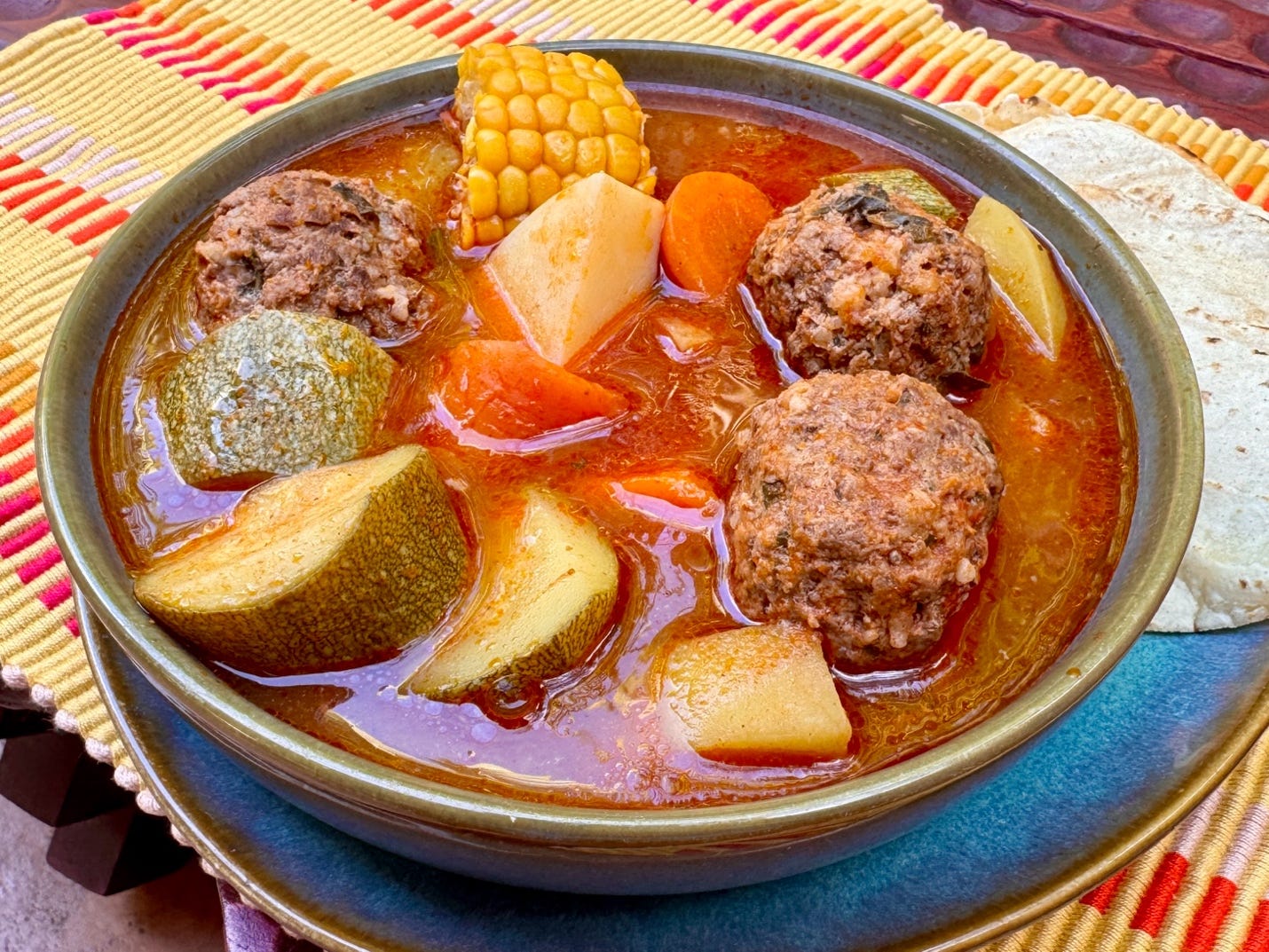
I adore meatballs. They’re so incredibly comforting and satisfying regardless of what country they come from. And they’re always drowned or bathed in some sinfully decadent or intensely flavorful sauce, soup, or stew. I think that’s part of the reason I love them so much.
My mom used to make what I think were some of the best spaghetti and meatballs I’ve ever had. It was always one of my favorite meals in her rotation. When she came home from work, she’d pick me up from daycare. I’d go to the dining room, drag this heavy wooden chair to the stove, stand on it, and wait for her to change and come into the kitchen and tell me what we were making. I was her little assistant, stirring the pots while she explained what she was doing and why. Those are probably some of the fondest memories I have of my mom. I owe her everything I know about food, cooking, and cooking with love.
But back to meatballs.
Albóndigas are Mexican meatballs. Albóndigas in chipotle are classic and delicious. I have a recipe for them in Mi Cocina. And recently on Sazón, I made albóndigas en rajas con crema. Those were ridiculous. Two of my favorite comfort dishes smashed into one.
When I was thinking about what I wanted to make this week, I was so inspired by summertime produce at the mercado. Corn, tomatoes, chiles, squash. It’s a bounty that makes me want to put it all in one pot.
Caldo de albóndigas is exactly that dish but with meatballs.
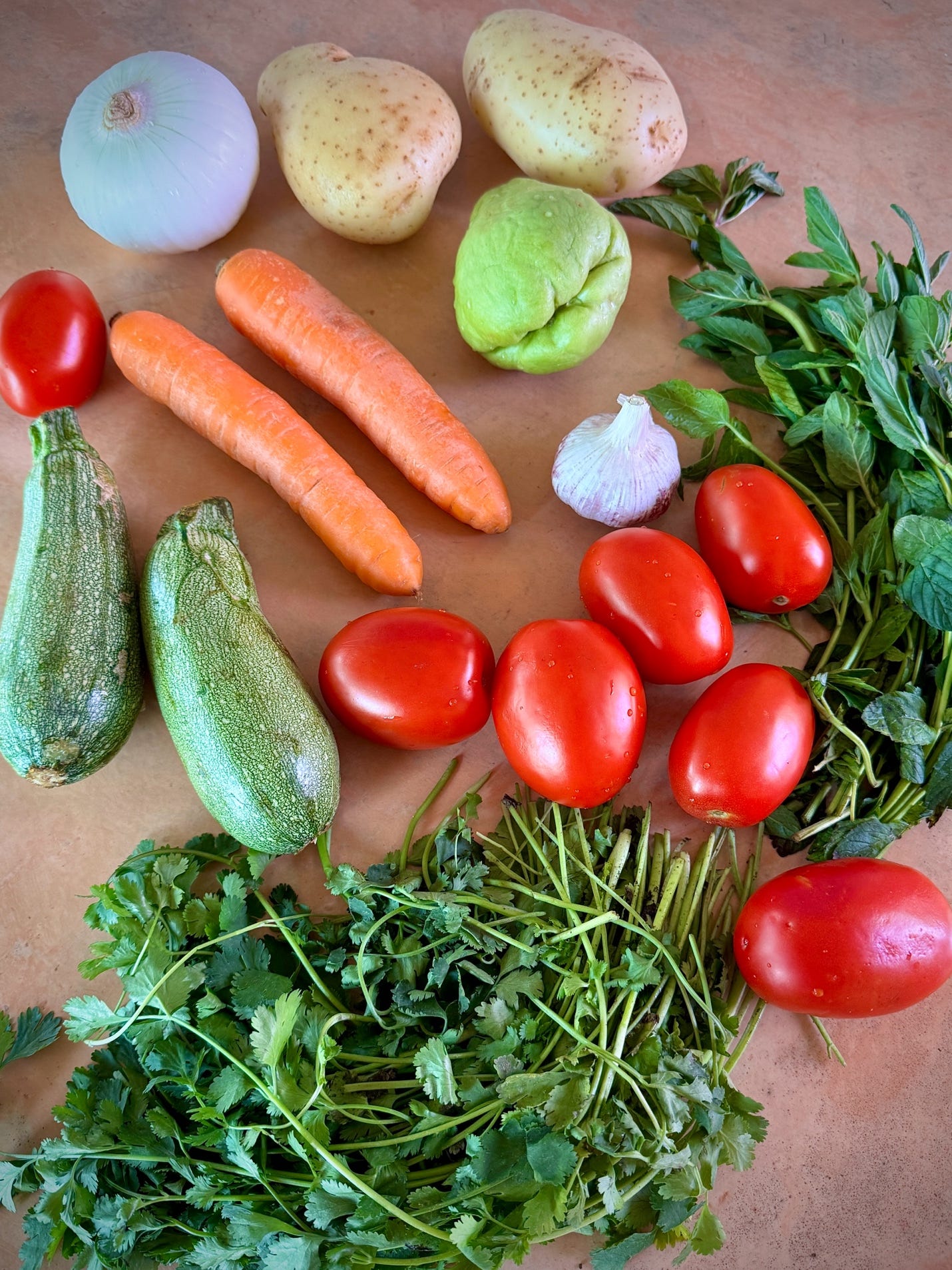
Certain vegetables are traditional in this dish. Potatoes, carrots, and squash are common, and sometimes there’s corn, chayote, or a little celery. But you can pretty much do whatever you want in terms of the amount and type of vegetables you use.
The tomato broth is really simple. It’s tomatoes, a little onion, garlic, chipotles in adobo, salt, and water. If you’re making beef meatballs, you can use caldo de res, caldo de pollo, caldo de puerco, or caldo de verduras instead of water.
I’m using water because I find that when I make soups with fresh, ripe vegetables, I like to taste the flavor of the vegetables. Don’t get me wrong. I absolutely adore broth of any kind, including vegetable, roasted vegetable, and mushroom broths. But when you have peak-season produce, all you really need is a little water. All those vegetables will release their flavor and create their own insanely delicious broth.
A lot of people also use bouillon powder which I’m a big fan of too. But if you’ve got flavorful meatballs, you don’t need any more umami.
One thing that’s a little different in my version is the way I treat the meat.
I’m pretty fanatical about meatballs and how they should be made. I hate tough, dry meatballs. So this is my standard practice for making meatballs. I always try to get at least 80/20 ground meat. I don’t do lean meatballs. I think they dry out and have a gritty texture that I just find unpleasant. If all you have or all you can find is lean meat, then I think it’s important to add a little fat. But typically, I’m going for 80/20.
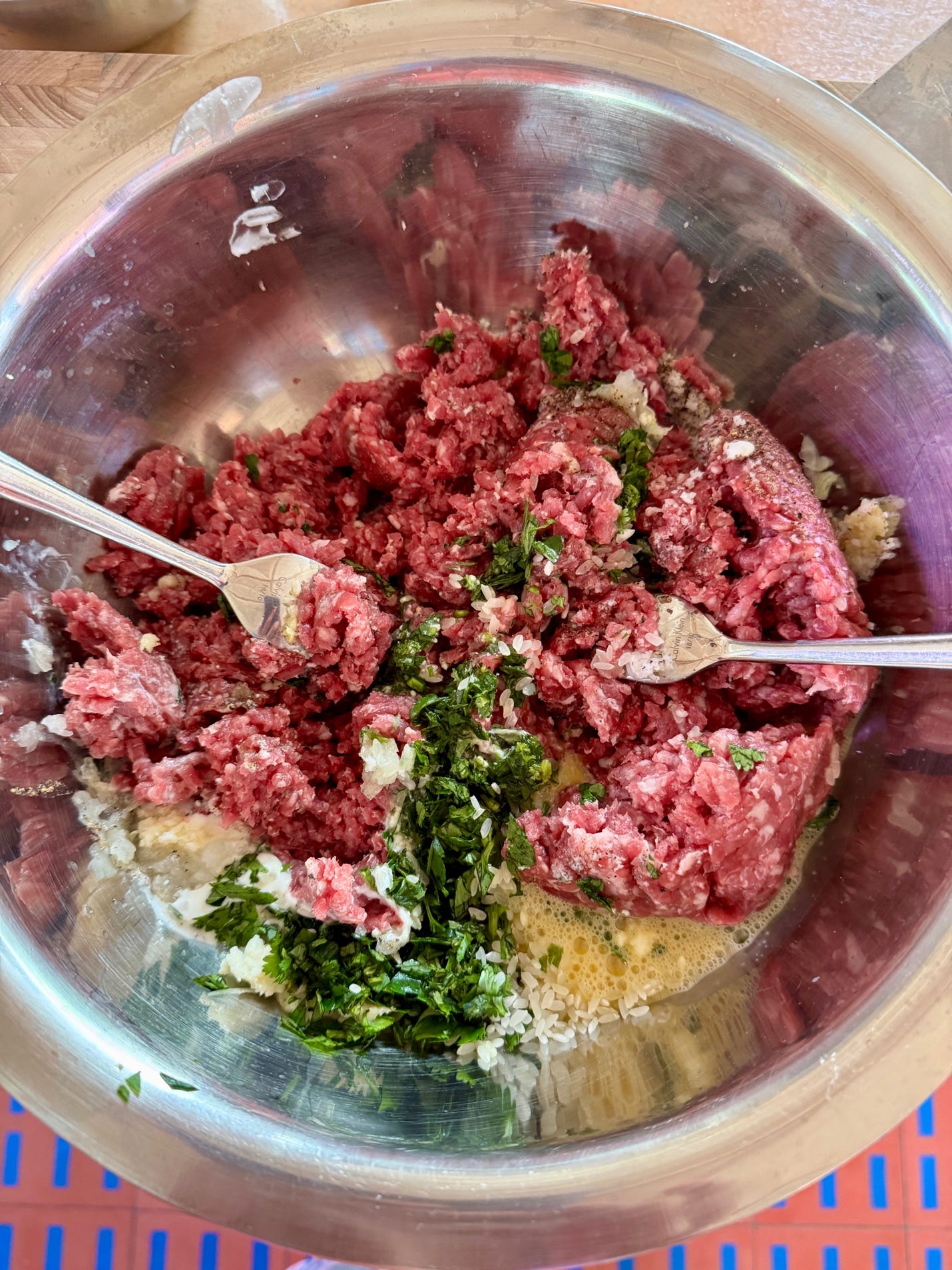
I like adding crema and crumbled Mexican cheese to my meatballs. A common feature in Italian meatballs is a panade, a mixture of breadcrumbs or torn stale bread soaked in milk and then added to the raw ground beef. The panade tenderizes the meat, improves the texture, and increases the moisture. The milk adds fat and tenderizes the beef. The bread acts like a little sponge and holds on to the moisture as the meatballs cook so they don’t dry out.
Normally, I like to use panko or fresh breadcrumbs with crema or heavy cream. Crema is very similar to crème fraîche. It’s very milky but has that sort of cultured funk. American sour cream tends to be a little more acidic and has less complexity. Crème fraîche and crema have a little more nuance, are less sour, and are more cultured and funky, which I love.
Another reason some meatballs get so tough and dense is because they’re overmixed. I find that you get a much looser mixture if you use two forks and pretend you’re pulling pork. Literally move the tines of the forks away from each other and do that really quickly until all the meat and ingredients are incorporated, no clumps of beef remain, and everything is evenly distributed.
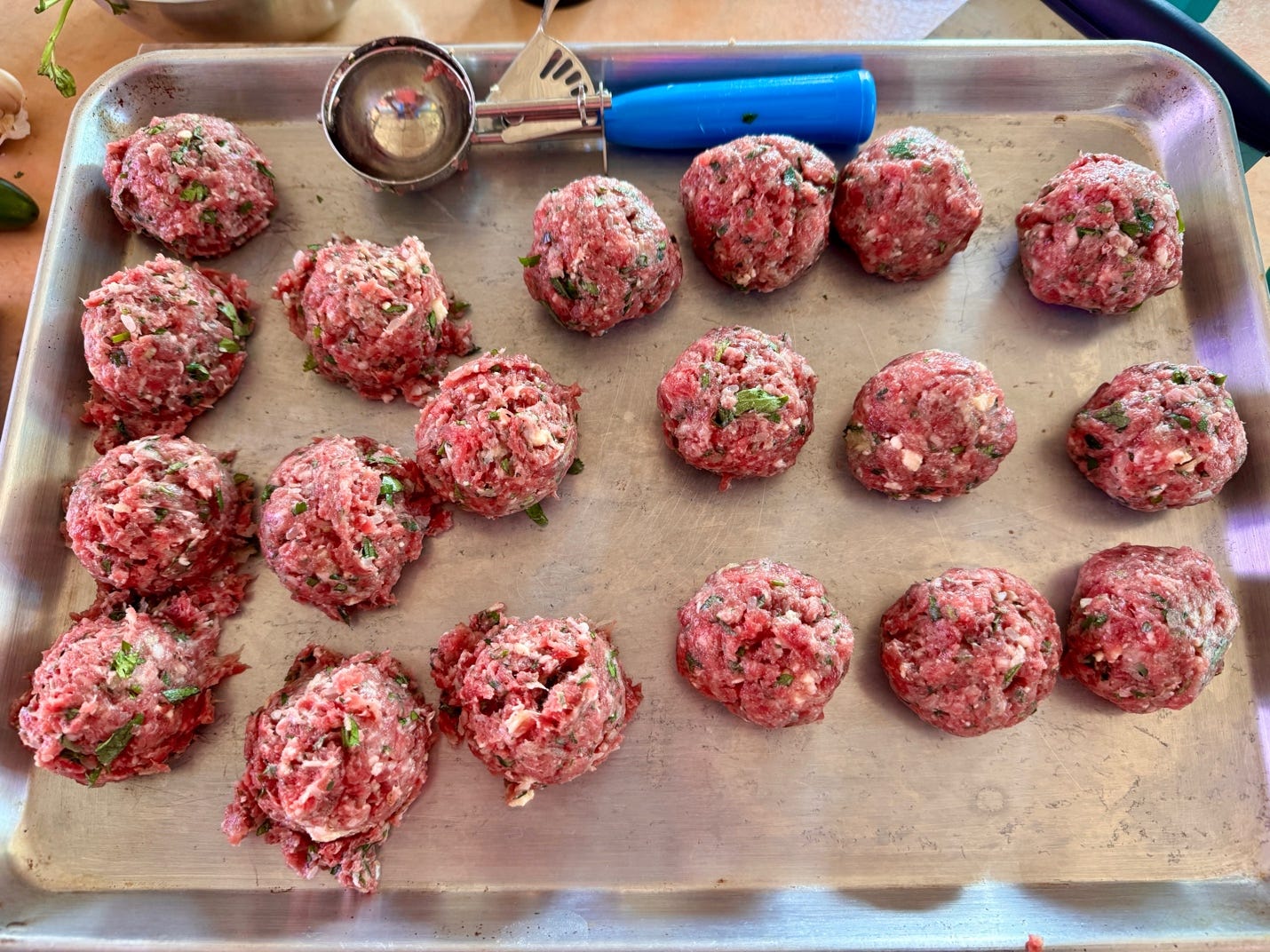
For soups, you definitely want to use an egg, but I’m a fan of using just one. I think another reason some meatballs get tough is because people use two eggs. One egg will hold the meatballs together, even if you’re boiling them in soup.
Another thing I do that’s a little different from what you’ll see in other recipes is to brown the meatballs. I like the flavor of browned ground meat. For my other albóndiga recipes and even Italian meatballs, I normally sear them a little harder and longer to get a deeper golden-brown color on the outside.
I didn’t necessarily want that here. I didn’t want too much of that browned, caramelly flavor, but I did want a little bit. I also don’t like gray meat. A lot of recipes drop the raw meatballs directly into the soup. They’re fully cooked, but they’re just a very unpleasant color.
I brown the meatballs in the same pot I’m making the soup in, so you get all that really beautiful fond on the bottom. You then dump in the vegetables and the salt for the soup and sauté them for about 10 minutes. The salt helps the vegetables release their liquid, and all that liquid helps you scrape up the delicious fond from the bottom of the pot. You’re concentrating the flavor of the vegetables by evaporating some of their liquid, and you’re also caramelizing some of their sugars.
Then you just add the tomato broth, cover, and simmer until everything is tender and done. Easy-peasy delicious.
I hope you love this recipe as much as I do. I’m so excited. I have this giant pot of caldo de albóndigas. I’ve already had one huge bowl, and I can’t wait to have more tomorrow.
Enjoy.


If you’ve read this far and you’re getting hungry, you probably want the recipe.
The full recipe, and monthly cooking classes are all on the paid side of Sazón.
There are over 190 recipes in the archive with new ones added every week.
A paid subscription is $50 for the year, which works out to about $0.26 a recipe.
If this kind of cooking makes you happy, you know what to do.

Rick Martínez
James Beard Award winner, Mexican cookbook author, and creator of Sazón, my weekly Mexican cooking newsletter with Mexican recipes, cooking techniques, original dishes, and deep-dive guides from my life in Mexico.
Comments
Nothing yet. Say the first thing.
Sign in to join the conversation.