
Your super represents decades of hard work and savings built for retirement. Almost 12,000 Australians lost $1.2 billion to super switching scams in 2025. Unsolicited contact pushing you to change funds is always a red flag.
Perimenopause doesn’t cause ADHD, it takes away the hormones that were masking it. In this piece, we hear from a GP on why midlife women are the fastest-growing group in her waiting room asking, “am I losing my mind?”
There’s a conversation happening in general practice waiting rooms across the country, and it goes something like this: a woman in her mid-forties, highly capable, holding down a career and a household and everybody else’s calendar, sits down and says, “I can’t think anymore. I lose my keys, I lose my words, I lose whole afternoons. Either I have dementia or I’m going mad.”
She almost never has dementia. Increasingly often, she has ADHD, and she’s had it for forty years.
If your mental image of ADHD is a small boy bouncing off classroom walls, climbing on desks, and out windows, that’s not an accident. The diagnostic criteria were built around how ADHD presents in young boys, and girls have been paying for it ever since. An international expert consensus found that girls and women are systematically under-recognised: their symptoms are masked by compensatory strategies, mislabelled by gender bias, and misdiagnosed as anxiety or depression, sometimes for decades. The daydreaming girl who “just needs to apply herself” grows into the woman with three alarm systems, colour-coded lists and a low hum of exhaustion from holding it all together. Clinicians call that masking. She calls it Tuesday.
More than one million Australians have ADHD, according to Australia’s first national evidence-based ADHD guideline, published in 2022 and endorsed by the RACGP and RANZCP. And Australian prescribing data shows what happens when you finally open the door: after the PBS expanded subsidised access to lisdexamfetamine for adults in February 2021, dispensing rose continuously, a wave of adults, disproportionately women, finally getting assessed and treated. This gets reported as an “ADHD epidemic.” It is not an epidemic. It is a backlog.
So why does the wheel fall off at perimenopause, specifically?
Oestrogen. Alongside everything else it does, oestrogen supports dopamine, the neurotransmitter at the heart of ADHD, and helps power the prefrontal cortex, the brain’s executive suite of focus, planning and working memory. A woman with ADHD who has spent decades compensating has essentially been running demanding software on limited RAM, with oestrogen quietly boosting the system. Perimenopause pulls that support, erratically and without warning, at exactly the life stage when demands on executive function peak, with teenager kids at home, ageing parents, senior roles at work. The scaffolding comes down and the underlying structure is suddenly, brutally visible.
The research here is young but consistent. A 2025 population-based cohort study found women with ADHD reported significantly worse perimenopausal symptoms than women without, severe symptoms in 54 per cent versus 30 per cent, with the gap appearing as early as their late thirties. A 2025 systematic review from Monash University’s HER Centre confirmed that hormonal life stages shift ADHD symptoms, and flagged menopause as one of the most under-researched areas in the entire field. Reviews of midlife ADHD management are blunt: ADHD in women is frequently underdiagnosed and undertreated, particularly when perimenopause exacerbates or unmasks it.
And here is the trap I see play out clinically. A 46-year-old woman presents with poor concentration, irritability, disrupted sleep and a feeling of being overwhelmed. Those symptoms sit on the Venn diagram of perimenopause, depression, anxiety, iron deficiency, thyroid disease and ADHD. If nobody asks “what were you like at school? at 25? has focus always been this hard?”, she leaves with her third antidepressant script and a referral for mindfulness. Antidepressants are excellent medicines for depression. They are not a treatment for undiagnosed ADHD, and every misdirected script costs her another year.
The cruelty is doubled because these women have usually spent their lives being told they were fine, even better than fine, high-achieving, because the effort was invisible. Women’s suffering gets normalised at both ends: as girls, they weren’t disruptive enough to be assessed; as midlife women, their cognitive collapse is waved away as “just menopause, it happens to everyone.” Two dismissals, forty years apart, the same patient.
What would I like to change? Three things.
I’d like every clinician assessing a midlife woman with “brain fog” to take a lifelong history, not a six-month one. ADHD doesn’t start at 45; the diagnosis requires traits going back to childhood, and asking is free. I’d like us to fund the research the Monash review is begging for, we still lack trials telling us how ADHD medication and menopausal hormone therapy interact, which is an extraordinary gap given half the ADHD population will go through menopause. And I’d like the public conversation to lose the sneer. Every time a commentator scoffs about middle-aged women “jumping on the ADHD bandwagon,” I think about the diagnostic criteria that were never written for them, the expert consensus documenting decades of missed diagnoses, and the woman in my consulting room who cried with relief, not because she was sick, but because she finally wasn’t a failure.
She was never a failure. The system was built without her in it. Perimenopause just made that impossible to keep hiding.
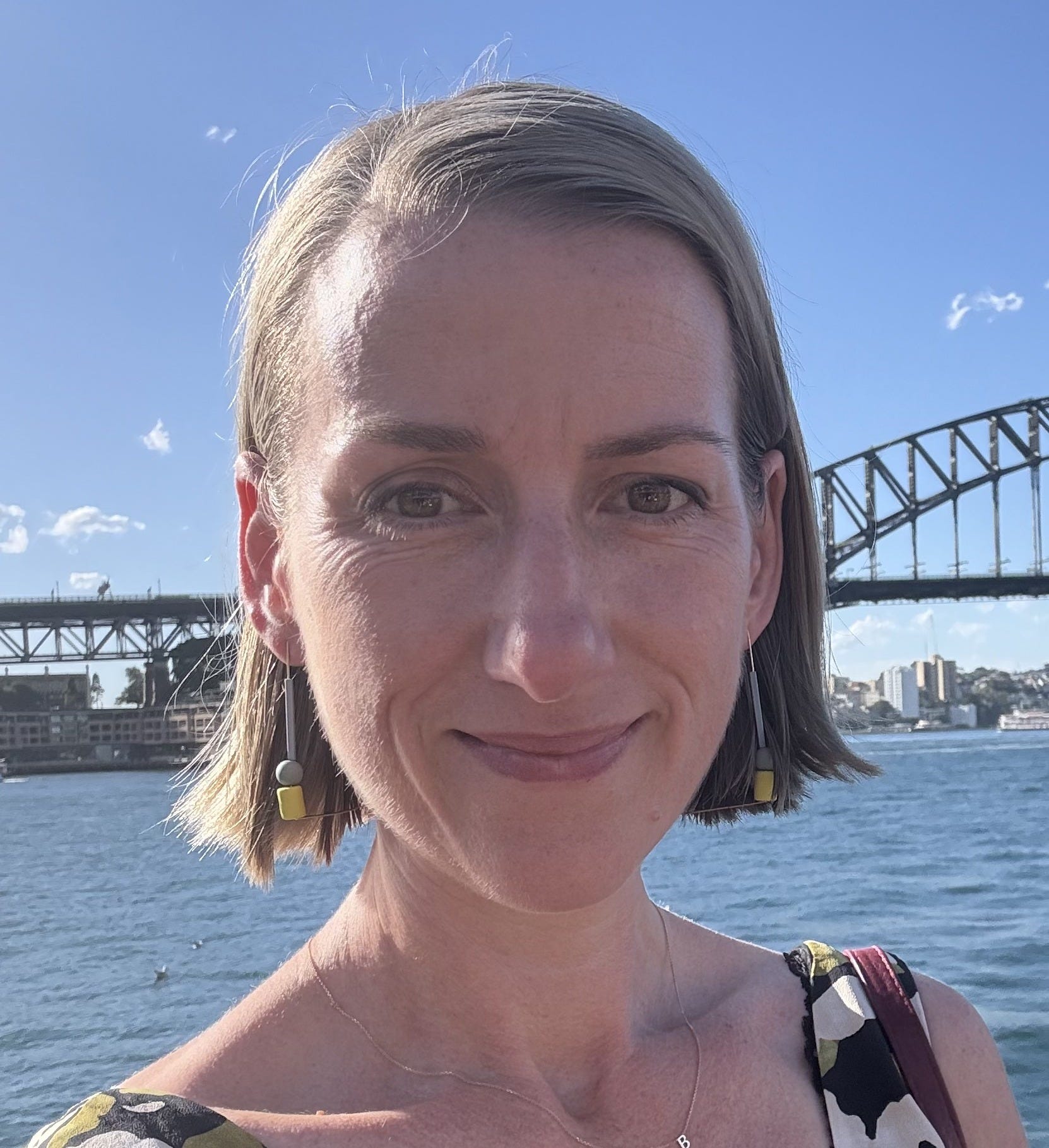
Dr Rebekah Hoffman is a Sydney GP, practice owner, researcher and Chair of the RACGP NSW and ACT Faculty. She works across clinical practice, research and health advocacy, with a particular interest in preventive health, women’s health, healthcare access and translating complex medical evidence into practical, everyday advice. The views expressed are her own and do not necessarily reflect those of the organisations with which she is affiliated.
Thanks for reading Cheek Media Co. ! This post is public so feel free to share it.
No posts
Comments
Nothing yet. Say the first thing.
Sign in to join the conversation.