
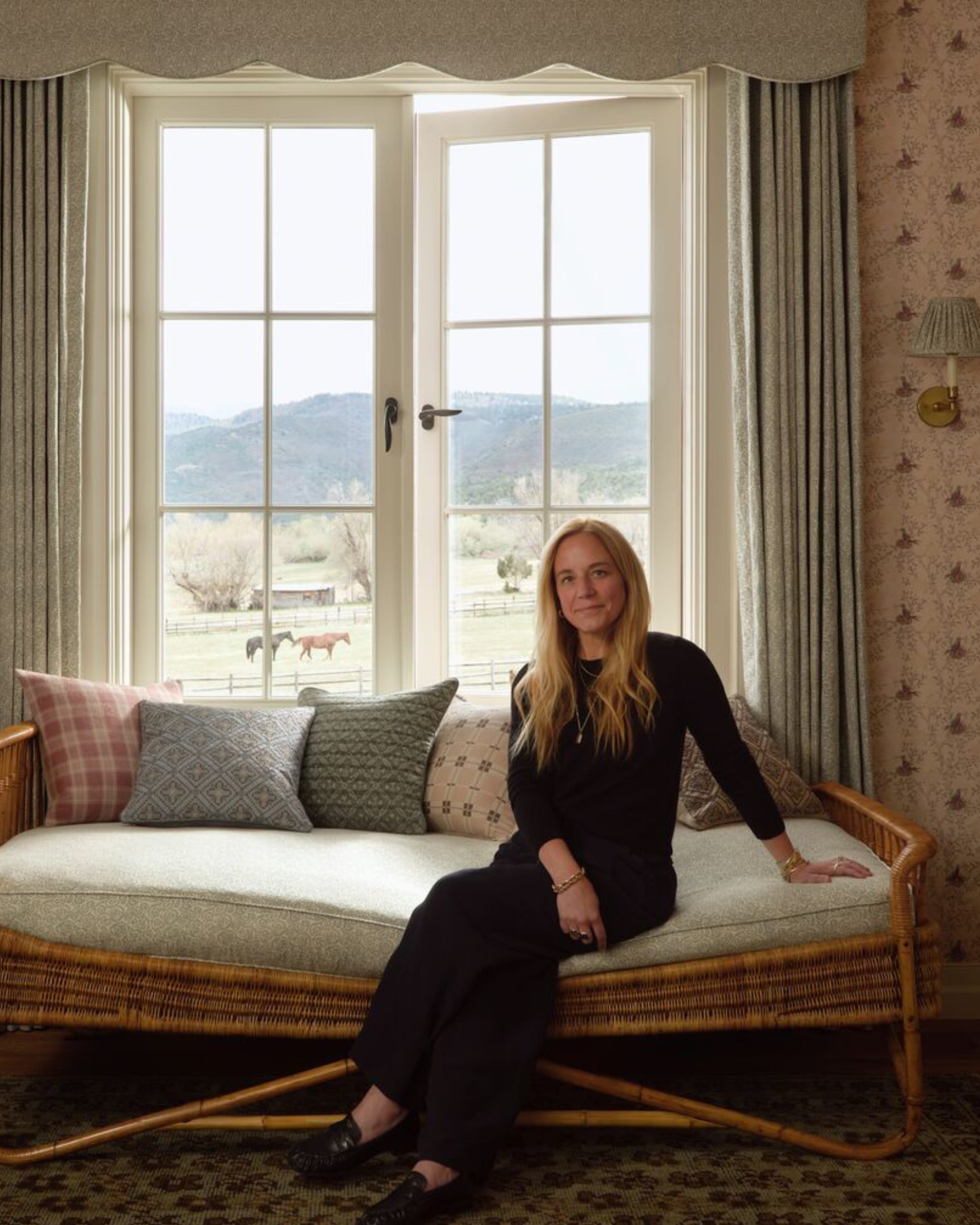
You might know interior designer Heidi Caillier from her work on Kendall Jenner’s mountain home, or from her bestselling book Memories of Home. Maybe it was one of her countless projects featured in Architectural Digest, The Wall Street Journal, or Homes & Gardens. Or perhaps this is the first time her name has crossed your screen. Either way, she’s someone I’m thrilled to be talking about today.
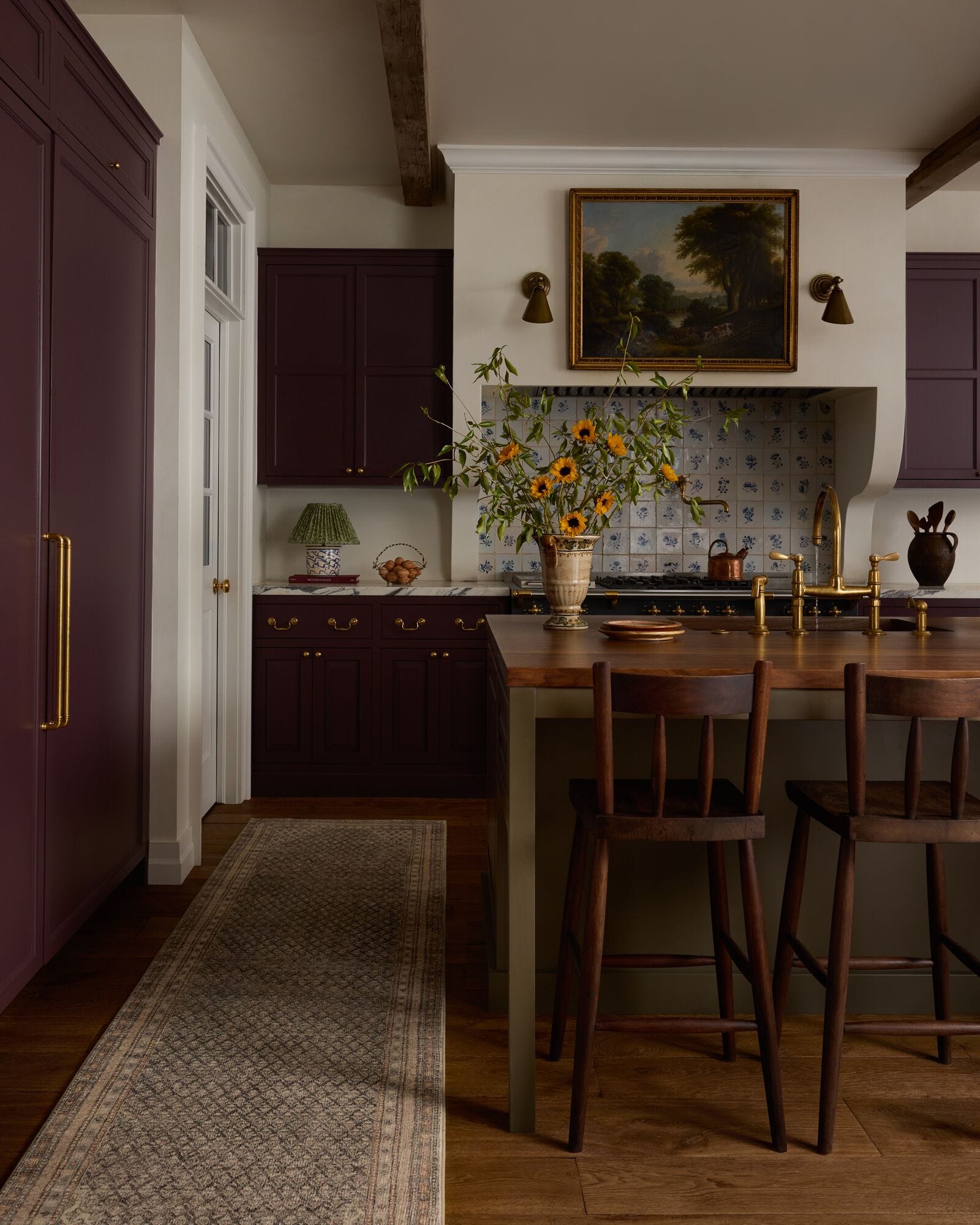
A self-taught designer, Caillier has risen through the ranks to land spots on both the AD100 and the 1stDibs 50 lists. Her work, which celebrates imperfections and patinas, includes a heavy dose of antique and vintage pieces—so it should come as no surprise that her projects resonate with me.
Outside of interiors, Caillier has also extended her creative skill set into product design—specifically a new rug collection with Joon Loloi. Curious to learn more about her career, how she approaches a project, and what it’s been like stepping into product design, I sat down with her (over Zoom) to hear from her firsthand. Here’s what she shared.
If you purchase something through some of these links, I may earn an affiliate commission.
Can you tell me about your journey to interior design—was there a defining moment when you knew this was the path for you?
Honestly, it was the opposite of a defining moment. I worked at a lot of different things before becoming a designer, and people always ask if there was a moment things took off—but it really progressed naturally over the years. It’s been very organic. I don’t have any formal training; I worked briefly for a few other designers before going out on my own, and I’ve just found my way since.
Was there a specific project where you knew it was time to go all in?
There was one project—it’s so long ago now—but I’d been doing a lot of small projects at the time. I knew I loved design, but I hadn’t quite found who I was as a designer yet. It was a project back in Seattle, and it ended up landing me the cover of LUXE. That was a huge moment for my career. It gave me the confidence to trust myself—that’s really where I started leaning into color, pattern, textiles, and antiques. It changed the course of my career.
You master the mix of pattern, color, old and new so well—are there any guiding principles you use when bringing it all together?
It’s really the opposite of principles or rules. Scale matters, and I pay attention to it, but for me it’s much more instinctual. I always want a little tension in a space—I don’t like when things feel too designed or too matchy. I like something that feels slightly off, like it doesn’t fit 100 percent. That’s how I approach textiles, too. I don’t want everything to feel like it’s working within one scheme.
I always want a little tension in a space—I don’t like when things feel too designed or too matchy.
You’ve worked with Joon Loloi before, but what made you decide to collaborate with them?
I’d used a lot of Joon Loloi rugs in the past and always admired the company—it’s family-owned and has a great reputation. When I started thinking seriously about partnerships and collaborations, there are only so many people you actually want to work with. It has to align with your brand and aesthetic, and honestly, I want to work with nice people—people who treat you well. I’ve been really fortunate to have partnerships like that.
What has surprised you most about product design versus interior design? How do the two differ for you?
There are similarities, but there’s definitely been a learning curve. You might have an idea in your head that just isn’t possible to execute for one reason or another. Or you might think something is incredible, and then realize no one’s actually going to buy it. Product design, and retail in general, is about finding that combination: doing things that are beautiful and interesting, but that people also want and can actually use. It has to be approachable—you shouldn’t need to be a designer to bring it into your home.
It has to be approachable—you shouldn’t need to be a designer to bring it into your home.
Are there any specific influences you drew on for this collection?
I’m always inspired by vintage. I’ve spent the past few summers traveling through Europe, and I find it endlessly inspiring—the old-world patterns, all of it. This collection is really a mix of that, plus the things I’m constantly noticing along the way. I’m always taking screenshots or photos—especially when I’m traveling, I’ll see a pattern applied in an interesting way on a column, or something in a museum, and start thinking about how to translate that into something new.
If someone is trying to bring together a “collected” look in their own space, what’s one of the first things you’d suggest?
Vary your sources—don’t buy everything from one place. Vintage and antiques are really the best way to build in interest, because those pieces are one of a kind; not everyone can have them. Then you layer that in with more easily sourced pieces, like a rug.
I think people shy away from creating interesting interiors because they’re scared. They don’t want to commit to a patterned sofa in case they get sick of it, so they buy everything neutral and try to layer in pattern through pillows—but that’s not really the way to do it. You have to go big somewhere. I love when people can fully envision a room before they start purchasing. It helps create that layered, intentional look. Not everyone can furnish a whole room at once, of course, so really it’s about leaning into pieces you genuinely love.
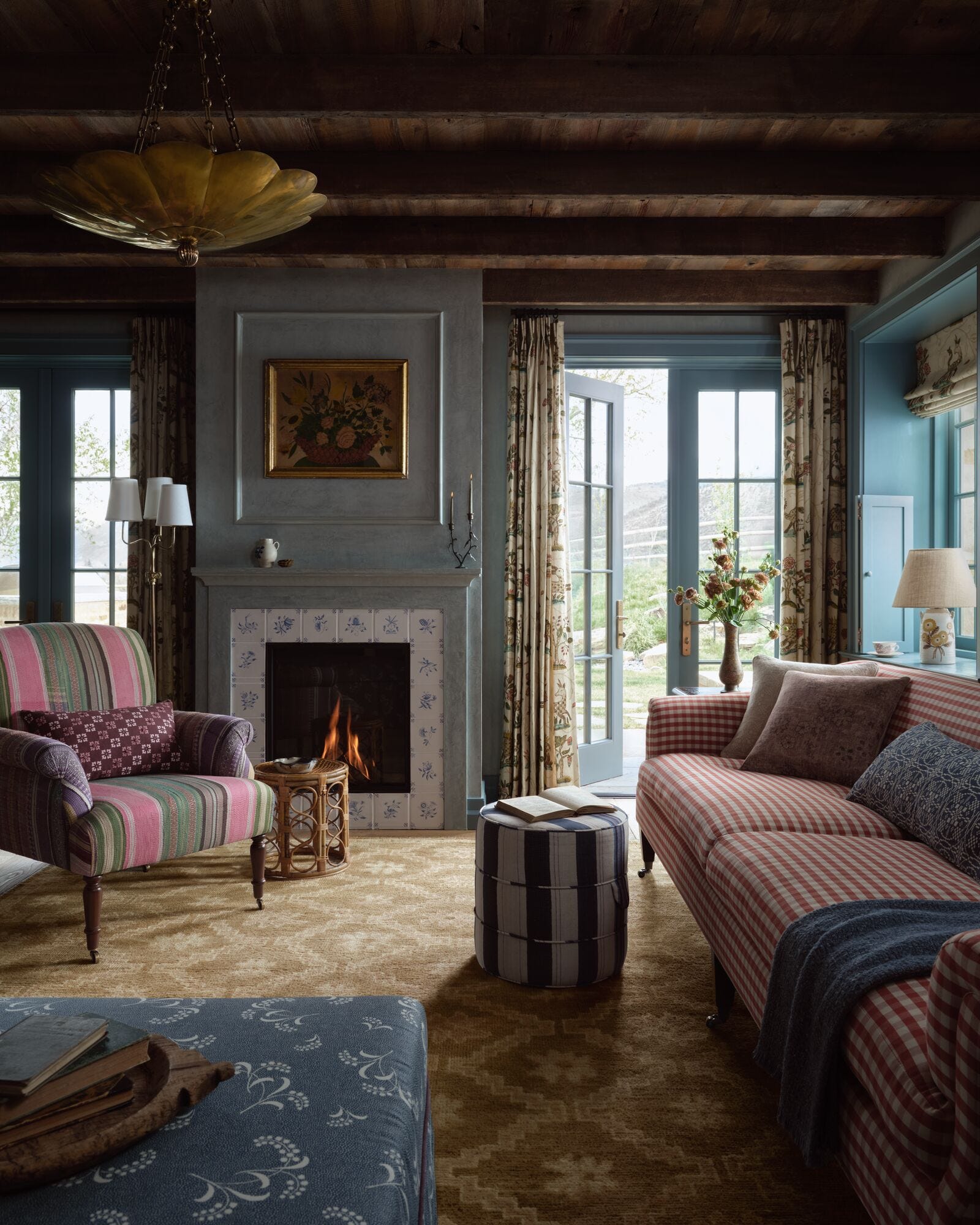
Really it’s about leaning into pieces you genuinely love.
What’s one piece of advice you’d offer someone looking to get started in design?
The thing that really shifted my career was when I started designing the way I wanted to. I talk to a lot of young designers who are scared to do that—they want to show clients what they think the client wants, and they’re afraid to take the risk. But what I’ve learned over the years is that clients love it when you bring your own perspective. That’s what they’re hiring you for. They don’t know how to do it themselves, and they don’t want a space that looks like something they could’ve designed on their own. Lean into the work you actually want to do, right from the start.
If you could design anything, no brief, what would your dream project be?
There are so many. I’d love to do a villa in Italy—that Italian aesthetic is a dream. Or something in the UK—a British countryside house, or an apartment in Paris. Any of those would be incredible.
You can learn more about Caillier at www.heidicaillierdesign.com or follow her on Instagram at @heidicaillierdesign.
xx Charlotte
Thanks for taking the time to read Charlotte’s Web. For more, you can:
• Follow along on Instagram
• Consider upgrading to a paid subscription
Have a story idea or want to collaborate on an article? Feel free to reach out at charlottenilssonparker@gmail.com. Charlotte’s Web is a reader-supported publication. To receive new posts and support my work, consider becoming a free or paid subscriber.
Comments
Nothing yet. Say the first thing.
Sign in to join the conversation.