
No one mentioned hunger anymore.
Lila noticed it at work.
The Friday lunches disappeared. Then the biscuits in the break room. The pastries at the Monday morning meetings remained untouched until the hardened croissants formed a cairn. A memorial to appetite.
At first, Lila thought that it was just another trend. A brief war against the body. Like grapefruits in the fifties. Hard-boiled eggs and cabbage soup. The Atkins diet in the nineties.
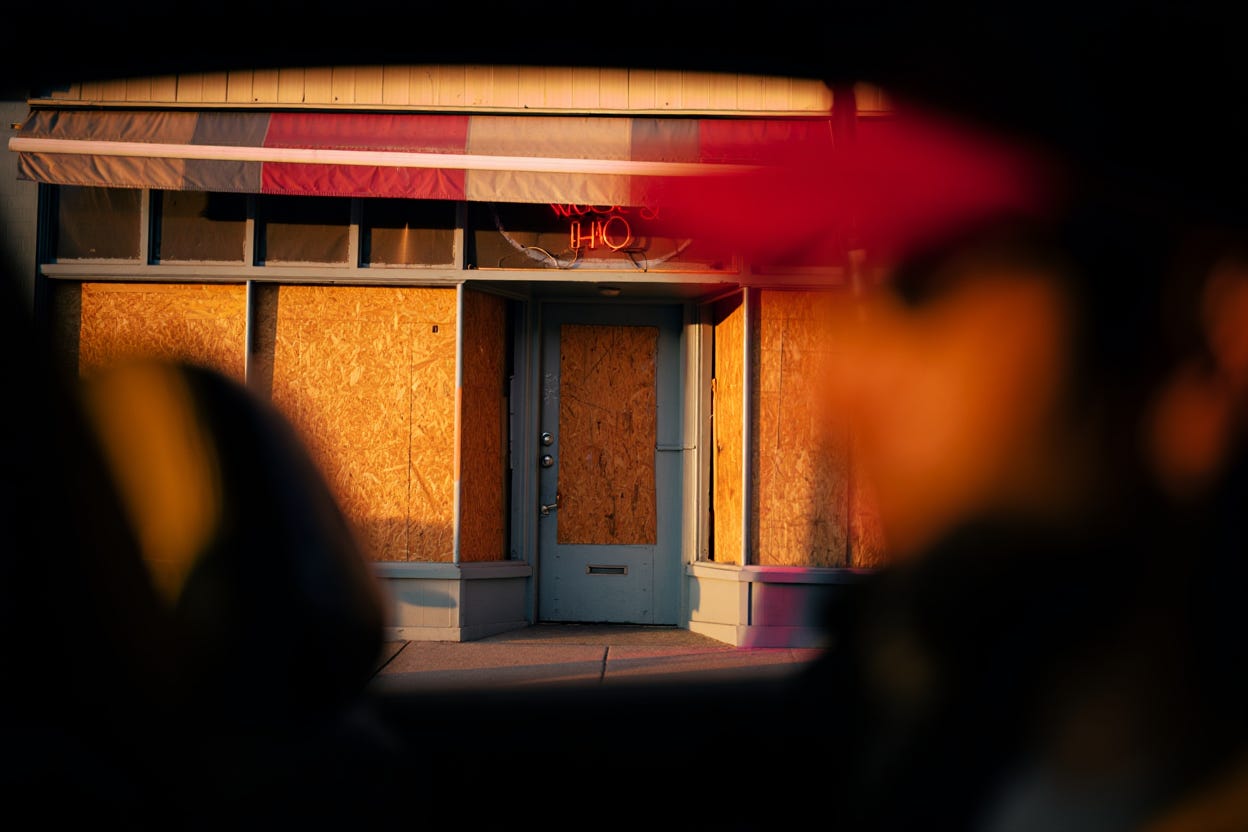
But those diets had still involved eating. Now people were speaking differently. No one mentioned recipes or restaurants. No one spoke about their cravings.
Even the office fridge contained no food. It used to smell faintly alive whenever someone opened it. Of citrus fruits and tuna wraps and yoghurts with the lids peeled back. Of homemade pasta in containers.
Now the shelves gleamed, clean.
Rows of protein drinks stood upright, beside waters with electrolytes, broths containing collagen and meal-replacement shakes. And everything was labelled. Arranged like precious medical supplies.
Lila scanned the shelves one lunchtime searching for something recognisable. A sandwich or a salad or a slightly bruised banana. But there was nothing that resembled food.
A colleague from accounting appeared suddenly behind her and peered over her shoulder.
“God,” he whispered, almost laughing, “I’m actually feeling hungry.”
His face flushed red, and he glanced around him as he spoke.
“I think it’s wearing off,” he quietly said. “I probably need a higher dose.”
Lila nodded without answering.
She heard that word too often now.
Instead of mentioning their appetites, their cravings or their lunch plans, people all discussed the perfect ‘dose’.
Within a year, the restaurants started closing.
Pizza places were the first to go. Then bakeries and fast-food joints. The salad chains survived the longest, serving people what they wanted. Tiny bowls of lettuce leaves, with translucent curls of cucumber and radishes sliced paper-thin.
But eventually they closed down too.
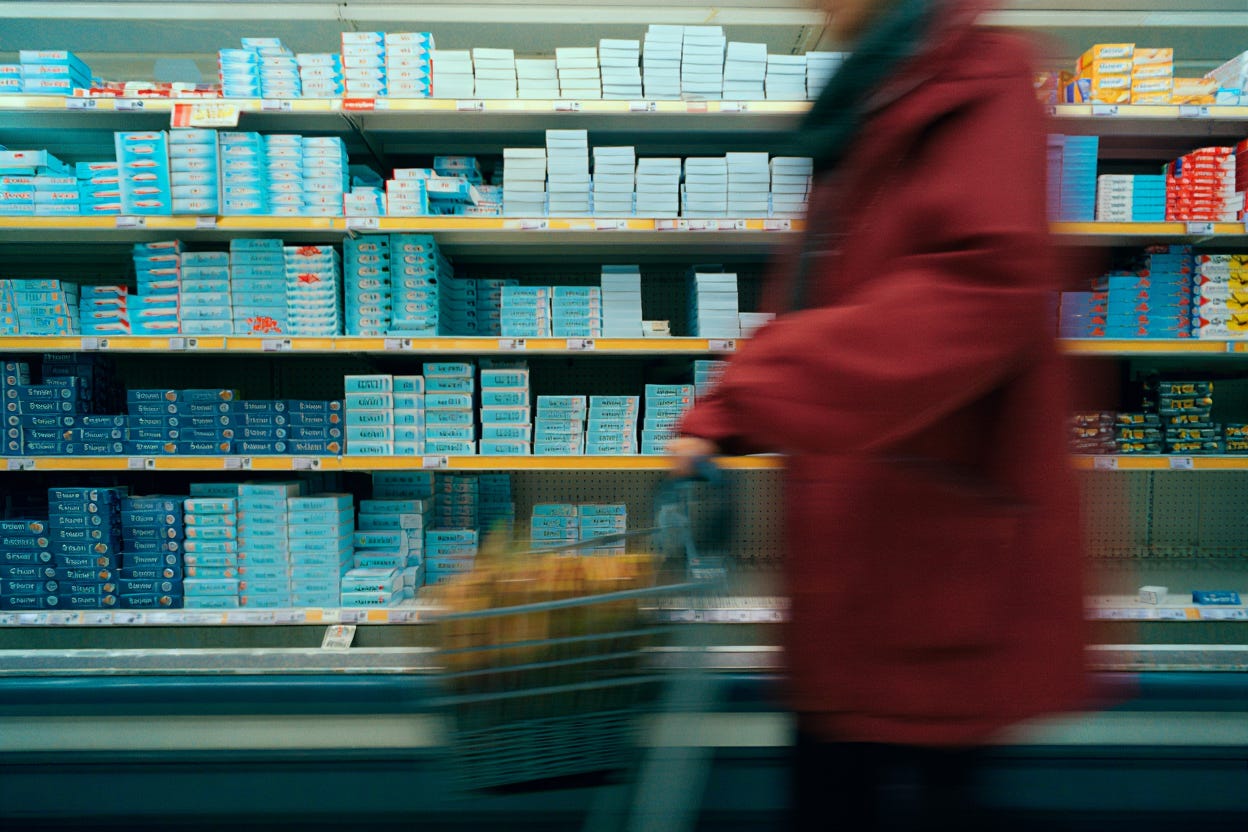
Supermarkets still existed but the aisles were stacked exclusively with supplements and powders, and medication filled the cold fridges.
The scooter drivers disappeared when Deliveroo went bankrupt. Cinemas stopped selling popcorn. (It ended up uneaten on the floor.) And football stadiums stopped selling hot dogs. Even wedding cakes were cancelled, replaced with foam constructions purely for display, that nobody sliced into.
And as the foods all disappeared so did the sounds. The world became far quieter. No more crunching in the cinemas. No deep-fat fryers sizzling in the chip shops on a Friday night. No conversation drifting out of restaurants in the evenings. No clattering trays in school canteens. No coffee grinders screaming.
The city had lost a layer of noise, and with it, something human.
At dinner with her parents on a Sunday, Lila realised they were doing it too.
The chicken sat untouched, at the centre of the table.
“Aren’t you eating?” Lila asked.
“Oh, we both had something earlier,” her father said, and Lila wondered if the ‘something’ was injectable.
Her mother cut a single carrot into small, then smaller pieces while her father drank a glass of sparkling water.
“But you cooked all this,” Lila finally said.
Her mother shook her head slowly and shrugged her slender shoulders.
“I still enjoy cooking,” she said, her lips pursed tight.
After Lila finished eating she watched her mother open all the cupboard doors, as if she couldn’t quite remember where the plates were stored.
Lila missed their normal Sundays.
She missed the windows fogging up with steam. Her mother tearing basil leaves whilst listening to the radio. The smell of frying onions.
Dinner used to stretch and spread across the evening. Her dad would tell the same stories. The ones that always made her mother laugh. And Lila would want to linger in those moments. Now dinner lasted twelve minutes and her father checked his emails halfway through.
“You should think about starting it too,” her mother carefully said to her, as she threw the chicken in the compost.
Lila stared at her.
“But I’m not overweight,’ she said.
“It’s not about the weight really. Not anymore,” she said squeezing her daughter’s hand.
And that frightened Lila more than if it had been.
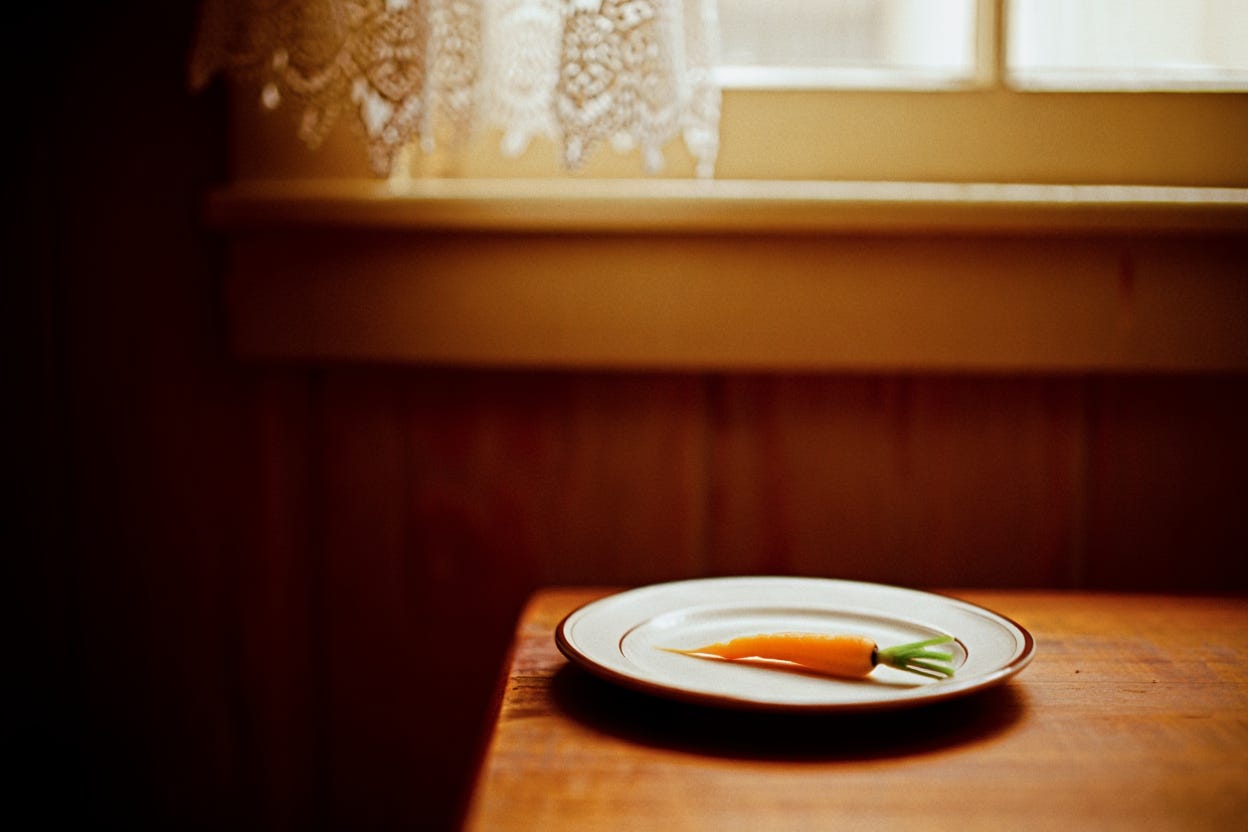
Lila still ate food in secret.
She ordered the ingredients online from a tiny niche supplier and she cooked alone, inside her flat.
There were pans of salted pasta, buttery garlic bread and tomatoes drenched in olive oil, and in the summer, there were peaches. In the colder months she made vats of soup, thickened with cream, which she ate with chunks of granary bread.
But she didn’t ever eat at work.
One afternoon she had reheated Chinese noodles in the small communal microwave. The smell of Szechuan chilli oil had drifted through the office.
Conversations quickly stopped. People looked up from their laptops. Someone opened all the windows. It was as if she’d lit a cigarette inside.
Later that afternoon her manager called a meeting.
“I just wanted to check in,” he said gently. “We’ve noticed some behaviours.”
Lila frowned.
“Behaviours?”
“You often disappear at lunchtime.”
“That’s when I go for lunch,” she said.
Her manager clasped his hands tightly and clenched his jaw.
“Yes,’ he said. ‘Exactly.”
One evening she met her friend Serena at a wine bar that used to require reservations in advance. Now the place was almost empty. The waiter barely looked at them when they arrived.
Serena was looking beautiful. Her collarbones cast shadows and her jaw looked sharp. She was almost architectural.
“You’ve lost so much weight,” Lila said, and Serena smiled faintly.
“Hasn’t everyone? It’s just like the new pilates.”
Outside, the rain was sliding down the windows.
Lila sipped her minute glass of wine and felt her stomach softly growl.
She remembered nights when the two of them had eaten tacos after work and ordered second cocktails. They would stay out late and loudly laugh. Serena would often order two desserts.
That version of Serena felt so far away.
“You really should start taking it,” Serena quietly said. “It’s easier.”
“What’s easier?”
“Existing.”
Lila looked at her. She really looked.
Serena stared back with a calm that was unnerving.
“After the first few doses,” she said softly, “everything gets quieter.”
“The hunger?” Lila asked.
“Yes. But other things too. The inside of your head feels clean. Like the volume has been turned down. At first, it was just food noise. Then alcohol. Then wanting. There’s nothing that I want these days,” she said proudly.
Lila’s spine felt cold.
“I haven’t dated anyone this year.”
“But what about sex?”
Serena shook her head.
“And that doesn’t bother you at all?”
She briefly paused.
“Nothing bothers me much anymore.”
The sentence settled heavily between them.
Lila watched Serena lift the wine glass to her mouth, but she didn’t actually take a sip. She just held it there, touching her lips. Like a half-remembered ritual.
The government campaign was launched that winter.
‘LESS IS MORE.’
Billboards appeared across the city beside train stations and bus shelters.
A child with a glass of water. A woman smiling at an empty plate. A doctor shrouded in white light.
Healthcare costs were plummeting as obesity declined. Heart disease and diabetes practically disappeared. And productivity surged as sick days fell to record lows. The drugs were called the greatest public health breakthrough in recent history. The penicillin of the modern age. A miracle cure.
And perhaps they were.
But other things were vanishing too.
Restaurants closed down in waves. Suppliers shut and farmers lost their livelihoods. The luxury industries struggled. People didn’t want things with the same intensity they always had. Fashion became utilitarian. Tourism shrank. (No one dreamed of eating pasta in the Tuscan hills or eating ramen in Kyoto). Dating apps were digital graveyards. Desolate places filled with ghosts of abandoned conversations. And the birth rates dropped and dropped again.
A journalist wrote an article suggesting something vital had been lost.
‘Perhaps desire gives life meaning’, he had argued.
But the article soon disappeared, replaced with government statistics, proving just how good things really were. Reminding people to be grateful.
That spring, Lila realised she could smell fresh rain.
For years it had been buried beneath ground coffee beans, and deep-fried food and the scent of bread drifting from restaurant doors.
Now the air smelled clean and mineral. Cold. The atmosphere felt empty.
Soon afterwards, her online food supplier disappeared. Their website simply stopped loading one morning. No announcement. No replacement.
Lila stood inside her kitchen staring at the food that she had left.
A packet of spaghetti.
Half a garlic bulb.
A slice of butter wrapped in wax paper.
Sea salt stored inside an old jam jar.
Three tomatoes softening on the windowsill.
That evening she walked past the old Italian restaurant where she used to celebrate birthdays. The chairs were stacked high on the tables. A menu hung inside the window, slightly faded. Lila stood there on the street, reading. She relished every single word, as if it were a morsel. She closed her eyes, imagining.
Wild mushroom risotto and fresh bread. Parma ham and arancini balls. A homemade, creamy tiramisu.
Her mouth flooded with saliva, as her eyes flooded with salty tears.
Back home, she cooked the last spaghetti slowly.
The garlic softened in the butter with the faintest hiss. It sounded like a lingering kiss. Ancient and somehow holy.
She added salt into the pan.
Then pasta strands.
Then the last of the tomatoes.
The smell filled the apartment so completely that her chest ached with emotion.
Then Lila sat down at the table and ate until she felt completely full.
Not disciplined, or optimised. But simply full.
Afterwards, she washed the dishes slowly in a bowl of soapy water, before she dried each item carefully.
Then she went and found the first syringe.
It was small and clean.
She held it in her open palm.
It was lighter than expected.
Outside, the city glowed beyond the windows.
As she stood inside the kitchen, she thought of all the millions of people. Asleep with stable blood sugars and stomachs that were silent. All dreaming dreams without desire. All dreaming without hunger.
Lila pressed the needle deep into her waiting thigh.
If you enjoy Charlotte’s writing, it may interest you to know she has written two books published by Simon & Schuster, Afterwards (published 2023) and One Little Lie, out in July 2026 and available to pre-order now.
No posts
Comments
Nothing yet. Say the first thing.
Sign in to join the conversation.