
Greetings, dear reader! You may be back in the school grind or still enjoying your hot, steamy summer, and whatever the case may be, I hope you’re doing well!
I’ve had a tremendous summer, which I’ve dubbed Self-Growth Summer. Maybe you’ve had one like this too? For whatever reason, many realizations and new habits came to me this summer, and I wanted to share some with you in case you also find them useful.
I learned five lessons, plus 10 mini-lessons, this summer, and I’m going to share them with you in the next few posts. This is part 1 of 6.
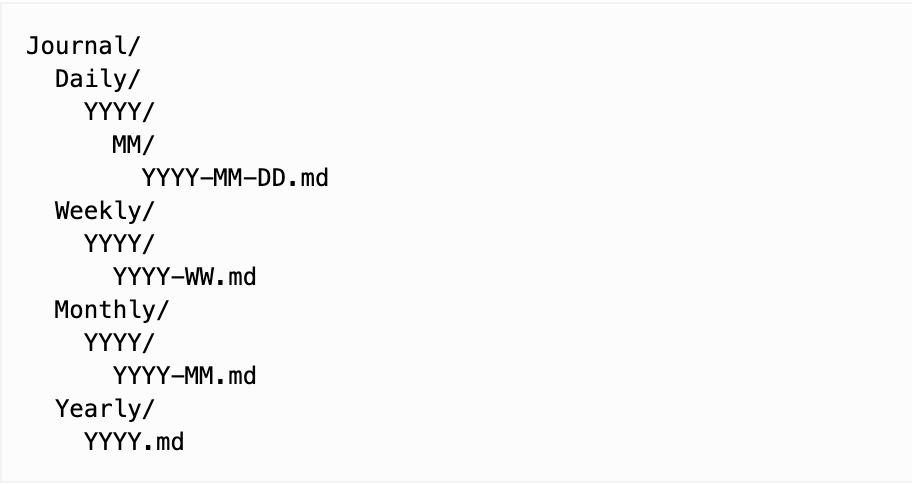
All summer, I’ve been keeping a hierarchical, review-oriented daily/weekly/monthly digital journal, a practice I pulled from a document about ADHD, but frankly, I think it’s appropriate for almost everyone.
The Interval Journal can be typed, dictated, or handwritten, but I’ve been typing it as my handwriting is much harder to re-read.
Using the file/organization structure pictured above, write a daily journal entry at whatever time and of whatever length appeals to you for ideally six days a week, or however many you manage to do.
Aim for consistency, not perfection.
Daily entries are similar to Julia Cameron’s Morning Pages concept, but needn’t be as long. They can be free-form. Ideas of things to include are:
Ad hoc notes and thoughts
Bullet journal
Brian farts
Emotions
To-do list
Big goals
Gratitudes
Attitudes
Conversations you wish you’d had
Wins
losses
Random ideas
Whatever is bothering you
On the 7th day, reread your daily entries and write a weekly entry on:
What went well?
What didn’t go well?
What do you want to change for next week?
Do this weekly entry 3x a month.
During the fourth week of the month, read your three weekly entries and do a monthly review with the same focus: what went well, what didn’t go well, what you want to change for next month.
Do this monthly review for 11 months.
At the end of the year, read your 11 monthly entries and write a yearly review.
Entries should be longer based on time covered, so weekly will be longer than daily, monthly will be longer than weekly, and your yearly review will be the longest.
In all the review-oriented entries (weekly, monthly, and yearly), keep in mind the following three questions:
List the salient things that happened in the review period.
List what went well and what went poorly.
Reflect on how I will change my behavior to make things better.
This practice identifies super-cycles, super-powers, and super-problems so you can act accordingly as you move forward.
Comments
Nothing yet. Say the first thing.
Sign in to join the conversation.