
Welcome to Desk Notes. I do hope that longtime readers notice that I at least attempt to align the opening photograph in each issue with my writing: the connection might be elusive, it might be its own puzzle, but there’s almost always, however tenuous, some link between the photograph and the writing that follows. This week, for once, I happen to have a few photos from the setting of these paragraphs, so that the story in this essay occurs right alongside this landscape. Thank you, as always, for reading.
Charles
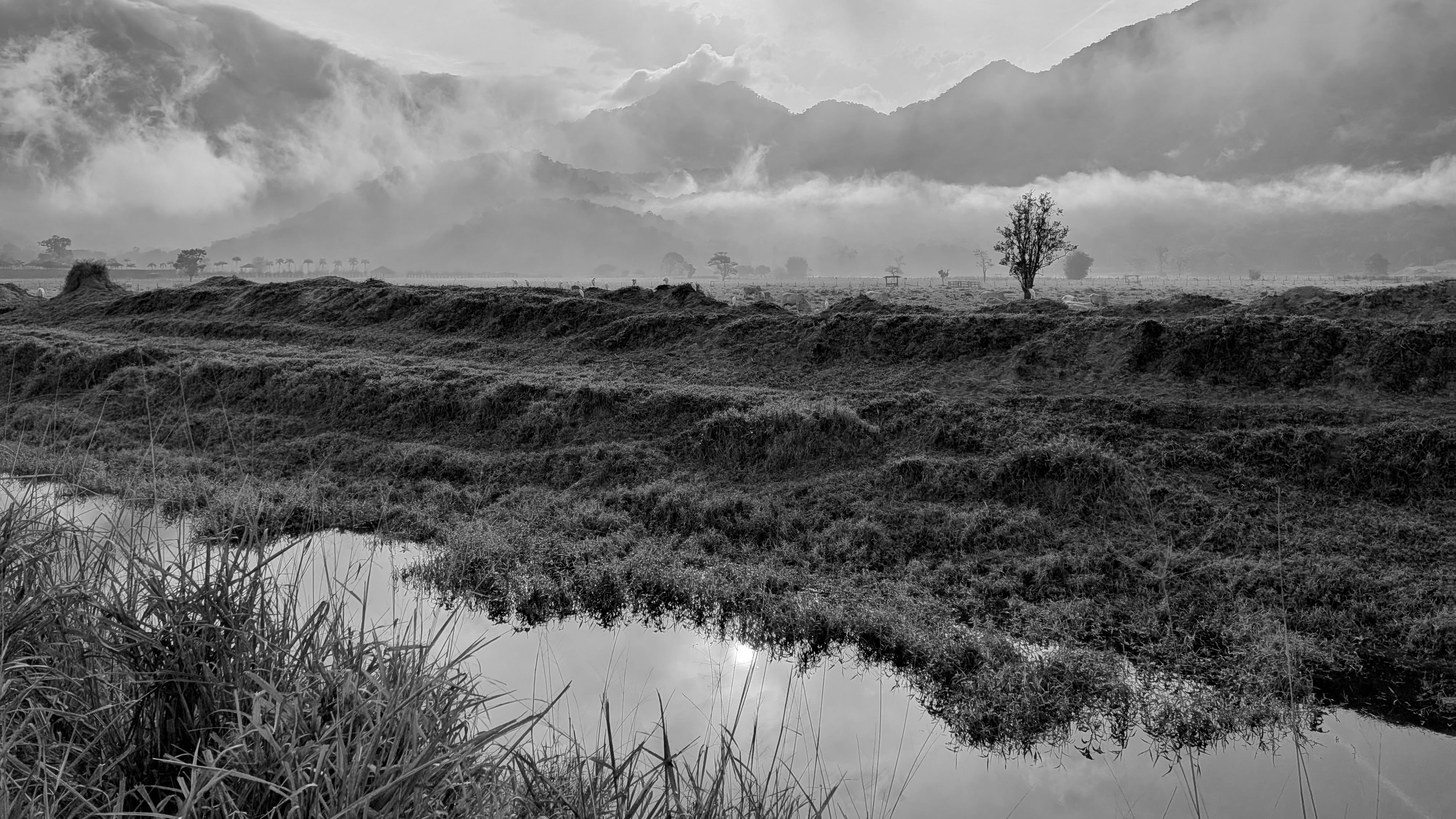
During a recent bike ride in the Brazilian countryside I found myself surrounded, surprisingly, by Brazilians. Obviously this shouldn’t have been a surprise—yet it still didn’t, at that moment, conform with my expectations. The morning was crisp and cool and just beginning to brighten with sun when we set out with the loose objective of meandering alongside the forest until we reached the beach, where you can go, in Brazil, even when it’s wintertime.
Our little cavalcade included eight bikes. Mine, unfortunately, came with a seat that refused to remain in place, so that it slowly descended as I pedaled, lifting my knees higher and higher while bringing me lower and lower and giving the bike a circuslike appearance. I wouldn’t exactly call this a disaster, though it’s not precisely a sensation that creates bliss. Unless you’re one of those giants who somehow sits in the front of every theater, you probably wouldn’t describe me as small, which made this sight particularly ridiculous.
Yet I persisted: somewhere along the way I picked up the lesson that you shouldn’t delay the group, that you shouldn’t draw too much attention, and that you especially shouldn’t fret too much about your plight. A plunging bike seat in the bucolic, verdant Brazilian countryside isn’t worth a fuss—there’s no reason to feel flustered, to whine, when I can just keep pedaling, the sky still blue and the foliage still dancing in the wind. I don’t believe these principles were ever stated, they were simply imbibed, a part of the culture in which I was raised. In my mind it is partly constructive, with a belief that I should aim to assist or support or enhance any group, and it is partly preventative, with a belief that I shouldn’t hinder any group with my foibles.
Thus my inclination was to repair the bike seat without help, without delaying the group, without hindering the ride. And I did stop, a few times, and tried to tighten the bolt with my fingers, while the motley of mostly teenagers swerved, sped, and skidded around me, pretty much slaloming on the road, until I eventually decided that I needed more time. Don’t wait for me, I’ll catch up to everyone, were the words that I didn’t really contemplate, they were instinctive, they felt natural, as I intended to fix the seat and then hurry back to the group.
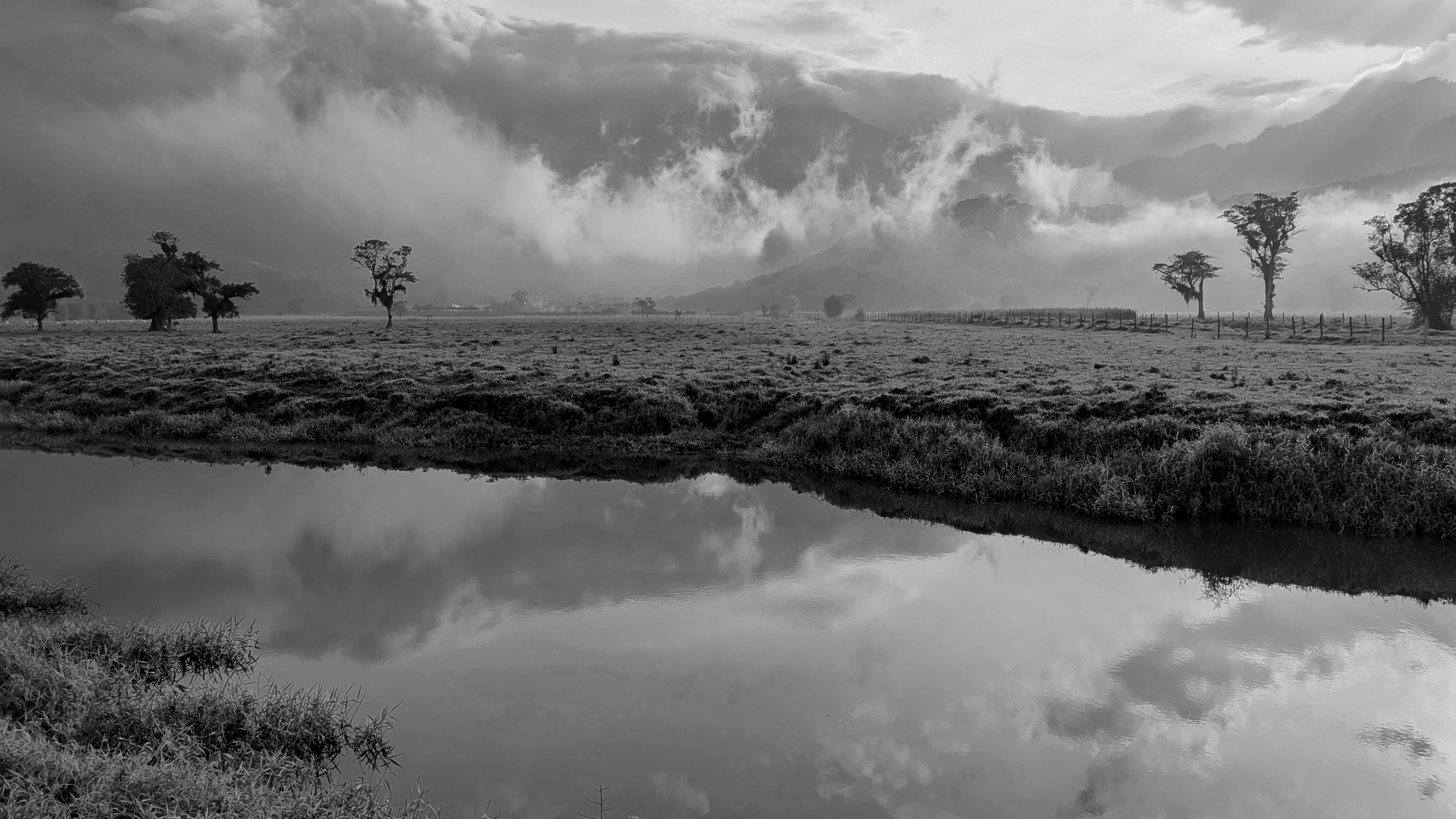
Off my bike on the side of the dirt road, I heard a few birds gossiping about news that sounded important, along with a yawning, or groaning, from deep in the trees. I was a few steps from thick, barbed greenery and assumed that, just behind, was a crouched Brazilian mammoth that almost certainly dined on humans with bicycle problems. Although I do adore how the supposedly silent countryside, when listened to closely, begins to roar, with insects buzzing, with grasses flickering against the wind, with little crackles and rattles and murmurs that I can’t identify but that I know are creatures just beyond my vision. I always wonder, when staring at the lush, impenetrable forest, how many creatures are staring at me.
The closest creatures, however, rode bicycles, which I soon felt closing around me while I used my fingers as a poor excuse for a wrench, the teenagers in the group encircling me the way I assume motorcycle bandits form a ring around their victims, giggling, jabbering, hollering, delighted by the sight of the tallest rider with the smallest bike. So I wasn’t alone. The group didn’t keep its pace. Encircled by these caffeinated cats, this wasn’t exactly what I had in mind. To me, this was a bit of pressure, a sense that I was responsible for the delay.
Even in the moment—amid the crackling insects, the screaming birds, the polish of sweat on my arms—I knew that this wasn’t reasonable. The urgency that I felt wasn’t shared. What I perceived in my bones didn’t match the joyful, boisterous cries that surrounded me, nor did it match the smile that I managed to convey. The bandits were perfectly content to linger, unexpectedly, skidding to stops and tossing little stones upward, until I became aware that my problem was instantly embraced by the group. I realized that I wasn’t going to be permitted to disappear into my own private frustration—and that it would be difficult, I think, to keep any problem private in this group.
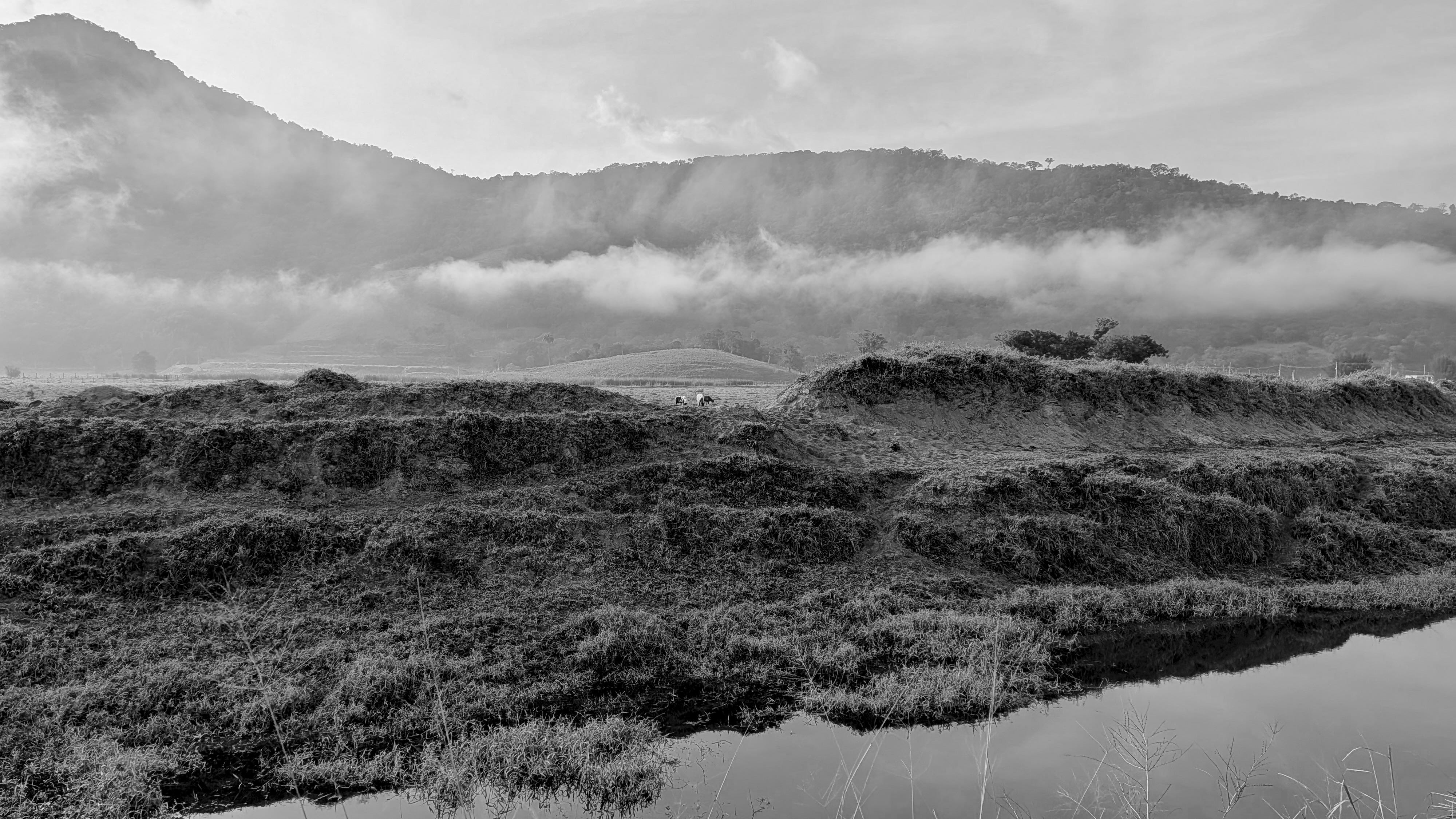
My perception is that there’s less space between people in Brazil—and that this dynamic is often, for me, a surprise. The barrier where one person ends and another person begins appears more elusive, though certainly closer, than the culture in which I was raised. Physically, this is straightforward and not too surprising: chairs are bunched closer at tables and strangers are more accustomed if not more comfortable with nudges and bumps and touches in public. That’s not too revealing or even that interesting although it does mirror a more interesting distinction with emotion, so that my perception as an outsider is that the same dynamic is present in the permeability of individuals. And obviously it shouldn’t have been much of a surprise to look up from the side of the road and find myself surrounded.
Yet I wouldn’t want to overstate this dynamic. Nor would I want to overstate my understanding of an electric, multifaceted, and almost kaleidoscopic culture. I’m an outsider who squints through a keyhole and struggles to describe a room that’s vast and mostly not visible from my position. Yet I still see less space between people, and this atmosphere redounds across the culture, in business norms, with family connections, to how conversations develop, even to the style of songs that echo throughout the streets. Or, perhaps, I could write the corollary, since this subject must be a comparison: in the United States there’s more space between people, and this tendency redounds onto friendships and relationships and it creates expectations and values and can even be witnessed when you watch a group from a distance.
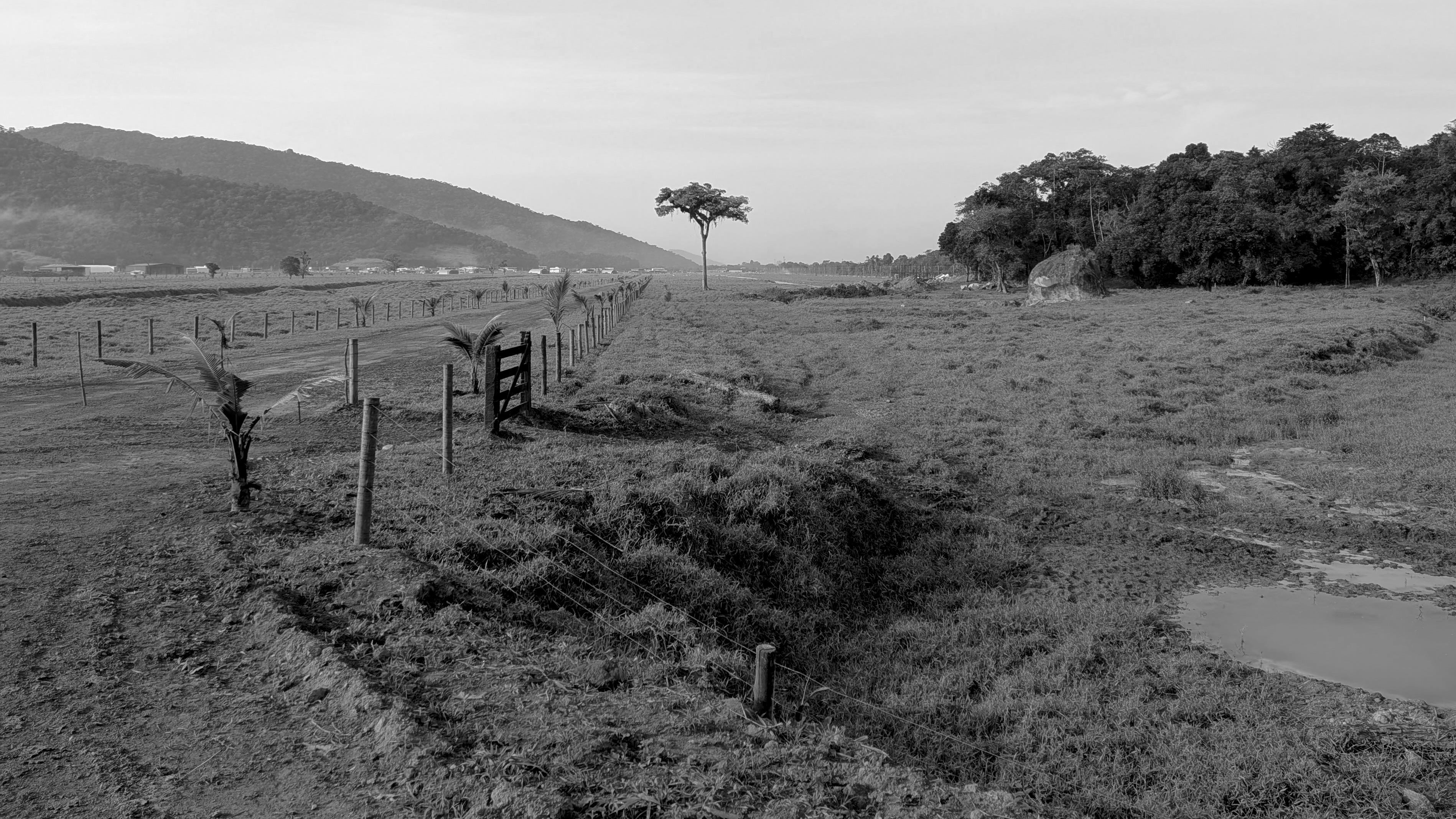
Riding away from a trifle of bike maintenance—I realize that I’m a little ashamed to admit, even to myself, that I would have listened if someone asked me to keep riding, that I would have continued along, insouciantly, not at all concerned, feeling perfectly congenial in my private world. And I find this unsettling to contemplate. I know that I would have slowed, I would have taken a glance backward, though I would have, also, listened to the serene bird calls, deeming the moment of isolation a time for me to listen closer. This alternative and more individual path feels a tad shameful, though that’s not exactly right, as I know that in my mind the instructions—I’ll catch up—were sincere, and I wouldn’t want to contest the words.
So: a quiet disorientation that arrives like a gust of wind from a nearby forest, leaving me with the recognition that I’m simply atrocious at accepting any assistance, whether that’s because it feels like exposure, or vulnerability, because it burdens the group, because it implies that I don’t have competence, or because it’s simply shrapnel from past experiences—it isn’t exactly clear in my mind. Of course I do wonder how many people have seen me in those moments when I’m attempting to not be seen and whether, at some point, that will ever be comfortable.
What’s most striking in my mind is that I can resist assistance during some of the most dramatic times over so many decades, but on a morning in Brazil I can witness its arrival during the most prosaic of times, almost whistling, with no expectations, no judgment. How silly—how straightforward—to switch bikes with someone shorter without any fuss, fashioning a collection of individuals into a group. And how satisfying to feel the slight wobble of the front wheel on the dirt road—how it traveled upward, pulsing through the handle and into my palms, a vibration that extended into my arms as a sensation that I found stirring and real and somehow pleasant in the cool morning air.
No posts
Comments
Nothing yet. Say the first thing.
Sign in to join the conversation.