
Dear readers,
I was at an event the other night when I heard someone say, “if you’re not feeling cynical right now, you’re probably not paying attention.”
It was hard to disagree with them. It feels like we’re living through a particularly dark moment in time, and each news cycle seems to only affirm this.
But here’s the thing: I also know that my cynicism doesn’t benefit me or any of the issues I care about. My friend and fellow scientist Jamil Zaki, a psychology professor at Stanford, was the one who helped me understand this. Last year, he came on “A Slight Change of Plans” to make the case for an alternative to cynicism—an approach that he calls “hopeful skepticism.”
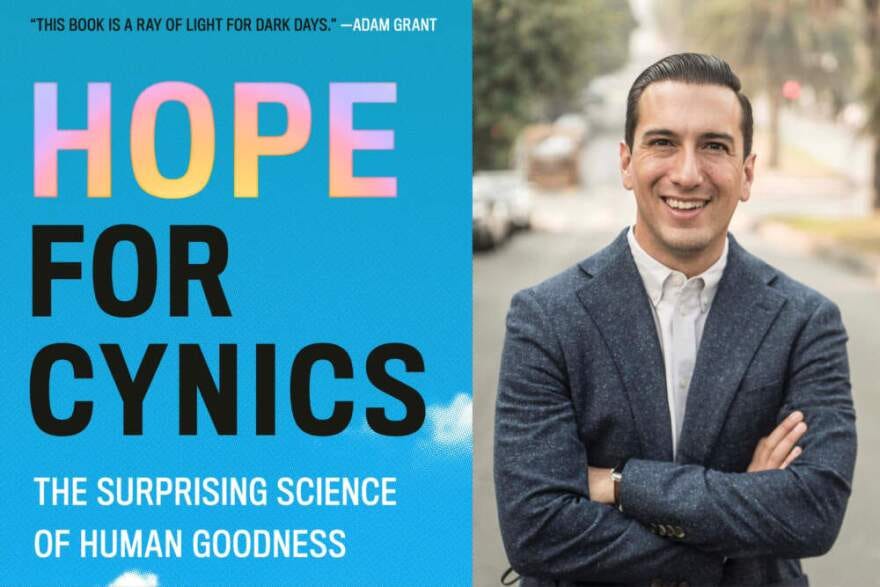
Jamil sees cynicism as a theory about humanity. It posits that people are selfish, greedy, and dishonest. It’s different from pessimism, which refers to a more general belief that the future will unfold in ways we don’t want.
Recently, I found myself falling back into old, more cynical habits of mind, and so I re-listened to the episode as a refresher. I’ve summarized the major insights below, in the hopes that it can help you rethink your relationship with cynicism.
Cynicism can be detrimental to our physical health: Relative to non-cynics, cynics show greater signs of cellular aging and inflammation, have a higher rate of heart disease, and die younger. Jamil has a theory for what might cause these negative physical outcomes: cynics may find it more challenging to build emotional connections with other people, which is a proven way to de-stress. As Jamil says, “If you’re cynical, if you don’t believe in people, then you kind of can’t digest or metabolize the social nourishment of connection.”
Cynicism may reduce our social impact: Research shows that cynical people are less likely to both vote and participate in social movements. They’re also more willing to spread conspiracy theories. One explanation for these findings is that when we believe that humanity itself is irredeemable, we feel helpless when it comes to doing something about society’s biggest problems. As Jamil says, “If a broken system reflects our broken nature, if the worst of us is who we really are, then any change, any attempt to improve the world or the systems that we live in, is doomed from the outset.”
Cynics aren’t smarter or wiser: It can seem like if we’re not feeling negatively about humanity, we’re either uninformed or naive. Surveys indicate that we tend to assume cynics have a more accurate grip on reality. For example, 70% of people think that cynics are smarter than non-cynics, and 85% of people think that cynics are more socially intelligent. But, interestingly, studies show that non-cynics actually perform better in both cognitive and social intelligence tasks.
Jamil’s alternative to cynicism is called hopeful skepticism. It involves interrogating our viewpoints like a scientist. Doing so will move us toward a more hopeful and positive place, because we’re actually just correcting for the negative biases we already have. As Jamil points out, “Our culture is so full of people giving life one-star reviews on Yelp…if the loudest conversations we have are about the worst things that happen, then we will end up with a skewed view of the world and of each other.”
“People always say, what, you want me to put on a pair of rose-colored glasses? And I say, ‘No, you’re probably already wearing a pair of glasses that’s mud-colored. So just take those off.’ ” -Jamil Zaki, Stanford professor
Jamil and I go into greater detail about how to cultivate hopeful skepticism in the podcast, but here is one practice that really resonated with me:
Social savoring, or slowing down to appreciate everyday human goodness.
One way I’ve been trying to practice this is to introduce moments of “moral beauty” into my life, based on research by the psychologists Dacher Keltner and Jonathan Haidt (I also recommend checking out my conversation with Dacher about the science of awe—including moral beauty— if you’re feeling down about the world lately).
My editor, Kate, had a moment of social savoring just yesterday: “I’m a floral artist and a gardener, and yesterday afternoon I came across a redwood potting bench, marked “free” on the side of the road, just a few minutes’ drive from my house. It didn’t fit into my car, despite multiple attempts, but no fewer than three passersby offered to help me try, and one elderly man even offered to return with his car if I was still having trouble. I really tried to savor the kindness of my fellow neighbors and the positivity of those interactions stayed with me for the rest of the evening.”
“I think it’s important to remember that hope oftentimes isn’t out there in the ether. It’s right here all around us in the communities that we live in.” -Jamil Zaki
Ok, here are your prompts for the week:
Can you share a time when someone proved your cynicism wrong?
How will you practice social savoring this week?
Cheers to entering the New Year with a more positive skip in your step. 🙂 I’d love to hear from you in the comments!
Warmly,
Maya 💫
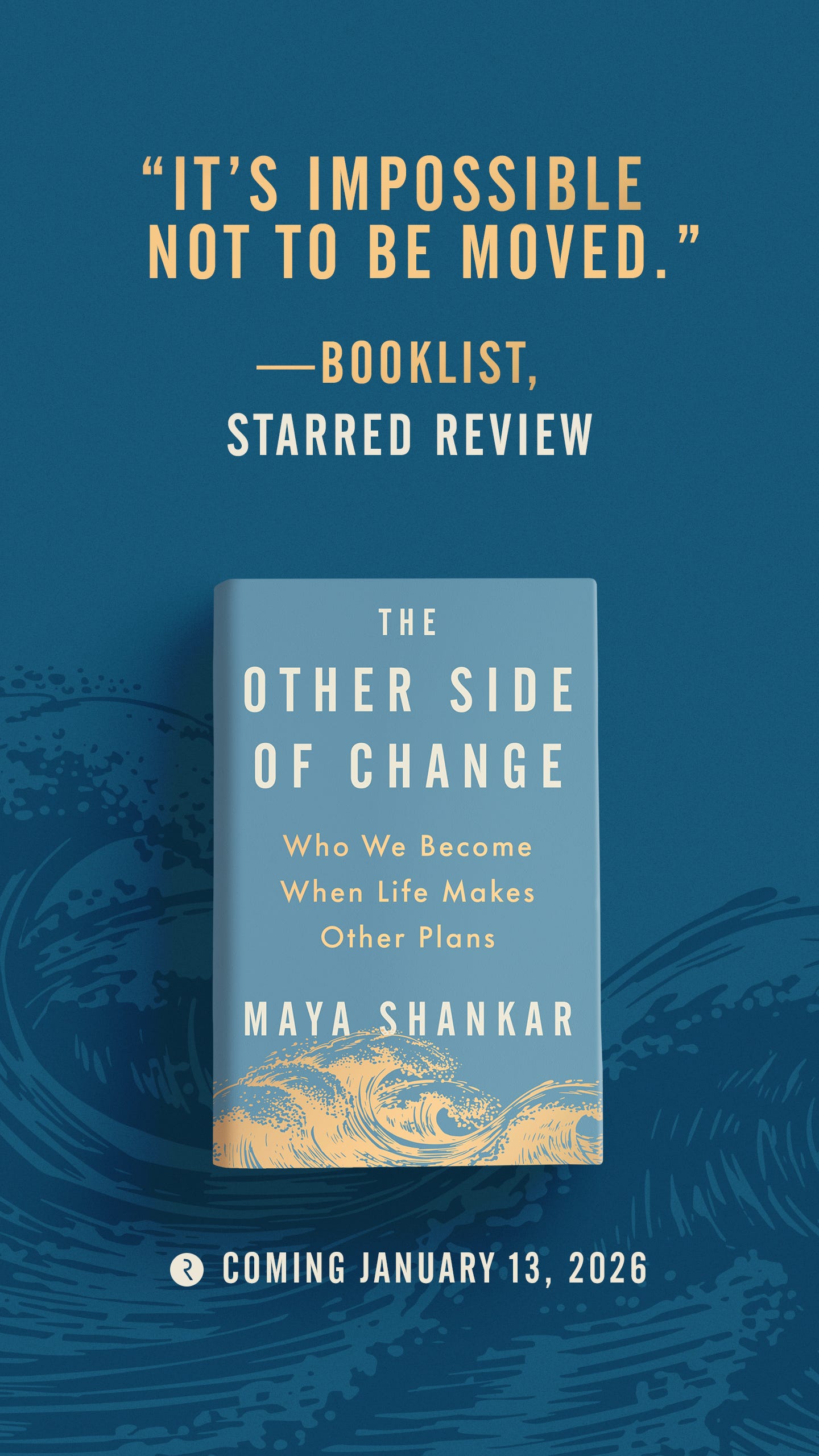
P.S. My book, The Other Side of Change: Who We Become When Life Makes Other Plans, is coming out in just TWO WEEKS! I’d love it if you could pre-order a copy. It blends cognitive science and in-depth personal narratives to help us navigate life’s inflection points with a greater sense of possibility.
No posts
Comments
Nothing yet. Say the first thing.
Sign in to join the conversation.