
The capability is called Integrated Sensing and Communication. It is in the official 6G standards framework, vendors are building it, and Germany's privacy regulators have already issued a formal warning about it. Here is what it does.
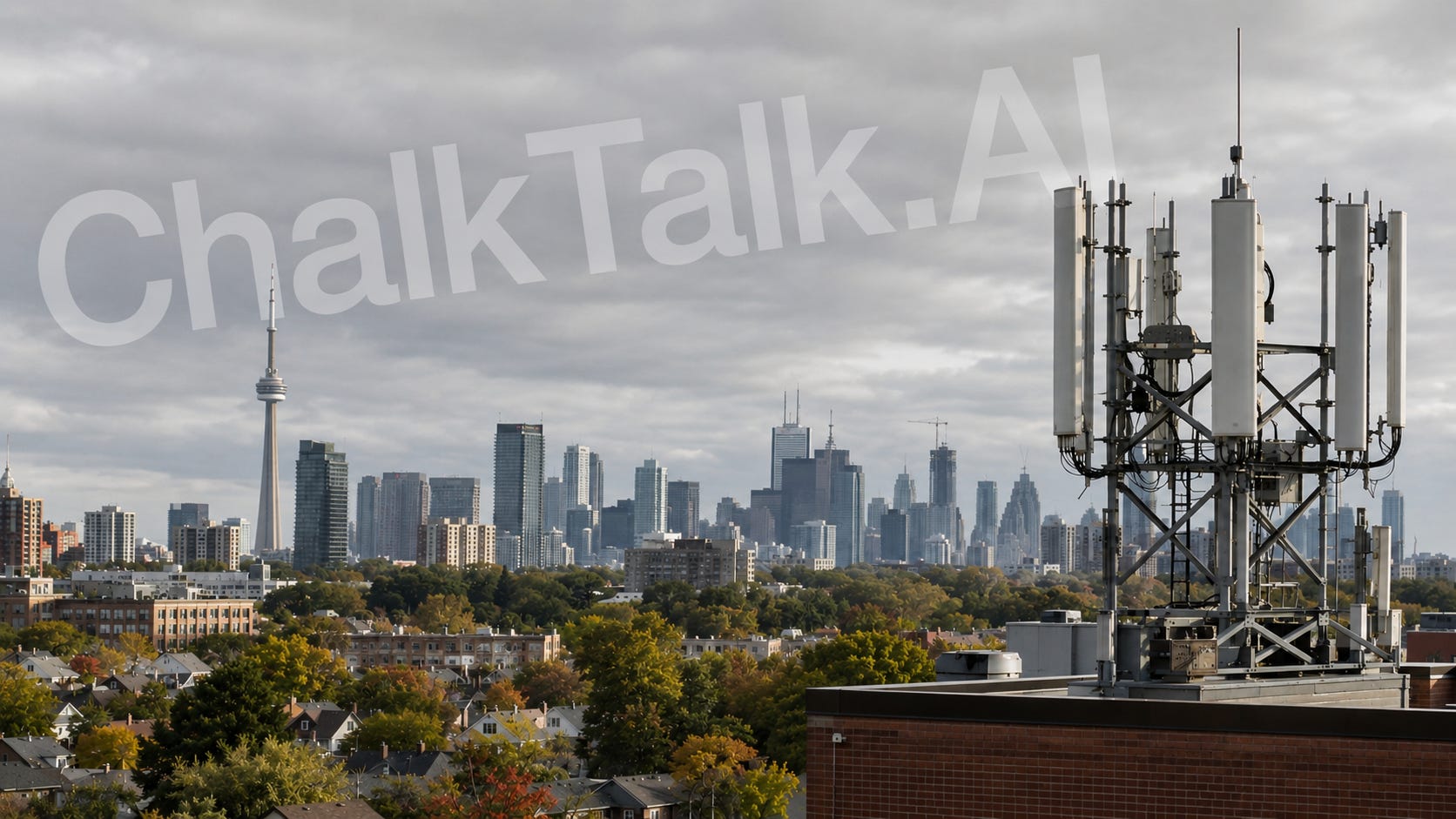
A claim circulating right now says 6G will turn cell towers into radar systems capable of detecting people and movement without any device.
That is an accurate description of a technology called Integrated Sensing and Communication — ISAC, sometimes called joint communication and sensing. It is not speculative. It is not a leak. It is a named, funded, standardized workstream that the telecom industry describes in roughly the same terms the viral posts do.
A cell tower transmits radio waves continuously. Those waves strike objects — vehicles, walls, drones, people — and reflect back. Radar has operated on this principle since the 1930s.
ISAC analyzes those reflections to extract an object’s distance, speed, and direction of movement, using the same signals that already carry voice and data. The tower does both jobs at once.
The critical property is that the target is entirely passive. Unlike phone-based positioning, where your handset actively transmits, a sensing target contributes nothing. It only has to reflect. No phone, no chip, no tag, no battery, no account, no app.
The ITU has designated ISAC as one of six official usage scenarios for IMT-2030 — the formal name for 6G. It sits alongside immersive communication, hyper-reliable low-latency communication, massive communication, ubiquitous connectivity, and AI-integrated communication.
3GPP, the body that writes global mobile standards, has identified more than 60 candidate use cases. Release 19 built the channel models needed to evaluate sensing. Release 20 is running active study items on network-based sensing, with early commercial work focused on base stations detecting drones. Release 21 begins the normative 6G specifications. Public safety agencies are tracking the work directly, citing the network’s ability to determine range, velocity, position, size, and even material composition of objects in coverage.
On the commercial side: Samsung Electronics and LG Uplus signed an agreement on 27 May 2026 to jointly develop ISAC, with Samsung Research leading. LG Uplus’s own white paper describes repurposing existing 5G infrastructure as a sensor array that detects people and objects even when they aren’t carrying a device. Ericsson describes ISAC as detecting, locating, and tracking objects including passive ones with no electronics. Nokia Bell Labs researchers have proposed using base station grids to sense weather.
Germany has invested roughly €700 million in 6G research and development. Commercial deployment is generally expected around 2030.
The baseline capability — presence, motion, speed, direction — is established.
Beyond that, research points further. Germany’s Conference of Independent Data Protection Authorities, the body coordinating the country’s privacy regulators, approved a position paper in June 2026 assessing the technology. It states that machine learning applied to sensing data could enable determination of breathing, heartbeat, and individual gait patterns. Radio waves penetrate walls and solid obstacles, which puts through-wall sensing in scope.
The regulators’ characterization is direct: the capability amounts to something comparable to invisible video monitoring, with significantly broader reach.
These extended capabilities currently come from research and controlled demonstrations. Signal resolution falls off with distance, wall materials, weather, and clutter — the further and more obstructed the target, the coarser the read. That is a present engineering constraint, and engineering constraints move. Sensing that requires proximity today is the kind of thing that gets extended by better antennas, denser deployments, and better models.
The regulators’ central objection is structural rather than technical.
There is no consent mechanism. You can deny an app location access. You can leave your phone at home. You cannot decline to reflect radio waves. Everyone within range is sensed by default, including people who never agreed to anything and have no way of knowing it is happening.
This is why the timing of the debate is what it is. Wireless standards are extraordinarily difficult to modify once adopted — the installed base, the certification regimes, and the chipsets all lock in together. Whatever privacy architecture exists in 6G has to be written during the specification phase, which is happening now, not after deployment.
Researchers at the Barkhausen Institute in Dresden are working on safeguards including hardware kill switches for sensing functions and applications that notify users when environmental sensing is active nearby. The European PAISES-6G project, led by Universidad Carlos III de Madrid, is pursuing similar protections. Whether any of it survives into the final standard is undecided.
Public discussion tends to jump to state surveillance. The nearer-term question is commercial.
The economics of ISAC are that sensing becomes nearly free. LiDAR and dedicated radar require separate hardware to purchase, install, power, and maintain. ISAC runs on infrastructure carriers have already built, which is precisely why they are interested — it opens revenue beyond connectivity. Ericsson’s own materials discuss monetization models.
Sensing that costs almost nothing gets deployed almost everywhere. That means property managers, employers, retailers, and insurers buying occupancy and movement analytics as a service. And it arrives in a form most organizational policy does not cover: it isn’t a camera, so camera policy doesn’t apply.
If you work in facilities, security, HR, insurance, logistics, retail analytics, or compliance, the practical step is available now. Pull your organization’s monitoring and privacy policies and check whether they govern cameras or whether they govern sensing. Most say cameras. Policies written around a specific device category do not survive contact with a capability that has no device.
The timeline is long, which is the useful part. There are years to write that language deliberately rather than under pressure.
The technology detects people who are not carrying anything. That is what it is designed to do, that is how its builders describe it, and it is on track to be standard infrastructure by the end of the decade.
Sources: ITU IMT-2030 framework; 3GPP Release 19/20 documentation; German Data Protection Conference position paper, June 2026; Samsung/LG Uplus joint development announcement, May 2026; Ericsson and Nokia Bell Labs published ISAC materials.
Comments
Nothing yet. Say the first thing.
Sign in to join the conversation.