
A species-appropriate feeding of rabbits and guinea pigs is based on the diet of the animals in the wild.
Both species of rabbits feed on plants rich in raw fibres such as grasses, herbs and barks in their original habitat.
The digestive tract of the animals is designed in such a way that they can extract all necessary nutrients from this food supply.
The food of wild animals is low in energy, that is. It contains a few carbohydrates.
Rabbits and guinea pigs cannot digest large quantities of carbohydrates, such as those contained in cereals, according to farmpally animals digest.
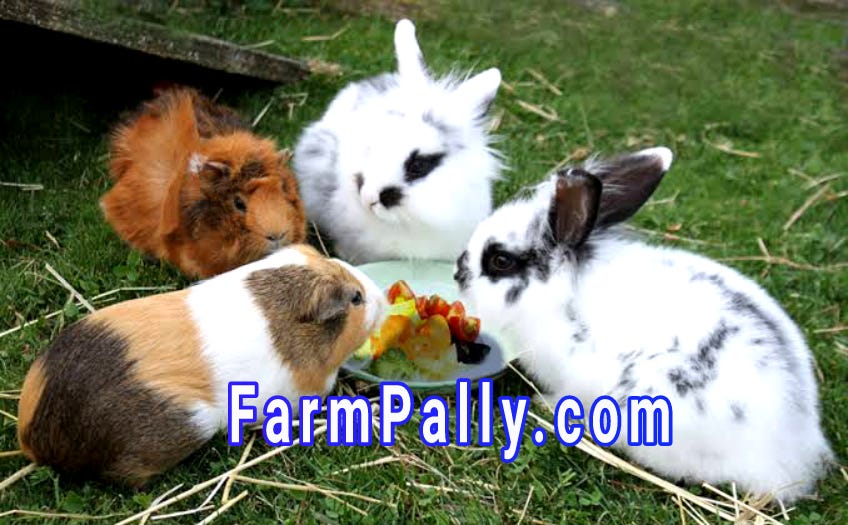
A diet rich in crude fibre is also important, as long as chewing and chopping of the fibres, for example, hay leads to abrasion of the teeth.
The teeth of both animal species grow throughout their lives.
Wear and tear due to the right food supply reduces the formation of tips and hooks, which can damage the tongue and mucous membrane of the mouth.
Such painful mucous membrane injuries can make it difficult or even impossible for the animals to eat.
Rabbits and guinea pigs consume many small portions of food during the day.
This not only leads to the necessary wear and tear of the teeth but also ensures that the animals' stomachs and intestines are kept in motion, thus enabling healthy digestion.
The digestive system has few muscles and therefore little inherent movement, which is why many small food portions must ensure that the food can be "pushed" through the digestive tract.
If the food remains in the stomach or intestine for too long, it can lead to faulty fermentation. Therefore, food must always be available to the animals.
The correct composition of the feed for rabbits and guinea pigs therefore helps to reduce the risk of digestive and dental problems and to keep the animals healthy for a long time, chaktty.
Freshwater should be available to the rabbits always and should be changed daily once it's dirty.
Nipple drinkers are not recommended, as they require the rabbit to adopt an unfavourable posture when drinking.
It is best to provide the water in a stone or ceramic bowl. If the performance water should be chlorinated, it is advisable to boil it beforehand or simply use still mineral water instead.
Bottled water should also be used if the tap water has a high nitrate content.
Other liquids do not need to be given to the rabbit additionally.
Camomile tea is only useful for medicinal and therapeutic use and milk is used by the rabbit.
Very few rabbit keepers know what processes take place in the bodies of the small rabbits after they have eaten.
It is, however, of utmost importance to understand the interrelationships if you want to feed your rabbits properly and provide them with healthy food.
Both the front incisors and the molars of a rabbit grow up to 1.8 mm a week throughout their lives.
Therefore, food and nibbles must be provided that encourage tooth abrasion, otherwise, if not properly worn, injuries in the mouth area and obstruction of food intake can result.
The gastrointestinal tract of rabbits also requires certain feeding rules. Although the digestive tract performs miracles in making the best possible use of low-nutrient rabbit food, the stomach wall, in particular, has only weakly developed muscles.
As a result, food that has been ingested is only transported further when new food "slips through".
One speaks of the so-called stuffed stomach. This means that digestion can only be kept going if the rabbit repeatedly eats small portions.
Therefore, the pet must be provided with food always , Akin C. Raph concluded.
Comments
Nothing yet. Say the first thing.
Sign in to join the conversation.