
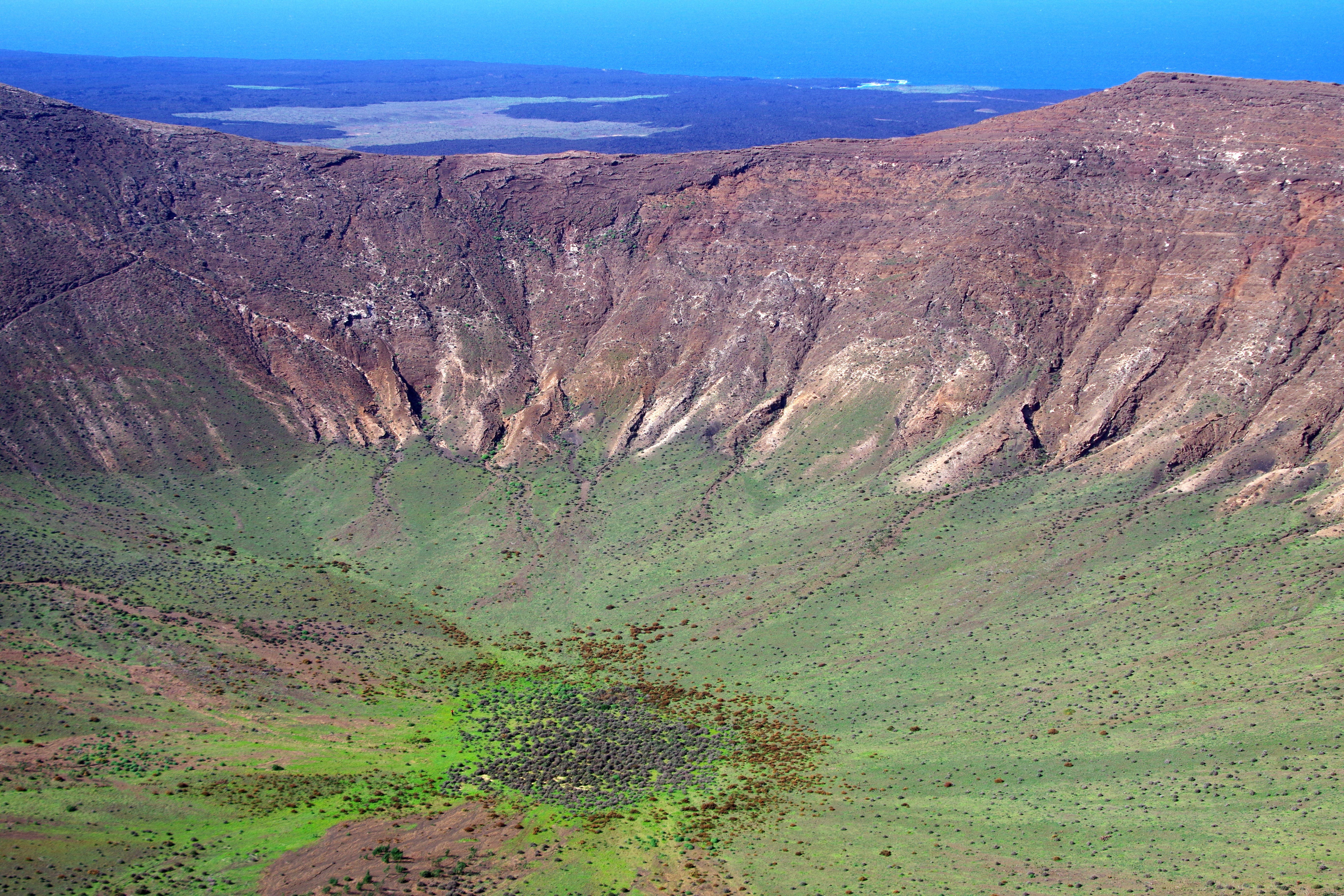
Far out in the Atlantic Ocean, beyond the edges of the kelp forests of the continental shelf of Europe lies an island that belies all geography. It is five hundred metres long and five hundred metres wide. It is bowl-shaped, with steep, sharp cliffs rising up all round the perimetre to protect the grassy interior from the raging winds outside. The interior of the island is thus calm and silent. Wildflower meadows relax in a lush blanket.
You would think that this island, being so totally isolated and so stubbornly inaccessible, might be home only to flying creatures. Northern insomniac albatross, maybe, or the ubiquitous scraggy tern of boredom. You will not, however, find any such soaring beauties, for on this green oasis you will find a flightless bird known as the tarabula.
The tarabula, much like its island home, is an anomaly of nature. Aside from its inability to fly, which is not otherwise unheard of, it gives birth to live young. Moreover, again extremely unbirdlike, it has fur instead of feathers. The fur is black and white. The bird is about the size of a turkey, but is much rounder: it looks, in fact, rather like a cross between a very fat kiwi and a panda.
If you were on the island and you had any questions as to the possible reasons for the evolution of such a strange, rotund creature, you would not hold them very long. This is because, were you to stand on the perimetre cliffs and look into the bowl, you would observe hundreds of tarabuli rolling from one side of the island to the other. You would watch as they rolled up one side of the cliffs and back down, then up and down the opposite cliffs, like so many black and white marbles in a soup bowl, getting higher up the cliffs with each roll they took across the bottom. Hundreds of them rolling over and back and over and back.
At some point, you would watch as several of the puffy balls rolled over the top of the perimetre. They would spring upwards into the air and plummet down the outside of the cliffs, plopping violently into the ocean waters below.
And then what?
Then they fish.
The tarabuli’s prey is the Atlantic gorble fish. The gorble fish is infamous for being the most directionless fish on the planet. If a gorble fish wants to go left, it goes right. If it wants to go up, it goes down. And if it espies a predator, rather than swimming away, which is what it presumably wants to do, it swims directly into the assailant’s path. This makes hunting incredibly easy for the tarabuli, which is a good thing because they can’t swim.
The whole spectacle is a wonder of anti-symbiotic lunacy. The tarabuli, who instantly panic, drop into the water in a fit of fright. The gorble fish, witnessing these sudden avian bombs, swim right towards them. The tarabuli wolf down the gorble fish and rise to the surface.
Since the tarabuli cannot swim, they rely on the power of the ocean to return them to the island. The island, being so battered by the water, has been eroded into an intricate cheese-like structure: the green meadows in the middle are punctuated by many blow-holes that spew salt water upwards with the force of an incoming wave. The tarabuli bob about outside the cliffs until a good wave comes, at which point they are sucked under the island and shot furiously upwards through the blow-holes. They land back where they had started from.
The tarabuli have no concept of hunting. They do not know that what they have just done is keeping them alive. They know only that they enjoy rolling. The fact that nature has paired two such inept and clueless creatures, and that the relationship continues despite all the odds is truly wonderful.
No posts
Comments
Nothing yet. Say the first thing.
Sign in to join the conversation.