
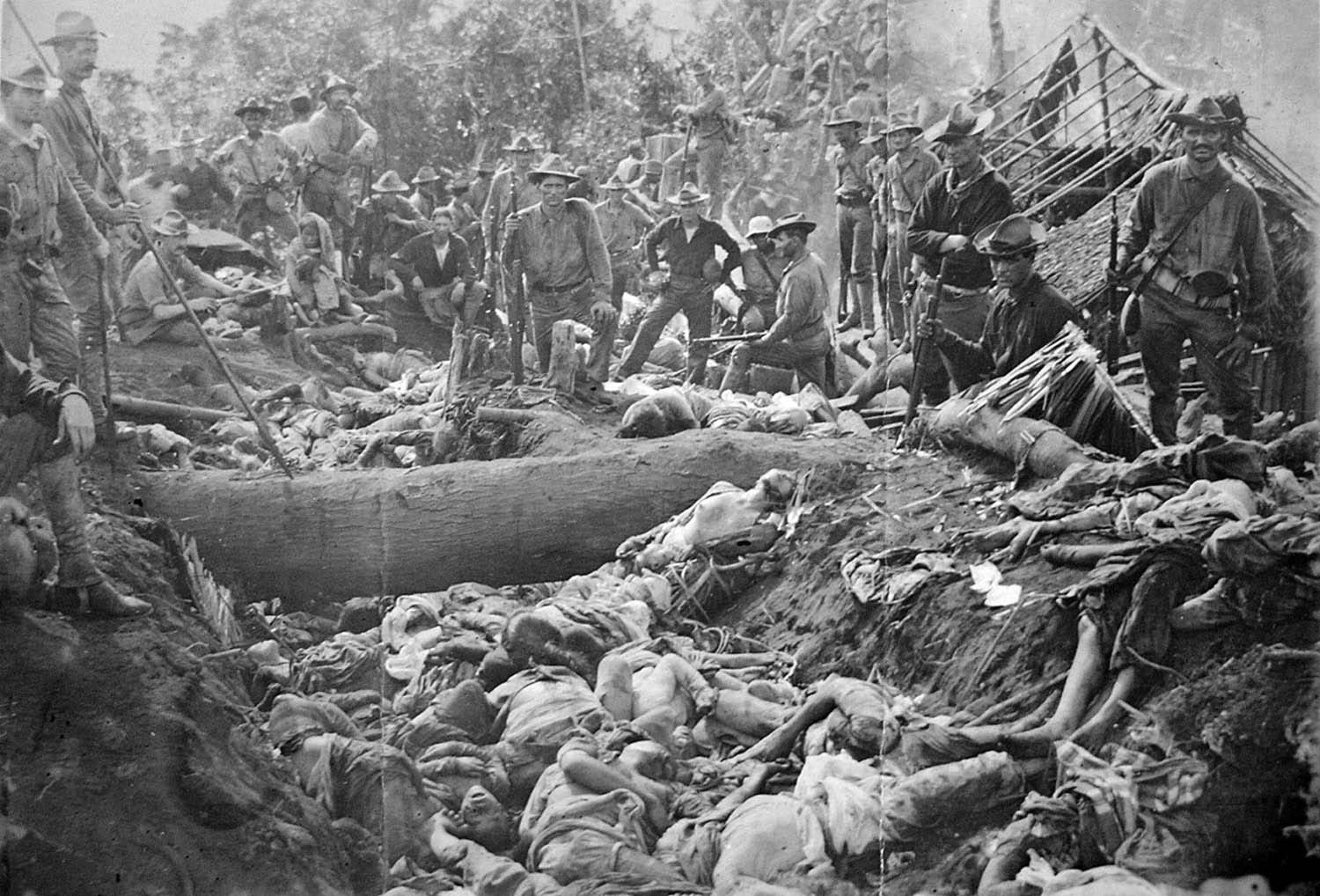
The US Army murdered men, women and children at the small village of Balangiga (located in the Samar Province) in 1901.
I discuss the darker side of celebrating war and the moral injury of wars of choice. Memorial Day is a day of remembrance and an existential wake.
This day is about the ashes of victory and blood lakes of defeat. I show how the American way of war is far more brutal and murderous than the usual suspects let on.
"By this time, the hearing was in shambles, and when the ruffled naval hero (Dewey) stepped down on June 28, Beveridge, on instructions from Lodge, adjourned the committee for good. Apparently there was no protest from the opposition. A petition from five leading anti-imperialists calling for an ad hoc congressional committee to go to the Philippines and investigate conditions there was ignored. Beveridge had the last word in the "investigation" by gleaning from the record anything that remotely supported his conclusion that the war was one of the most humane ones in history and then publishing this deceitful cut-and-paste job as a separate senate document. (S. Doc. 422, 57th Congress., 1st Session) As far as Beveridge was concerned, the Lodge committee had destroyed the malicious fiction of "the slanderers of the Army."
*
"(This testimony) almost coincided with the publication of a soldier's letter boasting that the writer had used the water cure on 160 Filipinos, all of whom save twenty-six died from the ordeal. The army quickly extracted denials from the writer and his superiors." Benjamin O. Flowers, "Some Dead Sea Fruit of Our War of Subjugation,"
Stuart Creighton Miller (1982). "Benevolent Assimilation: The American Conquest of the Philippines, 1899-1903”.
The Philippine Investigating Committee hearings were published in three volumes as Senate Document 331, 57th Congress, 1st Session An abridged version of the oral testimony can be found in: Henry Graff (1969). American Imperialism and the Philippine Insurrection: Testimony Taken from Hearings on Affairs in the Philippine Islands before the Senate Committee on the Philippines--1902
American political leaders did not consider the Filipinos entitled to the political rights of civilized peoples, and American military leaders did not believe they were entitled to the humanitarian protections of civilized peoples. Many of the explanations provided by military leaders at the 1902 Senate hearings were consonant with the opinions of the troops on the ground. The testimony of General Robert P. Hughes, who commanded American troops around Manila in 1898, included this exchange with Senator Joseph Rawlins (D-Utah) on the practice of burning Filipino villages:
Rawlins: “The punishment in this case would fall, not upon the men, who could go elsewhere, but mainly upon the women and little children.”
Hughes: “The women and children are part of the family, and where you wish to inflict a punishment you can punish the man probably worse in that way than in any other.”
Rawlins: “But is that within the ordinary rules of civilized warfare?…”
Hughes: “These people are not civilized [Senate Hearings, 64–5]. It would be comforting to think that war atrocities by Oregon Volunteers were desperate acts produced exclusively by the fear and anger of combat conditions. It is true that the trauma of combat produced a profound change in their understanding and treatment of the enemy, but it was a change enabled by a racial ideology they had already embraced. All claims of political or humanitarian rights were, in the American mind, conditioned on race. Thus the soldiers could maintain one set of standards of self-determination and political participation for European peoples and another for non-European peoples — one set of wartime ethics for European adversaries and another for American Indians. The soldiers did not change their ethical system as a result of combat. They simply re-categorized the Filipinos by race. In making their Filipino enemies into blacks and Indians, the soldiers were able to place both the objectives and the methods of the war beyond doubt.”
***This episode is not for the squeamish or faint of heart.***
Thoughts?
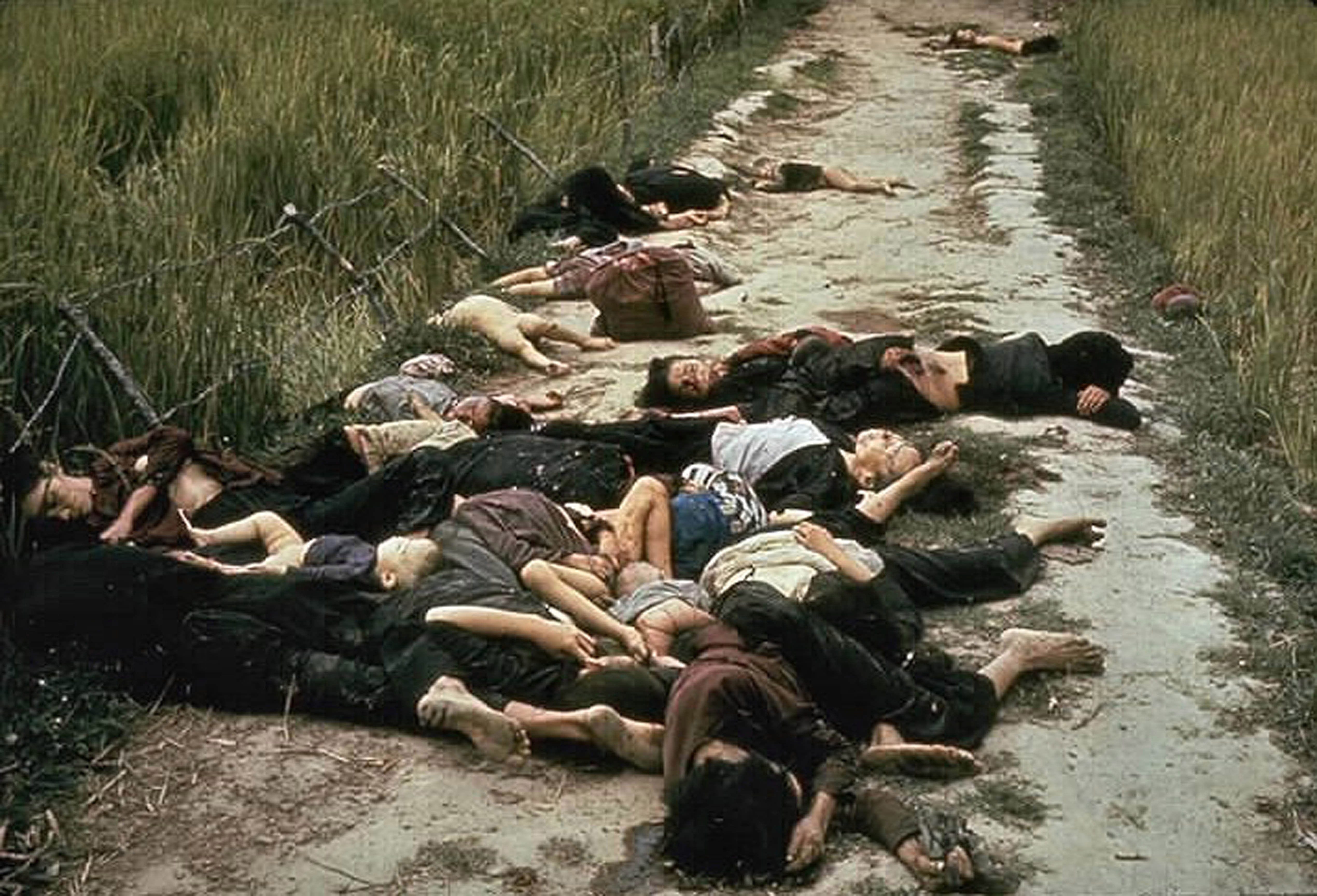
U.S. WAR CRIMES IN THE PHILIPPINES
“Marked Severities” in Philippine Warfare: War Secretary Root
James M. Scott Rampage: MacArthur, Yamashita, and the Battle of Manila
Howard Jones My Lai: Vietnam, 1968, and the Descent into Darkness
Karl Marlantes What It Is Like to Go to War
Bill Russel Edmonds God is Not Here: A Soldier’s Struggle with Torture, Trauma, and the Moral Injuries of War
Clark Savage King of All Things: A Guide to Man’s Martial Purpose
Dick Couch A Tactical Ethic: Moral Conduct in the Insurgent Battlespace
Andrew Bacevich Paths of Dissent: Soldiers Speak Out Against America’s Misguided Wars
Shauna Springer WARRIOR: How to Support Those Who Protect Us
Jonathan Shay Achilles in Vietnam: Combat Trauma and the Undoing of Character
Jonathan Shay Odysseus in America: Combat Trauma and the Trials of Homecoming
Another podcast:
Martyrmade: Anything That Moves - The My Lai Massacre (w/History on Fire)
Email me at cgpodcast@pm.me
Comments
Nothing yet. Say the first thing.
Sign in to join the conversation.