
*Please note the opinions presented in Substack pieces do not necessarily reflect the views of the Canadian Future Party Youth Wing or the Canadian Future Party.
*Veuillez noter que les opinions exprimées dans les articles Substack ne reflètent pas nécessairement les vues de l’Aile jeunesse du Parti Avenir Canadien ni celles du Parti Avenir Canadien.
From the earliest beginnings of Canadian history, the Monarchy has been a core part of Canadian identity and Tradition. Whether it be Loyalists and indigenous groups (like the Haudenosaunee led by Joseph Brant) migrating to Canada in the aftermath of the American Revolution due to their loyalty to the crown, to Canadians fighting in both World Wars for King and Canada or even the crowds of Canadians who watched the King arrive in Ottawa this past summer when he defended Canadian sovereignty. Canada has changed dramatically from its creation to now, but there has been one constant throughout that: the Monarchy. The Monarchy should not be abolished as it offers three main benefits. First, it offers an advantage in stability compared to republics like the USA. Second, the monarchy offers a third way between republicanism and authoritarianism (communism). Ultimately, it provides a connection to the past as we move into the future, preserving our identity and tradition. Further, there is also no clear or good plan to replace the monarchy.
One of the core benefits of the Monarchy is the stability that it offers. Of the 193 countries in the world, only 24 are constitutional monarchies. Ten of them are ranked as the most democratic states in the world, including the three most democratic states: Norway, New Zealand and Sweden. Canada is likewise one of the most democratic states in the world, thanks in part to our Westminster-style government that is led by our non-partisan Monarch. The neutrality of our monarch is crucial as the Monarchy holds significant reserve power that it can use, including:
The ability to dissolve parliament (which leads to an election).
The ability to give (or refuse) royal assent to laws, allowing them (or not) to go into effect.
The ability to dismiss a prime minister.
The ability to prorogue parliament.
Foremost constitutional scholars, including Eugene Forsey and Peter Hogg, agree that without the monarch and their reserve powers, our democracy and its systems would not be able to function effectively. They act as safeguards to protect Canadian democracy from overreach, opportunism or outright authoritarianism by our elected government. A partisan head of state couldn’t effectively wield these reserve powers due to their own partisan political biases or perceived biases. The Monarchy also acts to moderate and temper our politics as they reduce our politicians from being celebrities and godlike figures that they are in the USA to being mild middle-level management who work on behalf of and report to the non-partisan Monarch. This has been a crucial part of the success of our Westminster system.
The Monarchy and the Westminster system offer Canada and many of our other commonwealth brethren a third way forward politically. American-style republicanism assumes that the majority is always right absolutely. In a perfect world, this might be true, but we live in an imperfect world, as evident in the recent US election or in Germany, where Hitler was elected by the people, both of which show majority made a questionable choice. Authoritarianism assumes that the leaders of the nation are always correct, which again isn’t true. The Monarchy and the Westminster system aren’t perfect, but they offer us the best foot forward in an imperfect world, as the monarch and the parliament (elected by the people) act as counterbalances against each other to ensure that our nation has stable, effective government. As the Canadian academic John Farthing notes, “there is no such pride and presumption in the ideal of kingdom. It knows nothing of absolute perfection.” “It seeks only to retain what it knows to be good and to attain to whatever is better. And meantime to perform the duties of the moment in which past and future are fused.”. Therein lies the greatest strength of the Monarchy, as they serve to make Canada better above all else by combining 1000 years of accumulated experience and using it to help guide Canada into the future unknown.
Philosopher Edmund Burke notes that our system of monarchy and the Westminster system is a contract between the living, the dead and those who are yet to be born. This is true of the Canadian Monarchy, as, in addition to its other benefits, it serves to anchor us in our past, our traditions, and the very essence of Canada’s existence. Our entire reason for existing is a rejection of America, republicanism and American ideals of Life, Liberty and the pursuit of Happiness. Our forefathers fought hard to build Canada, striving for a better future and resisting American influence, with the Monarchy, which has witnessed all the greatest achievements of Canada, remaining a testament and connection to those past accomplishments. If we try to remove the monarchy, we slide further into abandoning what makes Canada, Canada, bringing us closer to Americanism. We have had many chances to remove the monarchy throughout our history. In 1812, we could have welcomed the USA, but we didn’t. English, French and Indigenous people came together and fought for the Monarchy and for Canada. In the 1980s, in the lead-up to the repatriation of the new constitution, politicians, from MPs to Premiers, whether they were socialists and social democrats of the NDP, Liberals and Red Tories, or Blue Tories of the PC Party, were committed to keeping the Monarchy.
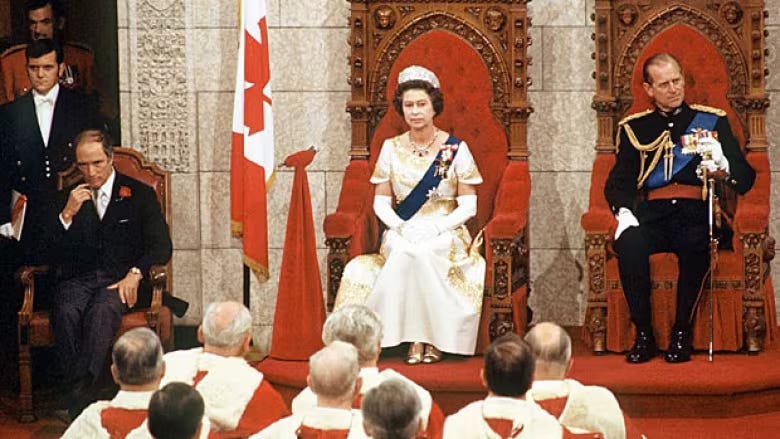
To those who say the Monarchy doesn’t care about Canada or is uninterested in us, they couldn’t be more wrong. The Monarchy has a long record of being active in Canada if one looks into it. Prince Arthur (son of Queen Victoria) volunteered and fought with Canadians for Canada during the Fenian Raids. He later would go on to be Governor General, steadying us through the start of the First World War. Queen Elizabeth II, when on a tour to the USA, was asked by Ronald Regan where she was travelling next, to which the Queen responded, “I’m going home… to Canada”. Princess Anne lives in Canada, and her Grandsons are Canadian. Most importantly, during the threats of US annexation this past year, King Charles III unequivocally supported Canada. Whether it be attending the British Navy Fleet Review wearing a Canadian uniform and medals, or asking to be referred to as the King of Canada during a trip to Italy, clashing with the British Prime Minister over his invitation of Trump to Great Britain, and most importantly, he opened Canadian parliament as an unequivocal show of support. There are hundreds more examples that can be drawn upon to show that the Monarchs aren’t absentees who have little interest in Canada. It is clear that they love and are willing to be involved in Canada.
The Monarchy also has one further benefit in that replacing it would be costly, politically catastrophic, difficult and would lead to Canada being torn apart as a nation. Constitutional scholars agree that removing the Monarchy would require the government to open the constitution. For any constitutional amendment to pass, it would require the consent of all 10 premiers and their governments, as well as a ⅔ majority in both the House of Commons and the Senate. This is a near political impossibility, as when Prime Minister Mulroney attempted to amend the constitution, it failed miserably, leading to the Quebec referendums, the rise in western populist conservatism and his party being reduced to two seats. Canada is much more polarised today, and any attempt to open the constitution would be nothing short of catastrophic. Further, the Republican movement has no concrete or good plan to replace the Monarchy. If we just turn the Governor General into a president, how are they chosen? If the Government appoints them or elects them through parliament, or if the people elect them, it results in a partisan Head of State. Thus, as noted earlier, this completely undermines our system of government, which ensures our democracy by having a non-partisan, unappointable Head of State with reserve powers. If the Prime Minister becomes the president, we now have all the same problems that plague America and are causing its slide into authoritarianism and demagoguery. There’s also the cost of replacing the Monarchy, which will be billions, and we will still have to pay for a president, Presidential elections, a president's residence and staff. Which saves us no money compared to our current Monarchy.
In summary, the Monarchy is a core part of Canada as a country and our political system that has brought us so much success. The reason the Monarchy should remain is that it offers us stability and safeguards our democracy, providing a middle ground between political extremes. It is a core part of Canadian identity and tradition, keeping us rooted in both as we move forward, and it has strong connections to Canada. Further, replacing the Monarchy would have catastrophic consequences, would be expensive, and there is no defined way forward; thus, the Monarchy must remain.
No posts
Comments
Nothing yet. Say the first thing.
Sign in to join the conversation.