
Congressman Ro Khanna is a long-shot in the 2028 conversation, but his candidacy could matter more than the odds suggest. He’s great at making headlines, but is he right to lead the party? Everyone weighs in.
Barack Obama walked so Ro Khanna could run. Having vanquished Hillary Clinton on his distinguished opposition to militarism in the Middle East, Obama won the primary and pledged to restore foreign policy sanity and bring Israel in line with its obligations. He campaigned on populist terms, promising to fix our healthcare system and unite the nation on our universal values.
Once in office, Obama betrayed nearly every principle he had presented to the voters. Obamacare offered crumbs while entrenching a criminally corrupt and broken healthcare system. He extended the Bush-era War on Terror — from illegal drone strikes, to the surveillance state, to the expansion of ICE — which we continue to suffer under today.
There are many sources of Obama’s failure, among them inaugurating a new standard of corporate corruption and elite capture in the executive branch. While in Congress, Obama had served as the junior senator from the state of Illinois; in the White House, he operated as the president from Silicon Valley.
Obama walked so that Khanna could run. We recognize and appreciate Ro Khanna’s early endorsement of Bernie Sanders, his somewhat courageous confrontation with the Epstein class, and his even more courageous advocacy against Israeli apartheid and genocide. Credit where credit is due. But real courage would require an outright rejection, disavowal, and direct aim at the tech sector that built Khanna’s career. He is literally the congressman from Silicon Valley.
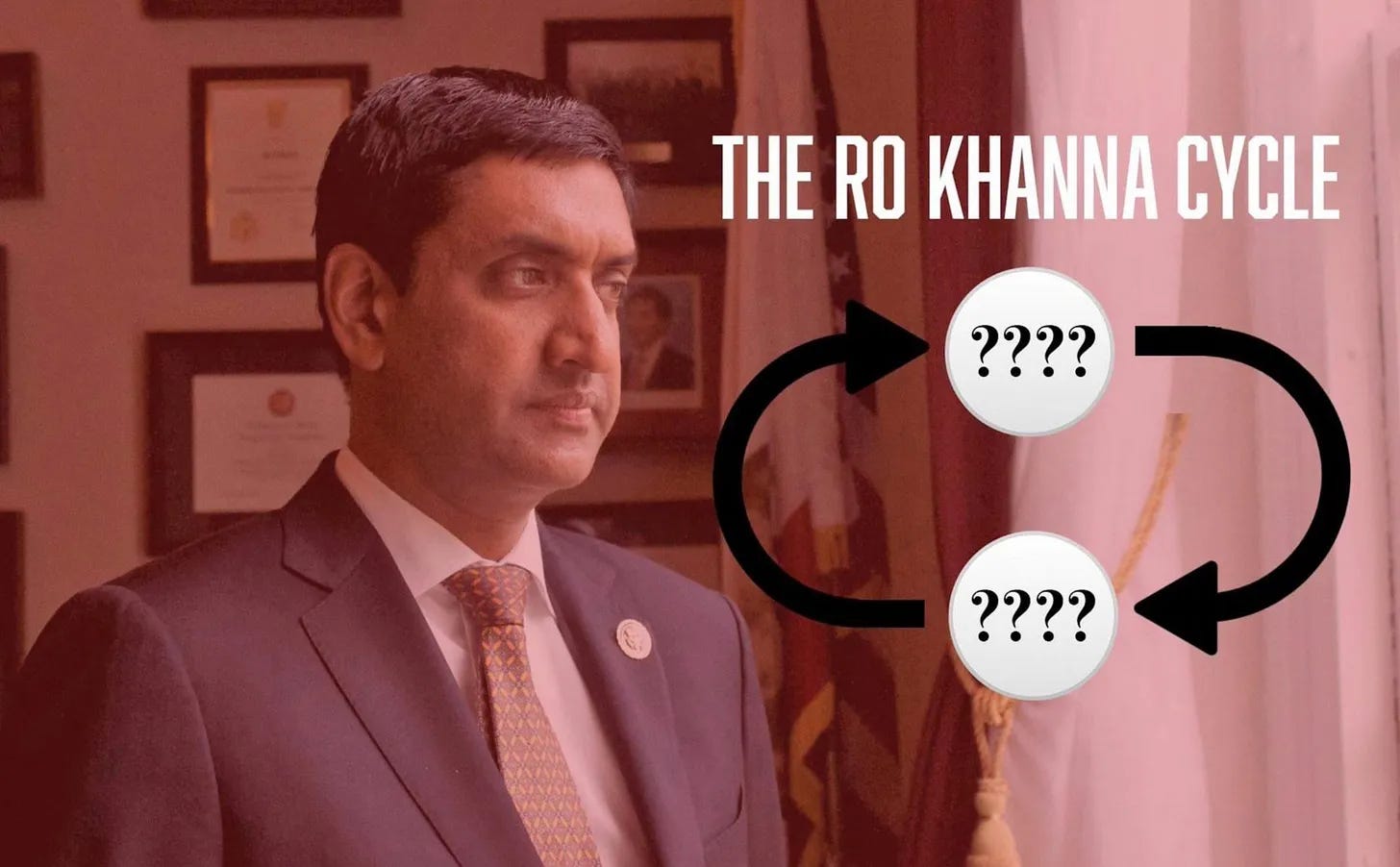
The evergreen Ro Khanna “???? 🔁 ????'“ cycle emerges from seemingly confounding or contradictory conduct, but the very simple explanation is a man with the heart of a populist and the black book of an oligarch. Under the brutal, uncompromising scrutiny of a presidential primary race, Khanna’s popular positions on healthcare, Israel, and accountability for a whole range of crimes, including, but not exclusive to, pedophilia, will only get him so far. Until and unless he makes a sincere and forceful 180 against the industry that brought him to the dance in the first place, Khanna will not get very far. And rightly so.
“Run, Ro, run!” That should be the refrain of every progressive American, encouraging California Congressman Ro Khanna to officially run for the Democratic nomination in the 2028 presidential election. Khanna is undoubtedly a dark horse in what will be a crowded field. His odds of getting the nod at the 2028 Democratic Convention are under 3% on both Kalshi and Polymarket (if you care about those things). But the point of progressives cheering for Khanna to run isn’t so much the long-shot hope of Ro being sworn in as president on January 20, 2029. The beauty of a Ro Khanna presidential run is its potential to shift the center of gravity of the Democrats’ economic platform significantly leftward, establishing progressivism as the mainstream rather than the fringe of the party’s future.
Consider the beneficial effects a Khanna campaign might have on the electoral chances of Alexandria Ocasio-Cortez, who is easily the strongest prospect from the party’s progressive flank. The combination of Ro and AOC neutralizes a familiar ad hominem trap set by opponents of progressive redistributive economic policies. Leftists of humbler means are often dismissed as covetous losers who want to steal from the wealthy the riches they were too stupid or lazy to earn on their own. Leftists of significant wealth, on the other hand, are derided as hypocritical, champagne socialists out of touch with the common working American. Having both the humble former bartender AOC and the centimillionaire Khanna advocating for redistribution will more clearly expose these personal attacks as a bad-faith gotcha game played by elites who wish to grasp onto as much of their unjustly accrued wealth as possible, even as our social fabric itself unravels. In addition, having taught economics at Stanford, Khanna brings a Silicon Valley sophistication that lends legitimacy to policies like Medicare for All and a Billionaire Tax that might otherwise be dismissed as pie-in-the-sky positions of a supposedly fiscally naive AOC.
A Khanna run will also be instrumental in disciplining the less progressive candidates jockeying for the nomination. As a congressman from the heart of Silicon Valley, Khanna’s bold redistributive economic agenda proves that the oligarchic pandering of Gavin Newsom and Kamala Harris is a cynical choice, not a practical necessity for Bay Area politicians representing one of the wealthiest regions in the country. Khanna will pressure a rising Jon Ossoff to reckon with the fact that prosecuting the Trump crime family and MAGA grift is a necessary but far from sufficient condition to advance Ossoff’s signature “anti-corruption” platform – to truly root out corruption, a full frontal redistributive attack must be launched against the power of all billionaires, not just the bad ones currently slithering around the White House. Khanna’s principled and long-standing positions on issues like the genocide in Gaza and releasing the Epstein Files also stand in stark contrast to the poll-tested shape-shifting of lifelong careerist strivers like Pete Buttigieg and Josh Shapiro.
With two years to go, it’s hard to say who will emerge as the Democrats’ presidential candidate in 2028. But one thing is for sure. When the dust settles, the eventual nominee, the Democratic Party, and the American people will all be stronger with Ro Khanna in the race.
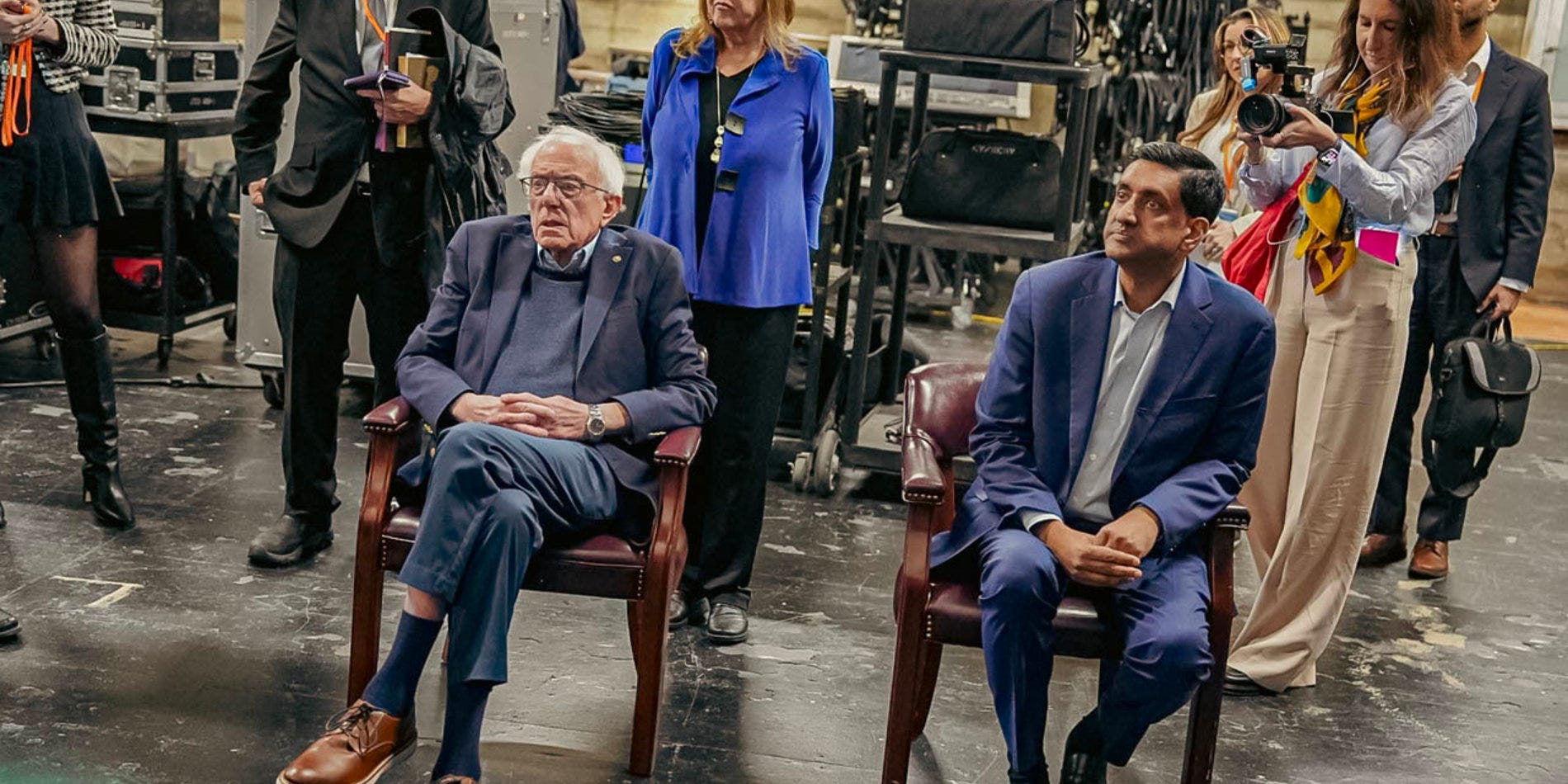
Ro Khanna is an oddity I can’t help but respect and root for despite his frequent bizarre takes or turns of action; the “Ro Khanna Cycle: ??? -> ???” meme really does sum him up. There’s just something about even a career-minded politician that actually has a respectable hustle that keeps me on his side and wanting to root for him. I think often about one of his exclamations to other Dem electeds, which went something like “Our base wants us to be the anti-war party.” He does seem to want to take action and shift the party’s stances and actions to be more in line with its base, rather than just trying to discipline the base like so much of the old guard. He’s a man of action; he gets so much press because he’s taking those shots that more cowardly Dems are leaving on the table, doing what leadership won’t (or actively discourages). After all, he’s a big reason the Epstein Files became such a big story, with the discharge petition he worked with the GOP rebels to pass and hang the issue like a lead weight around the administration’s neck.
Khanna simply understands and is willing to perform the job of an elected representative in the current environment more than most Democratic electeds and officials. I don’t know if that’s enough to make him a contender in 2028; I see him much more as a top pick for Speaker of the House. He comes off to me as much less of a party leader/presidential contender and more as one of its strongest fighters in the legislative bodies. I want him to stay in Congress being the muscle needed to pass the kind of major legislation we desperately need to begin to fix any of this nation’s crises. We would be a hell of a lot better off if more Democratic electeds followed his example, just in terms of how to act like a real opposition party. The Democratic establishment and old guard leadership often feel like they don’t want to win, and Ro Khanna simply does.
I don’t think he’s actually a good candidate, although if AOC doesn’t run I suppose it’s better to have him representing the left than nobody. He’s got no charisma, and I still don’t fully trust him on tech issues if the Silicon Valley execs ever come down from the weird hybrid of AI psychosis, evangelical Christianity, and white nationalism they’re into now.
He does have some use as a “bad cop” to AOC’s “good cop” though, as long as he drops out before there’s any risk of vote-splitting. He can make her look more diplomatic and “moderate” without having to actually moderate, just by being less polished and more blunt. A lot of voters seem to sort candidates based on tone, so just being a more aggressive-sounding leftish voice could help her avoid being seen as the “unreasonable” furthest-left candidate by the kind of liberal who approves of everyone from Bernie to Newsom.
If he’s willing to play a Chris Christie role and torpedo a centrist frontrunner like Ossoff/Harris/Newsom over Gaza or the Laken Riley Act and then drop out, that’s pretty much ideal.
Ro Khanna is an opportunist. Backed by tech oligarchs, the congressman has built his career representing the interests of Silicon Valley’s socially progressive yet pro-capitalist constituency. Khanna’s newfound advocacy for Palestine is welcomed. But he repeatedly fails to walk the walk. Even after being detained at gunpoint by US-armed West Bank settlers, he still won’t call for an arms embargo on Israel. When considering presidential options, it’s important to avoid media narratives and look at long-term results. AJP Action, which tracks congressional support for Palestinian human rights, offers a strong look at Khanna’s record. His statements and letters are ranked highly, but his voting record is just 27%, earning him an F. This isn’t to say it can’t be improved. Rather, on this and pretty much every other issue, Khanna lags behind Ocasio-Cortez, who remains the socialist and progressive choice in the pre-pre-2028 Democratic primary.
Opportunism is not necessarily a bad thing. It shows that the anti-genocide left is winning in the marketplace of ideas, and career-focused politicians are coming along. That’s good! I would rather every Democrat follow Khanna’s lead rather than double down with AIPAC sponsors. But when choosing who I’m backing for president, I’m skeptical of Ro Khanna. And I think for good reason.
·
March 31, 2025

Who is more exciting than AOC? Although she has not announced for President in 2028, speculation abounds. The following perspectives are in no particular order:
One Battle After Another: Everyone Weighs In.
·
October 11, 2025
Since its September release, One Battle After Another has piled up box office receipts and rave reviews. The gang got together to discuss this epic Paul Thomas Anderson adaptation of the 1990 Thomas Pynchon novel Vineland.
Comments
Nothing yet. Say the first thing.
Sign in to join the conversation.