

Thanks to the community for the enthusiastic response to our first CEO Dinner Insights report. Feedback included requests for more attendee context, creation of a Substack group to build community, and texture on opposing opinions. I’ve included a social media post from Mike Cassidy with anecdotes, guest list, and photo. Join our new Substack group here, and in my Editor’s Note I share how we coalesced around specific points.
This month’s Jeffersonian questions were “Who was the best and worst board member you have ever had?” and “Where is AI on the Hype Cycle?” As usual, we had a lively discussion with entertaining vignettes about amazing board members who backed CEOs during dire times and offered perfectly timed counsel during both good times and bad. We also heard shocking stories of self-absorbed board members who prioritized their own interests above the company’s. Selfless or Selfish? When it’s raining on you, do they remind you that you said it wasn’t going to rain or lend you an umbrella? As part of this discussion of corporate governance, we all agreed on the value of maintaining control as a private company through board seat majority and through dual class shares as a public company – no surprise to our community of CEOs and Founders.
The responses to where AI is on the Hype Cycle generated more varied responses with some feeling like the hype is still building with bullishness about the anticipated step-function capabilities coming through multiple new S Curves as well as straight-forward penetration of AI technology into supply chains and SOP-rich workflows. In contrast, there was broad agreement that many proof-of-concepts are failing and the promise of agent-driven workflows is largely going to be unfulfilled by most startups in this current round. The few that do deliver (and are delivering already) stand to be Silicon Valley’s next massive rocketships. Everyone agreed on imminent wins and losses. $500B will be lost, but trillion-dollar companies will be formed. Whether AI looks half-full or half-empty might depend on whether your POCs are succeeding or failing.
Dion Lim
Mike Cassidy Recap
Interesting CEO Dinner this month hosted by Anthony Noto. Special guests included Mike Belshe (CEO at BitGo), Markie Wagner (CEO at Forge), and Alfred Wahlforss (CEO at Listen Labs). Wide ranging discussion topics included asking people “are you in receive mode?”, board members who lend you an umbrella when it’s raining on you vs. board members who ask you “why is it raining on your company today?”, your company buying 10,000 shares of Bitcoin at $300 but your Board making you sell it all at $350, the importance of Google’s AP2, the rise of Thinking Machines, having Ben Horowitz as a product manager reporting to you, having Sundar Pichai as a product manager reporting to you, how Chrome would auto-update every single user in 24 hours vs. Internet Explorer updating every user in 18 months, why Joe Kennedy was the first SEC Chairman, how the top US banks have on average 1.5 million pages of Standard Operating Procedures, how 20% of comments you see today on LinkedIn are AI generated, how at Amazon poor writers give ChatGPT 5 bullet points to generate their 6 page meeting briefings, and how people at Amazon ask ChatGPT to translate 6 page meeting briefings into 5 bullet points, and how the 5 bullet points don’t match, and so much more.
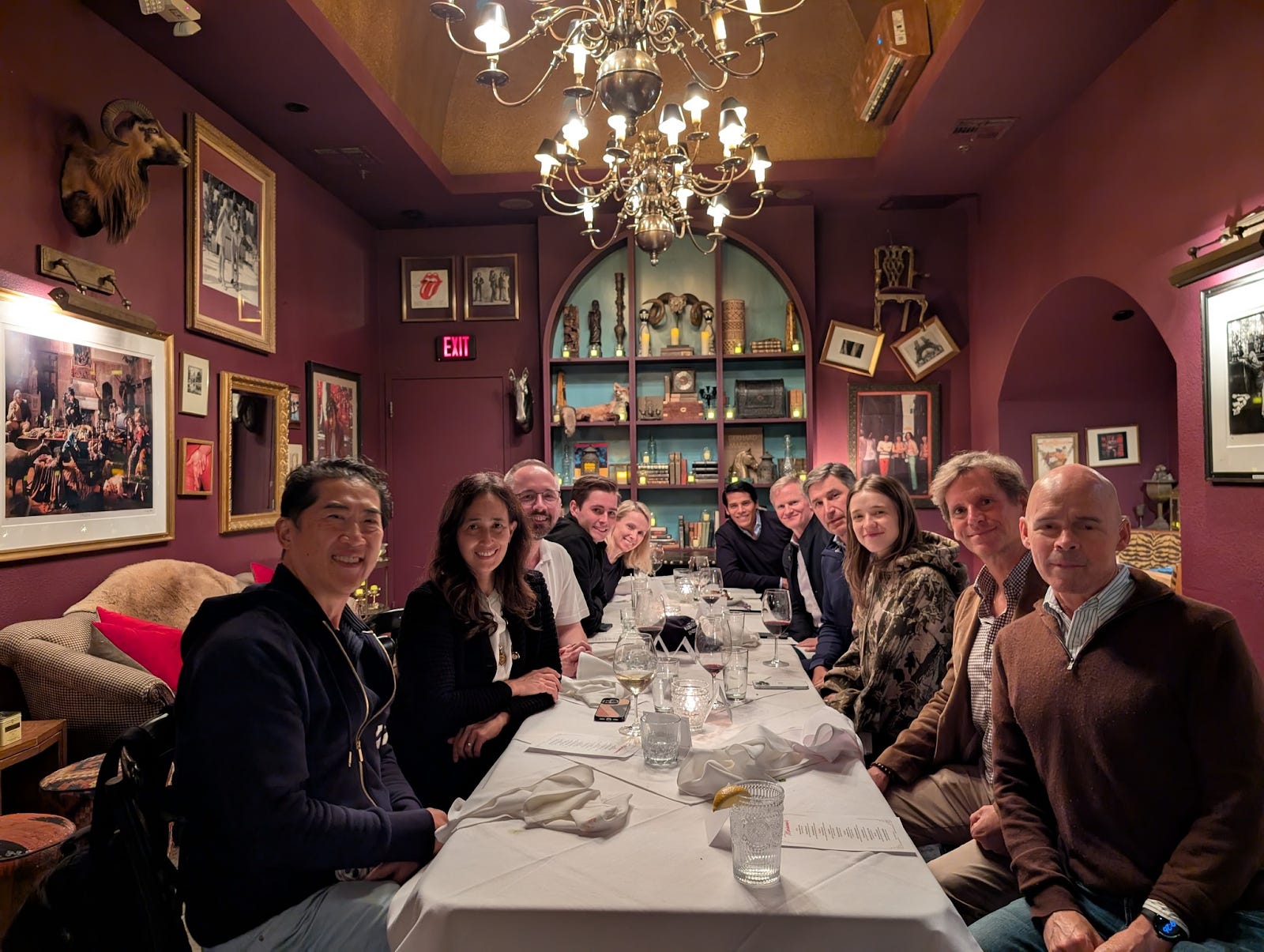
Twelve leading technology executives gathered to discuss the best and worst in corporate governance and the evolving AI landscape, revealing five critical insights that will define the next phase of business strategy:
Board Member Psychology Beats Pedigree
Defined not by their resume but by their psychological makeup and incentive structure, the most valuable board members are non-linear thinkers who can not only answer but also reframe questions, prioritize the company's well-being over their own personal gain, legacy, or political agenda. They offer direct, tough advice—even encouraging audacious moves—but are humble enough to understand that a CEO's decisions are highly context-dependent. One CEO shared a board member imbued the confidence to ask for and secure $300 million in revenue guarantees. The worst bring liability fears, ideology, or optics games that distract CEOs. Another CEO summarized, “The best way to frame board members is selfless vs selfish.”
“A board member kept asking, ‘Why is it raining? You said it wouldn't be raining. It's still raining.’ I understand it's fucking raining. I need an umbrella.”
Board Control Is the Ultimate CEO Survival Tool
CEO tenure depends on board composition and control mechanisms. The challenge lies in balancing governance oversight with operational autonomy, particularly when board members pursue personal interests. The conversation revealed two governance philosophies—traditional "one share equals one vote" versus founder-controlled dual-class structures—with successful CEOs favoring control mechanisms that provide board expertise while limiting interference. Board control mechanisms only matter for major decisions, especially whether the current CEO fits the role. This becomes increasingly critical as AI's evolutionary speed demands faster, more decisive, and riskier bets to win. Inevitably, “billlions will be lost in AI investments.”
"As a CEO, it's important to have control of your board. In the private phase, you have to have more seats. In public, you have to have dual control shares."
AI Hype Is Fracturing Into Four Camps even as Multiple S-Curves loom on the horizon
AI optimism versus skepticism discourse yields four positions: AI has plateaued; AGI won't be achieved; AI is great and AGI is coming; and AI/AGI are real and coming soon and “I need to build my business around AGI.” Your camp defines your resource allocation, talent acquisition, and long-term planning. Beyond pre-training, CEOs see fresh S-curves: reinforcement learning for complex tasks, simulators cloning human behavior, multi-agent collaboration with theory-of-mind, and scaling compute 10×. Each may unlock compounding progress. Several CEOs feel AI's ceiling is still rising due to minimal use-case penetration to date. One CEO noted that "Only 1% of AI's value chain in e-commerce and B2B has been implemented."
"There should be more people in the fourth camp (AGI is real, coming soon and should be built around), but there are fewer and fewer people in this camp despite the fact that there are many more S-curves to be had."
AI Implementation Reality Is Hitting the Trough of Disillusionment with a $500 Billion AI Correction Coming
Despite continued investment and hype, practical AI deployment faces significant obstacles. One CEO reported: "Many proof of concept trials are failing... many agents don't work." The gap between AI capabilities in controlled environments and real-world success is creating a credibility crisis separating viable companies from pure hype. Operationally, people are not pushing hard to implement many AI advances because they mean job loss. Few think like CEOs—most just want to hold onto their jobs. Leaders predict a massive market correction, with one executive stating: "The grift is getting revealed... We're going down, but companies will double down on things that actually work." This bifurcation will create extreme wealth concentration among few AI companies achieving genuine product-market fit while most startups die.
"Many companies are going to go up in flames like a nuclear fallout. $500 billion will be lost in AI investments. Good news is that there will be rocketships that will come out of it and be very successful."
AI Workflows Are Still Immature — and Often Comical
Executives shared examples of workplace AI experimentation and its immaturity. One CEO described "washing": passing presentations through multiple models for critique and improvement. Results generally improve on single-model solutions. However, several CEOs noted problems with contraction-expansion cycles. "AI is great at summarizing because it reduces entropy. But when you ask it to expand, entropy explodes—more words, less meaning." CEOs agreed AI excels at contraction over expansion, and current practices often seem absurd when colleagues use AI to elaborate then summarize ideas. Society remains early in learning productive AI workflow integration. The next phase requires replacing these cycles with thoughtful systems design.
"Everybody's trying to adopt AI. Document writing is the worst arms race. Bad writers take bullets, feed them through AI, get six pages of crap. Leadership runs it back through AI to summarize. We're back to bullets — totally different than the originals. We're just spinning GPUs and fooling ourselves. Nothing gets done. We've got to fix this."
Theme 1: The Board Member Psychology Imperative
"You want to bring people on that have nothing to lose so that they can give you the best advice without worrying about their own personal upside."
The Problem: Boards too often prioritize résumés and optics over the psychological traits that actually matter in moments of consequence. Credentials don’t guarantee courage, alignment, or contextual judgment.
Several CEOs shared how this misalignment plays out. One described a director who, instead of helping address challenges, fixated on liability and legacy, ultimately resigning when optics mattered more than outcomes. Another recalled a director who repeatedly weaponized meetings to push personal agendas — “always asking why they couldn’t have what they wanted” — turning board time into leverage rather than support. A third described the futility of working with an ideologue who ousted multiple CEOs when disagreements arose. Even well-intentioned directors can create drag: one “too-much peacemaker” smoothed over conflict but consistently avoided decisive calls, slowing execution. Alternatively, Directors with the right mindset can be transformative. Courageous advocates pushed CEOs to demand multi-hundred-million-dollar guarantees — and got them. Nonlinear thinkers reframed problems and reset discussions with deceptively simple prompts that shifted leaders into true listening mode. Selfless backers funded pivots themselves to avoid governance complexity. Others provided tough but constructive accountability, like forcing clarity on sales metrics that sharpened performance. These directors added disproportionate value because they combined judgment with selflessness and context awareness.
The Insight: The most valuable board members are defined by psychology, not credentials. They are selfless, context-aware, and courageous enough to help CEOs pursue bold moves — but humble enough to recognize that operational decisions are context-dependent. The best directors reframe problems rather than just answering them, offering perspective without attachment to personal legacy or upside. By contrast, selfish or optics-driven directors undermine CEO effectiveness by prioritizing their own reputations or agendas over company outcomes.
Leadership Implication: When building or reshaping boards, prioritize psychological alignment over prestige. Select directors who: 1) act selflessly, putting company outcomes ahead of personal optics or liability fears, 2) think nonlinearly, reframing strategic debates rather than circling familiar questions; 3) encourage boldness, giving CEOs confidence to make uncomfortable but high-value asks; and 4) stay engaged, offering direct, tough feedback informed by context rather than parachuting in with uninformed opinions. Boards anchored in selfless psychology compound CEO effectiveness, while boards driven by ego, ideology, or optics create friction that even strong company performance may not overcome.
Theme 2: The Board Control and Role Clarity Imperative
"Fire me if you have to, but don't tell me what to do."
The Problem: Traditional corporate governance assumes alignment between board oversight and company performance, but CEO tenure increasingly depends on power dynamics in addition to business results as environments of exponential change merit strong founder vision and conviction.
Multiple leaders shared experiences where board composition determined their ability to execute strategy, with several of the most extreme examples being CEOs ousted by the board. When a company is private the issue is about maintaining a founder friendly majority of seats. For public companies, one CEO explained the fundamental choice: "There are two churches of governance, one share equals one vote or you have founder control based on a dual share kind of framework." Recent research has reflected favorably on dual share companies with returns greater than single class. Even with control, however, problematic board members attempt to control based on personal interests or agenda and often without the full context of the problem. Since AI is increasing the rate of change, innovation excellence will require faster, higher-risk, higher-return bets which may be at odds with operational excellence. Successful CEOs will have the latitude to take big swings, confident in their control and board support.
The Insight: CEO effectiveness requires proactive board management and control mechanisms, not just business performance. The most successful leaders architect their board composition before they need protection, understanding that lapses in company performance and/or big, long-term bets may make leaders vulnerable due to adversarial board dynamics.
Leadership Implication: Design your governance structure during periods of strength, not weakness. Establish control mechanisms—whether through dual-class shares in public companies or board seat allocation in private companies—before market downturns or performance challenges test board loyalty. Vet board members thoroughly for ideologues who may withdraw support based on stubborn beliefs or selfish interests.
Theme 3: The AI Progress Plateau Misperception
“A lot of people think the S-curve of pre-training the model has generated all possible AI advances and things are slowing down now. They couldn’t be more wrong.”
The Problem: Current skepticism about AI advancement is based on narrow focus on pre-training model improvements, creating dangerous complacency about the next wave of breakthrough capabilities that will reshape competitive landscapes.
Leaders reported widespread belief that AI progress has plateaued as gains from pre-training models have slowed dramatically. However, this perspective misses multiple emerging S-curves that will drive exponential capability improvements. One executive explained: " But there are many more S curves to have." These include extending reinforcement learning beyond math to all tasks, reinforcement learning that clones human behavior using simulators, complex work automation in game-like environments where the model serves as the simulator, and multi-agent collaboration systems. The executive emphasized that multi-agent simulation represents a particularly significant S-curve: "A lot of the agent work in the future will involve interacting and collaborating with multiple parties." Additionally, advances in compute power continue to enable compounding progress across all these domains.
The Insight: AI development follows multiple sequential S-curves rather than a single improvement trajectory. Companies assuming current limitations are permanent will be blindsided by the next wave of capabilities, while those preparing for multi-agent, reinforcement learning-driven systems will capture disproportionate value.
Leadership Implication: Resist the temptation to scale back AI investments based on current plateau narratives. Instead, position your organization for the next S-curve by developing capabilities in reinforcement learning, multi-agent systems, and human-AI collaboration models before these become mainstream competitive necessities.
Theme 4: The AI POC-Reality Disconnect and Opportunity
"Companies may have 40 proofs of concepts and only a couple are being proven out. These companies tout AI advances even though their POCs are failing."
The Problem: The gap between AI hype and practical implementation is creating a credibility crisis that threatens the entire sector's funding and adoption.
Leaders with hands-on implementation experience painted a sobering picture of current AI capabilities. Agentic POCs often fail due to brittle workflows, extensive corner cases, hallucinating agents, technology-first approaches hunting for problems, poor data foundations, undefined business value, and often no clear path from experiment to production. Another human element is resistance due to a lack of leadership buy-in and frontline lethargy. One CEO noted that "operationally, people are in the way of advancing AI because advances mean job loss. Most people are thinking how they can just hold on to their job." Contextual limits reduce efficacy as well with one executive sharing that "agents cannot sustain thought for multiple hours and solving issues by making up context from scratch every time is not going to be successful right now." One with extensive proof-of-concept experience observed: "There are very few AI companies that have multiple millions of revenue. Some are in coding, health scribing, or customer service."
The Insight: AI adoption will follow a power law distribution where a tiny percentage of applications generate massive value while the majority fail to achieve product-market fit. The current phase of broad experimentation will give way to extreme consolidation around proven use cases.
Leadership Implication: Focus AI investments on domains with clear, measurable value propositions rather than following hype cycles. Do not tout gains until implementations are operationally excellent. The winners will be companies that solve specific, high-value problems rather than those claiming general AI superiority.
The Problem: The gap between AI hype and practical implementation is creating a credibility crisis that threatens the entire sector's funding and adoption.
Theme 5: The “AI-First” Workflow Integration Challenge - Washing or Chasing your Tail?
"AI should never be used to make something more than what went into it. It's like entropy—it becomes disorganized over time."
The Problem: Top down mandates and organic experimentation with AI tools are creating gains but also disruptions in workflow. Rather than seamless enhancement, adoption in professional environments may be delivering wins and losses depending on whether process reliability matters more than capability peaks.**
One CEO described an elaborate "washing" process from their offsite: taking ChatGPT results, pasting them into Claude for improvement, then moving through Gemini, eventually back to OpenAI saying "I've now washed this four or five times. Please do it one more time." Another executive described how Amazon's rigorous writing culture—where "every word counts" and documents face heavy scrutiny—is colliding with AI adoption mandates. The top-down AI mandate created "a hilarious arms race" where "bad writers are the ones that want to use it. Good writers care about every word." Bad writers take bullet points, expand them through AI into six pages, then leadership runs it back through AI to summarize. "The bullets the AI spits out are totally different than what the bad person wrote to begin with." Another executive captured the core issue as entropy. The conversation turned to TENET, Nolan's film about reverse entropy, which one attendee had watched four times. The metaphor proved apt: while the movie explores reversing entropy to restore original states, AI workflows increase entropy—taking clear bullets, expanding to verbose documents, then compressing back to different bullets entirely.
The Insight: These examples illustrate the tension between adopting an AI-first mindset and maintaining organizational discipline. This mindset requires rethinking entire workflows rather than plugging AI tools into existing processes. Organizations that succeed will redesign their operations around AI capabilities rather than forcing AI to fit existing procedures.
Leadership Implication: Approach AI implementation as a business process reengineering project, not a technology deployment. An AI-first approach means changing how work gets done, not just what tools are used to do existing work.
Financial Services & Cryptocurrency
A cryptocurrency infrastructure CEO provided perspective on market structure evolution: "The new capital markets of America will be digital, there's no doubt about it... But you can't diss that the market structure hasn't served America pretty damn well." The regulatory environment remains the primary constraint, with "stablecoin regulation that's getting better" but banks seeking "a regulatory moat as opposed to having to compete for your business."
Key Insight: Cryptocurrency adoption will follow traditional financial infrastructure patterns, requiring robust risk isolation mechanisms before achieving mainstream acceptance.
Enterprise Software & Process Automation
A leader in process automation revealed the scope of manual operations: "I was just with the CEO of this top 10 bank who's using this. He's like I have a million and a half pages of SOPs because you have to design to the lowest common denominator when human beings are involved. 10,000 manuals is because they're actually building to lowest common denominator. They keep creating additional SOPs because the goal is to clarify but it actually becomes counterproductive. The top 1% then has to operate at the bottom 99%. With AI, it's the opposite, the lowest common denominator goes up by 10x. 99% operates at the 1%." The opportunity lies in converting human-readable procedures into executable code: "Operating procedures are like code for people... Engineers write code that runs on AWS, humans write operating procedures that run on human labor."
Key Insight: The largest enterprise software opportunity involves automating the millions of standard operating procedures that currently require human interpretation and execution.
Market Research & Consumer Intelligence
An AI-powered market research platform CEO described changing dynamics in customer feedback: "People are very honest [with AI]. And I think another thing that's also cool is you can then simulate responses as well." The technology enables "synthetic users" where companies can "extrapolate based on the things that you learn and create like synthetic users" for product testing.
Key Insight: AI-mediated consumer research will replace traditional survey methods by enabling more honest feedback and scalable synthetic user generation for product development.
The "Receive Mode" Leadership State
A board member introduced a powerful framework for CEO effectiveness: asking "are you in receive mode as a CEO?" This concept of being in receive mode was recognized as applicable "not only with your board, but with people who work with you, people you manage, people you report to and even on your personal life."
Application: Before entering important conversations, especially with stakeholders who have critical information, consciously shift into receive mode rather than advocacy mode. This mental state change improves information gathering and stakeholder relationships.
The Context Dependency Principle
Multiple leaders emphasized that effective board members understand that "so many decisions are context dependent and board members are challenged to understand what the context is so they're less likely to try to tell the CEO what to do." This creates the ideal dynamic: "fire me, but don't tell me what to do."
Application: When working with advisors or board members, establish clear boundaries where they have authority to evaluate outcomes but not dictate methods. This preserves their accountability role while maintaining operational flexibility.
The Compute Scaling Advantage
One AI executive revealed the continued importance of computational resources: "At a previous company he would spend hundred millions of dollars on training, but that is sort of a middle class budget. And when you have 10x the amount of compute, it generates progress."
Market Implication: AI market leadership will increasingly require massive capital commitments that favor well-funded incumbents over startups. The compute scaling advantage will create natural monopolization tendencies in AI development.
The Board Member Liability Crisis
A CEO shared how perceived personal risk derailed board effectiveness: "A board member mentioned his concern he had that he would be personally held liable for the company's decision and that they would come after him personally... he was very self interested in a given outcome and that he was worried about his legacy." When the company made difficult financial decisions, "he actually resigned because he was concerned about what how it would look like, how he would look."
Leadership Lesson: Board effectiveness deteriorates when members prioritize personal reputation protection over company success. The most valuable board members are those with "nothing to lose so that they can give you the best advice without worrying about their own personal upside."
The Bitcoin Board Panic
A CEO described how board anxiety cost the company massive returns: "There was a board member that was not supportive of putting some of their money into crypto... when the price finally recovered from went from $300 down to $180 back up to $330, that anxiety caused the board members to push to have the company sell all of its bitcoin. And today that two and a half million dollars that they had invested at $300 would be worth a billion dollars today. But we’re still friends.”
Leadership Lesson: Board member risk tolerance can override rational long-term strategy, especially during market volatility. CEOs must either select board members with appropriate risk profiles or maintain sufficient control to override emotional decision-making during market stress.
The Power Play Recognition
A CEO shared witnessing deliberate disrespect as a dominance signal: "A Fortune 500 company CEO kept mispronouncing his company's name throughout the evening on purpose in order to demonstrate his standing over the other person's standing."
Leadership Lesson: In high-stakes business interactions, seemingly minor behaviors often carry intentional power dynamics. Recognizing these signals allows leaders to respond appropriately rather than attributing them to accident or oversight.
Boards & Governance
“In a startup, the board can’t just hire and fire the CEO—they actually need to be useful.”
→ Early-stage boards matter most when they roll up their sleeves, not when they act like investors.
“A quarterly board email that takes hours to digest is a symptom: I need to inform my board better.”
→ The format of board communication reveals whether information flow is enabling or hindering alignment.
“A near-deal reneged in a crash; only social enforcement saved it—trust is a boardroom currency.”
→ Contracts may fail under stress, but trust and reputation can still preserve value.
“No board yet—and not sure I need one; investors who help are enough at this stage.”
→ For very early companies, active advisors often outperform formal governance.
“I have one board member—my best and worst—because they push me, then defer to context.”
→ Great directors balance pressure with restraint, knowing when to lean in and when to step back.
“Texas now blocks shareholder lawsuits unless you own 5%—to curb frivolous claims.”
→ Legal environments are evolving to reduce nuisance suits, shifting governance risk.
AI & Markets
“Today feels like peak exuberance.”
→ Market sentiment may be topping out, signaling a near-term correction before sustainable growth.
“If foreign buyers stop taking U.S. Treasuries, stablecoins might become the mass-market hedge.”
→ Crypto adoption could accelerate if it fills gaps left by weakening trust in traditional debt markets.
“Crypto is a ‘forever asset’—valued against the dollar’s long-run purchasing power.”
→ The strongest crypto thesis views it not as speculative tech, but as long-horizon monetary insurance.
Leadership & Decision-Making
“My best advisor was the best and worst: brilliant when reachable, unreachable too often.”
→ Even great advisors lose impact if they aren’t consistently accessible.
“Great board members think non-linearly; many corporate veterans think too linearly.”
→ Nonlinear thinkers expand the solution set, while incumbents often stay stuck in incrementalism.
“If singularity is 1,000 days away, most leaders still can’t think beyond that.”
→ Leaders must act despite uncertainty, while others stall at the edge of big unknowns.
No posts
Comments
Nothing yet. Say the first thing.
Sign in to join the conversation.