
For July’s talking point, we asked what you’re reading so we can build our own summer reading list.
One Honest Sentence is currently reading Secure by Amir Levine. Anna B said that Janice Hadlow’s The Other Bennet Sister is her “boomerang book” and deems it better than the TV series (of course it is!). Julie recommends The Correspondent by Virginia Evans, and Jeff just finished Mortimer Adler’s A Guidebook to Learning. Anna G. K. said Michael Pollan’s A World Appears is great, and has moved on to “a YA memoir by Sylvia Acevedo called Path to the Stars and a celebrity memoir by Jeff Hiller called An Actress of a Certain Age.” Lastly, Mitchell recommends Theo LeGro’s Don’t Let It Kill You.
Thanks for the recs! As for us, in addition to the wonderful stories and essays our writers are sharing in our current generative writing session, our bedside tables are full of good summer reads. Stacia is reading Natalie Haynes’ Pandora’s Jar, a collection of essays reinterpreting the actions that define some of the most despised female figures in classical mythology. Shawna just finished Temi Oh’s More Perfect (look for her review of this “afro-futurist YA rendering of what assimilation looks like” next week!), and Teneice recently enjoyed Isabella Allende’s Spirit House and Jennifer Givhan’s River Woman, River Demon.
Finally, we absolutely must recommend a few Center writers. Check out Ghost Flowers, a short essay collection by Cindy von Halle; In Plain Sight and When the Past Becomes Present, the first two crime novels in a series by Lori Mulligan; and Kristi Rimbach’s Soul Excavation with Joy here on Substack.
Happy reading, everyone.
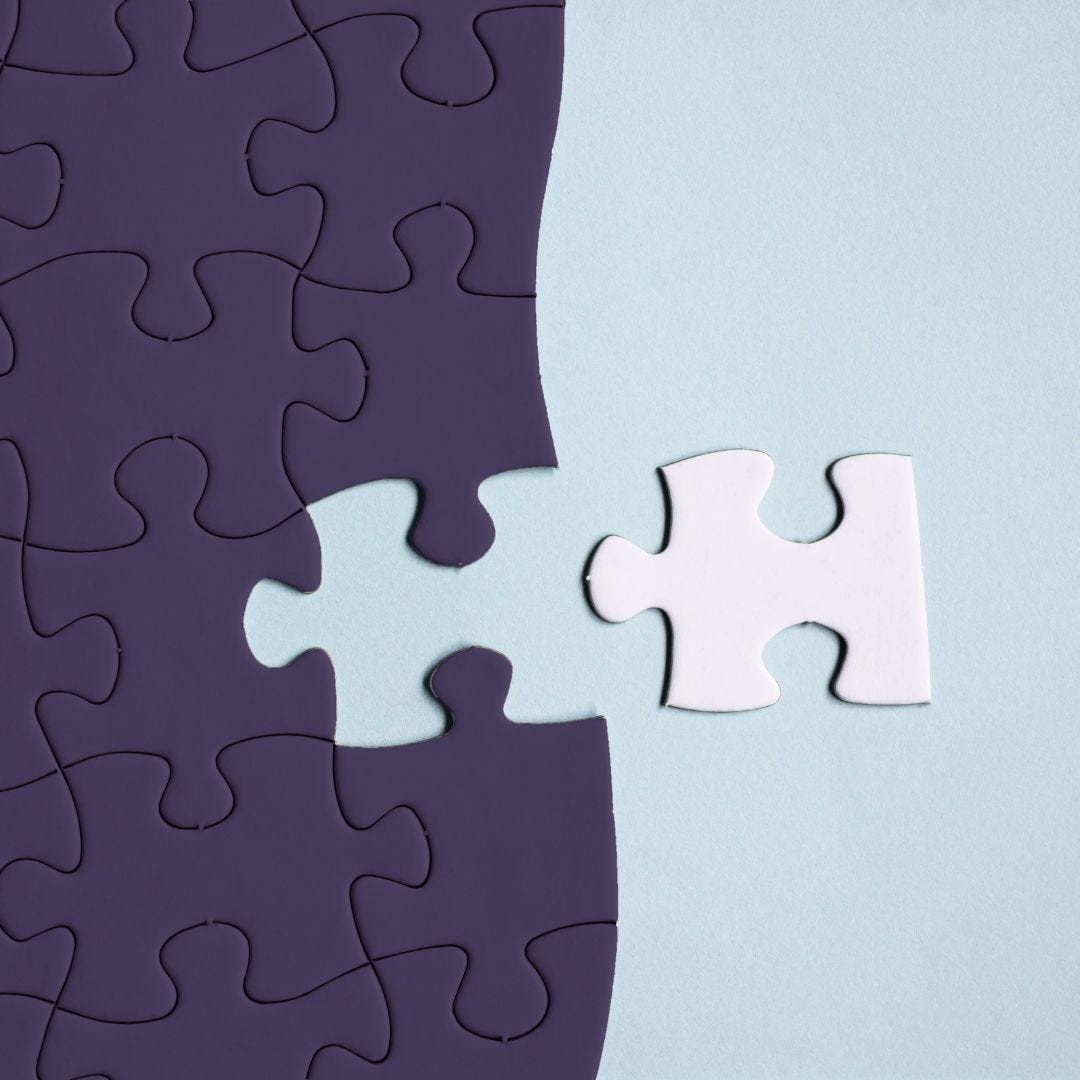
Writing a story, poem, or essay is often like putting a puzzle together. There are the edge pieces that frame the story, then some weirdly shaped things that often find their spot by surprise or even accident. Sometimes we work in several large sections until we can see how those sections connect to one another.
Unlike a puzzle, though, the ending isn’t always about a final piece fitting neatly and obviously into place. How do you know when the piece you’re writing is finished? Is it a visceral feeling, like a tingle or goosebumps? Is it only clear to you after you’ve read and reread your piece and can’t find anything else to change? Do you need a reader’s perspective, or feedback from a trusted friend or colleague, before you declare it complete? Or does it never feel done, only “close enough” or “done for now”?
For August, let’s talk about our writer’s sense of when to put down the pen or step away from the screen and call the puzzle complete. We can’t wait to hear how this part of the process works for you.
If you haven’t already, subscribe to get a motivational quote by a literary great in your inbox every Monday morning, plus a new writing prompt every Friday and reviews, author Q&As, craft talks, writing advice, personal essays, tarot readings for writers, and more every Wednesday. Upgrade to a paid subscription to receive a free download of our “20 Writing Prompts for Your Work-in-Progress” and, for annual subscribers, a free evaluation of up to five pages of your writing. If you seek mentorship, join us in the next six-week writing session beginning Sept. 8. Come write with us!
No posts
Comments
Nothing yet. Say the first thing.
Sign in to join the conversation.