
0:00
-5:18
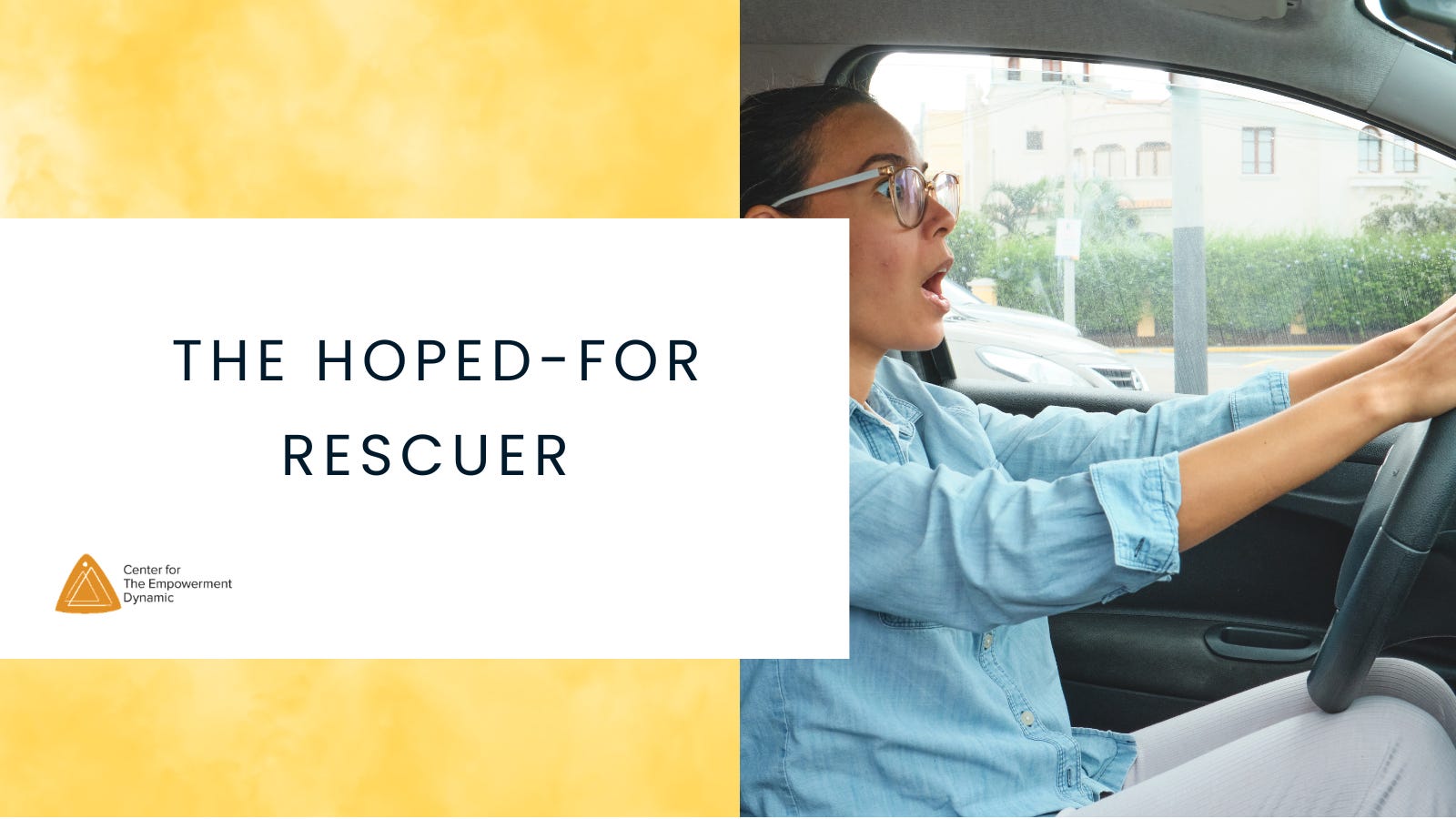
Have you ever experienced someone driving recklessly on the freeway, weaving through lanes and almost causing an accident?
You may think to yourself, “I hope there’s a highway patrol officer around the bend, ready to turn on their siren and issue a costly speeding ticket.”
This is an example of what I call Hoped-for Rescuer.
Because we feel personally powerless to do anything about the situation, we unconsciously enter the Dreaded Drama Triangle (DDT). We react as a Victim, perceive the reckless driver as a Persecutor, and imagine the police officer as the Rescuer who will restore order and justice.
The phrase Hoped-for Rescuer has brought smiles to workshop participants over the years. Something about it feels instantly familiar. Maybe it is the subtle self-righteousness we feel. Maybe it is the fantasy of revenge. Or perhaps it is simply the relief of imagining someone else stepping in to solve the problem we feel powerless to change. I identify with all of those experiences, and I sense the dynamic itself is far more widespread than we realize.
Every day we encounter situations over which we feel little direct control: global conflicts, environmental disasters, political division, financial uncertainty, illness, aging, or painful family struggles. In moments like these, it is natural to hope someone, or something will “save the day.”
In true emergencies rescuing behavior is essential. First responders, medical teams, neighbors helping neighbors during a disaster — these are not examples of Drama Triangle Rescuing. They are expressions of genuine service and care.
Healthy support helps stabilize people so they can regain their own capacity and responsibility. Drama Triangle Rescuing, however, unconsciously assumes others are incapable. From that perception, we justify overstepping boundaries, fixing, controlling, or doing for others what they are capable of doing for themselves.
The deeper danger of the Hoped-for Rescuer is that we can become attached to remaining in the Victim role without realizing it.
Fantasizing about winning the lottery, waiting for a new boss to finally make work enjoyable, hoping a partner will suddenly change, or believing external circumstances must improve before we can feel peace — these can all become subtle forms of hoping to be rescued from our discomfort, uncertainty, or responsibility.
We all seek Rescuers at times because human beings naturally want relief from pain. I know I do! And I have learned that my Hoped-for Rescuer is often not a person at all.
Maybe an afternoon cookie becomes relief from stress or an extra glass of wine at night temporarily numbs frustration or loneliness. Maybe endless scrolling on social media distracts you from anxiety or grief. In these moments, you have found a Hoped-for-Rescuer.
But temporary Rescuers rarely resolve the deeper issue. More often, they simply soothe the discomfort long enough to avoid facing what feels difficult, uncertain, or emotionally uncomfortable. Over time, this can quietly reinforce the belief that life is happening to us rather than inviting a response from us.
When this mindset takes root, even subtly, we’re at the mercy of circumstances, people, moods, or events. Often this happens unconsciously. The story runs quietly in the background of our thinking: “When this changes, then I’ll be okay.”
TED* reminds us there is another possibility. A Creator may not control circumstances, but a Creator can choose a response. Even when options feel narrow or imperfect, we still retain the capacity to relate consciously to what is happening. That shift changes everything.
So, if you notice yourself longing for a hoped-for Rescuer, let it become a cue to pause with compassion rather than judgment. Take a breath and ask yourself:
Given this situation, how do I choose to respond?
What thoughts or actions would help me take responsibility for my response rather than waiting to be rescued?
What is within my power right now?
In the case of the reckless driver, your response may be as simple as slowing down, changing lanes, and silently wishing safety for everyone ahead.
We always have a choice. We may not like our choices. They may feel limited, uncomfortable, or unclear. Yet there is always a choice available in how we respond to life’s challenges.
Until next time, here’s to the Creator in you,
Donna
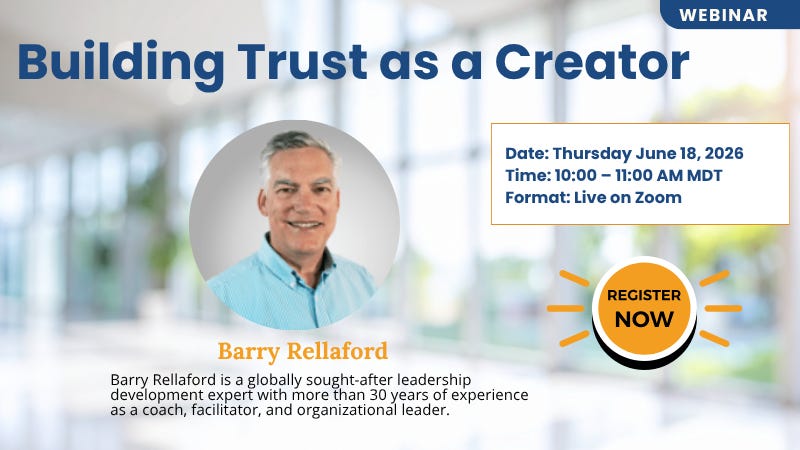
We’re so excited to be kicking off a new webinar series based on The Empowerment Dynamic.
Join us for our first webinar with Leadership Development and Trust expert Barry Rellaford!
Click the image below to register
Comments
Nothing yet. Say the first thing.
Sign in to join the conversation.