
I apologize for the errors in the post earthquake ill-advised late night posting of this short article, my interview with Blaine Holt. I’ve corrected it now.
I was disoriented.
While on the subject though, I have this nervous tic about cross-posting my own interviews. It is something I rarely do.
Blaine Holt was a truly fascinating person, and if the world was rightside up, it would have been me interviewing him.
I was always (in my original incarnation as investigative, long form, print journalist) the person asking questions, that is my place in the eco-system—not being an object of other people’s questions or interest. Still, sometimes a very interesting conversation happens and this was the case with Mr. Holt.
These days, things circulate, in loops. Rivers don’t flow in one direction.
I came from the written word, but everything now is the spoken word—audible journalism. And it is a kind of renaissance. So much talent.
I have lost friendly relations with people for not posting an interview I did on their show. Sorry, “podcast.”
I just don’t relate to myself but I relate to others.
I would write: “I promise I will post it,” and then just never do it. And they think I’m a bastard.
We’re all definitely bastards.
Barry
My father was a radio broadcaster for 60 years precisely. (I like the word “broadcaster.”)
He set a very high standard for the spoken word.
So is this a shadow thing?
Yes. You could say that.
I liked the obscure, quiet life of the ant dragging a stick nobody knew about, but what a stick it was. I would get there…
Writing is a form of having enough time to figure out what you think.
My English stopped at age 11. I didn't know basic words when we came back. And Swedish is designed for functionality, not persuasion. So talking is a work in progress.
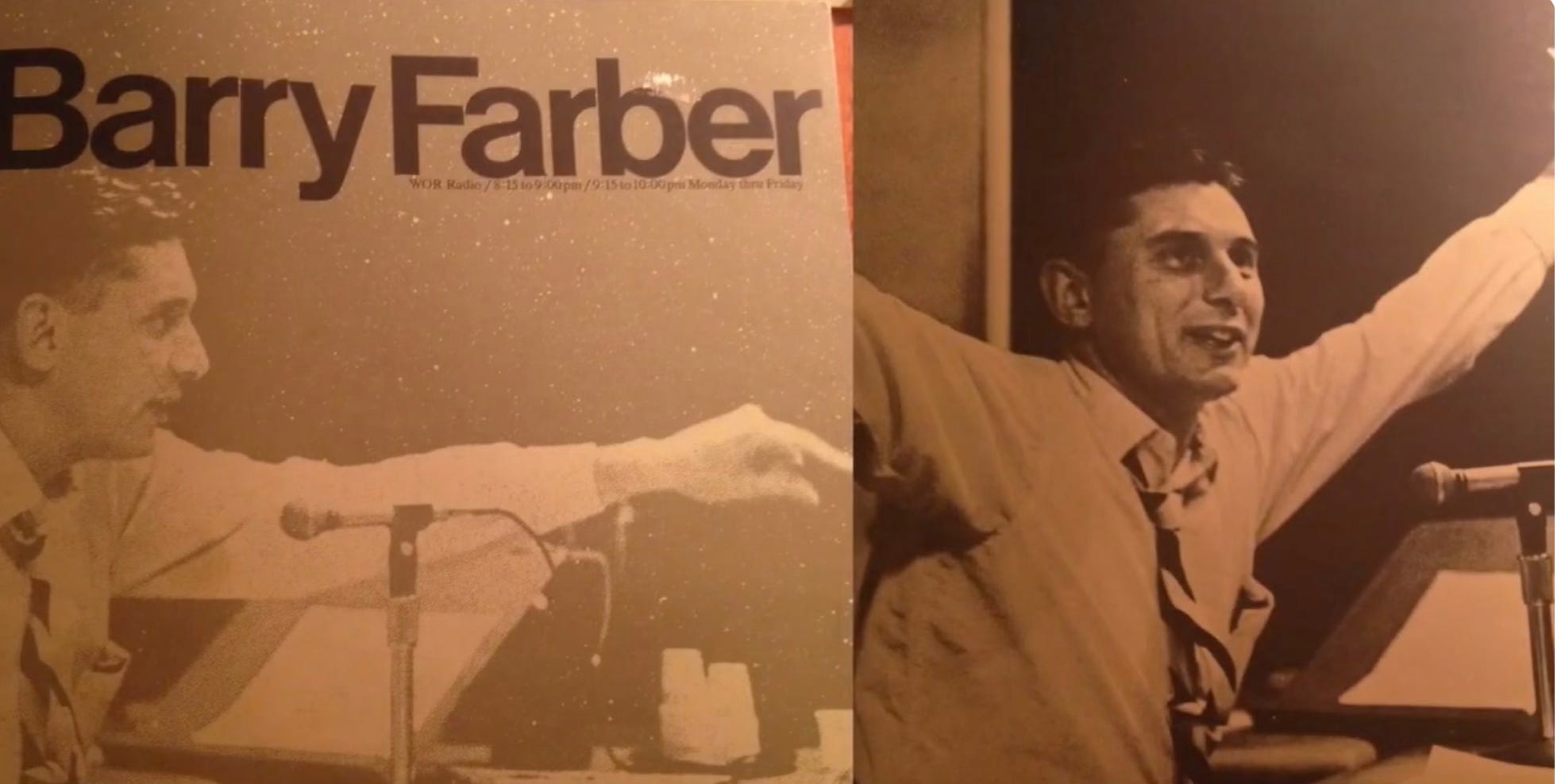
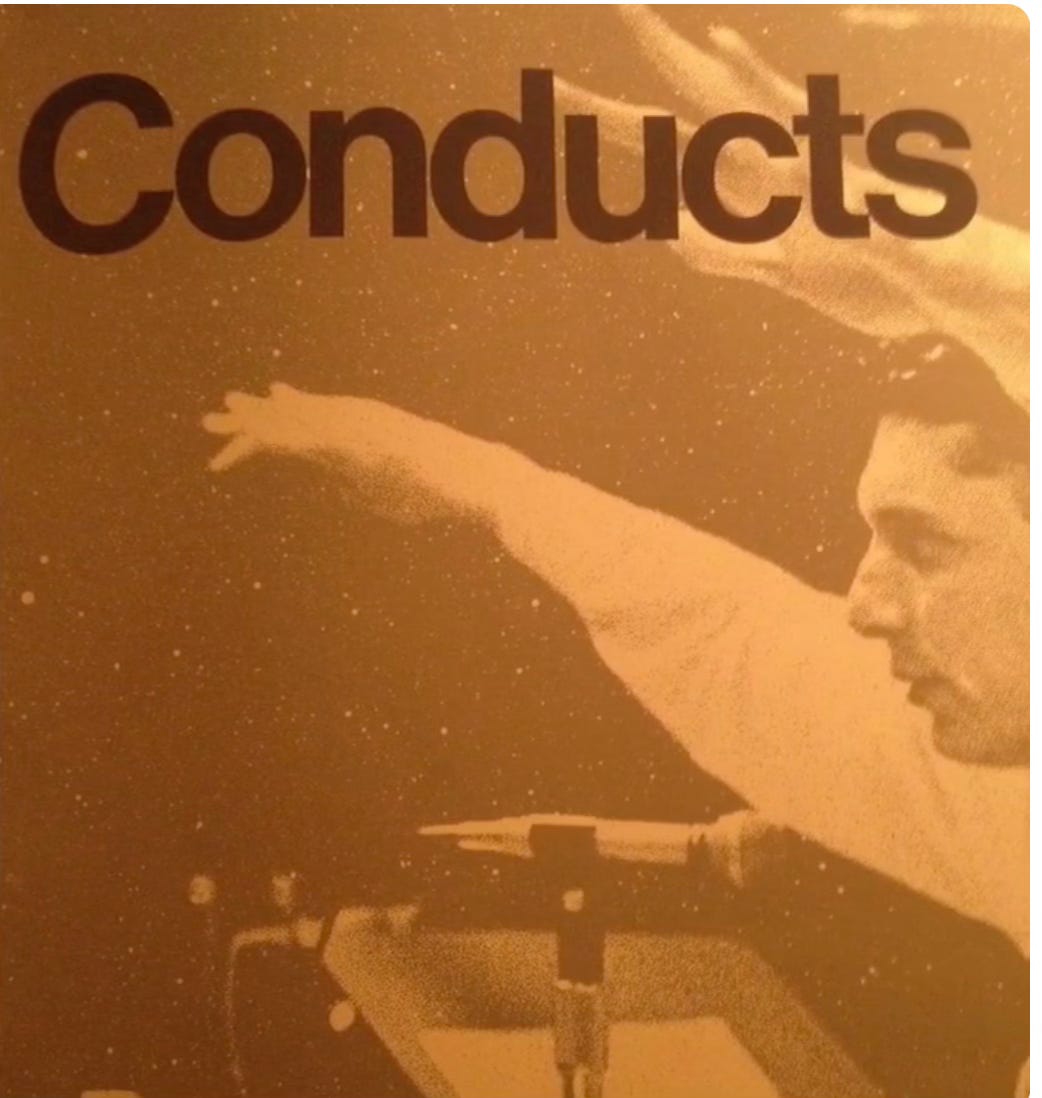
Anyway, the idea he had, and I must have adopted, was that a show was over when it was over, like rain is over when it stops.
Or like fresh bread. Pre-internet, pre-social media.
Back in the day, when guests wanted a cassette tape—yes, cassette tape—Barry would cuss, (except a kind of clean, Southern cussing.) But he dutifully did it—got the cassette, the envelope, walked to the post office, mailed it off. (I’m not sure how the cassettes were made.)
He would never reproduce an interview with himself, but I’m not saying it’s unseemly, only that it’s new—a new artifact of new technologies.
So did I post it against my will?
No. Just against my nature.
Things others do in minutes take me forever, and I have never known why.
My mind is always elsewhere, I feel like I am always having every thought at the same time, with no guardrails.
Hence: Life often feels like a gigantic pile of things people want me to do that I have not done and this makes me despondent.
I wake up swimming in all the people who are mad and how many I might apologize to on this day.
The key is to get things done right away.
I don’t exactly like doing interviews, and I outright detest documentaries, but I do them anyway when I must, and I recognize that people want me to explain Fauci, explain HIV-AIDS-Covid, and I do have some insights after almost four bloody decades.
But I’m one of thousands (alive, dead, or like me, both) who got snared in that ghastly thing.
Imagine you lived through say, your country going Iron Curtain communist, everybody going mad, creepily, and trying to describe how it happened, and all the players, dynamics, forms of sorcery, depths of media spells, decades later. I wind up sounding like somebody describing a bad dream.
By the way, here, again, is the list. If you come across a new hero of insight—see if he’s on this list. If not, hard pass. Unless he’s interviewing people who were. Or at least, like Tom Cowan, making a new and interesting case for all the ways infectious lunacy has evolved, and what can now be learned.
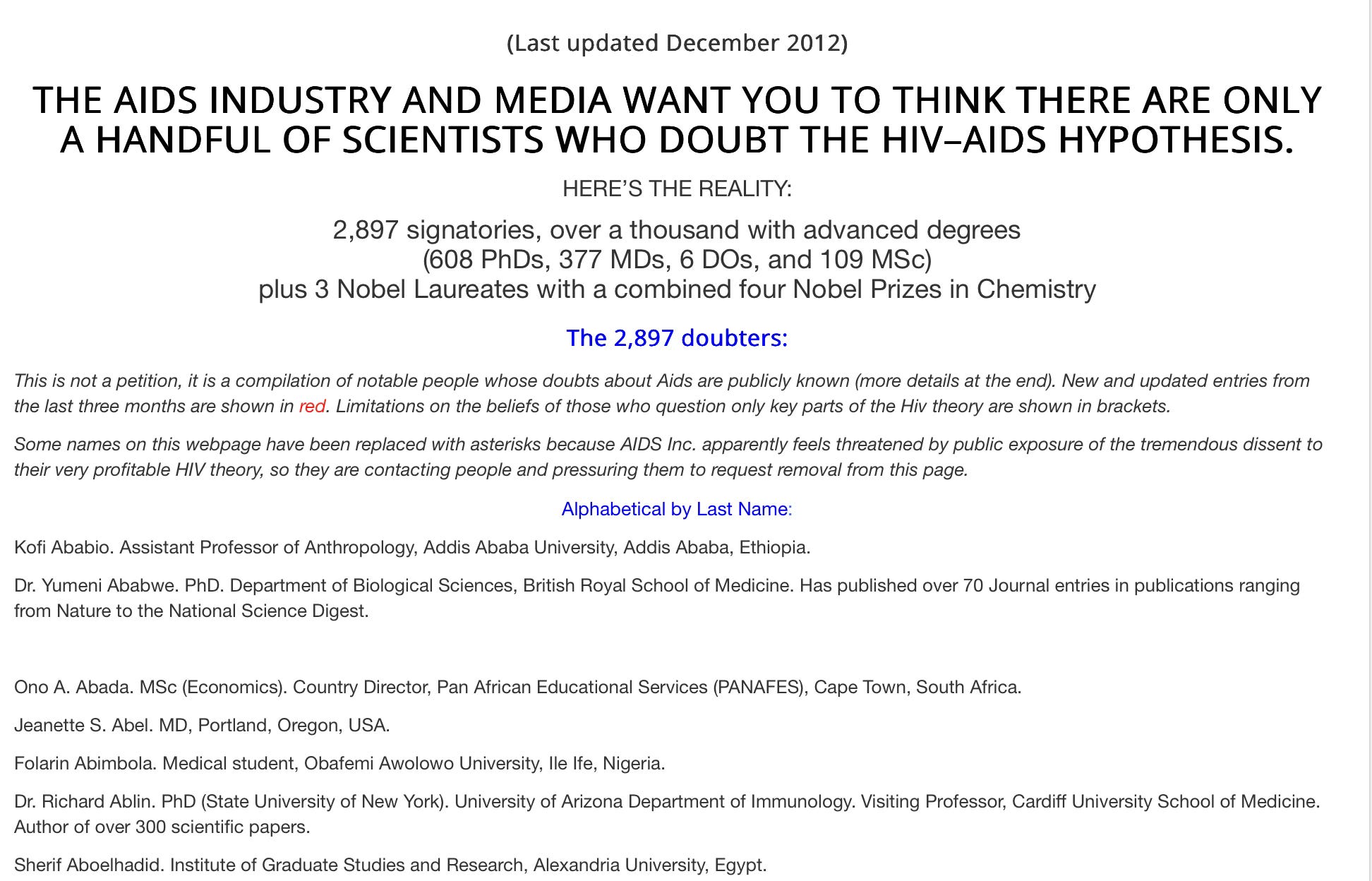
Link here.
Conversations, Kaleidiscopes
I plan to also cross post an interview I did recently with Greg Reese, about RSD, which Greg revealed he felt he also has. I think RSD is important.
Maybe I should do it now?
OK, here it is. “RSD & Other Stuff With Celia Farber.”
Greg Reese—a good friend— has an extraordinary life story.
What makes him interesting is the fact that he does not project his shadow onto others, but travels his own roads—references his own inner landscape as one of the tools of his work.
He rejects the word “journalist,” when he introduces me.
It does sound like a word from the pest family.
What word is better?
A “journalist” is somebody who had a very bad childhood and is trying to forget about it. That’s a starting definition. A good childhood makes a bad journalist.
But it can be a great word.
Seymour Hersh, for example, is a genuine, towering oak tree, capital J Journalist.
Have you read his Substack article about how be broke the My Lai Massacre story?
Absolutely remarkable.
And he didn’t have Harper Lee to help him either.
That piece is a blueprint for what the craft used to be, and never will be again, because standards are vanquished, in favor of clicks. Hersh is not a “just the facts Ma’am” type of alpha-male reporter; He uses subtle brushstrokes that in one line bring his reportage into tragic, 3-D colorization.
Like the ending:
”I gave them a good boy and they made him a murderer.”
(There you have, in one line, the story of Vietnam, a tragedy—the story that gets away from those who hear and understand only “facts.” The mother’s line was also a “fact.” How many of today’s journalists, I wonder, would have had the heart to hear it, take note, and weave it in?)
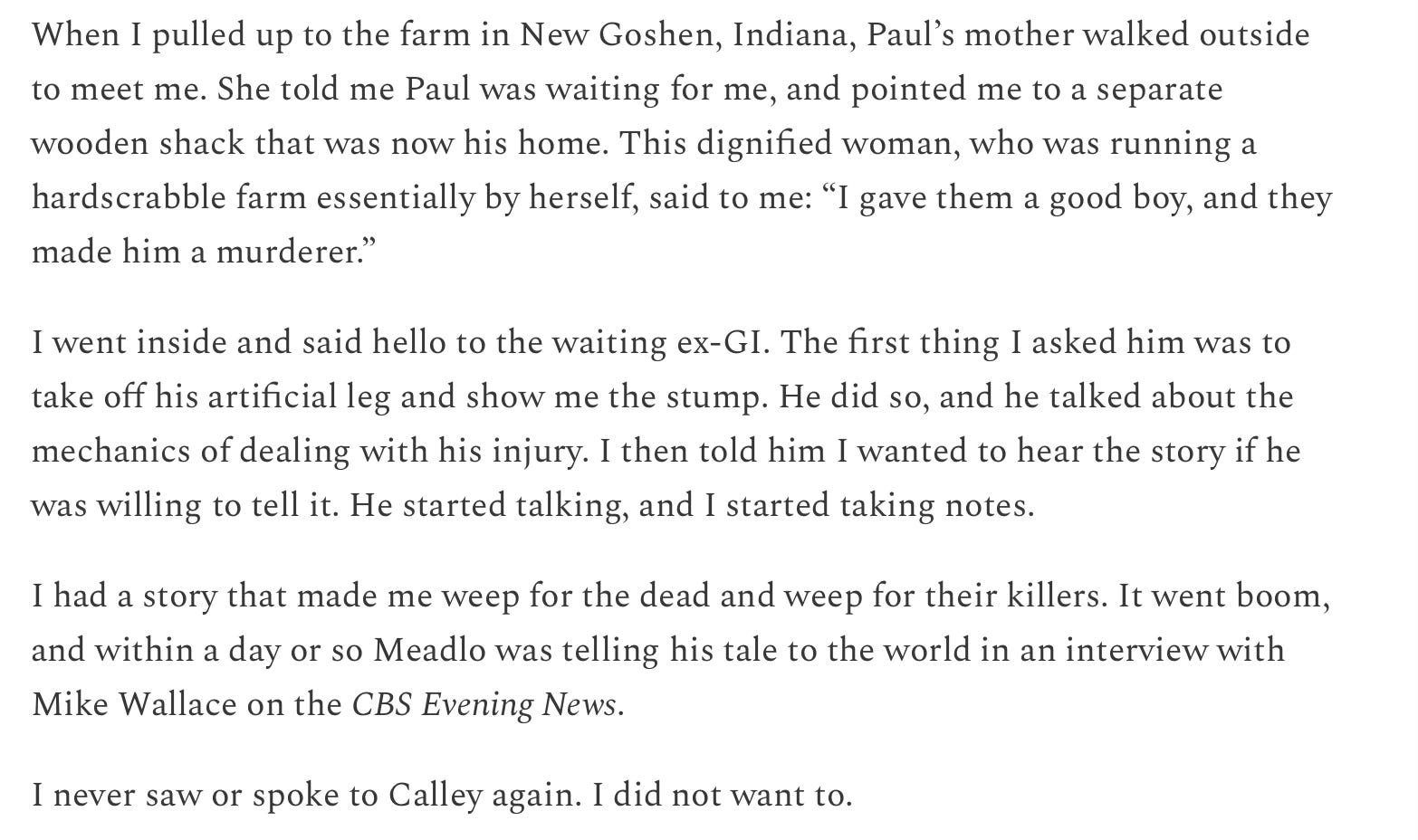
Journalists used to hunt the story not only in their own gizzard, their own resentments, but out there in the actual world, full of danger.
It was called “show-leather” journalism, because people wore down their shoes finding the story. Their own story—nobody else’s.
And Calley was Seymour Hersh’s story.
Behold what he went through, and what a marshaling of all senses, all energies, all ways of being lost and risking destruction. Yet the art form—it’s not just digging, finding, somehow luring people to reveal things they didn't intend to. That is the basement stuff.
The higher art form is creating a genuine intimacy, informed by empathy, complexity, appreciation for contradiction and pathos, so that the subject is better off for having unburdened what the reporter came to confront him with.
As is the world.
Comments
Nothing yet. Say the first thing.
Sign in to join the conversation.