
Roald Dahl, beloved children’s author of Charlie and the Chocolate Factory and Matilda went to a boarding school in London in the 1920s.
His memories there are… not great.
He was beat quite a lot. Plenty of beatings came from the administration when rules were broken, but most came from the other boys.
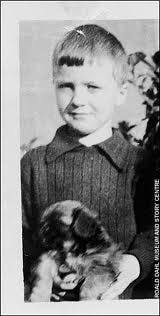
In his words,
“Prefects were allowed to beat their fellow pupils. This was a daily occurrence. The big boys (aged 17 or 18) would flog the smaller boys (aged 13, 14, 15) in a sadistic ceremony that took place at night after you had gone up to the dormitory and got into your pajamas.
‘You’re wanted down in the changing room.’
With heavy hands, you would put on your dressing gown and slippers. Then you would stumble downstairs and enter the large wooden-floored room where the games clothes were hanging up around the walls. A single bare electric bulb hung from the ceiling. A prefect, pompous but very dangerous was waiting for you in the center of the room. In his hand he held a long cane, and he was usually flexing it back and forth as you came in.
‘I suppose you know why you’re here,’ he would say.
‘Well I…’
‘For the second day running you have burnt my toast!’ - Roald Dahl, Lucky Break
Roald explains that the older boys were assigned younger boys to act as well, essentially as their servants, including to toast their bread over an open fire at tea time each day.
And if you lowered your bread on a stick one inch too low and accidentally let your prefect’s bread catch fire? You’d be whipped that night for sure:
“He beat you with every ounce of his strength. Sometimes he would take a little run, three or four neat steps on his toes, to gain momentum and thrust, but either way, it was a savage business....
Upstairs in the dormitories, the boys would sit in silence on their beds in sympathy for the victim, and through the silence, from down below in the changing room, would come the crack of each stroke as it was delivered.”
These nightly beatings were the bane of those young boys’ existence.
But then in just a few years time, those exact same boys who were traumatized by the beatings, became the beaters and perpetuated the trauma they had endured.
Why?
Why would they take the thing they hated the most and then do it to somebody else?
Why wouldn’t their memories of pain and dread stop them from repeating the pain and dread?
//
In her book, From Housewife to Heretic published in 1981, Sonja Johnson describes a conversation she had with her mother late one night around the kitchen table about her mother’s childhood.

Johnson writes,
“She remembered what was required of her as a young girl. After a bonebreaking day in the fields, she was to drag her exhausted body and her screaming muscles about the kitchen to help the women with the supper and the washing up while the men were allowed-even expected and encouraged- to rest. And despite going to bed two hours later than the men to tidy up and wash the dishes, she had to arise earlier than they did the next morning to begin it all over again. There was no rest for the women- only endless drudgery, until the children were reared, and then death.”
“She idolized her father, but I asked her what she thought of her near-perfect father for behaving this way. Her eyes filled with tears and she whispered, ‘It wasn’t fair.’”
Despite this recognition about how difficult the gender inequality of her childhood was, Sonja’s mother continued to urge her daughter to get in line and play her part in the gender inequality program.
Even though she could see the unfairness of her own comfort and desires being set aside in order to make the men in the family more comfortable, she repeatedly encouraged her daughter to take it easy on her husband, have dinner on the table when he gets home, thank him for providing, don’t embarrass him and for heaven’s sake put on some lipstick.
Why? Why wouldn’t she tell her daughter to do less? To prioritize the rest that she herself had so desperately yearned for?
Why would she perpetuate the same expectations that she found so unfair?
Comments
Nothing yet. Say the first thing.
Sign in to join the conversation.