
Cal Newport is a productive man.
He’s a full time professor of Computer Science at Georgetown while simultaneously blogging, podcasting and being the best-selling author of eight books.
People are always asking him, “Cal, how do you get so much done?”
Being the generous fellow that he is, Cal wrote us an entire book answering that question.
That book is called Deep Work: Rules for Focused Success in a Distracted World.
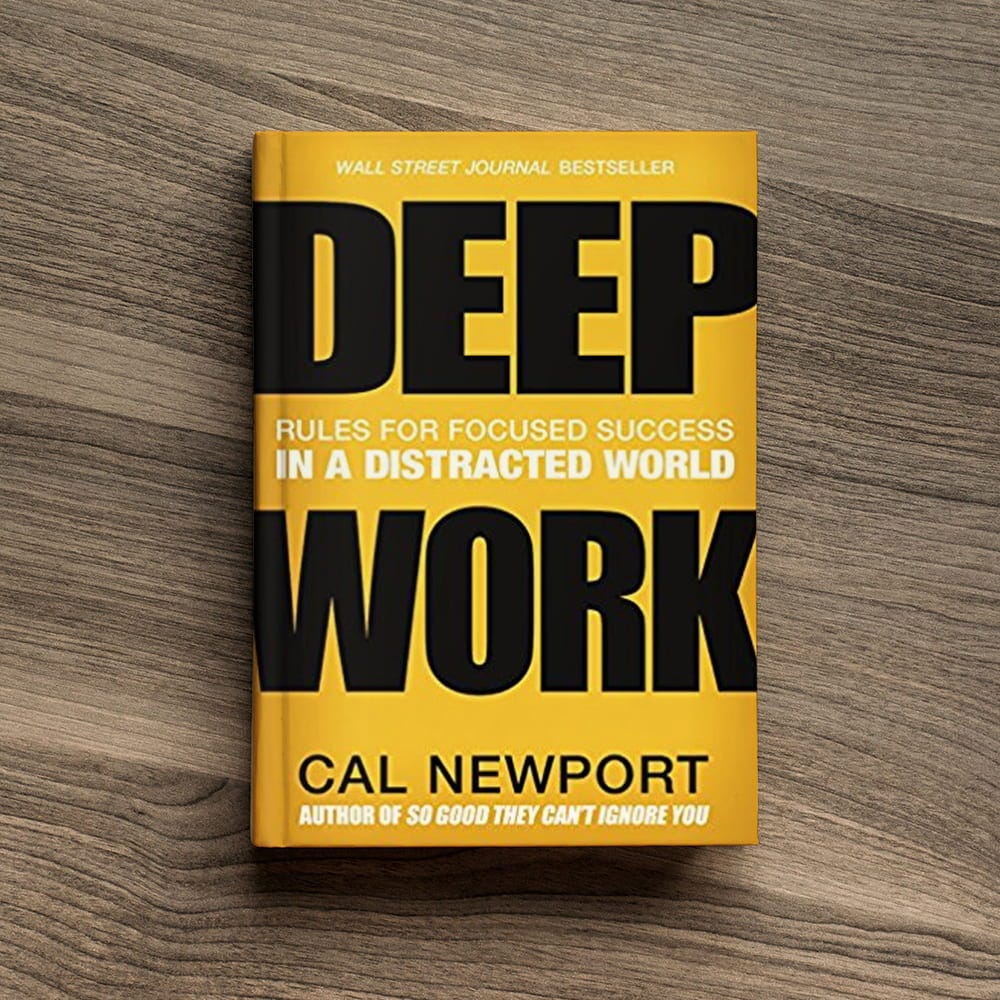
According to Cal, the key to deep work is setting aside chunks of time free from interruption and distraction where you focus on just one thing.
“To produce at your peak level you need to work for extended periods with full concentration on a single task free from distraction.” - Cal Newport, Deep Work
He is NOT a fan of open work spaces, a calendar full of meetings, Slack channels or an open email tab.
Cal says all the greatest thinkers have this uninterrupted deep focusing time in common:
Carl Jung built a stone retreat called Bollingen Tower in the woods where he would go to think and write without distraction.
Henry David Thoreau famously isolated himself for months in the woods where he produced his great work Walden.
Mark Twain protected his concentration by building himself a cabin on his property.
A few times a year Bill Gates would schedule “Think Weeks” for himself where he would go alone to a cabin with nothing but stacks of papers and books. No technology. No meetings. No interruptions.
I read Deep Work1 in 2018.
Well, I listened to it.
I listened to a chapter here and there on my way back from dropping my daughters off at school. Or on mornings when my baby would wake up early as I pushed him in the stroller. Or while making dinner as my kids watched a show on the laptop.
At the time, I was trying to figure out how to become a more established writer.
And here was Cal showing me the key: time free from interruption and distrac…
Wait what was that you said Cal? I couldn’t hear you over my baby waking up from his nap, the toast burning, my four year old showing me his drawing and the dryer dinging.
When I read the book in 2018, it did not occur to me that it is quite a bit easier to block out long chunks of time to deeply focus when you have a wife or a mother or hired help to cook your meals, wash your clothes, clean your house and take care of your kids.
Which all of the men in his examples had. Even Thoreau had his mothers and sisters bring him meals and do his laundry in his months of “total isolation” at Walden Pond.
At the time, I did not notice that Cal only mentions two women in the book as examples of deep workers, while highlighting dozens of men.2
I’m sorry to report, the book did not greatly help my writing career. (Access to a wife would have helped much more.)
My main byproduct of that book was a nagging feeling of guilt when I would get distracted by my email inbox or social media.
THAT must be why I can’t write. My bad.
//
A book I had not read at the time, but which would likely have been a better fit was Virginia Woolf’s A Room of One’s Own.
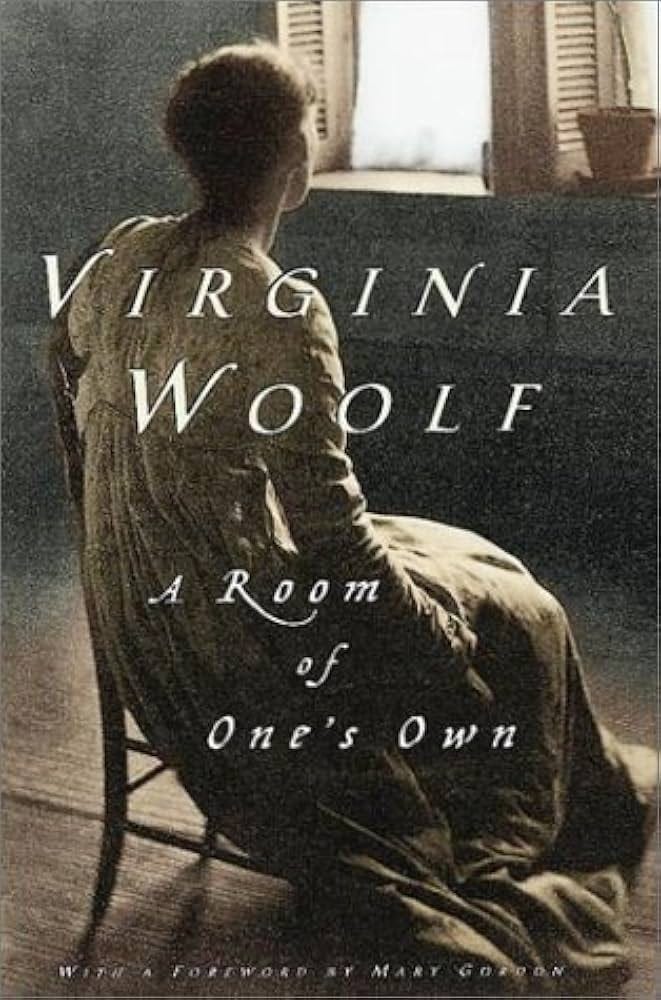
Written in 1929 England, the book is based off of a seminar Woolf was asked to give on women fiction writers.
Woolf said, well, there are very few published female authors of fiction. We’ve got Jane Austen, we’ve got the Brontë sisters, we’ve got…. not much else. So to talk about women writers, we’ve first got to talk about why more women don’t write.
And that is because, according to Woolf, in order to write a woman needs two things:
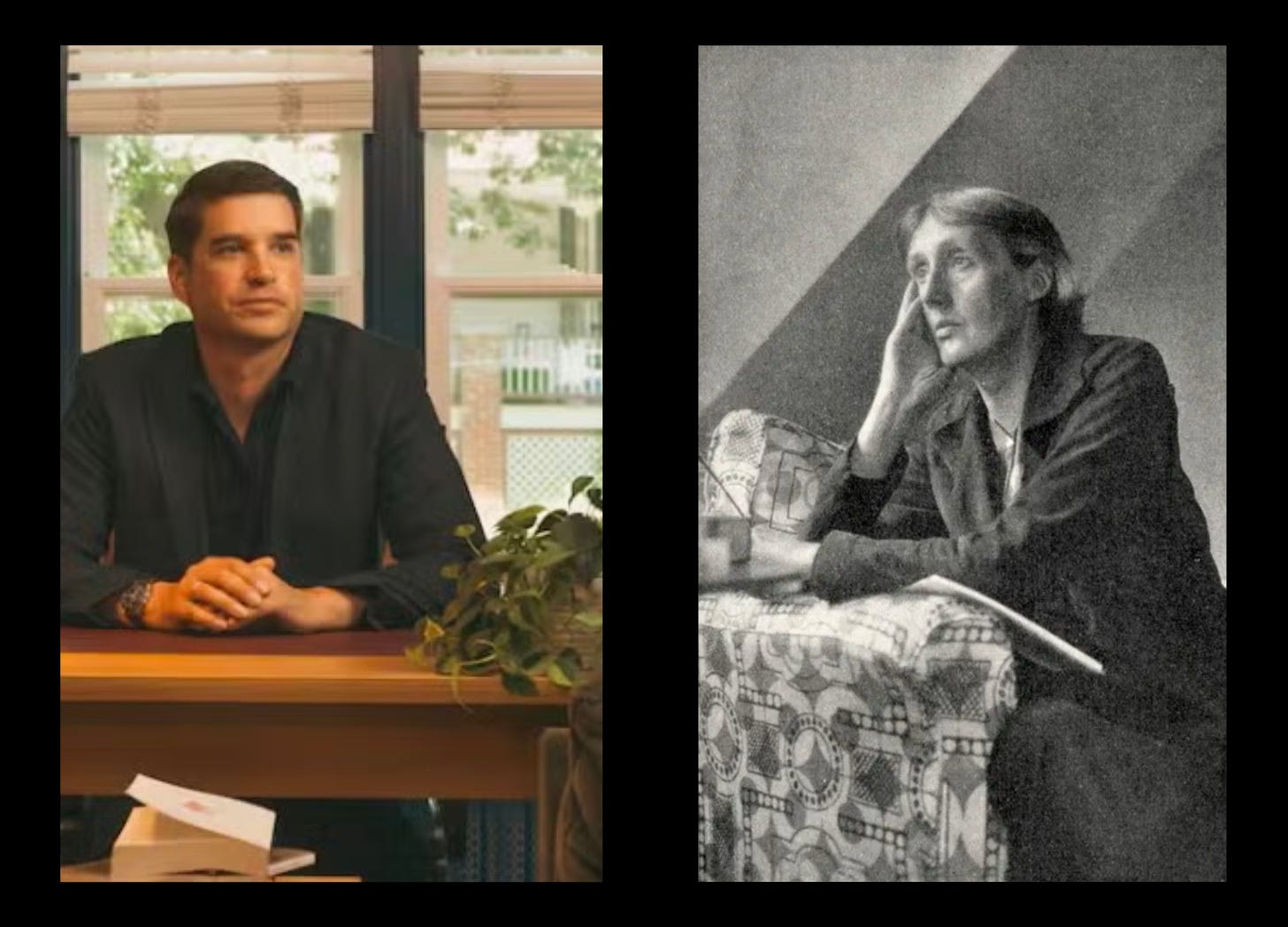
Woolf and Cal Newport are in agreement on the importance of a space free from distraction. But acquiring this space was significantly more difficult for the women of Woolf’s time than for men.
Access to your own room and freedom over how you spend your time is significantly easier if you are in possession of your own money.
Before she received an inheritance from her aunt and four walls of her own, Woolf found it almost impossible to write. Her time and attention were fractured by the constant distractions that dogged her in unpaid and poorly paid work.
And if the barriers of physical space, money and time weren’t enough, there was yet another obstacle between women and writing—one that Cal Newport does not touch on: intellectual freedom.
“Intellectual freedom depends upon material things. Poetry depends upon intellectual freedom. And women have always been poor, not for two hundred years merely, but from the beginning of time. Women have had less intellectual freedom than the sons of Athenian slaves. Women, then, have not had a dog’s chance of writing poetry. That is why I have laid so much stress on money and a room of one’s own.” - Virginia Woolf, A Room of One’s Own
Intellectual freedom requires not just a physical room of her own, but a mental room of her own.
And why wouldn’t women have that?
Why indeed.
Comments
Nothing yet. Say the first thing.
Sign in to join the conversation.