
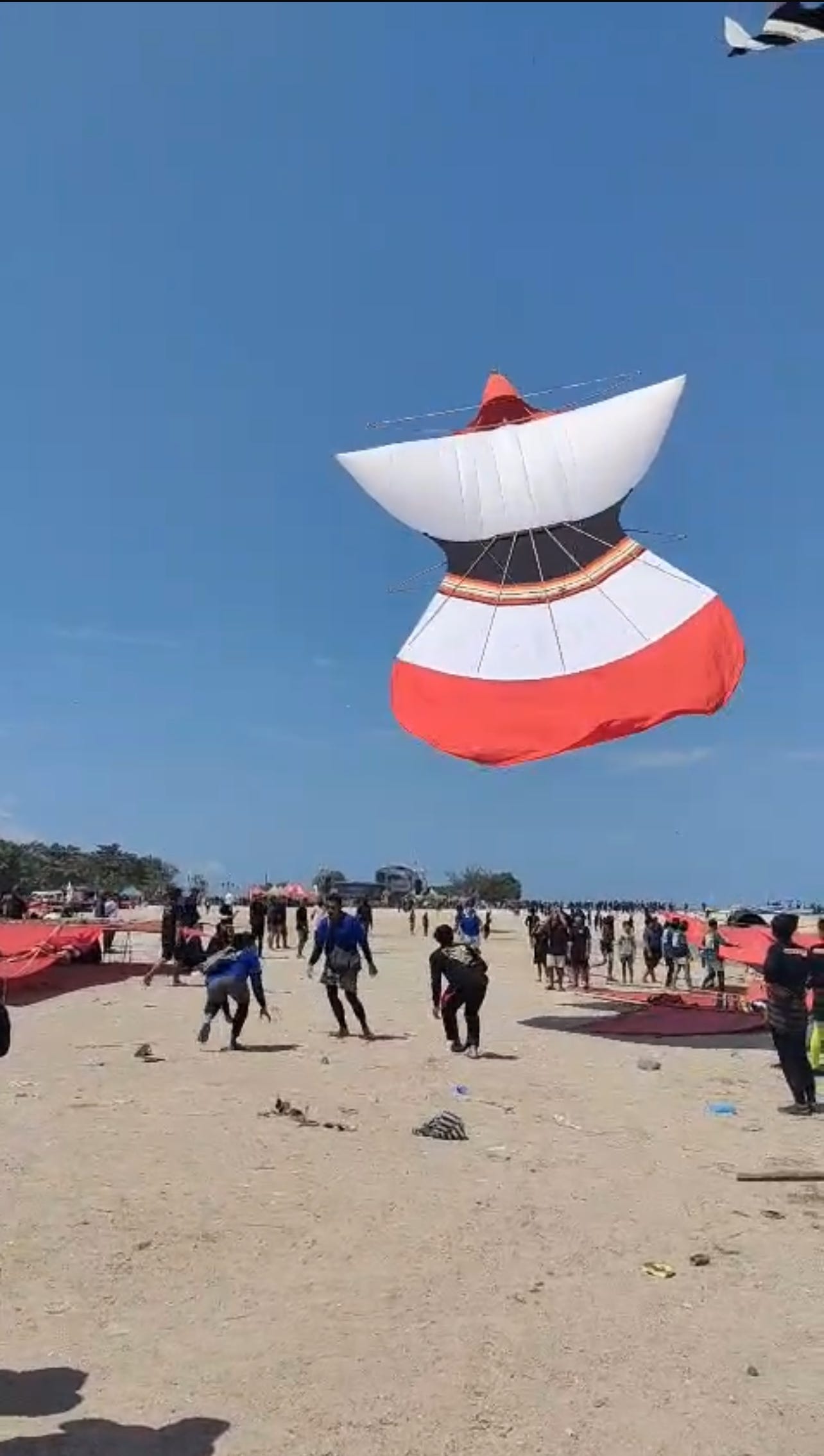
Photo by I Made Mertayasa of Sempidi, Bali
In Bali, sport and art, fun and recreation, mimic life. Dance is connected to history and spirituality. Food is connected to ancestors and communities.
The same goes for flying kites.
Next week, kite season will begin during the dry, windier months that span from July until October. Like much of what occurs in Bali, nature dictates life events and planning, even in recreation.
The annual kite festival will be held in Sanur. It’s been going on for decades. Multiple generations of people will attend, including nostalgic fathers and grandfathers cheering on their children and grandchildren.
There’s one, specific, traditional kite known as janggan. A few years ago, Bali built the world’s largest janggan kite. It measured two hundred fifty meters in length, and it weighed over one ton! They take it seriously.
Of course, it takes an army to fly such a kite. In Bali, the community is that army. It consists of youthful, strong locals, representing many banjars (districts) locally.
The kite festival is also a competition. Prizes are awarded for “best launch”, “best design”, and “longest flight”. The locals take great pride in participating and winning.
With international kites, one person will fly and control the kite. Not so, in Bali. Community is everything in Bali.
Between ten to over one hundred young people will fly and maneuver the kite, in a sophisticated and organized, well-practiced manner.
Visually mesmerizing, it is a pleasure to watch. The bright colors mixed with the wind, and the perfectly synchronized social cohesion is something to see.
Balinese traditional kites are immersed in strong philosophy and powerful cultural beliefs. Kites are flown in honor of Sanghyang Rare Angon, the Balinese Hindu god of wind.
The traditional kites have a sound element called guangan translated loosely to hammer, as they are hammer shaped.
Small guangan are made of palm leaves and larger ones are made of rattan.
The (guangan) sound elements harmonize with nature and are placed on the middle and the top of the kite. The guangan represent the male and the female, and how they must maintain their relationship harmony.
Comments
Nothing yet. Say the first thing.
Sign in to join the conversation.