
Vast (or Little?) Waste
I get it. You don’t have to tell me. That last story left you wanting to learn a lot more about Mary and Jeanne, and likely somewhat unsatisfied regarding Jenna and Bob.
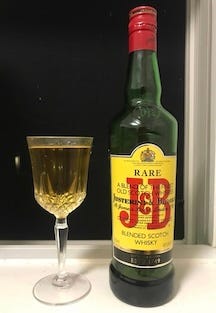
At least you’ve been reassured that J&B are a well-blended, happy couple, but you don’t have a clue whether the two women are roommates, sisters, partners, lovers, or something altogether else. Perhaps a combination? All of the above?
Actually, I don’t know much, having just met them a week ago. With new acquaintances you can’t simply ask things like that.
“So what’s the deal here? You two, y’know? Well, are you? Like, uh, what? Diddling?”
So I didn’t. But I did find out that Mary is an electrician. So that’s a start. She learned the trade working with Greg Samsa, back before the stories with which you’re surely familiar.1 Small world. Back then, before Greg cooked up the get-rich-quick cottage cheese recipe scheme that landed him as half owner of a goat dairy (and not rich), he was a full time electrician. He hired Mary a couple of years before the ‘08 crash, during a building boom, and she got her journeyman’s license just in time to be out of work.
Of course Greg called her in when he found work himself, but it was a tough row to hoe until things picked up a little in 2011. By then Mary was finding her own jobs, and their lives went different directions, as lives will, though Greg still referred work to her when he wound up too busy with the farm to do all the construction jobs that came his way.
Calling her company The Illuminati® is just what it sounds like. “We know it all and we want to control your electric future,” she jokes. “We hope to end the widespread worship of Duke Power®.” And, yes, their biggest business is installing solar panels.
Greg told me she’s one of the best electrical workers he’s had the pleasure to employ, and he’d recommend her in a heartbeat to anyone needing residential or commercial wiring. On the other hand, he said she’s pretty circumspect about her personal life, and he never asked.
As it happens, Greg and Mary wired J&B’s home, built in 2007, and Jenna and Jeanne became good friends. Maybe something about their names. Anyway, you can ask Jenna if you’re really interested in sexual orientation or other relationship details regarding the neighbors. She’d certainly know.
But that’s not what this story is about.
One of the jobs Greg and Mary did was part of a major remodeling effort in a cluster of commercial buildings in downtown Asheville. You can read more about that effort in David Brendan Hopes’ delightfully dark novel, Night, Sleep and the Dreams of Lovers, Black Mountain Press, 2019.2
When a new owner took over the complex, refurbishment was long overdue—maintenance had been ignored by the last member standing in a once proud and wealthy family, which member collected declining rents from tenants of less and less means as the structures rotted3. Thriving businesses had given way to cheap office space, to cheaper residential uses and finally squatters admitted to the least desirable spaces via broken windows and unlocked cellar doors.
Wiring from the 1920s meant the place was a firetrap, fortunate to have survived its decline. The section where our team worked was separated by just one partition from the … no, I can’t steal Hopes’ thunder4. But if their work had led them one room over … wow. Just wow.
As it happened, they did find the murder weapon, though of course no one knew that it was that. Just a large, antique high-carbon steel butcher knife, oddly secreted in a nondescript cubby that no one would ever likely have found absent the demo of old plaster walls.
The other thing in that cubby was of more immediate interest, really. A newspaper, the Asheville Citizen, with an article about the 1919 construction boom that spawned 65 new commercial buildings, and featuring a front page black and white photo of the city taken from Beaucatcher Mountain. Mary framed the picture and it’s hanging in her living room to this day.
She considers it a wry reminder of the ups and downs of the construction trades. Not long after that photo was taken Asheville was bankrupted via the Great Depression together with a highly placed grifter, the city mired in debt that would burden the town right up into the 1970s.
The knife lives in her kitchen drawer, by the way, a useful and well made tool, with no one the wiser concerning its checkered past. Your author has one such knife, though attended by threat rather than action, which is a happier thing, if no less sinister.5
High-carbon steel has it way over stainless for keeping an edge, and of course, serrated knives are fine when new, but sharpening them is a nonstarter. A knife with a history has merit. In your author’s case, reflection time and again on that incident, easily qualified as a “near miss,” long ago, each time the blade is put into service, sharpened, or washed and settled on the drain board. This puts the item in the category of “memorabilia” much the same as other heirlooms, at least those with a known provenance.
Mary, of course, only has the less dramatic memory of finding the knife and the paper together in a nook in a rundown warehouse. Wouldn’t it surprise her if she knew more? Indeed. And would she want it residing in her drawer if she did? Hard to know.
We each, fictional figures or flesh and blood, have our thoughts about death, our relationship to those of ourselves and others. Greg once worked in a private home where a young woman had been murdered. The new owner bought it for a song because the story was well known in the small town and buyers shied away, spooked by the aura of crime or suffering, or perhaps the possibility of a ghost. It didn’t bother Greg any more than your current author is troubled that the last owner of his current residence was a suicide, reportedly in the bedroom where he now types.
As the song has it, “Birds do it, bees do it,” and though Ella was singing about love, it applies to mortality too: None of us getting out of here alive, no matter what you’ve been promised.
Jeanne it turned out, once we had a chance to chat, manages a Stop’n’Shop, easily making her the most introspective of our five principal characters. Her view of death, which is hard to argue with, is that it is the controlling factor for all of life’s many decisions. “Knowing that I will die dictates that I evaluate everything I choose through that lens. If I thought I’d live forever I don’t think I’d ever be able to pick A over B or D over C. The absolute certainty of death makes me ask myself ‘What’s really important?’”6
But back to the story. Mary appreciates the keenness of a well-sharpened, high-carbon-steel blade, this one the product of Ontario Knife Company, with a 10-1/2” blade. Professional tool users tend to admire manufacturing craft, knowing from their trades the qualitative difference of wielding a well-wrought implement. As R. Crumb’s Mr. Natural admonished, “Get the right tool for the job!” (Though I’m pretty sure he was talking about a bong or a roach clip.) You tend to hear a lot about people who “aren’t the sharpest knife in the drawer.” This one is.
But what qualifies as “high-carbon?” Doesn’t all steel have carbon as one of it’s two principal constituents? Good question.
High-carbon steel contains up to 2.1 percent carbon by weight, quite a bit different from stainless, no?
Chop-chop, as the saying goes.
Of course the downside is that high-carbon steel is prone to rust if rode hard and put up wet, as the other saying goes.
So for goodness’s sake, at least dry those blades after bath time, and yes, if you really truly care as much as you like to claim, oil them too. In point of fact the object in question had been wiped clean,7 but not oiled. Fortunately the cubby wasn’t situated below one of the many leaks in the sadly untended roof, and therefore did not rust.
Mary, as you’ve probably intuited, is an oiler, FWIW. That’s the kind of attention to detail that makes her a crackerjack electrician as well. Dots “i’s,” crosses “t’s,” tightens ground-wire clamps, organizes breaker panels in logical and well labeled order, etc. and etc. Knows her AC from her DC, too.8
I, for the record, am not.
This gets us to the heart of the tale.
I don’t know if you’ve ever walked through a job site after an electrician has roughed in, but before the outlets and switches go into the boxes. I have, and I’m here to tell you the miles of wasted wire are, or should be, unconscionable. Long strands of black and white and shiny copper (in three-way situations, red as well—and more on “three-way situations” anon), are stuffed into the boxes or hanging like hippie-chick hair past the waistband of the breaker panel—all to be pared back before the ends are stripped and screwed into place.
There are reasonable reasons for this overage, involving the pulling of long runs through stud walls and so forth … but
The pruned ends are almost invariably tossed into the trash. As I write this sentence (2/23/20) the scrap price for bare copper wire is $2.25 per pound. Insulated electrical wiring goes for $.58. A person could make a living just following electricians around and sweeping up the leftovers!
But not, as it happens, following Mary. She always has a bucket on the job site and all the trimmings land there. Quarterly she takes the collection to Biltmore Iron®, down there on the Swannanoa, on Meadow Road, and picks up a check for a couple hundred dollars.
Smart cookie.
What’s not to like?
And here you’ve been fretting about her. Her whatever.
Let it go. Let it go.
*****
Note: Substack starts footnote numbers anew each time I paste in a story. But footnotes are wildly important and sometimes refer back to previous matters, so I’ve thoughtfully put the correct numbers in brackets, like so [#].
1 [81] Assuming that is, that you’ve read Fifty Wheys to Love Your Liver, Brave Ulysses Books, 2018, and the aforementioned Seize You on the Dark Side of the Moo, Brave Ulysses Books, 2019.
2 [82] Fictional electricians self-evidently must work in fictional edifices.
3 [83] And then died. The last standing member, not the building.
4 [84] And Hopes should always embody thunder, if there’re any Hopes at all.
5 [85] A tale related in Whale Falls: An exploration of belief and its consequences, Brave Ulysses Books, 2010.
6 [86] This would have been an easy and obvious point for me to pose the question, “Are you AC or DC?” However I did not.
7 [87] A smart move even though DNA testing was a long way in the future at the time.
8 [88] Whichever she may or may not be, personally. This text is dedicated to being gender neutral.
****
Copyright© 2020, Cecil Bothwell, All rights reserved.
Want more stories? Check out my website
No posts
Comments
Nothing yet. Say the first thing.
Sign in to join the conversation.