
You’ve probably heard about Strangers: A Memoir of Marriage by Belle Burden. It’s been a bestseller for multiple weeks, and Hollywood is in a bidding war over who gets to adapt the story to screens. Borne from her viral Modern Love column about her husband of 20 years abruptly leaving her and their three children, the memoir read surprisingly Gothic to me. It’s impossible to read the first half of the book—wherein Belle recounts how she and her husband, “James,” met and fell in love and started a life together—without a growing sense of dread and claustrophobia. You know how they’ll break, how they’ll end.
Still, we read on because it’s not the ending that surprises us, but how one could be so blindsided. The abruptness, the lack of explanation—they reify our worst fears of abandonment. It is one thing to be dumped; it is wholly another to be dumped without much of an explanation:
He thought he had wanted our life but didn’t. He thought he was happy but wasn’t.
The memoir is an even-keeled post-mortem, a dissection of how two people can come together, build a life together—and still experience that shared life so differently in the end. There are potential red flags throughout—such as when James insisted on revising the pre-nup at the eleventh hour, adding a clause which Belle’s advisers warned her against signing—but not overly so. As in any relationship, we all experience red-flag moments that, were things to go south, we’d look back upon and call ourselves stupid. But when things work out, we look back on those same red flags and pat ourselves on the back for pushing through and having faith. Because marriage and relationships are, in part, about work and trust.
Belle claims she does not know, and may never know, why James left their family. That is likely true. But I suspect she knows, on an intuitive level, why James left. It’s the same reason she, post-divorce, is “lighter, easier, more relaxed…. letting go of a bigger set of cultural standards, of some sort of externally imposed idea of who [she] should be.” It’s how she is able to give us an impressionistic portrait of James’ background, select details which convey Belle’s underlying, unspoken hypothesis: James and Belle were strangers to each other in their marriage because they were, first and foremost, strangers to themselves.
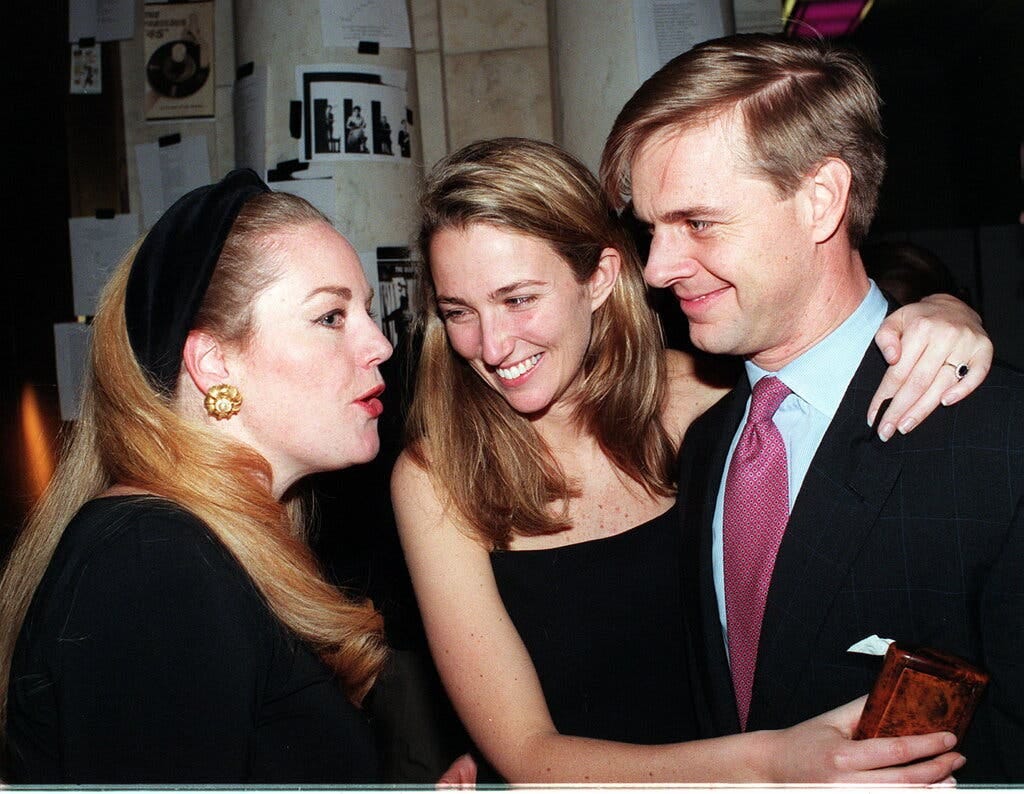
Belle and James both come from privileged backgrounds—Belle is a Vanderbilt, and James grew up attending Manhattan private schools—and as a consequence of soaking in those elite spaces, they have learned through osmosis what good taste is. Good taste is “linen blazers and colorful dresses” on Martha’s Vineyard, not “competing, dressing up, and traffic” to get to the Hamptons. A tasteful life involves antique furniture (a mahogany bed) and inherited art (Sally Mann photographs). Logos are not tasteful; loud luxury is not tasteful; loudness, in general, is not tasteful.
In “Is Good Taste a Trap?” for the New Yorker, Joshua Rothman astutely quotes another consummate observer of taste, F. Scott Fitzgerald. A character in Fitzgerald’s novel Tender Is the Night says:
Either you think—or else others have to think for you and take power from you, pervert and discipline your natural tastes, civilize and sterilize you.
This is the thing about taste: if genuinely yours, it is delightful, joyous, revelry. Flopping onto a bed that feels exactly like your safe space, where no one can hurt you. Smiling every time you walk by the kitschy or minimal or abstract or outlandish print you purchased while exploring Prague, or Osaka, or Cape Town, or New Orleans. Pulling your arms through a coat that others hate but you love—which you definitively know that you love because of how much others tell you they hate it.
But, as Rothman posits, taste can also be a prison:
The world is always telling you what to like; as a result, taste is suspect. When are you expressing your true self, and when are you allowing others to reshape you? Visit one beautifully appointed Brooklyn apartment, and you’ll admire the owners’ taste. Visit ten identical apartments, and you’ll wonder if having perfect taste actually means having none at all.
On the Big Five personality traits—Openness, Conscientiousness, Extraversion, Agreeableness, and Neuroticism—I score fairly high on Openness. This means I am curious and willing to entertain new ideas. I will try everything once, and I am never certain that my taste is better than anyone else’s. I have preferences, of course, but they are weak ones: savory over sweet, but I like sweets, too; Pop Art delights me, but I can appreciate the Pre-Raphaelites; athleisure if left to my own devices, but I adore dress-up in most forms.
Openness has allowed me to explore facets of life and stumble upon microcosms I never could’ve imagined. Amateur video game showcases and toy piano concerts. Beauty brand launch dinners, packed with influencers and beauty editors I recognize from social media. Dining aboard a mega-yacht. Attending a birthday party at a shuttered Blockbuster, watching three topless women eat a sheet cake (vanilla, with chocolate frosting) off of a guy I went on two dates with a decade ago.1
But openness has also hindered me from expressing what it is that I want, when I want. Because I am open to most possibilities, only have weak/moderate preferences, I inevitably cede to those with stronger preferences. Each time, it feels natural. Clearly they care more and I care less, so why not let them have their way? I’ll live. There will be another time.
Until one day you realize: no, there won’t. There will not be another time. When I was in Berlin the summer before starting law school, my travel companion told me he didn’t like clubbing. He’d rather relax at biergartens. And even though I wanted to go clubbing—clubbing was the thing to do in Berlin, was it not?—I acquiesced. He seemingly had such a strong aversion to clubs, and I, only a moderate desire. I thought I’d be back one day, be able to try my luck with the Berghain bouncer another year.
Spoiler: I have never been back to Berlin.
When you realize that your openness means that your weak/moderate preferences have rarely, if ever, been expressed, it is horrifying and alienating. It is immediate estrangement from yourself, from your body and the life you built with your body. Your hands no longer feel like your hands, but rather conduits through which others expressed their lives, their desires, their tastes. Where were you all these years? At the wheel, yes, and not quite asleep—but letting a backseat driver take control all the same.
I imagine this is how James felt when confronted about his affair. He recognized the distance between the life he desired—because affairs are always a reflection of a repressed desire—and the life they’d built with his hands. They being high society, those with homes on the Vineyard, the associates and partners at the Biglaw firm he’d worked at (Davis Polk), the hedge fund bros, his mother and father and friends. It is alarming how easy it is to fashion a life around everyone else but you.
This isn’t to excuse his affair—lying is rarely advisable—or to condone his reckless abandonment of his children (requesting zero custody and no overnights, weekends, or holidays in the divorce). His actions can be heinous, even while his impulses and underlying motivations are understandable. The difference between a Good Man and a Bad Man lies not in what they think, but how they act upon what they think. Thoughts—no matter how intrusive, disgusting, repulsive, violent, vile—are never inherently bad.2
My own inciting event wasn’t so dramatic as an affair. It was, simply, posting so much on TikTok that one day, I was presented with an opportunity which felt more right than anything I’d done in the previous 10+ years. Would I be interested in writing? Perhaps a book?
Comments
Nothing yet. Say the first thing.
Sign in to join the conversation.