
One of the most common criticisms I hear about creators who create content about their professions (e.g., medicine, law, finance, consulting, tech, education) is that they must be bad at their jobs. Something along the lines of, I would never hire a doctor/lawyer/consultant/engineer/teacher/etc. who posts on social media. There is something troubling about this piercing of the authoritative veil, perhaps—like seeing a parent weep for the first time—that is too confronting to behold, because it forces us to confront the fact that even those whom we believe are in control are not actually in control.
I am sympathetic to this recoiling. I, too, have turned away in disgust from professors and bosses who have displayed hints of weakness, evidence of being human. A colleague once told me that when he walked by a partner’s office, they had their head down on their desk, as if asleep or resting. My first thought wasn’t empathy—how tired they must be from billing so many hours on this deal with me!—but rather judgment. (I was tired, too, but how utterly uncouth to be seen asleep on your desk. At least I hid under my desk for my 20-minute power naps!)
Generally, I am open to critiques from the general public of my content—after all, online content is directed at the general public. But critiques from the general public about my lawyering, when most of said lawyering is conducted behind closed doors, confidentially, on behalf of clients? How do you respond to that—post PDFs of past performance reviews? Screenshots of emails from clients?
In these moments, I envy litigators. Litigators produce work that reaches the public eye. Litigators have objective metrics of “wins” (i.e., how often judges decide in your favor). Litigators can speak more about their work. The same cannot be said about transactional attorneys, regulatory attorneys, or counselors; evaluating my competence as a lawyer, then, is much more of a cloaks-and-daggers affair. Only my clients and their counterparties can really judge how I’m doing.
It’s not that I dislike litigating. I love long afternoon stretches spent on legal research and reading cases, trying to understand the rules in any given area of law. I appreciate that litigation has greater overlaps with creative writing, which I love, and allows me to flex my storytelling muscles. And I love the sordid investigation of discovery, even if I find extensive discovery in securities cases, which comprises most of litigation in Biglaw, to be a fate worse than death. (In the best of times, document review is like reading an experimental novel composed entirely of emails from a stranger’s inbox. In the worst of times, document review is like reading thousands of pages from an accounting textbook and knowing you’ll get quizzed on it later.)
But right now, I am litigating! It is a time-intensive process. It is one of the primary reasons for why last month’s post was late, and why this month’s post is late again. Because I’ve spent all this time on litigating instead of being able to write on Substack, I thought, why not share what I’m litigating on Substack?
So rare is the case that I can actually share any of my legal work, I didn’t want to pass up this opportunity to give you a peek behind the curtain. What kind of writing does a litigator do? What does the document look like, sound like? The brief is also chockfull of intellectual property issues—copyright infringement, right of publicity—that will be a fun read for any other IP nerds.
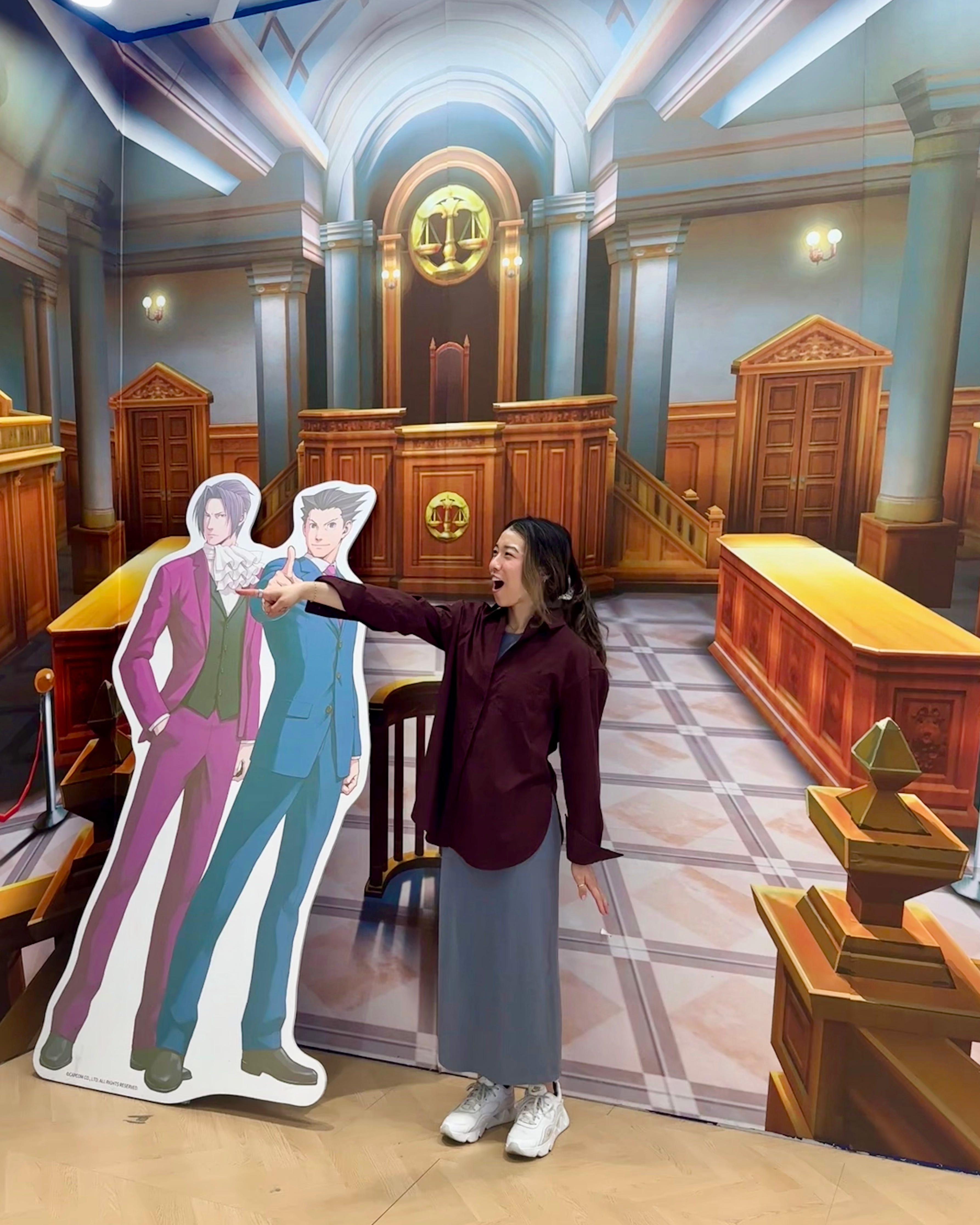
So here you go: my legal work product, so you can be the judge on whether I’m bad at my job! 🙃 (Plus: a photo of me on set for my very first acting role!)
Comments
Nothing yet. Say the first thing.
Sign in to join the conversation.