

(Trigger warning: references to sexual abuse.)
Health Secretary RFK Jr. successfully pressured the Center for Disease Control (CDC) to weaken it’s position on effective and safe immunizations. NPR reported, “The CDC’s website now says a link between vaccines and autism cannot be ruled out. That’s a reversal from the CDC’s longstanding stance that there is no link.”
In light of this chilling news that will sicken more children and further fuel to anti-vaccination activists, I’m reposting writing I originally posted on World Moms Network in 2021 during the pandemic when people were dying because they were fearful of the COVID-19 vaccine. I interviewed a friend who once fiercely opposed vaccines for childhood diseases because I wrestled with two questions: “Why would anyone oppose a life-saving vaccine?” and “How can we change their minds?”
To help me better answer these questions, my friend Bernadette shared her story. Now a proponent of vaccines with grown children, she was once a young mom planning not to vaccinate her baby.
The first part of understanding Bernadette’s early vaccine suspicions is to know that her first pregnancy at 19 years old resulted from an act of violence. Young and vulnerable, she fled from a friend who had suddenly become an abuser.
She sought medical care from four different obstetricians, but as a single, low-income mother, she received little compassion for her traumatic history. The dismissive attitudes of male doctors eroded her trust in traditional medicine.
She eventually decided on an illegal home-birth with “underground” midwives because she feared her abuser could find her at a hospital. Bernadette recalls, “The midwives were the first people to ‘hear me.’” They gave her excellent advice about nutrition and childbirth.
The competence and kindness of these caretakers primed Bernadette to accept that the medical community was not all-knowing. Unfortunately, these particular women also gave her misinformation about the pertussis (whooping cough) vaccine. It’s important to note that midwives are valuable, trusted birthing partners around the world and often support immunizations.
When her baby girl was born, Bernadette still wanted to provide the best protection she could. So she took her daughter for vaccines. It horrified her when a lump the size of a walnut appeared at the injection site of the first shot. The follow-up shot caused an even bigger lump. Even though lumps are a common side effect, it convinced Bernadette that her midwives were right in opposing vaccines. She added her voice to those expressing mistrust about immunizations.
Eleven years later, Bernadette was pregnant with her second child. This time, with a loving husband and health insurance, she looked forward to consistent care for the new baby and her daughter. However, she still distrusted vaccines, and brought that attitude with her to interview doctors.
That’s when she met Dr. Patricia Wolff, a highly respected St. Louis pediatrician. Bernadette remembers her as respectful and unflappable with a wry sense of humor. It was a very impactful conversation. She says, “She didn’t seem like she was standing four steps above me. We were having a discussion. She wasn’t trying to make me submit.” Bernadette wanted to work with this woman!
Dr. Wolff told Bernadette that she wanted to work with her, too. However, for the safety of her current patients, she wouldn’t be their doctor unless Bernadette agreed to vaccinations. Dr. Wolff didn’t show anger at the anti-vaccine position, only disappointment. Bernadette’s desire to work with Dr. Wolff won out. The doctor was flexible enough to alter their vaccine schedule, so the kids only received one shot at a time.
When Bernadette talked to anti-vaccine folks during the pandemic, she felt a reluctant kinship. She remembered the temptation to dig into a position when others belittled her intelligence. It was empowering then to think, “I know something those so-called experts don’t know.”
She reminded me that people act illogically, faced with helplessness and fear. Nobody wants to feel ignorant or out of control. They can’t control job loss or the economy, but they can control whether they get a needle in their arm. She also told me it’s hard for them to back down, saying, “Once you take a stand, it’s hard to reverse because that would make you look and feel stupid.”
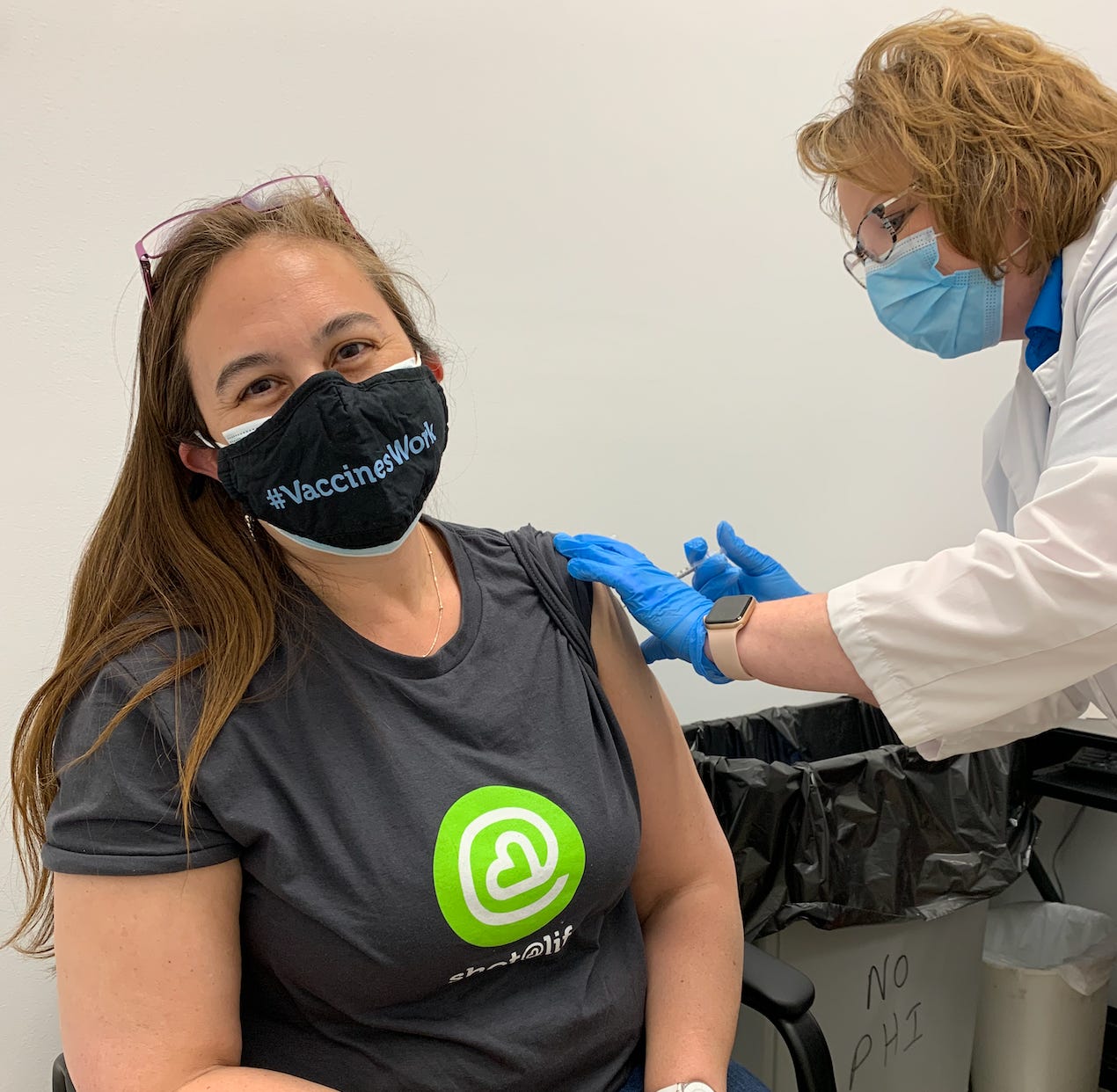
As an advocate for childhood vaccinations with the UN Foundation’s Shot@Life, what did I learn from Bernadette’s experiences as we talk to people who mistrust the vaccines?
Listening + Respect = Trust
I noticed themes of listening and respect. The midwives were the first people to hear Bernadette. The doctors who wouldn’t listen made her feel small and ignorant. Why would she trust them over the women who took the time to care for her emotions and her body?
Dr. Wolff listened to her. It didn’t cost the doctor anything but time, but she gained trust. Far too many people in Bernadette’s life were condescending and dismissive when she longed for validation and respect.
Trust is essential
Trust was the element that caused Bernadette to change her mind. Once you stoop to ridicule or insults, there’s no trust in the relationship. If you make fun of others, they can dismiss you. They no longer see you acting like someone with their best interests at heart. You go from being a friend and resource to “one of them.” The response switches from “I’ll hear her out because I respect her” to “I don’t care what she says.”
Stand firm without punishing
Dr. Wolff didn’t berate her potential patient. With compassion, she denied services based on the safety of her patients. She was accommodating, but never compromised the protection of children under her care. We can be firm without being hateful.
After talking with Bernadette, I reached out to a vaccinated friend who hadn’t taken her 12-year-old for his COVID-19 vaccine even though he wanted it. I recognized her desire to protect a child was the same reasoning that led me to vaccinate my kids. Focusing on that common emotion helped me speak less and listen more. Shortly afterward, I received a message from her saying that her son received his first dose!
Not all conversations will go that smoothly, of course. Yet I hope others might find inspiration here to help start the hard conversations. Lives depend on it.
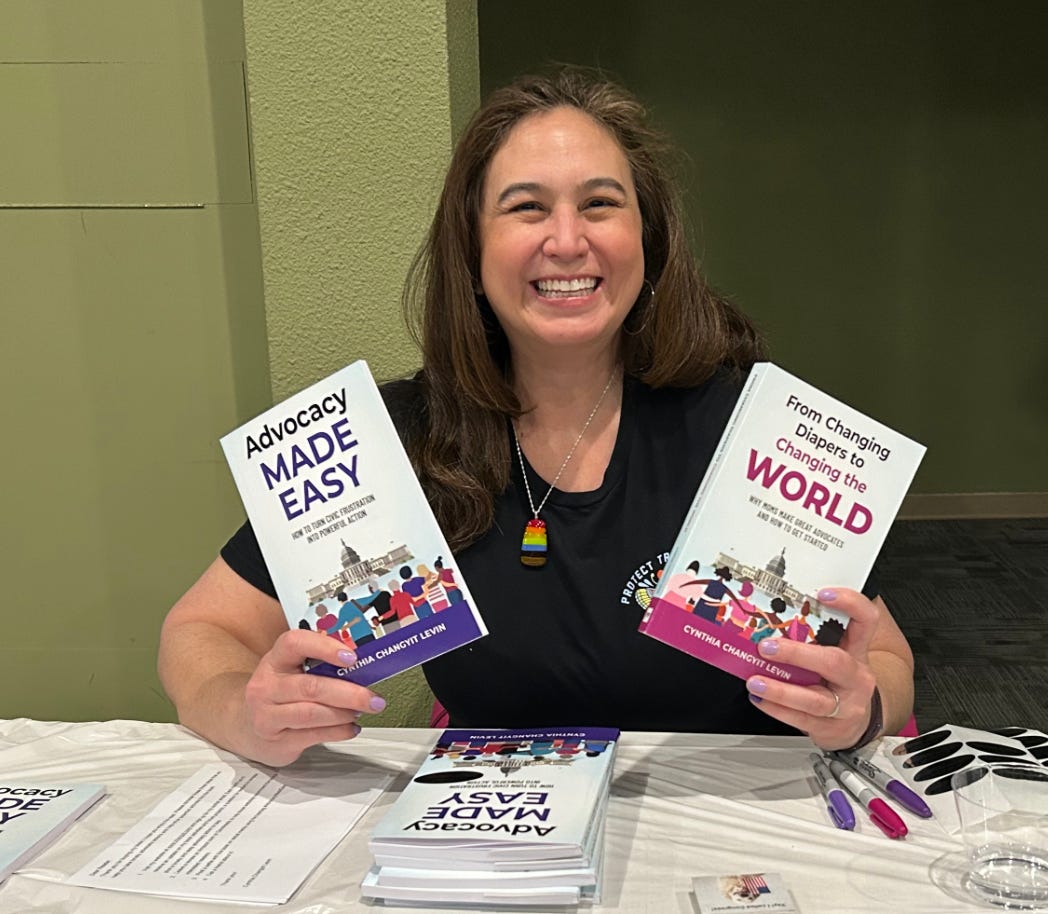
My first book, “From Changing Diapers to Changing the World: Why Moms Make Great Advocates and How to Get Started,” is a warm and witty guidebook helping moms to make a better world for all of us. It provides inspirational stories and “how-to” instructions for new and experienced activists to get more involved in advocacy.
My second book, “Advocacy Made Easy: How to Turn Civic Frustration Into Powerful Action,” is a practical handbook designed to demystify the advocacy process for everyone. It offers a convenient, step-by-step guide to making your voice heard in the halls of power—no political experience required.
Buy an autographed copy from my website at www.changyit.com/books.
Order online at bookshop.org or Barnes & Noble.
Order from any independent bookstore near you!
Comments
Nothing yet. Say the first thing.
Sign in to join the conversation.