
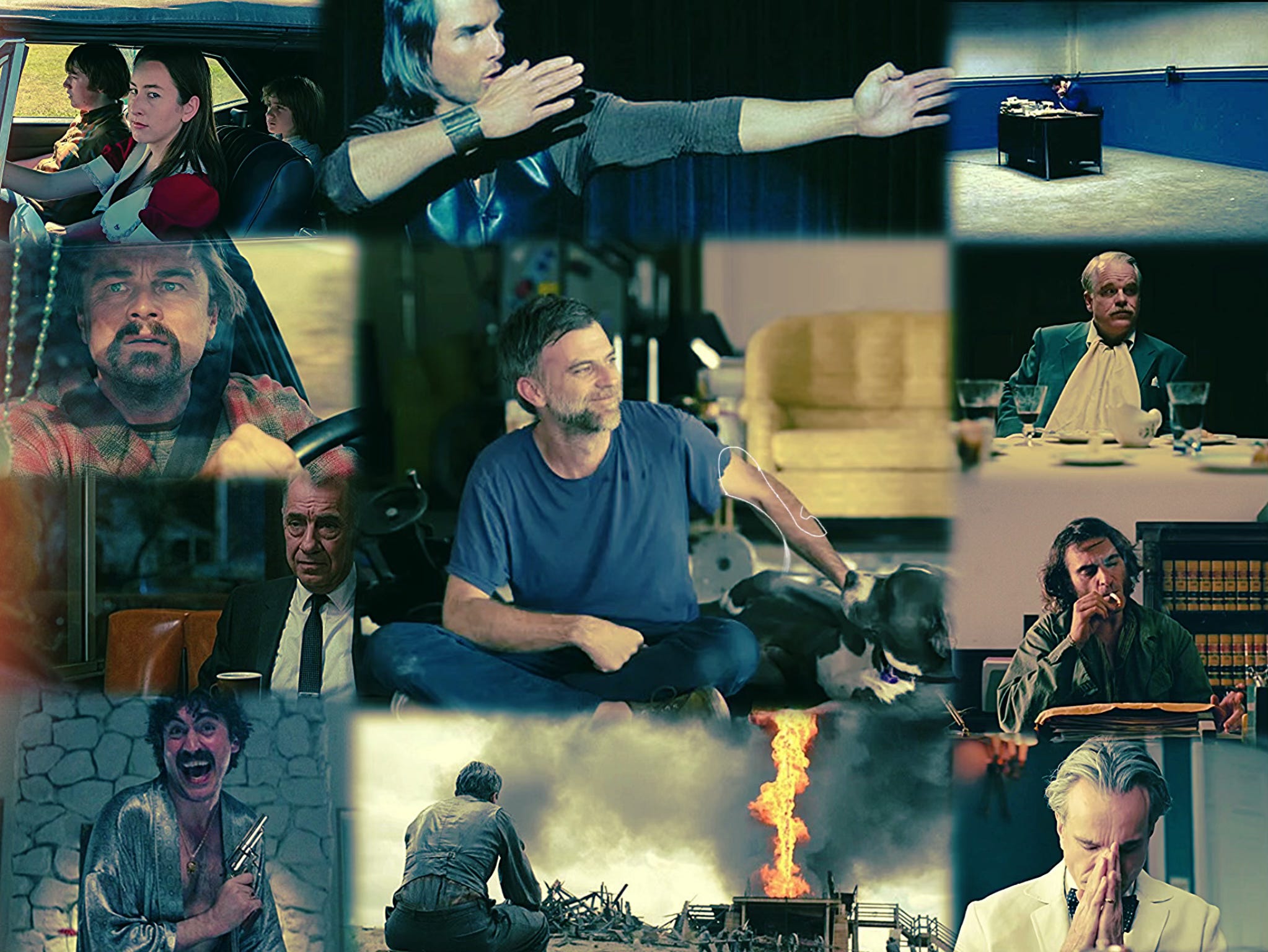
In the Winter 1962-63 issue of Film Culture, an aspiring critic named Andrew Sarris (1928-2012) published an essay entitled “Notes on the Auteur Theory in 1962.” The piece would prove highly controversial, though that was hardly Sarris’ purpose. A stint with the United States Army Signal Corps during the Korean War had landed the Columbia graduate in Paris, where he encountered France’s burgeoning film culture. In and through the cutting-edge magazine Cahiers du Cinéma, which, in 1951, was cofounded by the great film theorist André Bazin (1918-58) and featured writers (and future filmmakers) Jean-Luc Godard (1930-2022) and François Truffaut (1932-84), Sarris developed an interest in the so-called politique des auteurs. Literally meaning “policy of the authors,” this name indicated a stance towards cinema rather than a discrete theory about cinema: to champion la politique des auteurs was to view a film’s director as its key artistic force. On this reading, a movie is not the mere “staging” of a script; it is a vehicle for the self-expression of the director.
La politique des auteurs was not exactly an original idea. Already in 1916, the early and influential silent film director Lois Weber (1879-1939) had already espoused a similar understanding of filmmaking:
A real director should be absolute. He alone knows the effects he wants to produce, and he alone should have the authority in the arrangement, cutting, titling or anything else that may seem necessary to the finished product…. We ought to realize that the work of a picture director, worthy of a name, is creative.
Subsequent thinkers agreed, including the early film theorist (and eventual Nazi) Walter Julius Bloem (1898-1945), the great American novelist and screenwriter James Agee (1909-55), and Bazin himself. What each of these figures, however different, saw in the movie director was a source of artistic credibility. At its inception, cinema was dismissed as nothing more than a popular diversion. It was not considered a serious art form, because it captured life as it is. In fact, the word “cinema” itself is adapted from the Greek words κίνημα and γράφω, which together mean “to record movement.” Hence, if this new medium was to contribute to Western aesthetics, it would have to be shepherded by visionary artists along the lines of composers, painters, and poets.
Sarris agreed. Upon returning to New York, he penned “Notes on the Auteur Theory” as a kind of apologetic for la politique des auteurs. He begins, first, by noting that “the Cahiers critics” were in no way trying to say that a film’s quality is guaranteed by the director: a good director can make a bad film, and vice versa. Auteur theory, in other words, is not an attempt to sidestep film criticism. It does, however, presuppose that “the distinguishable personality of the director [stands] as a criterion of value.” A movie “looks and moves” in the way that “a director thinks and feels.” This emphasis on personality dovetails with a third assumption—that film directors imbue their projects with a kind of “interior meaning,” “an élan of the soul” that emerges “from the tension between a director’s personality and his material.” Sarris sums up his argument in this way:
The three premises of the auteur theory may be visualized as three concentric circles: the outer circle as technique; the middle circle, personal style; and the inner circle, interior meaning. The corresponding roles of the director may be designated as those of a technician, a stylist, and an auteur.
Sarris’ “auteurism” is so robust that he ultimately concludes that a director’s individual movies matter far less than his total authorial vision. “As Renoir has observed,” Sarris adds, “a director spends his life on variations of the same film.”
Such a “hot take” was bound to invite criticism, and Sarris received more than a little in his heyday, particularly from outspoken New York Times film critic Pauline Kael (1919-2001). For Kael, filmmaking is a collaborative and collective art. Thus great films are not the products of individual genius, but of finely-tuned teamwork. If anything, an auteur convinced of his own personal brilliance is likely to make a bad film, because he will treat his actors poorly, disregard the advice of his editor, make unwarranted changes to the script, and so on.
Nevertheless, it’s hard to deny that Sarris’ auteur theory has proven influential. Even today, cinephiles will turn out for the “big directors” in Hollywood—auteurs such as Martin Scorsese, Steven Spielberg, and Christopher Nolan. Pace Kael, the movies made by these directors are often heralded as must-see “events,” and they tend to garner multiple critical nominations and awards. Sometimes, as in the case of a Scorsese, an auteur will even emerge as an important cultural figure, who is asked to address political issues or the state of cinema itself. Perhaps Kael would still object that the fame and popularity of such auteurs does not ipso facto render their films successful—and this is undoubtedly true. But the reality is that most moviegoers act as if Sarris’ auteur theory were true, and major motion picture organizations are no different: five persons were nominated for “Best Directing” in this year’s Academy Awards, and all five could easily lay claim to the title “auteur.”
Among this year’s nominees is Paul Thomas Anderson (1970-), who has joined Nolan as a bona fide Gen X auteur. Anderson (or, as he is often called, “PTA”) burst on the scene in 1996 with Hard Eight and has made nine films since then. His most popular movie is Boogie Nights (1997), though his most celebrated work is One Battle After Another, which was released in September 2025 to great critical acclaim. Oddsmakers long (and, it turns out, rightly) viewed One Battle After Another as the clear favorite to win “Best Picture” at the 98th Academy Awards. It is the fourth of PTA’s films to be nominated, though There Will Be Blood (2008), Phantom Thread (2018), and Licorice Pizza (2022) all failed to win. As a PTA fan, I saw One Battle After Another during its opening weekend, and, though I liked it, my immediate takeaway was one of disappointment. I initially shrugged this feeling off as a post-hype letdown—after all, there has been talk that One Battle After Another is the “greatest movie of all time”—but on a second viewing I decided that, no, there was something “off” with the film. To put it in the terms of “auteur theory”: the “interior meaning” of One Battle After Another didn’t seem to match that of PTA’s other work. The question is: iwhy?
Indeed, if there is a “through line” in PTA’s filmography, it’s that human beings have a deep and abiding need to belong. In most cases, this need is expressed in terms of direct interpersonal relationships (family, friends, lovers, etc.). Indeed, a number of PTA films begin precisely by identifying this need in the protagonist. In Hard Eight, for example, Philip Baker Hall plays Sydney Brown—an aging gambler, who becomes a surrogate father to a pair of down-on-their-luck drifters (played by John C. Reilly and Gwyneth Paltrow respectively). At the outset of the film, Sydney seemingly happens upon John, alone and broke, sitting outside of a Nevada diner:
In time, Sydney is able to help the couple escape a dangerous situation and to start a new life together, even telling John, “I love you like you were my own son.” Yet, in making this confession, Sydney also knows that he is condemning himself. On account of his dark past—revealed in a surprising scene late Hard Eight—Sydney’s redemption remains incomplete. In helping John, he is fated to remain alone.
Boogie Nights centers on precisely the same theme, albeit with a comic (rather than tragic) ending. Dirk Diggler (Mark Wahlberg) is a young man from an abusive home, but he knows that his, um, male endowment could be his ticket out. He approaches porn filmmaker Jack Horner (Burt Reynolds, in an Oscar-nominated role) for a part in one of his films. The two, along with Jack’s troupe of regular actors, find unprecedented success. At last Dirk has a sense of belonging; he has a family. And yet, the excesses of the emerging porn industry prove overwhelming. Dirk develops a drug problem, fights with Jack, and gets caught up in petty crime. Late in the film, in an attempt to scam a drug dealer, he hits rock-bottom:
After narrowly escaping with his life, Dirk returns to Jack as if he were a kind of prodigal son (Luke 15:11-32). The two reconcile, and their peculiar but nevertheless loving family is restored. Dirk belongs again.
In both Hard Eight and Boogie Nights, happiness is found outside the system. “Family” can appear in any number of contexts—even otherwise dysfunctional ones—but PTA does not ground family in, or link it to, institutional structures and/or political power. Human life is quirky, ironic, fickle, and often melancholy. For that reason, it is also frequently disappointing, even tragic. Yet, in most of PTA’s movies, hope remains in that which can’t be assimilated into social convention or political rationalism. In Magnolia (1999)—which, for my money, is PTA’s masterpiece to date—a series of broken relationships only finds healing when a rain of frogs (Exodus 8:1-4) descends upon Los Angeles. In Punch-Drunk Love (2002), one of PTA’s most underrated movies, the romantic bond between Barry Egan (Adam Sandler) and Lena Leonard (Emily Watson) defies all expectations—and that’s precisely why it works. Licorice Pizza (2021) is the thematic sequel to Punch-Drunk Love but carries its thesis to the extreme, suggesting that true love does not just defy societal expectations but our own as well.
In other PTA films, the inverse is true. That is to say, the system betrays those who otherwise profit from it. In There Will Be Blood (2007), oilman Daniel Plainview (Daniel Day-Lewis, in one of his most iconic performances) strikes it rich in his trade, only to die alone, drunk, and wretched. In a key scene, Daniel rejects his adopted son H.W. (Russell Harvard), who, as a child, had lent Daniel’s business an air of decency but became a burden when a gas blowout cost him his hearing:
As we learn, H.W. was an orphan, who had once longed for a father. But in this scene Daniel definitively cuts himself off from H.W. and therefore from any possibility of having a loving relationship. In the end, Daniel’s successful pursuit of material gain has secured his spiritual demise—a metaphor for a nation bent on serving the machine.
PTA’s psychological drama The Master (2012) makes a similar point, albeit from a different perspective. The film’s “Daniel Plainview” character is Lancaster Dodd (the late Philip Seymour Hoffmann, who nails it as usual), an intelligent but seductive leader of a philosophical movement known as “The Cause.” Set in the aftermath of World War II, The Master frames Dodd’s movement as a response to the West’s postwar spiritual malaise. The only problem is that it’s built upon deceit, manipulation, and hypocrisy:
For much of the film, the viewer experiences “The Cause” through the eyes of Freddie Quell (Joaquin Phoenix, another PTA regular), a Navy veteran who has fallen on hard times. Lonely, hypersexual, and addicted to drink, Freddie is taken less by Dodd’s philosophy than by the man himself. Like H.W. in There Will Be Blood, Freddie wants a father, a leader, but Dodd proves to be neither. For him, the abstract system trumps personal loyalty. If Freddie won’t bend the proverbial knee, he must be discarded.
It would be easy multiply examples—the woozy irony of Inherent Vice (2014), in which cannabis and surfing are treated as the last (and perhaps greatest?) forms of resistance to bureaucratic control; the psychological-erotic manipulation at the heart of Phantom Thread (2017), in which the artifice of romantic love is stripped bare. But let’s turn to One Battle After Another, which just recently racked up a number of major wins at the 98th Academy Awards, including Best Picture, Best Director, and Best Supporting Actor. One might assume, then, that it marks the culmination of PTA’s career. I would argue that it’s actually a deviation.
The movie begins outside the Otay Mesa Detention Center, roughly 25 miles southeast of San Diego. A leftwing revolutionary group known as the French 75, led by “Ghetto” Pat Calhoun (Leonardo DiCaprio) and Perfidia Beverly Hills (Teyana Taylor), are on a mission to liberate detained immigrants. The two become lovers during their campaign but soon find their relationship fractured after Perfidia is captured and sexually coerced by U.S. military officer Steven J. Lockjaw (Sean Penn, in what I think is an overrated performance). Lockjaw offers Perfidia personal leniency in exchange for political betrayal. Thus she abandons Pat and their infant daughter Charlene, thereby forcing father and daughter (not to mention other French 75 members) into hiding under false identities.
Sixteen years later, a perpetually stoned and increasingly paranoid Pat (now known as Bob Ferguson) lives off the grid with Charlene (now known as Willa Ferguson). In the meantime, Lockjaw has become a powerful security figure, who harbors designs of joining the Christmas Adventurers Club—a highly selective white supremacist secret society. In an effort to conceal his past with Perfidia (and, in turn, his fetish for Black women), Lockjaw uses law enforcement (essentially ICE) to seek and destroy Willa, whom he believes is his biological daughter. Lockjaw’s efforts trigger a violent chain of raids, rescues, and pursuits involving surviving French 75 members and other outside factions. Now a fugitive, Willa learns the truth about her mother’s duplicity, while Bob struggles to reach and protect her amid the chaos. Eventually, the two are reunited, and Lockjaw receives his comeuppance. In the movie’s final moments, Bob gives Willa a letter from Perfidia, in which she apologizes for what she’s done. Thus galvanized, Willa tells Bob that she is ready to join the leftwing resistance movement herself.
PTA adapted the script for One Battle After Another from Thomas Pynchon’s 1990 novel Vineland—his second adaptation of a Pynchon work, following Inherent Vice. However, while PTA’s rendering of Inherent Vice hews closely to the source material, One Battle After Another does not. This difference is in some ways accidental—Vineland has a famously labyrinthine plot, even by Pynchon’s standards—but it also allows PTA to rework Pynchon’s story of post-1960s burnout for twenty-first century audiences. The “love triangle” at the heart of Vineland is largely retained, but Pynchon’s critique of the Age of Reagan has given way PTA’s “takedown” of the Age of Trump.
In and of itself, this is neither an unusual nor a “bad” move: filmmakers have long adapted older stories to suit contemporary purposes. But it does raise a number of questions about PTA’s motivations, including just how One Battle After Another fits in with his larger authorial vision. As I have been arguing, one of the hallmarks of PTA’s career is the juxtaposition of family and system. Human beings want to belong—want to be loved—but this fundamental desire is threatened by impersonal forces of bureaucracy and control. In what might be called his “comic” mode, PTA celebrates characters who break free from the constraints of the system and, however improbably, opt for loving relationships. At times, it almost seems that the universe—or perhaps even God himself—urges people to make this choice. In Magnolia, only the unexpected arrival of a supernatural mystery is capable of shocking broken people into forgiveness and reconciliation:
Similarly, in his “tragic” mode, PTA depicts a world where the system prevails, leaving only death and despair in its wake. “I’m finished,” gasps Daniel Plainview at the end of There Will Be Blood, practically inverting Jesus’ last words: “It is finished” (John 19:30).
What’s unusual about One Battle After Another is that it displays elements of both modes. Lockjaw’s subservience to the military-industrial complex entangles him in a murderous web of corruption and power, even as Bob and Willa realize that their bond, however peculiar, is more important than the politically-inflected messiness of their past. In a sense, then, one could argue that One Battle After Another represents a kind of Hegelian synthesis of the dialectic that lies the heart of PTA’s entire oeuvre. Both the comic and the tragic are realized in the film’s riveting final hour.
But such a conclusion would tidy up, and therefore elide, the curious decision that PTA makes in the very last scene of One Battle After Another—a decision that represents a divergence from the general arc of his filmography. One might have expected the movie to end with Bob and Willa together, but it actually ends with them separating. Even though the systemic tribalism of the modern nation-state has caused undue destruction and mayhem—yes, the harassment and abuse of undocumented immigrants, but also Perfidia’s disingenuous commitment to the French 75 and her subsequent abandonment of her family—Willa bizarrely opts to follow in her mother’s footsteps and to become a political activist herself. Perfidia’s battle has become Willa’s battle. But why? What exactly has Perfidia accomplished, apart from adding to the tragedy of modern politics—its internecine violence and impersonal groupthink? Is her path not synonymous with her own name, which is derived from the Latin phrase per fidem decipere (“to deceive through trustingness”)?
One Battle After Another ends before such questions can be addressed. Indeed, a longtime fan of PTA might squint and wonder if, in fact, a note of irony might’ve been smuggled into the conclusion, as if PTA were underlining the dismal tension between system and person, politics and family, in the twenty-first century? Yet, the ending doesn’t support such an incredulous position. If anything, One Battle After Another’s very last frames, set non-diegetically to Tom Petty’s classic anthem “American Girl” (1977), suggest unbridled optimism. There’s Bob (pictured below), still smoking weed but now warming up to the idea of using an iPhone—a technology that he has eschewed while in hiding. Bob is reintegrating into society, quite possibly to fight again.
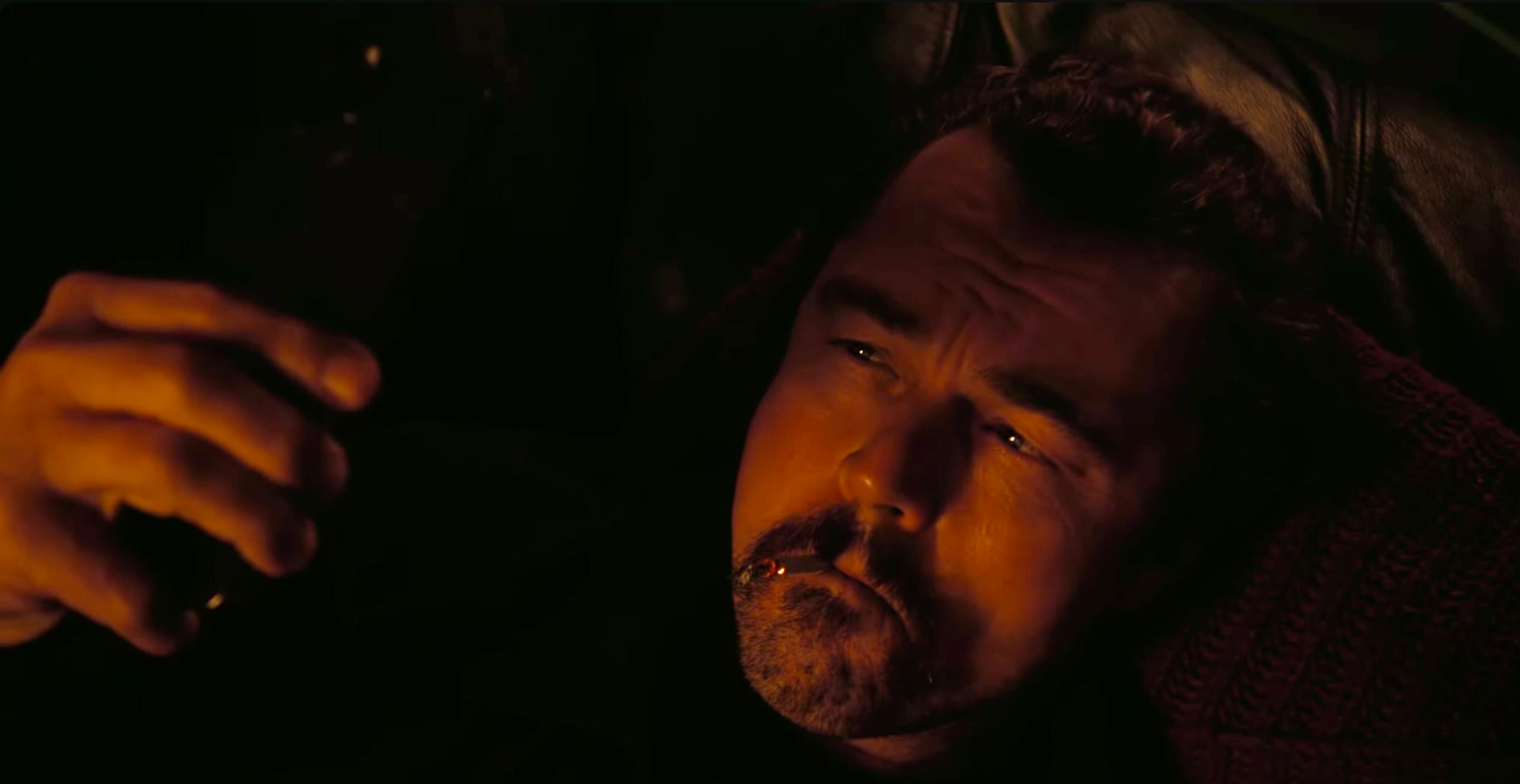
And then there’s Willa, not so much rejecting her surrogate father as resuming the battle he left behind years ago. The systemic machinations of partisan politics have divided her family and led to the deaths (literal and metaphorical) of family and friends. But Willa expresses no reservations. The lone certainty is that political battles never end. It is indeed “one battle after another.”
Doubtless this conclusion was persuasive to the members of the Academy of Motion Picture Arts and Sciences, who rewarded PTA with multiple Oscars. Of course, whether or not it will satisfy all who watch One Battle After Another will vary. But what’s clear is that the movie ends in a way that runs contrary to what Sarris would call the “interior meaning” of PTA’s overarching authorship. In a career dedicated to undermining the system, PTA has finally succumbed to it. In One Battle After Another, “belonging” is conceived in partisan rather than interpersonal terms, and family has been politicized. In a paradoxical twist, then, it stands as the perfect representation of the Trump Era.
No posts
Comments
Nothing yet. Say the first thing.
Sign in to join the conversation.