
I left home at 17 and moved into a two-room apartment with my just-turned-18 boyfriend. Of course, we had no money; we both worked after school and on the weekends at a mall steakhouse. As graduation loomed, I needed a full-time job.
We had no phone. Landlines, the only option then, were too expensive. Besides, we had a phone booth a hundred yards from our door, just 25 cents a call.
Ever seen an American phone booth? You stepped inside a vertical box made of metal and clear glass panels with your back to the door. Everyone could see you. In those with an awkwardly folding door to shut out some of the noise, you could get focused on your conversation and be oblivious to what was going on outside or behind you.
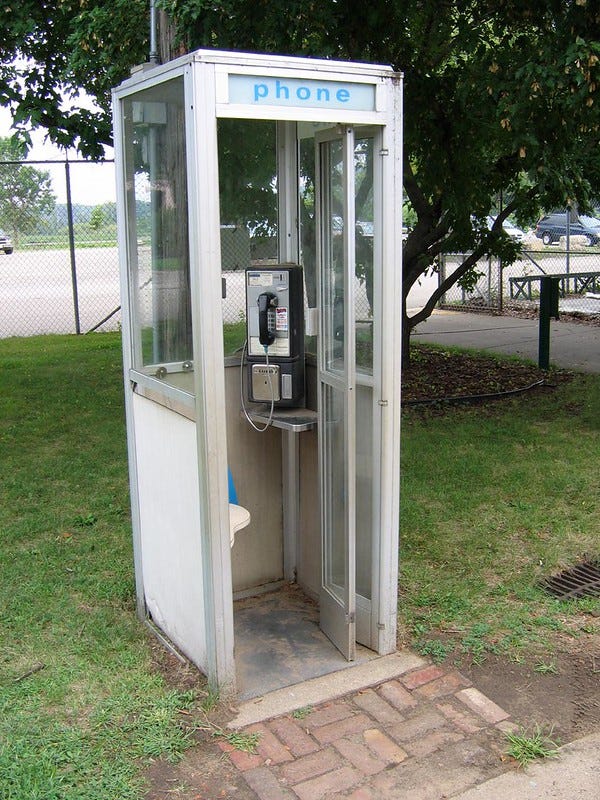
One weekend, I came out of the booth and ran into a man in polyester pants and a shirt. A slightly battered brown car sat in a parking space behind him.
He must’ve recognized a vulnerable situation.
“Are you looking for a job?” he asked after some offhand, friendly chitchat. “We’re looking to hire people.”
My excitement (and naivete) surely showed on my face. I can’t remember what his pitch was, but I ended up telling this perfect stranger I needed a job and lived in an apartment “right over there,” where I’d meet him to learn more.
Thank goodness for medians. I had only a short walk; he had to drive in the opposite direction and turn around twice before getting into my apartment complex. By then, reality had smacked me in the back of the head. I hadn’t given him the apartment number, so I turned my deadbolt and stayed quiet, peeking through my curtains as he drove up and down the apartment complex looking for me.
I was incredibly lucky. Was he a rapist or a human trafficker? I have no way of knowing. Decades later, I’m still aghast at the thought that the life I have lived might have been stolen in a moment.
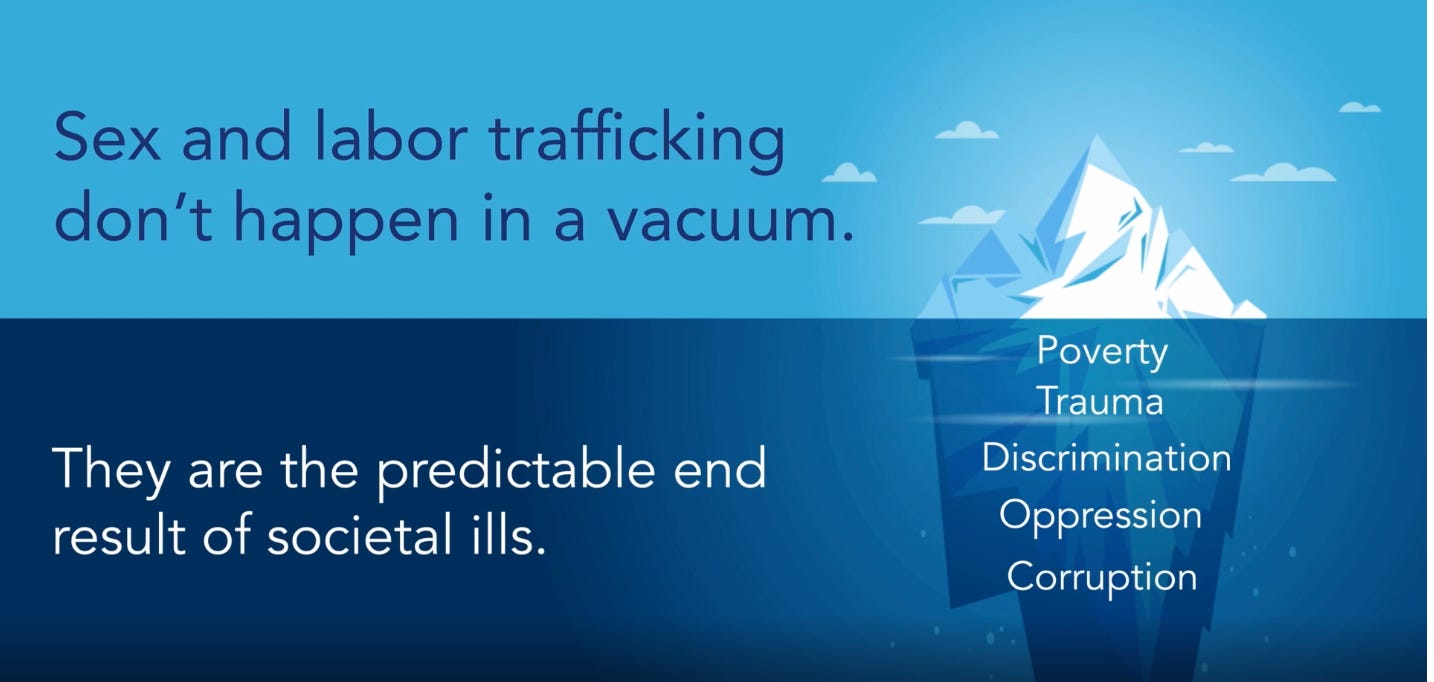
The Polaris Project says that trafficking victims more often fall prey to people they know than strangers. In all cases, though, traffickers identify a need and provide solutions, just as in my situation. Their victim may not realize anything is amiss until long after the initial helpfulness has turned into coercion.
“Human trafficking is the business of stealing freedom for profit. In some cases, traffickers trick, defraud or physically force victims into selling sex. In others, victims are lied to, assaulted, threatened or manipulated into working under inhumane, illegal or otherwise unacceptable conditions. It is a multi-billion dollar criminal industry that denies freedom to 24.9 million people around the world.”
Survivors who tell their stories are incredibly brave. In the stories and videos shared on the Polaris site, one especially struck me because we as a society are only making it more likely to happen again and again.
This person, who was born a female, said:
“My trafficker provided me with a space to express my gender identity as a child, which is something that no one else in my life really knew about or was able to provide a space for .... My trafficker understood that I was a transgender boy and I was someone who really didn’t have a space to be validated for the masculinity I knew I held inside, and he recognized that. He treated me like I was his son, which was very different from the dynamics that people around me would treat me with, seeing me as a young girl.”
This young person just wanted to be themselves. Only the trafficker gave them that ability.
They go on:
"I think things could’ve been different for me if society, of course, had been more accepting and validating of young transgender children, ... [allowing] spaces where I could have been validated and noticed, and my trafficker wouldn’t have been the only person who did.”
Think about how many traffickers are gleefully watching those opposed to transgender people among us today—voters and politicians who believe they are somehow helping children but instead are making life harder for them and easier for human traffickers.
Educate yourself about human trafficking. The way we talk about it can significantly affect how others view victims and how victims view themselves. In a nutshell, from Polaris:
“You can’t ‘rescue’ a person being trafficked. What you can do is create an opportunity for that person to leave.
READ Language Matters: 5 Ways Your Words Impact Trafficking Survivors
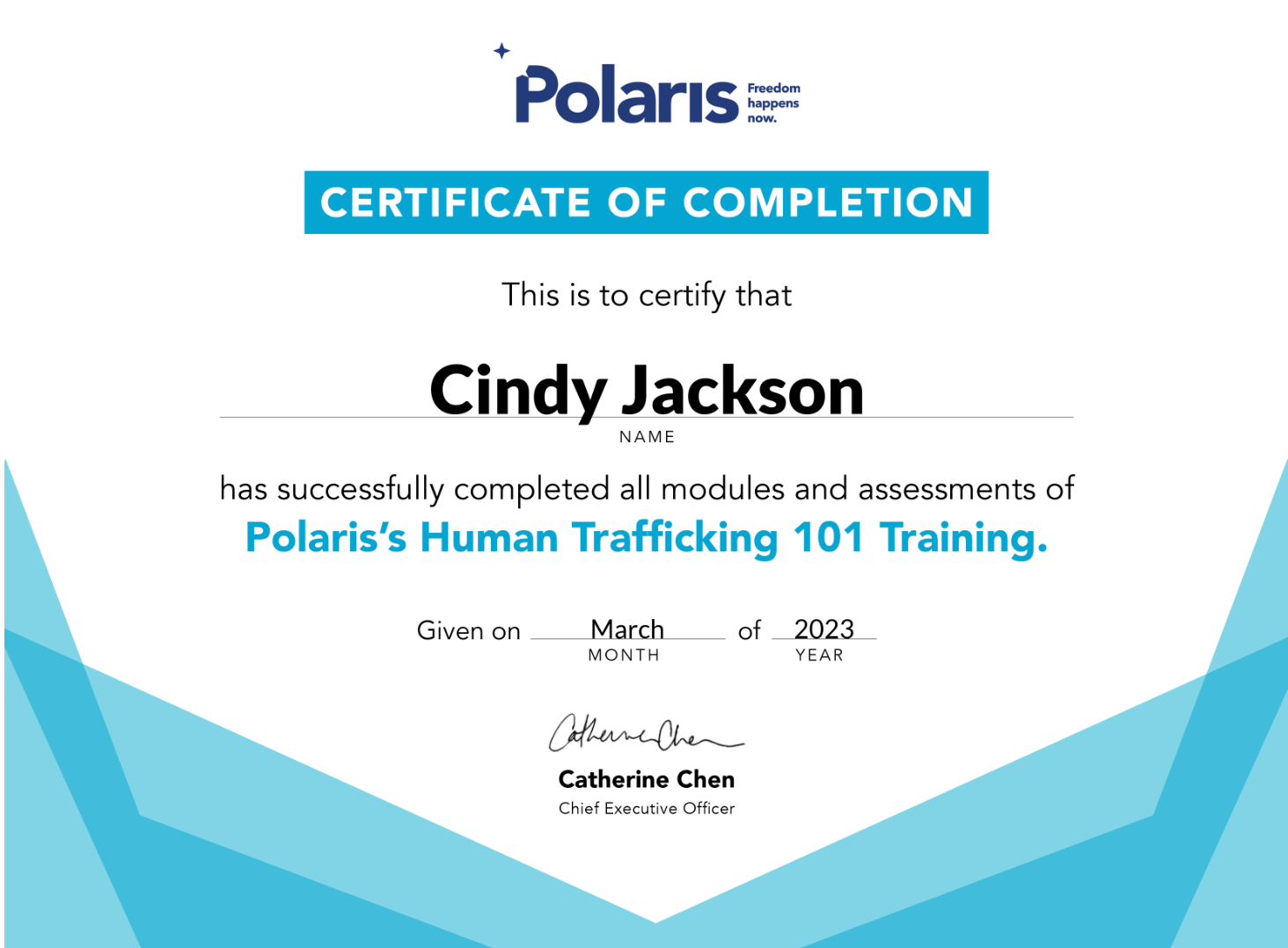
I spent a lunch hour to become certified in the Polaris Project’s Trafficking 101 Training It wasn’t difficult, and I learned a ton.
I also interviewed Kiwanians; read about what an 18-member Kiwanis Club in northern Indiana is doing to educate others about human and labor trafficking. Talk to your own membership or community groups. Support groups like the Polaris Project. Learn about how social issues lay the groundwork for trafficking. And share the safe and confidential Human Trafficking Hotline.
Comments
Nothing yet. Say the first thing.
Sign in to join the conversation.