
I pulled out of the Australian national final two weeks ago due to ongoing fatigue and stomach issues (which I’ve discussed here before). I’m obviously devastated and taking a bit of time to process things so will write a reflection about nationals another time.
Instead, I want to write about a play I watched called Drive Your Plow Over the Bones of the Dead. Nathan decided that, to cap off my horrific day in Sydney, it would be a great idea to take me to see an insane 3.5-hour play about the extent of human cruelty.
The play is an adaptation of the Polish book of the same name by Olga Tokarczuk. It’s about an eccentric older woman named Mrs Duszejko who explores her rage after the disappearance of her two dogs (her “little girls”). It’s a murder mystery, a comedy, and a statement about the way the world treats animals and the environment as ours for the pillaging. I sobbed non-stop for the final hour. I sobbed walking out of the theatre, sobbing walking down the street, and continued throughout dinner.
Evidently the play really got to me. Not surprising, having adopted a greyhound and minimised my animal product consumption, and being in a vulnerable state of mind after pulling out of the race. But it also got me thinking about parallels to athletics. I’ve written before about the objectification of the athlete body and how handing over bodily autonomy is the price of entry.
Towards the end of the play and book, Mrs Duszejko laments:
Who divided the world into useless and useful, and by what right? Does a thistle have no right to life, or a Mouse that eats the grain in a warehouse? What about Bees and Drones, weeds and roses? Whose intellect can have had the audacity to judge who is better, and who worse? A large tree, crooked and full of holes, survives for centuries without being cut down, because nothing could possibly be made out of it.
Athletes are like animals in that the ones that are valuable (beautiful, talented, and young) are the target of hunters and poachers (agents, bookies, and brand executives).
At the track on nationals weekend I noticed agents (who are nearly always men) milling about the teenage prodigies. They make deals on behalf of athletes like brand endorsements, race entry and appearance fees. Because all of these tasks can be done via email, when they’re at the track they don’t really do much. They could easily be mistaken for any other parent or coach except there’s a certain awkwardness about them, like an adult at a playground who you slowly realise isn’t there with a child.
An athlete, like an animal, can also lose their value. If you get old and slow they stop paying attention, which is painful in another way. I’ve felt this myself since I started professional sport at the ripe age of 25 and have only gotten older. When asked, I now tell people I’m in my very late 20s (my prime).
I think part of why I was so affected by the play was that I’m grieving my status in a system that even though deeply flawed, I still benefited from. Thank god I have a healthy sense of self, a rich personal life, incredible hair, and a fantastic dog, or I’d be screwed.
Speaking of Plum, my little girl, it would do me some good to extend the same compassion I feel for her, and all animals, towards myself. After all, treating my body like an animal with needs is how I ultimately got over my eating disorder. That chick who writes the DSM-V is screening my calls.
I’m currently in South Africa again on a training camp with my team. I’ve previously written about the tracks we use here – here’s an index of all the tracks I’ve shared! – so let’s look at a track I visited for a race last year.
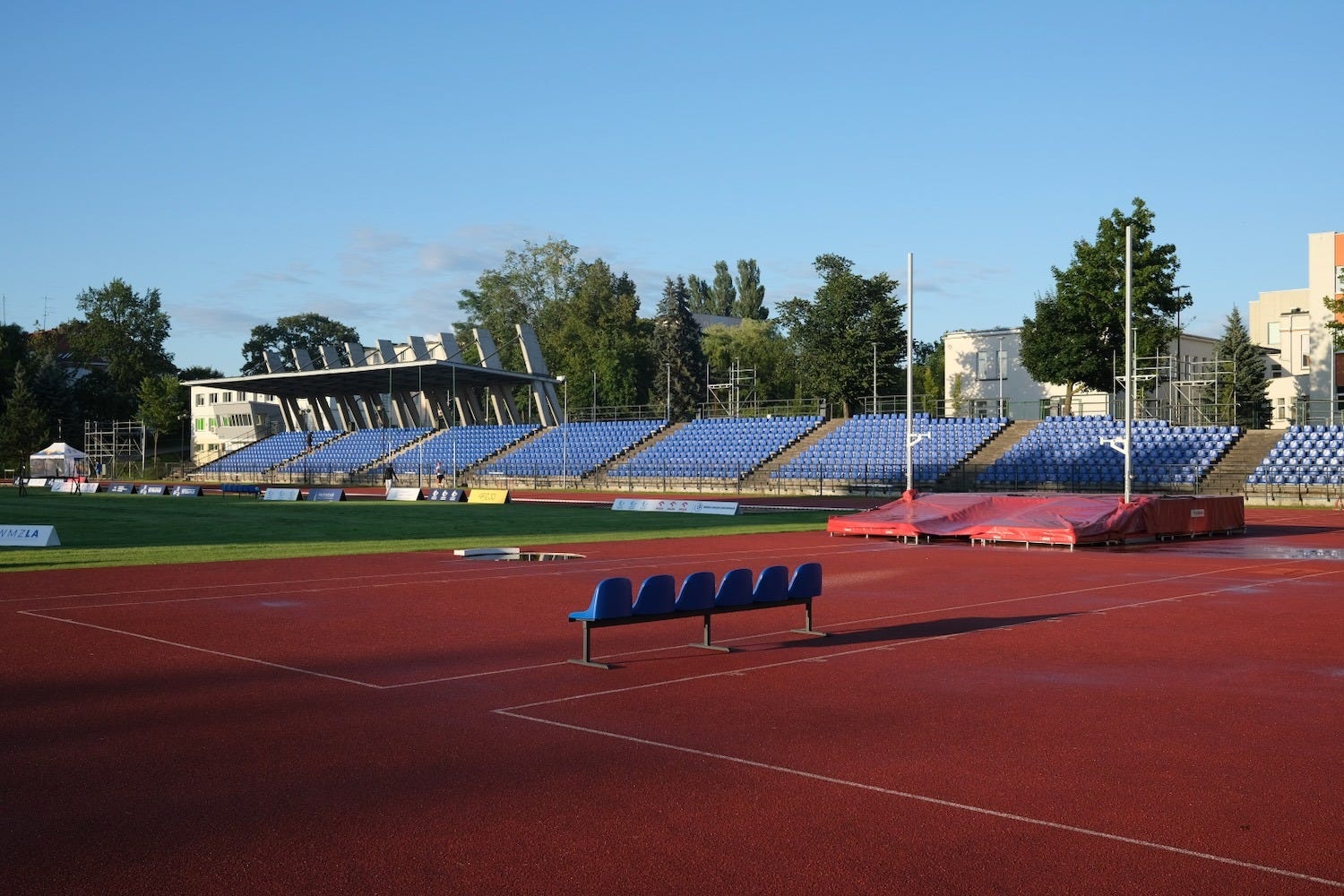
Olsztyn is a small historical tourist town in the north of Poland. Nathan and I rode around everywhere on Bolt e-scooters.
We took these photos during my pre-meet warm-up session the evening before the race. It was a perfect cool and still summer evening. Elite athletes were doing their thing, workers were leisurely setting up for the competition, and some local running groups were training.
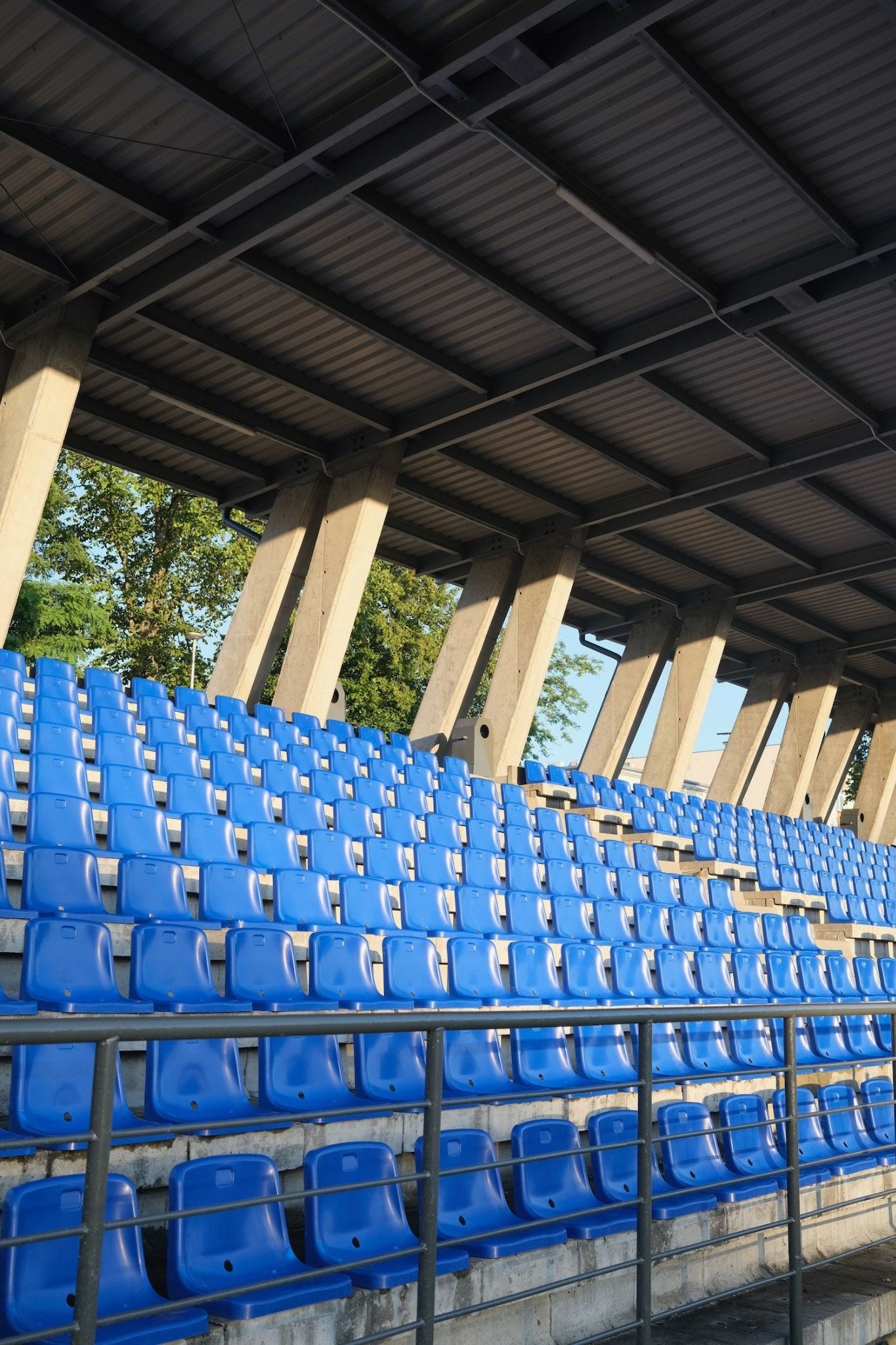
The concrete stands were beautiful in their uniformity and monumentality. Nathan wondered whether seating could be more organic or free-form – “thickets” of seating rather than great slabs. This could work well for a dedicated training-only facility or destination-style track that also serves as a public park or landmark. There’s obvious economic constraints for this to be viable on the community level since to minimise costs tracks are often constructed as a kit of pre-made parts. Also, of course, the need to efficiently cram in as many spectators as possible.

The “warm-up” track was a few 80m lanes of tartan track squashed between handball and tennis courts. It was unpleasant and overgrown, teeming with mosquitoes, and not particularly useful.
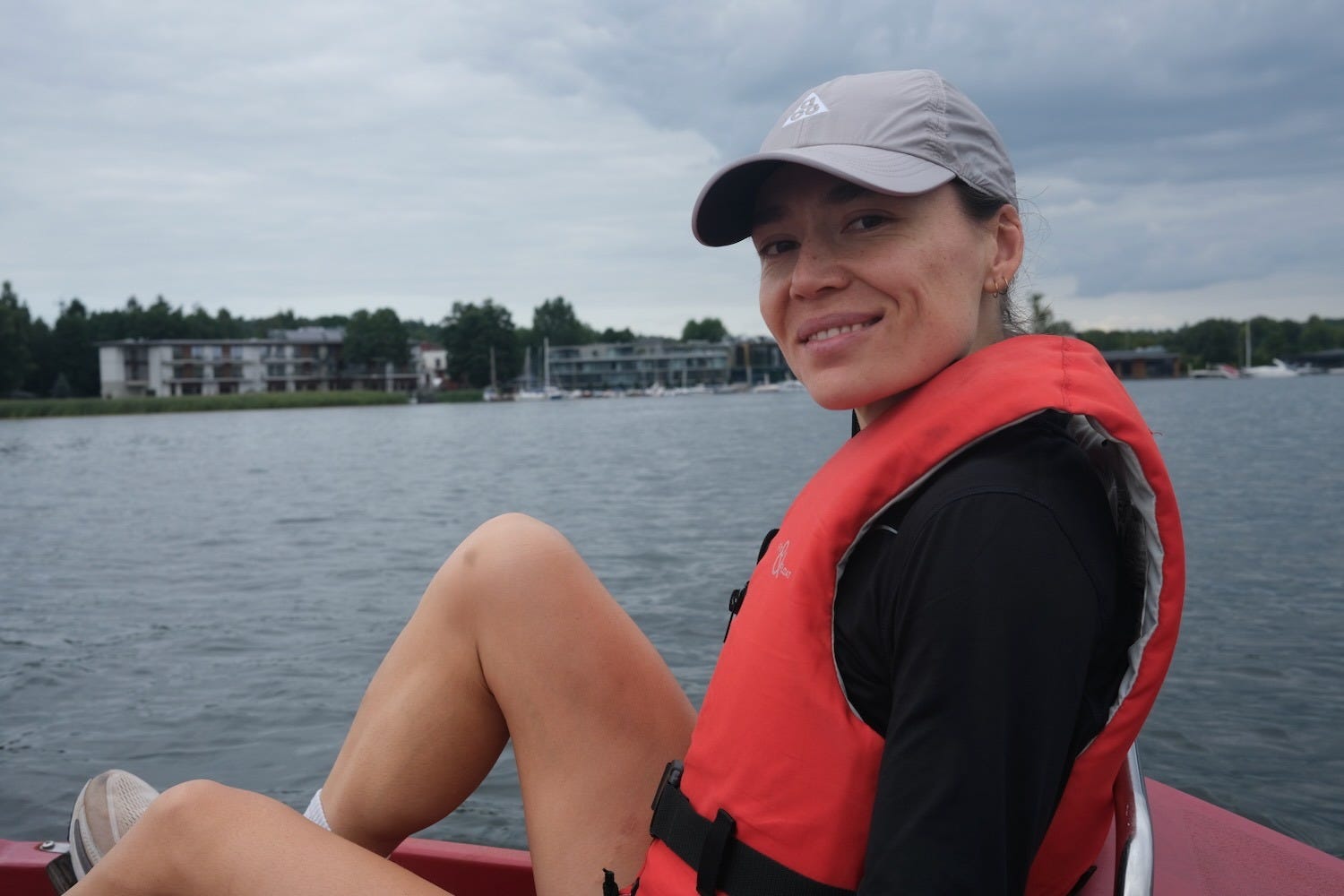
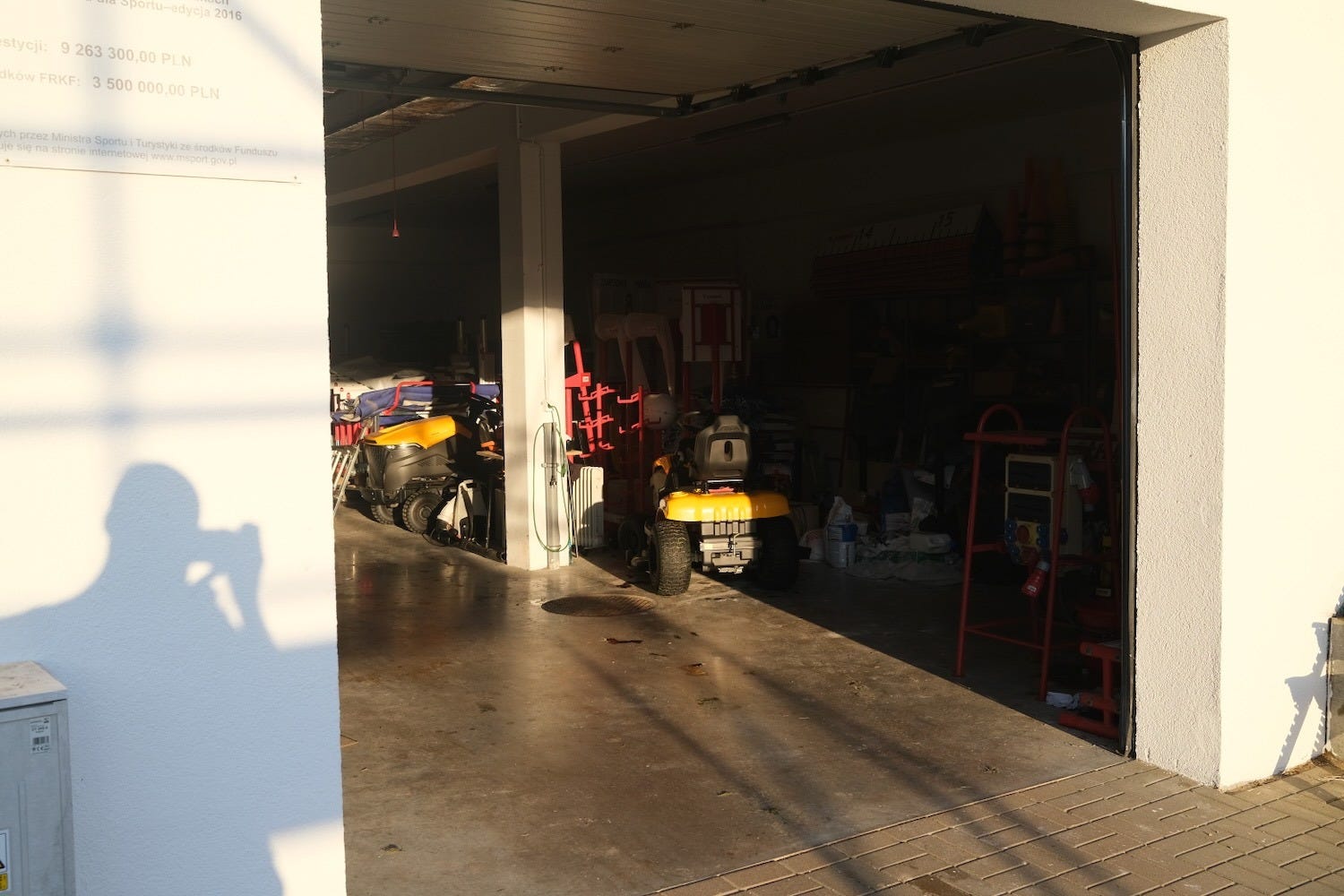
Overall, I have lovely memories of our trip to Poland, especially having Nathan to keep me company. This comp was at a time in my season last year where I was trying to secure a last-second qualifying time for the Tokyo World Champs. I ran an uncomfortable 2:02 and finally let myself cry on the phone to coach Jenny after being relentlessly stoic about it all.
My future architect self is going to be grateful that I started this track documentation process so I can reference all the tiny atmospheric details that make these tracks work. It’s also these little details that help me remember the layers of each race experience besides the time alone.
Lots of love, Trina
Comments
Nothing yet. Say the first thing.
Sign in to join the conversation.