
After 18 months of health issues, I’ve finally been forced to take a proper break. I have a stress fracture in my foot. How? Probably a combo of RED-S last year followed by a rolled ankle changing my running gait. Frankly, after months of ups and downs, the straightforwardness of having a bone to heal is a relief. At least this injury has a clear path to recovery. Now I can reset and get healthy for next year!
I’m so lucky to be this mature and well-adjusted. I recommend not having negative thoughts.
I left Manchester a month ago since it was the same price to get an MRI in the UK as it was to pay for a flight home and get the scan in Melbourne. I had a strong suspicion at that point that something Quite Serious was happening to my foot, so off I went.
I’m now halfway through 8 weeks of no running. I’ve been gorging myself on Chinese study, little architecture-related projects, and hanging out doing nothing with my regular crew of gay and neurotic loser best friends. The kind of people who don’t know where their passport is but also use disposable logins to stream shows on ABC iView. Your vibe attracts your tribe, I guess.
My improving Chinese must be a wild experience for my mum. My listening ability is good but I still mostly utter vaguely comprehensible gibberish. Every so often, amongst the garbage, I bust out one flawless sentence. I see my mum’s eyes bulge slightly as the clarity of my words ping off her synapses. It’s like if one day I was playing with my dog and amongst her snuffling and animal sounds she suddenly said “mother”.
I’ve been looking for photographs of sports fields illuminated at night. There is something architectural about how floodlights can create a room without needing physical walls.
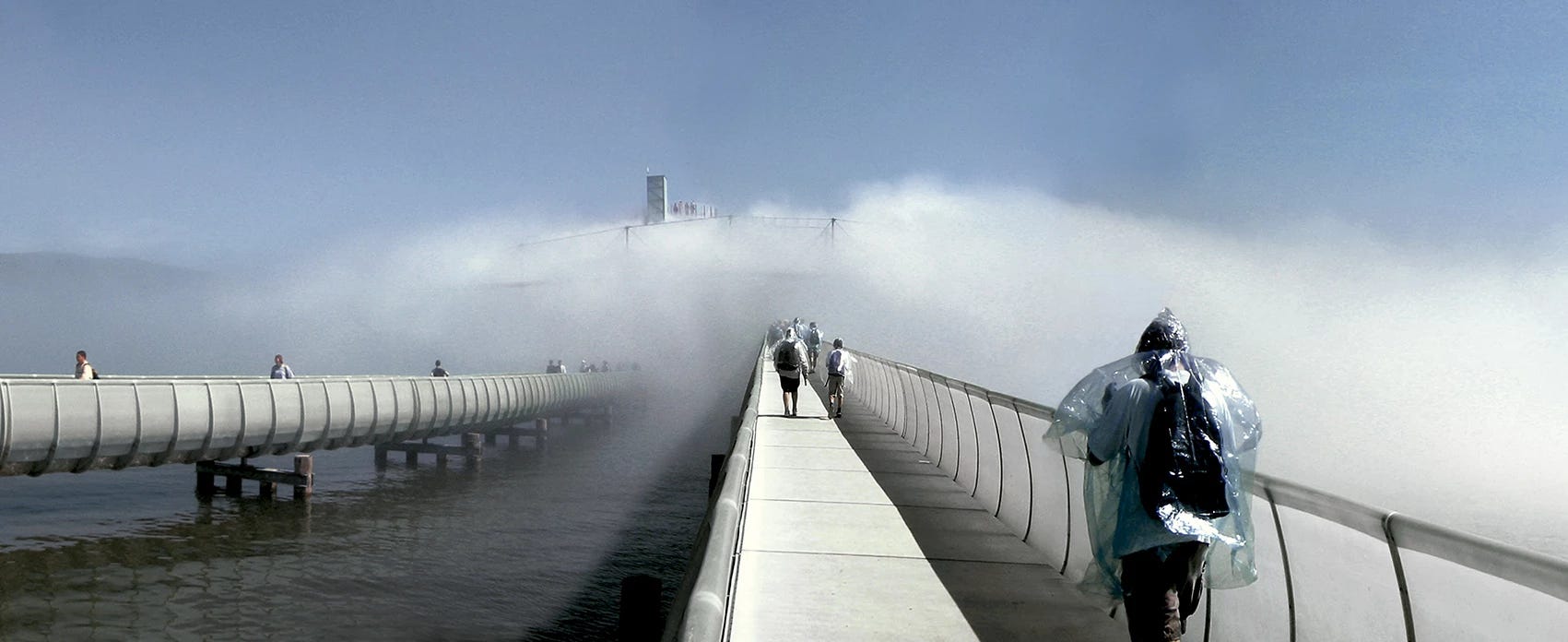
Architects love this sort of thing – ‘atmospheres’ – places made out of nothing. A famous work is Blur building: a pavilion by Diller Scofidio + Renfro and constructed for Swiss Expo 2002 on Lake Neuchâtel. This ‘building’ uses a sophisticated system of steel frames and water pumps to create a floating ball of mist. When you enter you become blind, only able to see as far as your hand in front of you.
A floodlit sports field is an everyday version of an atmosphere: when you step inside the light cage you’re now surrounded on all sides by curtains of black void.
I’m still yet to find the artist who nails the ‘atmosphere’ I’m looking for, but in my search I came across Hans van der Meer instead. The following are from Hans van der Meer’s European Fields: The Landscape of Lower League, 2006.
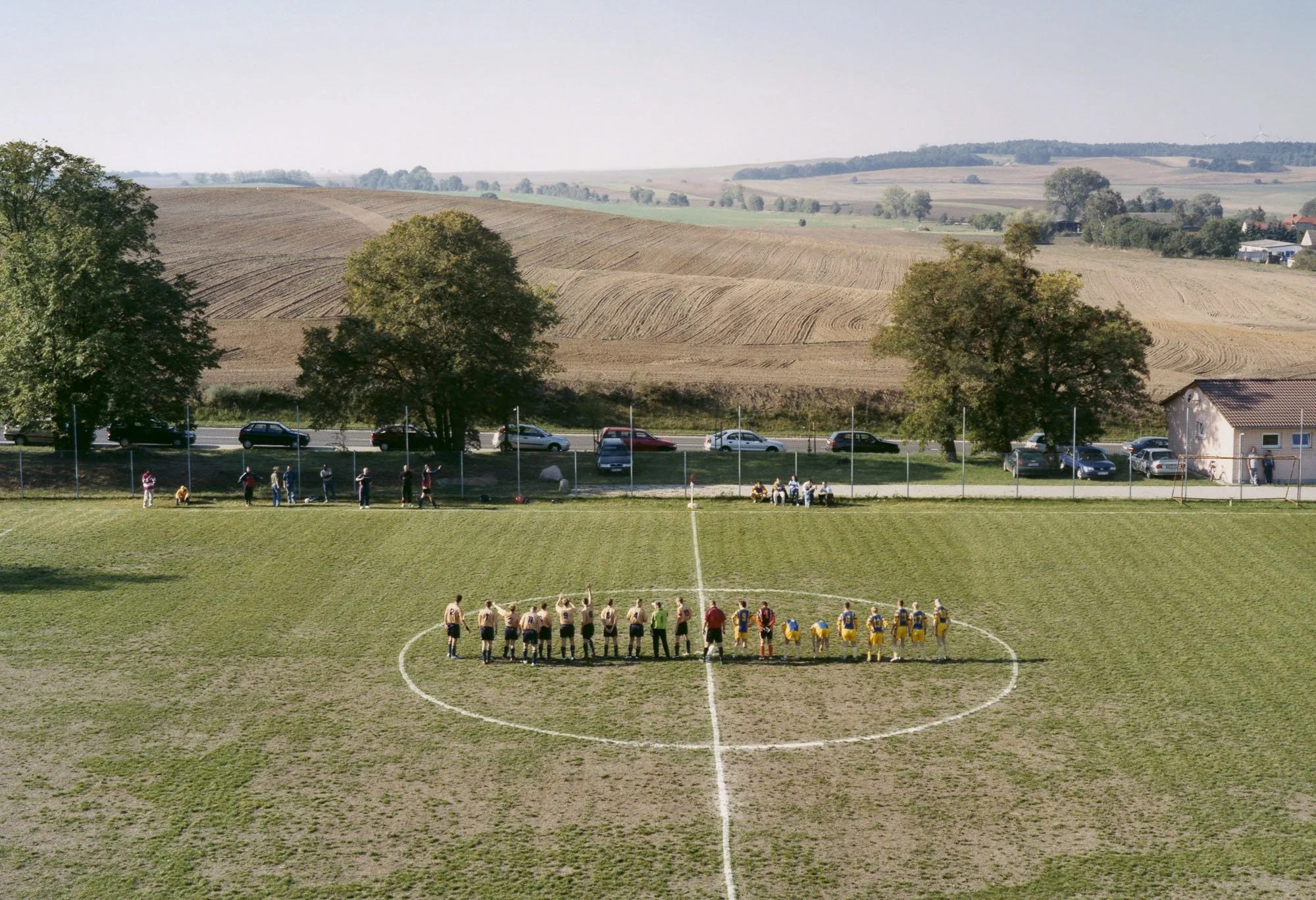
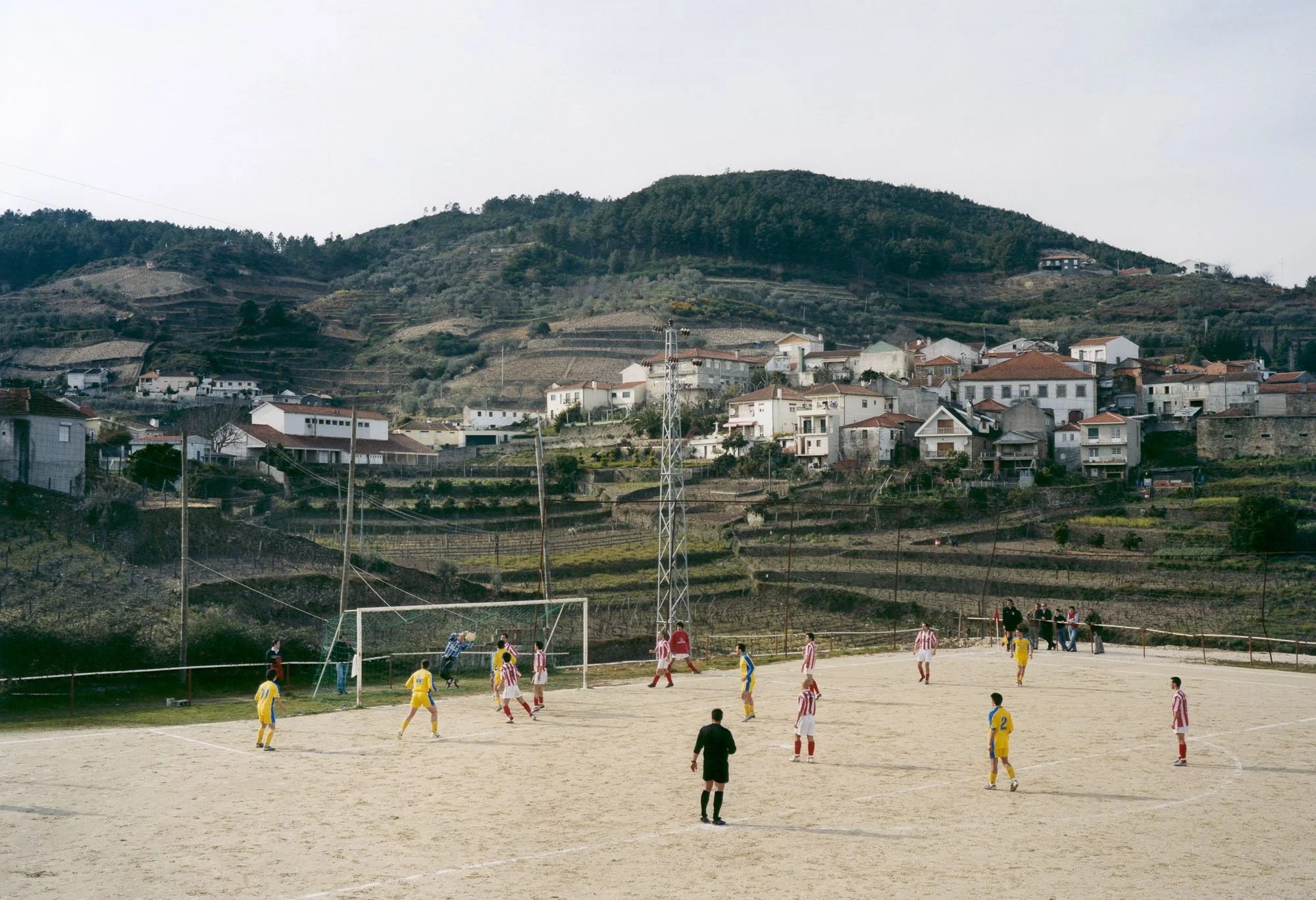
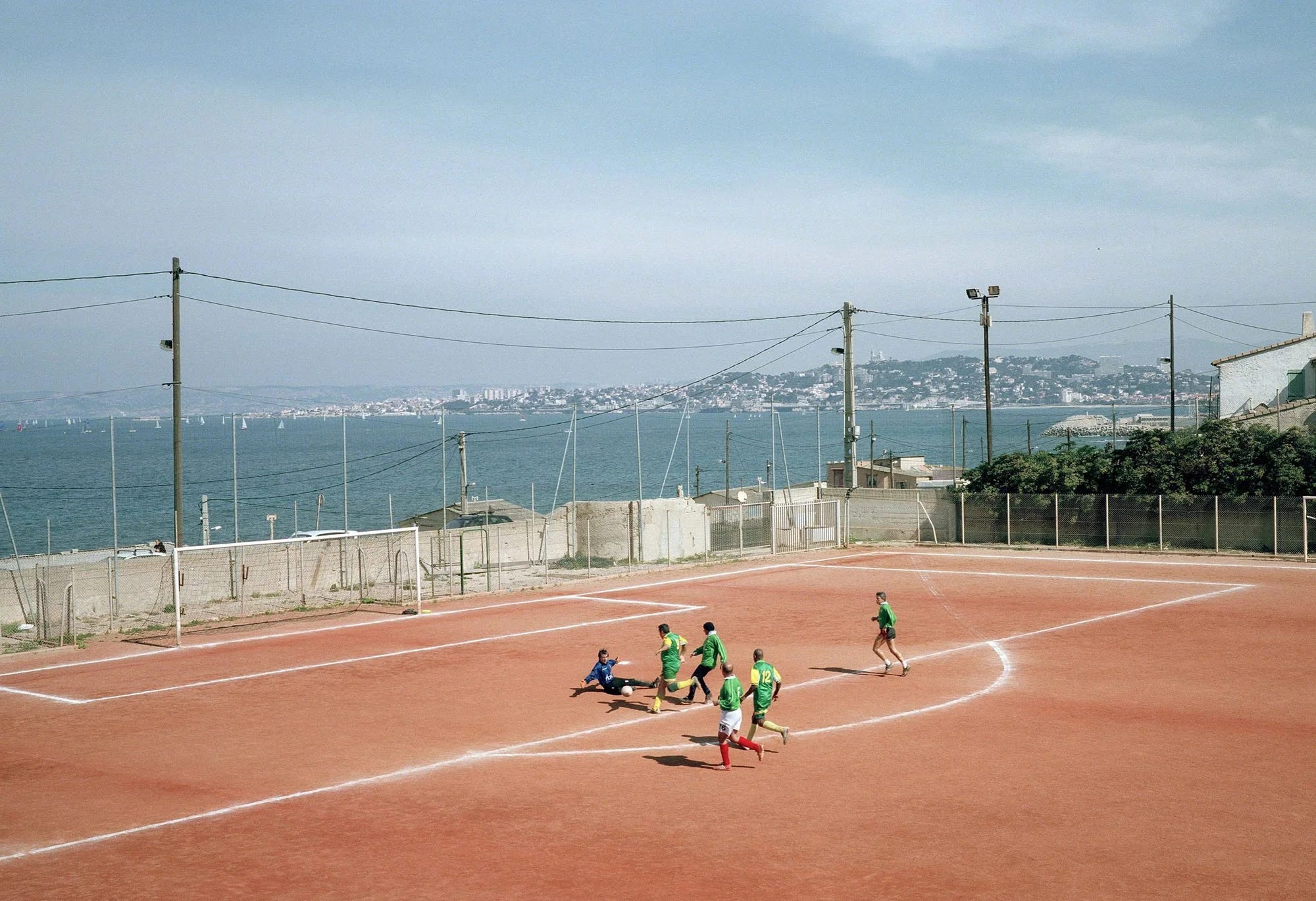
In his project on community football fields throughout Europe, he always places the fields in the foreground, using their uniformity to frame the neighbouring landscape. The rigid geometry of a sports field provides a ready juxtaposition against the messiness of everything else.
I’ve loved capturing the same effect when I photograph running tracks. Synthetic tracks offer slightly different effects, having a hard rubber edge, whereas grass and dirt fields are more ‘natural’ materials.
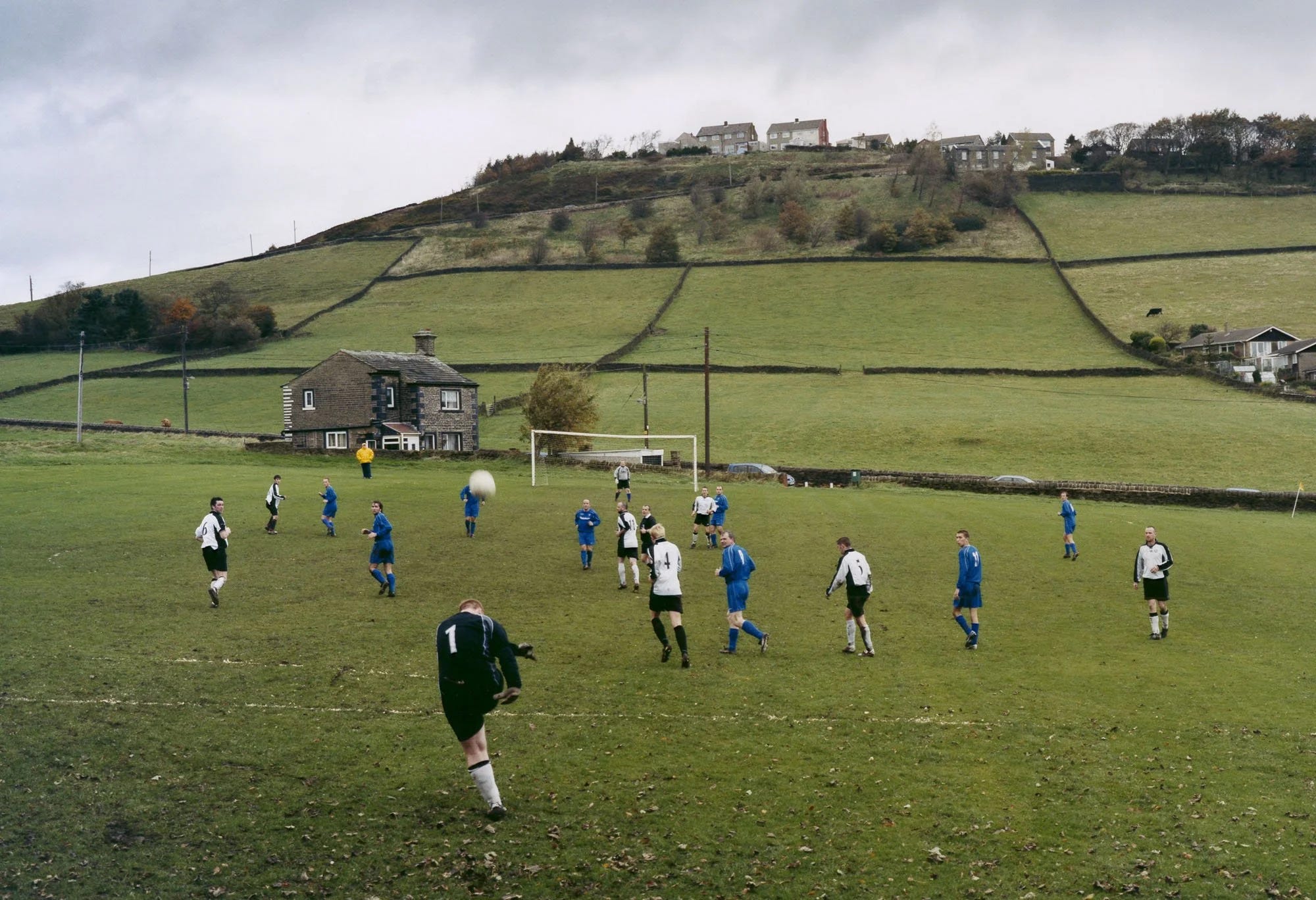
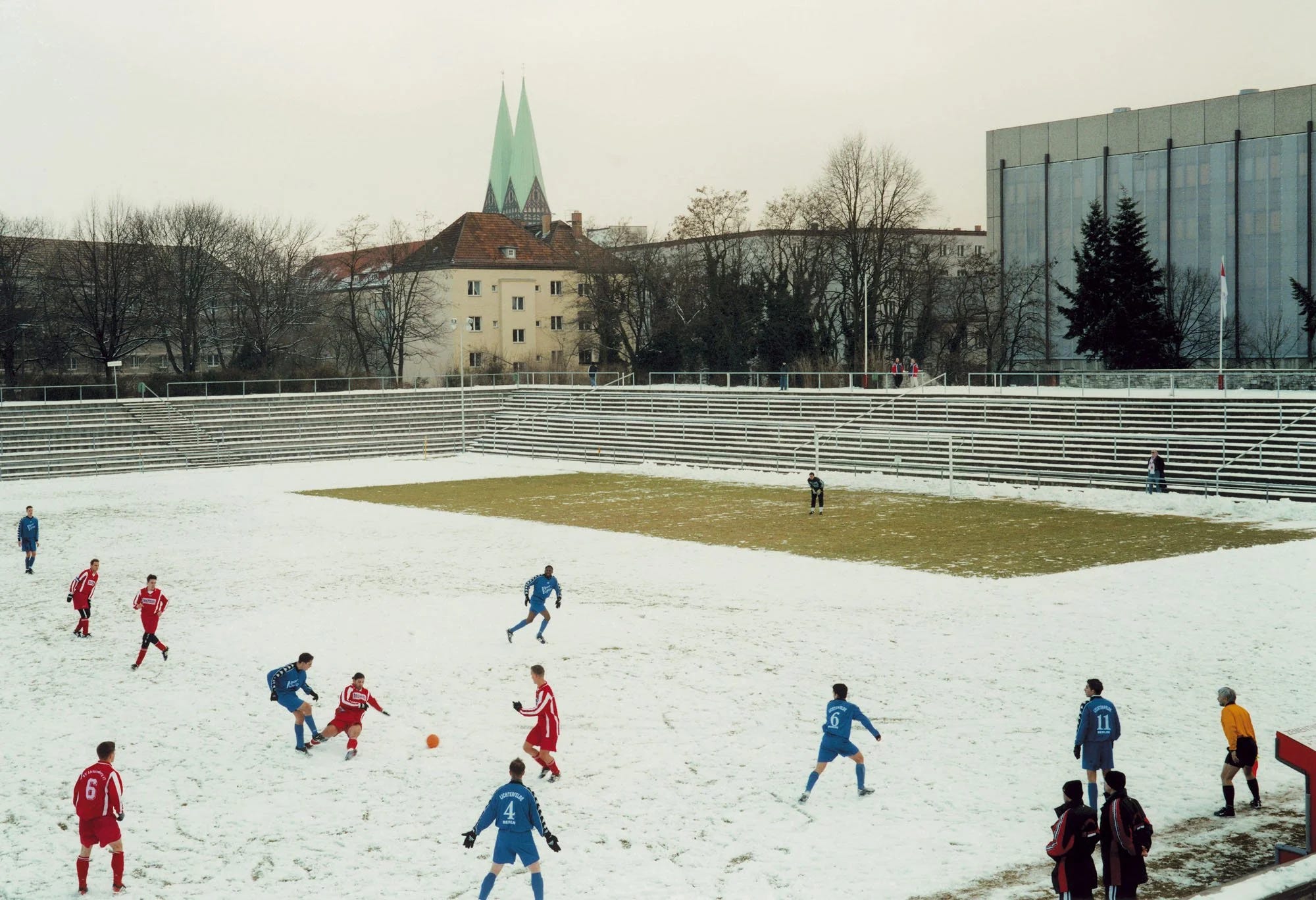
Apparently Van der Meer uses a step ladder to get an elevated vantage point (imagine me zipping around Melbourne in my rain suit with a ladder on the back of my e-bike). This inhuman/omniscient angle emphasises the ‘unnatural’ geometry of the pitch. It’s a little disorienting. The combination of stage in the foreground and alternating backgrounds reminds me of the level variations in fighting video games like Super Smash Bros.
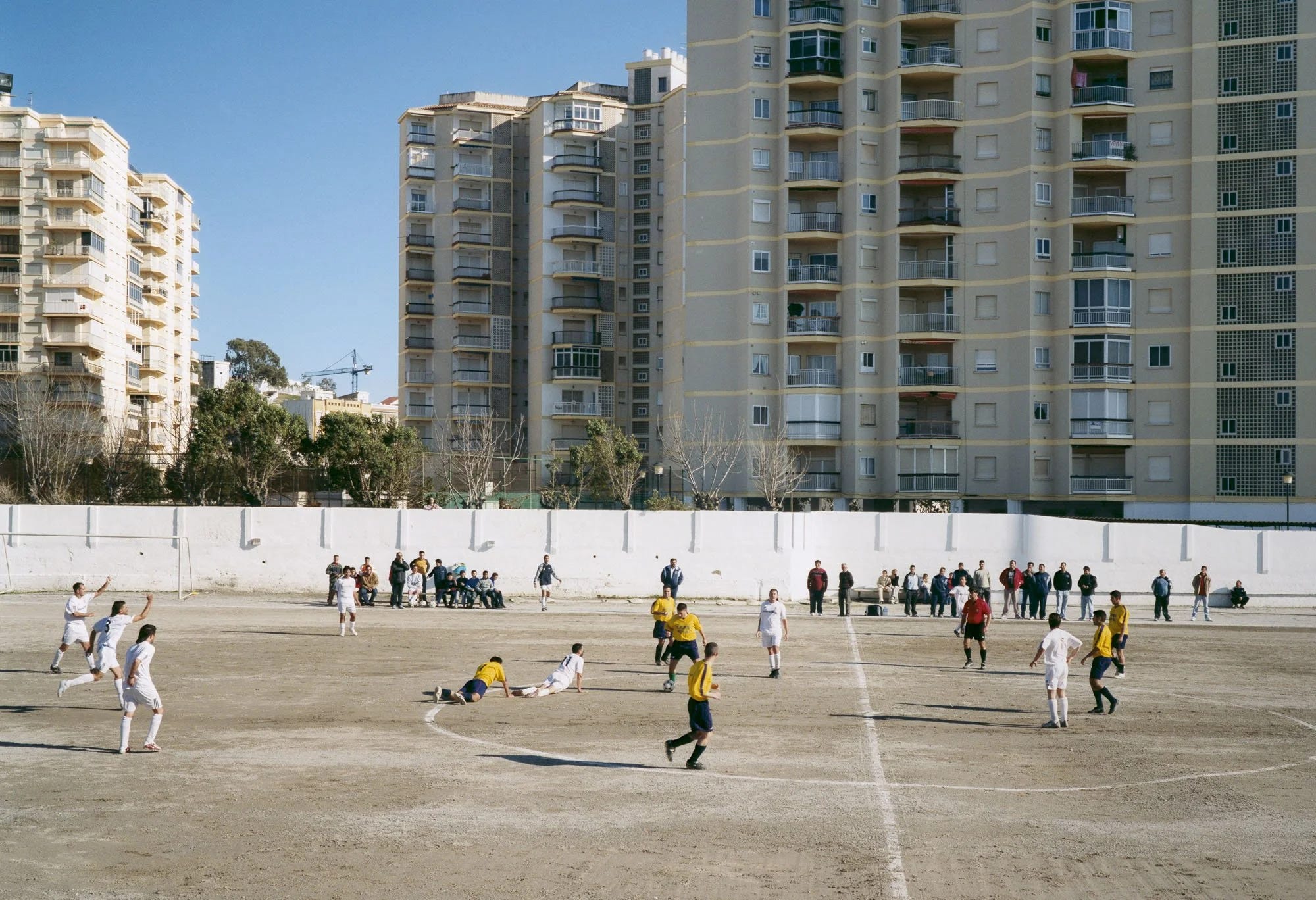
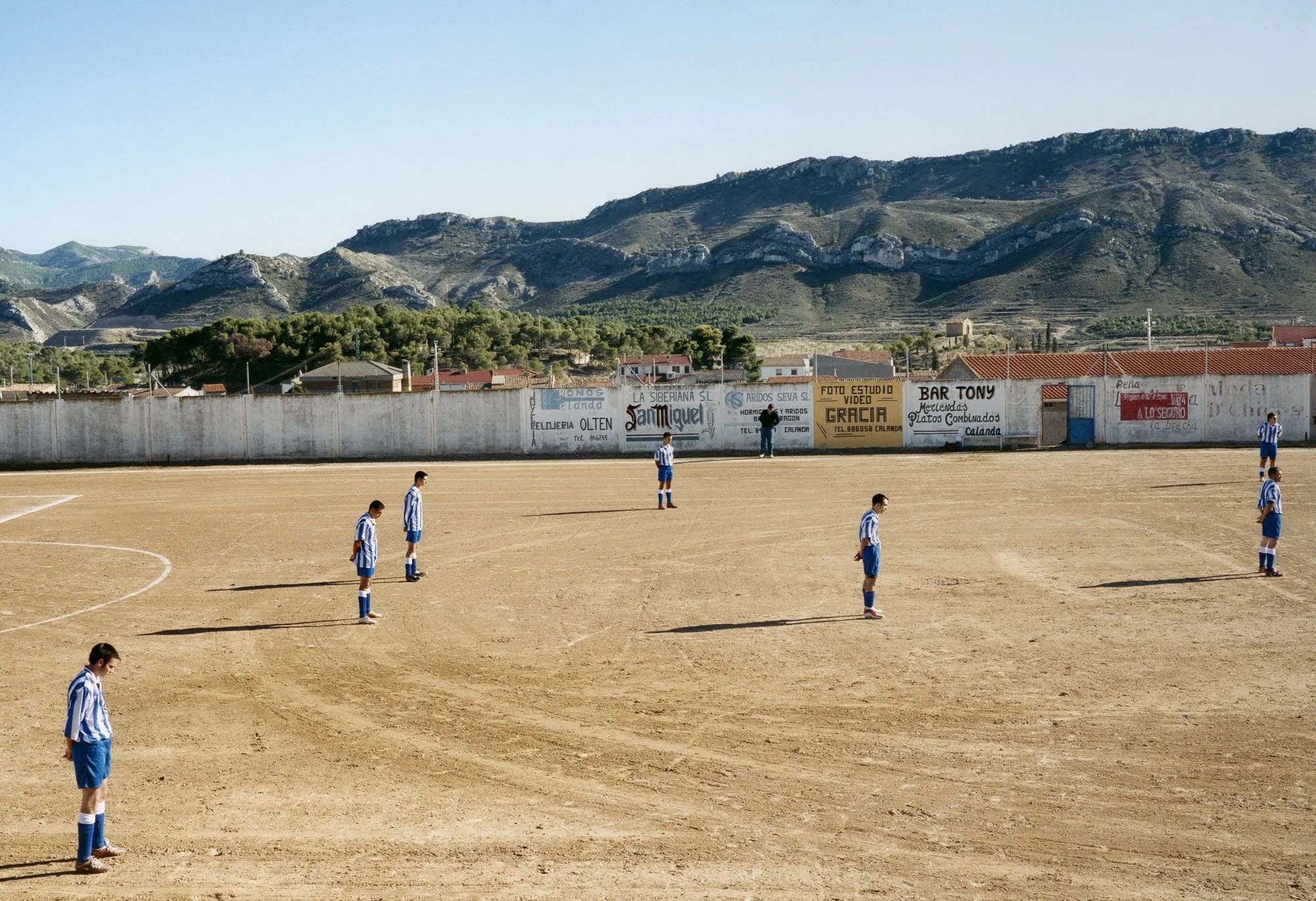
You can see a similar ‘simulation’ phenomenon in other places. Check out this great little collection of photographs that unintentionally look like screenshots from isometric computer games, which feature a couple of sporting scenes. Aren’t we just the cutest little Sims in our matching outfits? Is an ‘atmosphere’ and ‘simulation’ the same thing?
Van der Meer has also made seriously wonderful accompanying videos. They have the same feeling of the Rain on Tartan video Ben and I made about George Knott Reserve. In both cases the camera remains still, so you’re watching rituals and processes unfold in long unbroken takes.
The detached perspective makes you feel like you’re inside a real-life memory, but in my opinion, without nostalgia. Your attention isn’t being (obviously) directed. You’re just watching. I associate nostalgia with a grief of time passing. This style feels more like an impartial catalogue of events and rituals. Sometimes I wonder if this is just how I experience memory, and perhaps I have some kind of dissociative/derealisation disorder. Ah well, best not investigate.
I’ll keep you all updated on the developments of my injury recovery but for the next little while you can probably expect a bit more on the architecture of sport than actual sport.
Trina xoxo
Comments
Nothing yet. Say the first thing.
Sign in to join the conversation.