
My previous issue, on the 1956 Olympics, is now public. Thanks to my paid subscribers who get early access to new issues and support my running career!
Being an athlete is basically living the same day over and over again hoping each time you do it a little bit better. When I raced in Madrid two weeks ago, I stayed at the same hotel, ate the same food, and ran the same race in the same stadium with mostly the same competitors as I had multiple times before. The first time I ran it in 2022 I won, then in 2023 I came second, and now in 2026 I was fifth.
I keep joking that I’m “ruining my legacy” which everyone finds funny except my psychologist.
My gigantic brain is incredible at combing through the data from past races and training sessions, stripping them of context, and mapping out a perfect graph of disaster. The goal, it seems, is to make myself feel like each year is just a poorer imitation of the last.
What’s the point of it all? I can never run as fast as Keely – my training partner, who a couple days ago broke the world indoor 800m record and did a snow angel on the track.
I’m in a time-loop, a simulation, the torture dome where every day promises more hard labour and humiliation.
Jokes on me though, I actually love the torture dome and couldn’t have reached where I am now without this part of my personality. I love repetition. I love routine. I watched the BDSM rom-com Pillion recently, in which a character is described as having an “aptitude for devotion”. This resonated with me. One of my psychological theories that I’ll be pitching to the DSM-6 committee is that all athletes are subs. We love following instructions and my god do we love praise.
When I start gnawing my own leg to escape my shackles, wondering how I got trapped in the torture dome, I have to remind myself that suffering is the whole point. “Enjoy the process” is another way of saying that we must find meaning in the suffering, or better yet, get a kick out of it. Only through surrender (following the training plan) will we reach salvation (a career we’re happy with).
I’d also like to acknowledge my Chinese migrant mum who reads these newsletters and tells me she often has to look up words. Sorry about this one.
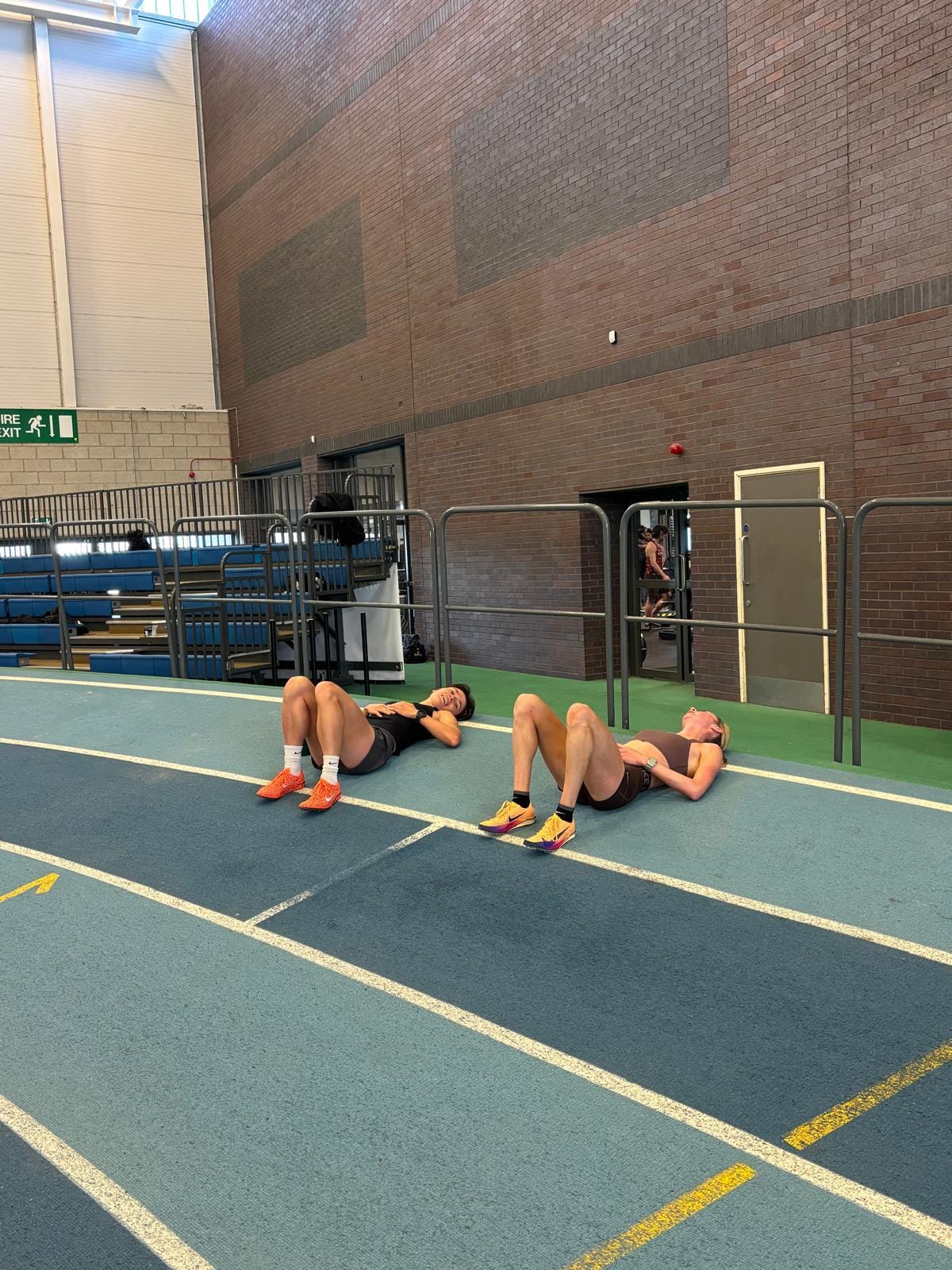
Winter on this side of the world means we run indoors on banked “short tracks” (200m instead of 400m). There aren’t any proper indoor tracks in Australia partly because of our climate but mostly because athletics isn’t as popular of a sport as it is in the northern hemisphere.
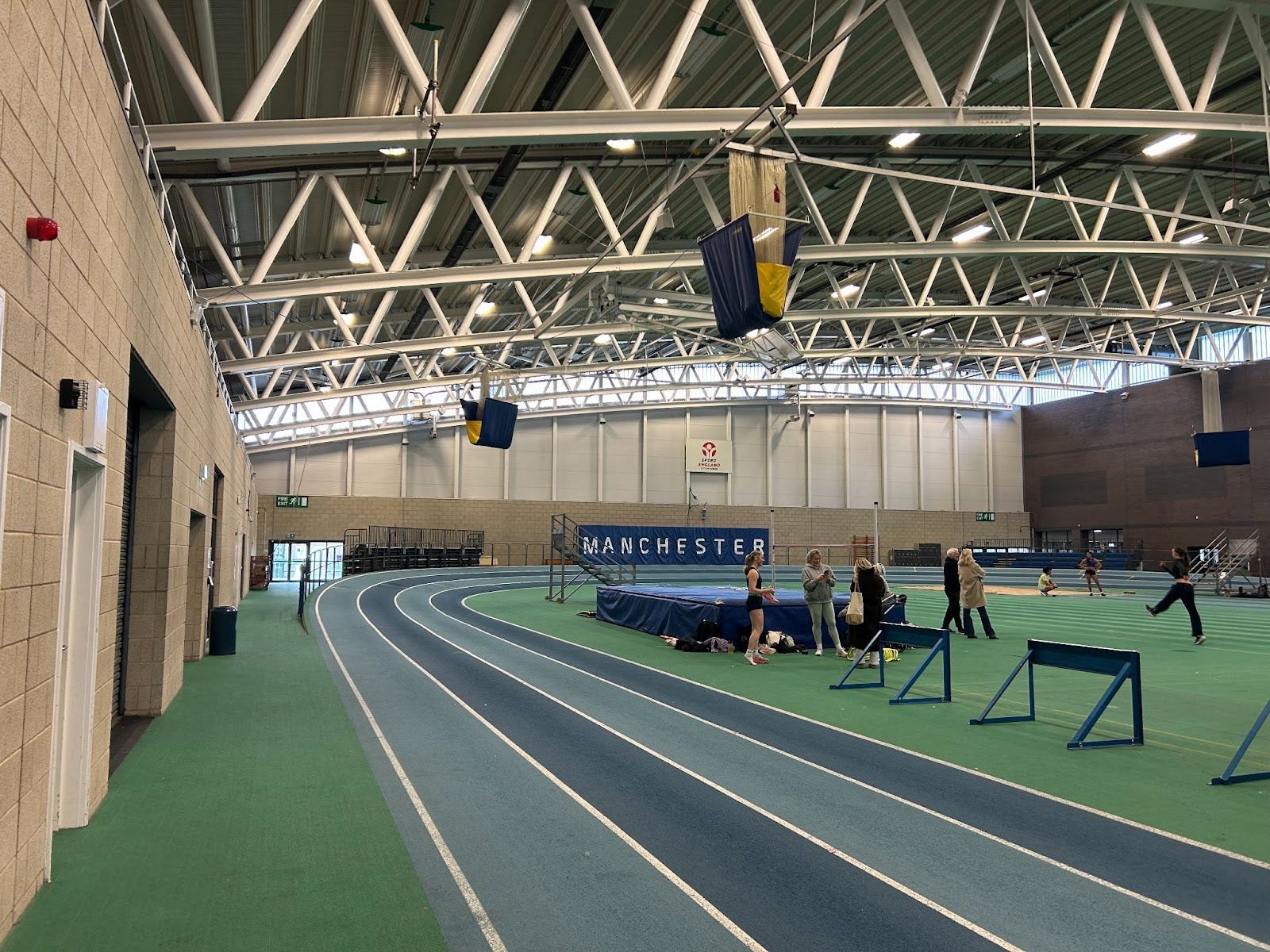
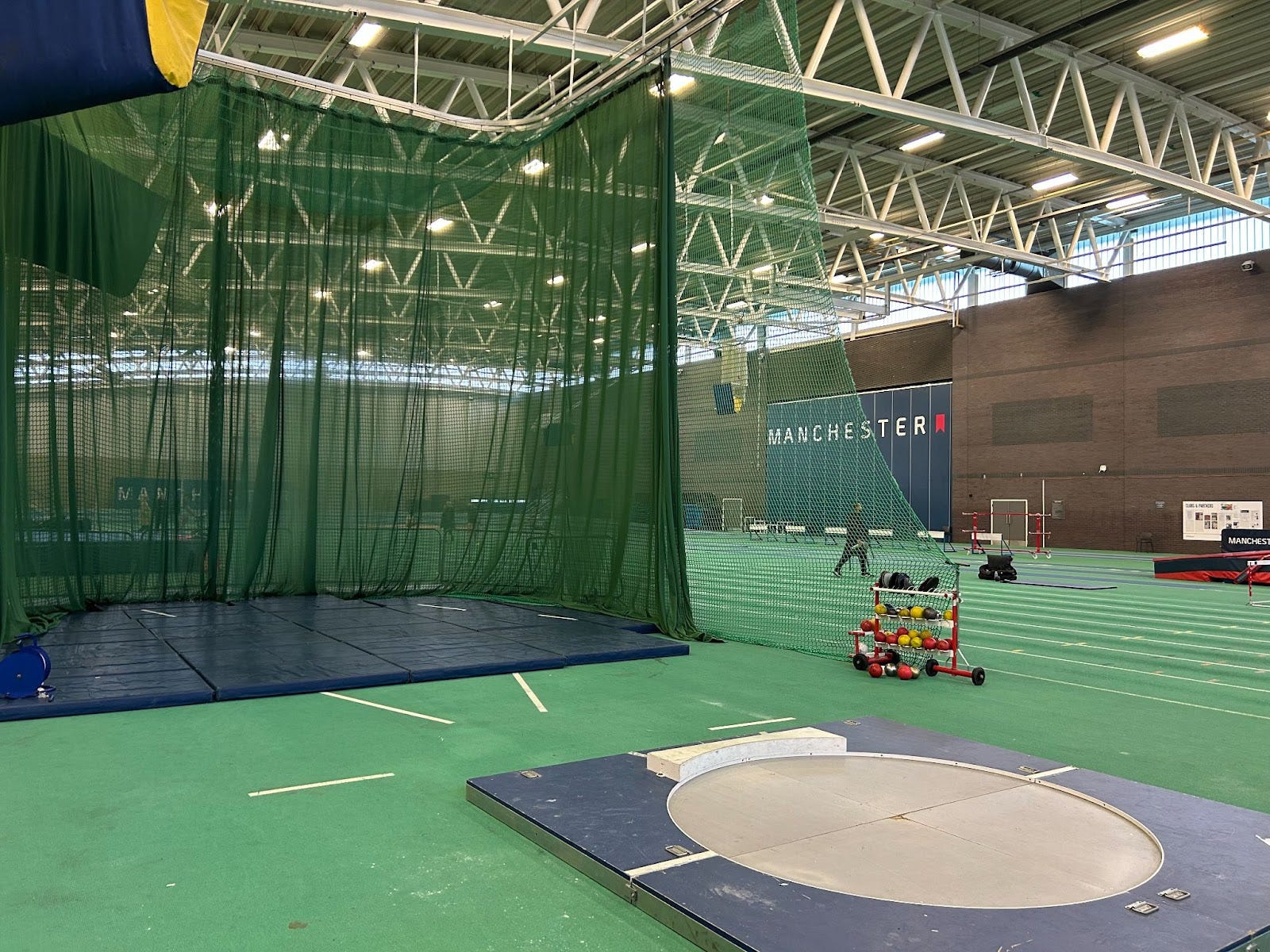
This is where our team has been doing our track sessions in Manchester. It’s objectively very ugly with poor natural lighting and a general ambience of algae green. It’s a shed with a track inside.
An indoor track is fully enclosed so has more in common with a theatre than a stadium. My friend Massimo designed an indoor track for Melbourne as part of his Master of Architecture thesis project last year. It’s gorgeous.
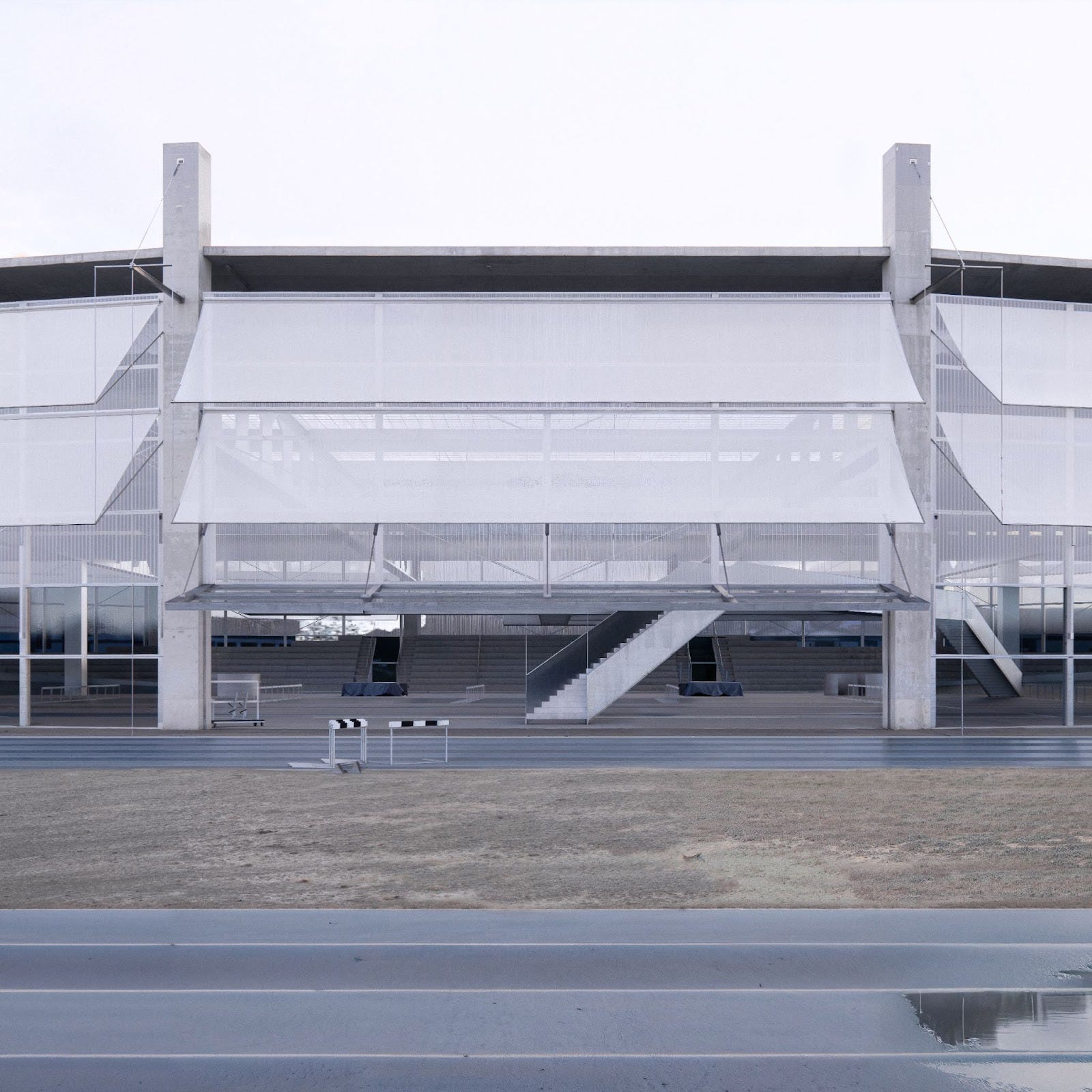
Its location along the Yarra river, next to the city, and connected to the Melbourne sports precinct, means it can capitalise on the running boom and capture those who use these busy training spots.
Semi-translucent external panels bloom outwards to expose the track when the weather permits but can also close to block the elements while still allowing in natural light. The multi-level facility, with spiral central staircases, creates multiple perspectives and vantage points, like a theatre with focal points but also a backstage and wings.
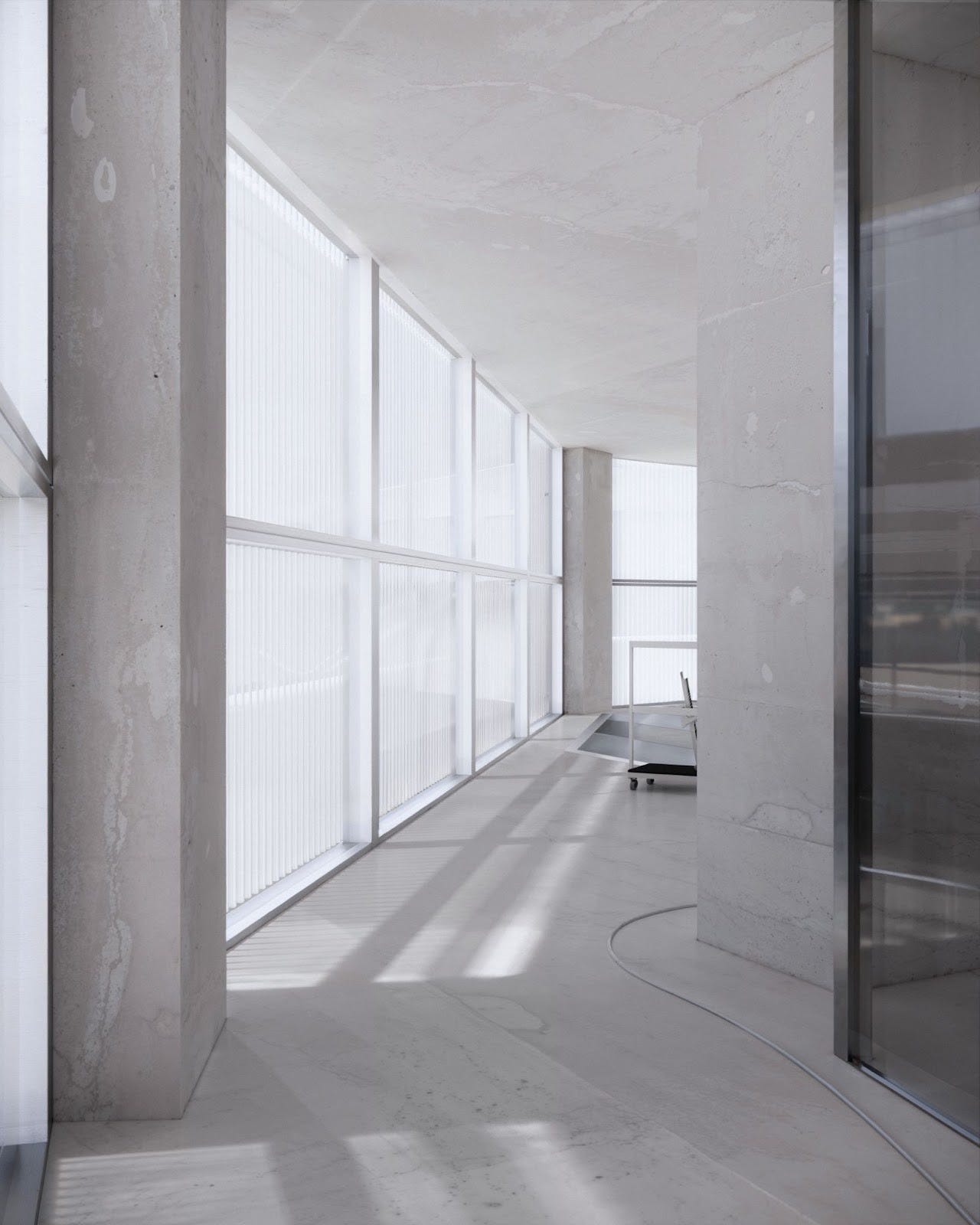
Mass is also a runner and we met through athletics. We’ve talked a lot about how sports design gets stuck between the interests of elite athletes, community sport, government programs and commercial sustainability. At the core of his project is the way monumental architecture can infuse importance into a program. We respect where the money goes.
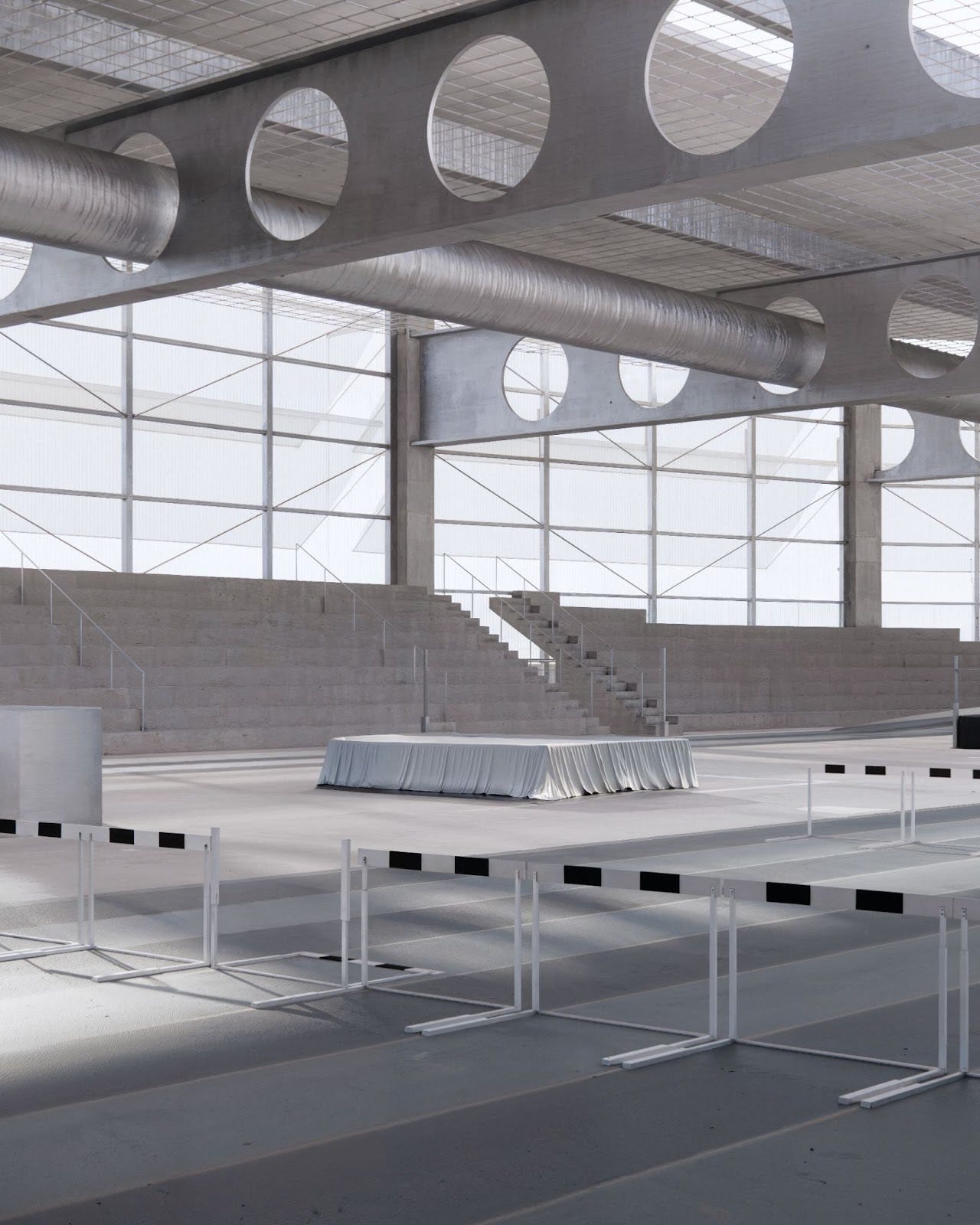
A big beautiful building like this, that is uncompromising in how it accommodates high performance sport, elevates athletics in the eyes of the public.
My last indoor race will be this Sunday in Glasgow with the M11 team. More on that next time.
xoxo Trina
Comments
Nothing yet. Say the first thing.
Sign in to join the conversation.