
When you understand that the Western world is run by a small, interconnected group of malevolent Judeomasonic mafia operatives to the benefit of global Zionism and a “new world order” agenda, events in business, politics, and world events take on a whole new meaning. I tell you why they are happening, what the mainstream is leaving out, and what comes next, in this daily report.
Public backlash against data centers is making politicians scramble to change course ahead of elections
There has been more startup capital invested in California than the rest of the U.S. combined in 2026 - and yes, it’s all on AI
SpaceX has racked up some big wins in Washington, and (like I predicted) they are defense-related
The Israel lobby’s new demands for the U.S./Israel military-industrial merger just dropped – and they’re worse than expected
Gold! As inflation mounts and the Fed signals a retreat, basically showing that it’s disregarding inflation and instead going to keep the economy (well, a tiny sliver of it) roaring, much of the world is now preparing for a high-inflation future by stockpiling gold. (Interestingly, the U.S. is stockpiling gold too – not by buying it, however, but by stealing it! Two months after the U.S. kidnapped a sitting president and his wife, putting his second-in-command into power as a CIA/corporate puppet, the U.S. Interior Secretary Doug Burgum flew to Caracas with twenty oil and mining companies, and returned to the U.S. with $100 million in gold. Now Rodríguez’s puppet government, with U.S. support of course, is seeking the release of another 31 tons of Venezuelan gold - worth roughly $4.63 billion - which has been held by the Bank of England since 2018. Under the proposal for “earthquake reconstruction,” the gold would be sent from London to be placed in U.S. Treasury-controlled accounts, and spent only on Treasury-approved contracts!)
Future IPO-watch: CA based defense manufacturer Hadrian Defense, and live auction streaming app WhatNot.
Today’s stories are basically three different views of the same extraordinary phenomenon: America is going all-in on AI, and the amount of money and infrastructure being thrown at it is becoming almost difficult to comprehend.
Start with California. Companies there have reportedly attracted an astonishing $370 billion in venture capital since the beginning of 2026—more than three times what the other 49 states combined received. More remarkably, over half of that money went to just two companies: OpenAI and Anthropic. We’re watching one of the greatest concentrations of investment capital in history, creating thousands of new millionaires, blowing up real-estate prices and pushing California tax receipts tens of billions above projections. Meanwhile, everyone outside the AI economy is increasingly asking a pretty reasonable question: what about us?
That resentment is now becoming political. Data centers are consuming enormous amounts of electricity, pushing up local costs and threatening jobs through automation, and politicians can read polls just like everyone else. Texas alone has reportedly halted plans for nearly 1,800 proposed data centers, despite Governor Greg Abbott proclaiming only last year that Texas would become the epicenter of AI development.
But here’s the contradiction I’m watching: while politicians facing voters are beginning to retreat from AI, Washington is accelerating straight into it.
Trump remains perhaps the industry’s biggest political cheerleader, while SpaceX is increasingly becoming intertwined with the military side of the buildout through Golden Dome and other defense contracts. The bigger picture, in my view, isn’t really about better chatbots at all. We’re simultaneously building enormous concentrations of computing power, data centers, satellite networks, cameras, drones and AI-enabled military and surveillance systems.
And here’s the problem for politicians suddenly discovering that opposing it might win votes: there is now an almost unimaginable amount of money riding on making sure this buildout continues.
We’ll see whether democracy—or $370 billion—has the stronger lobby come this November.
What the mainstream is saying: Nationwide, Democrats are increasingly using the data-center issue to attack Republicans as representatives of big-money interests that are not only raising costs (of everything) but putting Americans out of work. While not all Republicans have supported the AI and data-center onslaught - and plenty of Democrats have supported it as well - opposition is becoming a major theme nationwide among Democratic upstarts challenging Trump-aligned Republicans.
One clear example of this: Texas Governor Greg Abbott, who boldly proclaimed last year that Texas would become the epicenter of AI development, but this year has dramatically reversed course, halting plans for nearly 1,800 proposed data centers across the state. (Currently Texas has over 500, the most of any state besides Virginia.)
Most importantly, the issue is putting many Republicans facing reelection directly at odds with Trump, who has become perhaps the most vocal champion of AI and Big Tech interests in the country – in fact, Trump goes so far with this he has become a pitchman for the industry, regularly touting that the dominant companies are American and boasting about their stock-market performance.
What they’re not telling you: This is a huge problem for Republicans, because Trump commands a durable, cult-like degree of loyalty from the Republican base, and has repeatedly demonstrated an almost miraculous ability to sell his voters on virtually any narrative. Candidates therefore face an uncomfortable choice: align with Trump at all costs and ride his coattails, or break with him on AI and data centers to protect themselves locally while risking the vengeance of Trump that has historically been career-ending for Republican challengers.
My prediction is that the issue may sway some state and local elections, but Trump fanaticism within the Republican Party will ultimately prove dominant. Candidates who significantly break with him will probably pay a price, in both Trump’s vicious criticism, and defunding from Zionist billionaires that funded both Trump and his allies (the Massie loss in Kentucky is instructive here.)
Something bigger is happening here – and it isn’t just Trump’s cult of personality. The enormous AI infrastructure buildout Trump is pushing isn’t simply about chatbot performance, corporate productivity, or even economic growth. It is laying the technological foundation for a much broader surveillance and control infrastructure that will be controlled by the international Zionist mafia (in fact, virtually every AI now blatantly pushes a Zionist agenda on many issues, as has been demonstrated by many people on social media.)
If I’m right about that, the powerful political and financial interests behind the AI buildout have an enormous incentive to prevent local opposition from gaining momentum, and despite what might be happening at state-level elections, they aren’t going to let this derail them. Look for a tsunami of funding against candidates opposing AI/data centers, and scandals to follow those who win in spite of that in the coming years.
What the mainstream is saying: California-based companies alone have drawn $370 billion in venture capital since the beginning of 2026, more than three times the amount of venture funding that has gone into the other 49 states combined. This onslaught of funding is remarkable not only because it is so concentrated, but because it comes despite a major push for a “billionaire tax” in the state that tech titans have already spent billions of dollars campaigning against.
The tsunami of money has caused home prices in specific areas to skyrocket, minted thousands of new millionaires virtually overnight, and pushed state income-tax revenues far above forecasts—$20 billion above forecast in 2025 alone, a number that will likely be dwarfed by the end of this year. Perhaps most shocking of all, more than half of this funding was allocated to just two companies: OpenAI and Anthropic. Some other companies to watch include defense-manufacturing startup Adrian Automation, as well as live-commerce platform Whatnot.
Many financial analysts are pointing out that this is by far the largest concentration of capital ever allocated to a single industry in history, not merely in total dollars but by percentage.
What they’re not telling you: This poignantly illustrates the massive bifurcation between the AI/tech economy and everyone else, but it also demonstrates the “misallocation of capital” effect that occurs whenever there is a large-scale bubble in the economy. The main problem isn’t simply that so much money is going to such a tiny group of companies and individuals; the bigger problem is that it’s not going anywhere else.
Investors with capital to deploy are increasingly ignoring other good ideas, good companies, and good entrepreneurs across other industries because everyone is chasing the spectacular gains associated with AI. This draws investment away from other critical developments the country could benefit from, which is contributing to the mounting anger toward the AI industry across the country.
The most threatening possibility here is that this extraordinary concentration of capital plainly suggests AI may be a massive bubble—and if it bursts, the consequences could extend far beyond Silicon Valley because investors from around the world are participating in it. The longer the boom continues, however, the larger the potential consequences if expectations eventually collide with reality.
I also believe this needs to be viewed alongside the rapid buildout of AI-powered data centers, domestic law-enforcement capabilities, license-plate-camera networks, and surveillance drones. Whether these developments are actually part of a coordinated strategy is another question, but taken together they are an extraordinarily powerful technological infrastructure for monitoring and controlling populations.
It is also worth noting that some of the world’s wealthiest technology billionaires have spent the last several years acquiring remote properties, second residences, and elaborate security arrangements. In the context of today’s extraordinary concentration of capital and increasingly stretched AI valuations, I would say they obviously know something we don’t (and are racing to build it out anyway.)
What the mainstream is reporting: SpaceX, which just experienced the largest IPO in U.S. stock-market history, is racking up defense-related contracts, particularly in support of President Trump’s “Golden Dome” space-dominance project. SpaceX has become the go-to contractor for launching large payloads into orbit, and Golden Dome—which would use thousands of military satellites to track space-based activity and potential threats around the world—could ultimately be worth tens of billions of dollars, with SpaceX positioned to receive a significant portion of that funding.
People focusing on the surface level are talking about SpaceX’s recent contract wins and projecting additional contracts in the future. What I’m looking ahead to is something much bigger: SpaceX is building out the future infrastructure for military communications, surveillance, and command-and-control using its enormous space network. Those services could eventually be leased not only to the U.S. defense establishment, but also to America’s allies around the world.
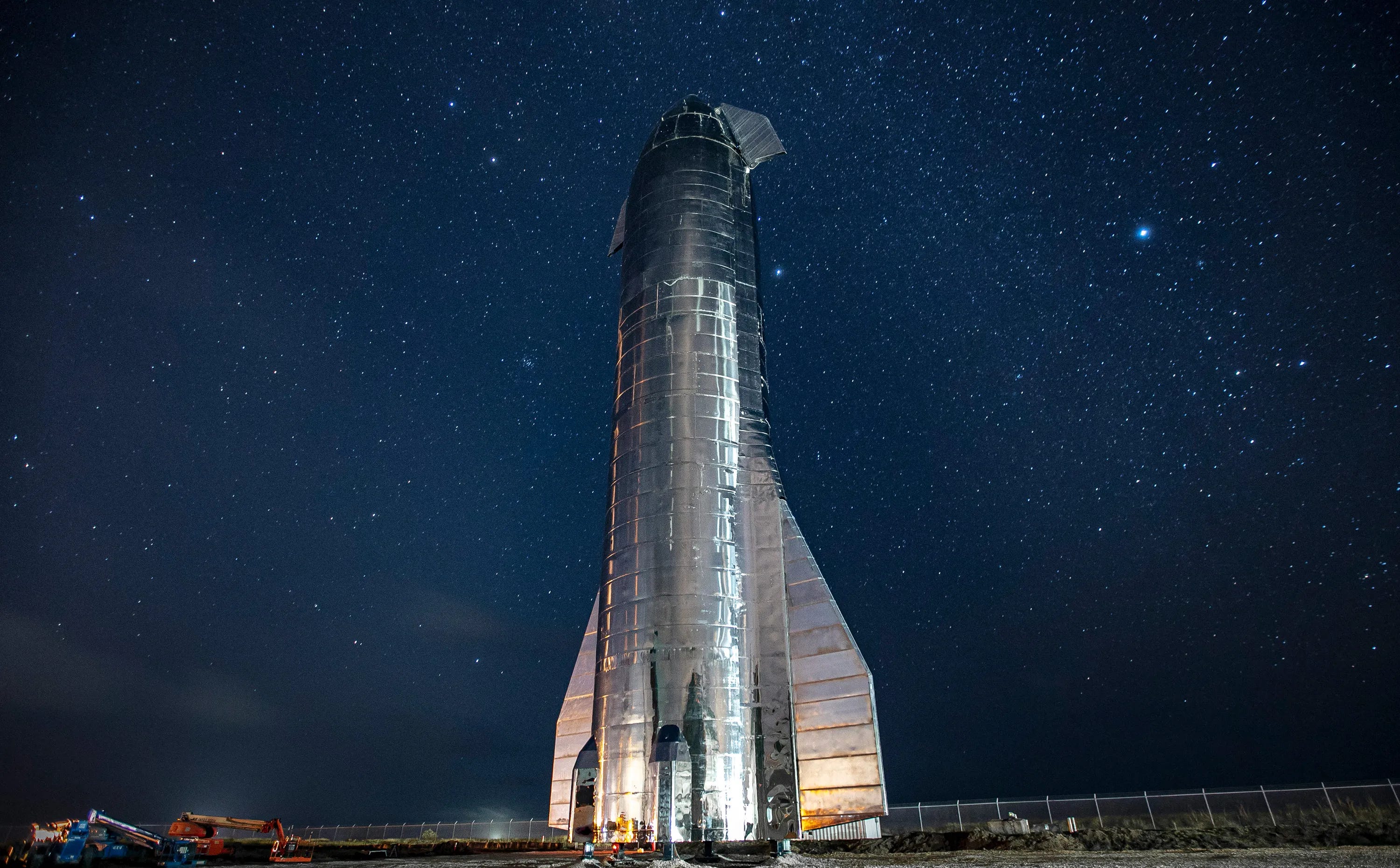
What they’re not telling you: I’ve explained this in much greater detail in another video, but what SpaceX is building could become the equivalent of the railroads in the late 1800s—except this infrastructure is concentrated in space and increasingly intertwined with global surveillance and warfare. In my view, those capabilities fit into a much broader effort by powerful national-security interests to construct an increasingly integrated global surveillance and military infrastructure.
With that agenda in mind, SpaceX could conceivably become the most valuable company in the world, and increasing international tensions—or outright war—would only make its infrastructure more strategically valuable.
We got an early glimpse of this during the Russia-Ukraine war, when Starlink became enormously important for battlefield communications and demonstrated something much bigger than the value of satellite internet itself: whoever controls the communications infrastructure can acquire extraordinary leverage over the people fighting the war.
According to a recently released proposal by the Jewish Institute of National Security for America (yes, that actually exists) new list of demands for the U.S./Israel Military-Industrial merger now includes:
$40B from US taxpayers over the next 10 years (as a base)
That the US establish a “permanent” military presence and CENTCOM operational headquarters in Israel
Israel would formally be included in Trump’s “Golden Dome” project to militarize space
A Merger of not only the military/industrial complex of both countries, but of the supply chains for raw materials for the products manufactured by it
A new US-Israel Mutual Defense Treaty (to “honor the memory” of Lindsey Graham)
A new version of NATO where the US organizes/arms Arab states in defense of Israel
What will the U.S. get in return? You already know: never-ending involvement in Israel-provoked Middle Eastern wars, and the privilege of picking up the check.
Given the nearly unbroken record of the Israel lobby’s success getting what it wants in the United States, I’m going to have to assume they will get all this too (and that it will only be the beginning.)
What do you think; will the 2026 NDAA that outlines the merger between the U.S. and Israeli military-industrial complexes pass? If so, how bad will it get?
Thanks for reading Cato: Your Info-Warfare Arms Dealer! This post is public so feel free to share it.
No posts
Comments
Nothing yet. Say the first thing.
Sign in to join the conversation.