
Learn what’s going on behind the news! When you understand that the Western world is run by a small, interconnected group of malevolent Judeomasonic mafia operatives to the benefit of global Zionism and a “new world order” agenda, events in business, politics, and world events take on a whole new meaning. I tell you why they are happening, what the mainstream is leaving out, and what comes next, in this daily report.
Iran is winning more at the negotiating table than on the battlefield, as the world gets Trump fatigue
Brazil becomes the latest political battleground as international Zionism (led by trump) continues its conquest of Latin America
Russia vs. Ukraine is rewriting the economics of war – and taking it to the comfy upper middle classes
The Marines are preparing for the next war with backpackable drones they can fly like video games
Fauci held in contempt by Senate; now let’s see what Trump’s DOJ does about it
Neros: an American weaponized drone maker currently shipping 1400 drones a week, but on track to make a million per year by 2028. It just got major defense contracts, and happens to be located near the headquarters of Anduril, a company working to merge tech and defense (read: real-life Terminator/Matrix-style human killing machines, but with American flags on them.)
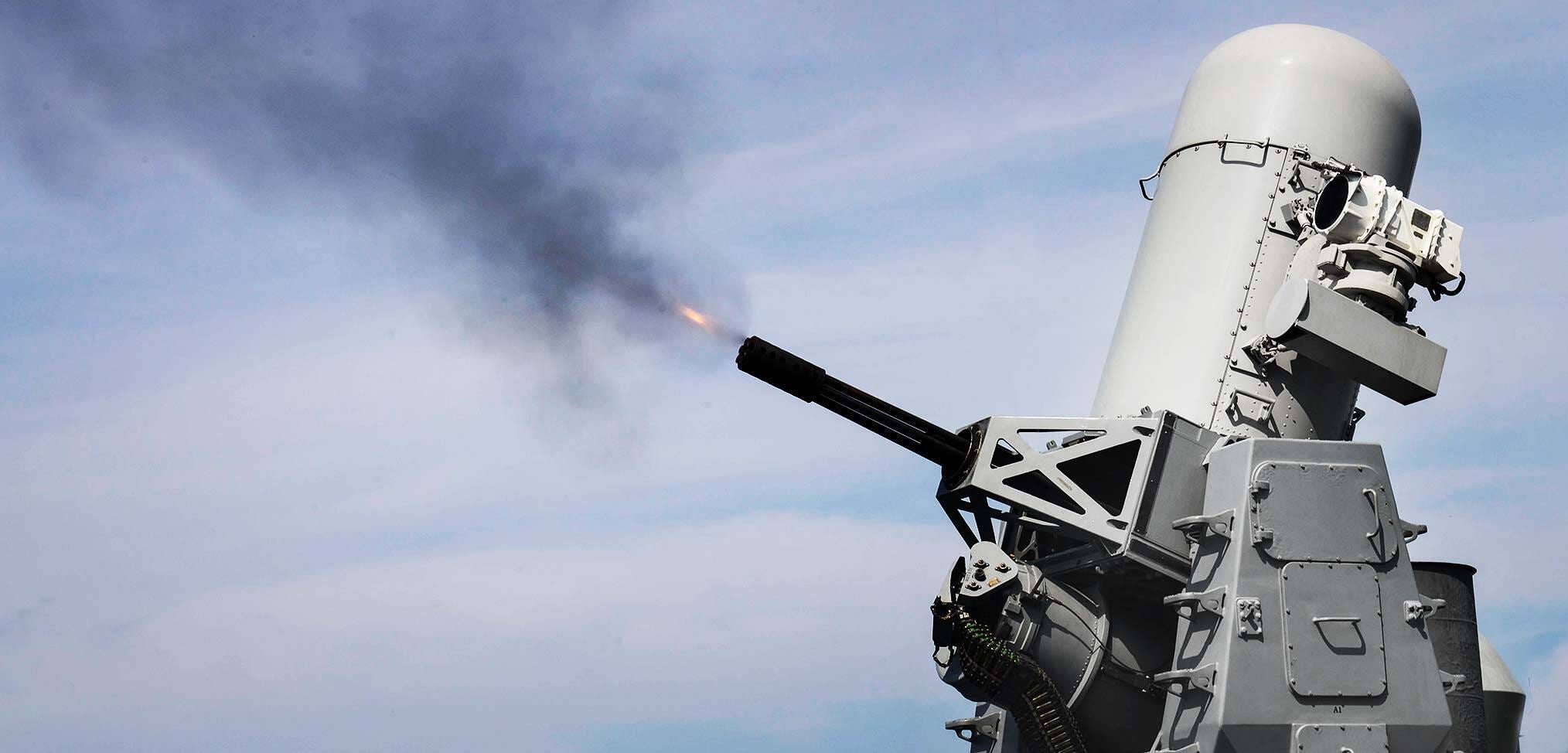
Any company making anti-drone defenses that are an alternative to expensive Patriot/THAAD interceptors: I’m thinking along the lines of RTX’s jaw-dropping Phalanx Gatling Gun-style weapons system
More info on this in my private group, which you can check out here.
Whenever I read the news, I am thinking two questions in the back of my mind:
Which of all that’s going on in the news today are part of narratives that historians will be talking about ten years from now?
Where is money and energy being shifted by the international banking elite, and what does that tell me?
That gives me the framework to always have my mind on the “bigger picture,” so I see big trends and shifts rather than getting caught up in the drama of this war, or that political spat, or the latest stock rise or fall.
With that said, today’s headlines aren’t just about Iran, Brazil, Ukraine, or weaponized drones - they are about governments and power elites that control them adapting to and reshaping a world where all the old assumptions are breaking down.
Despite all its chest-thumping and “we never negotiate with terrorists” rhetoric of decades past, the United States appears very willing to negotiate with adversaries when military capacity is constrained – or when money is to be made in markets.
Russia and Ukraine both continues scrambling to adapt to cheap drone warfare, and frustrated with the lack of movement on the front, they are increasingly targeting civilian infrastructure deep behind enemy lines. And that is getting ugly, fast.
Brazil has become another front in a broader goal of international Zionism – led by the the U.S. – to control all of Latin America. Whether that happens the Argentina way (plata) or the Venezuelan way (plomo) is up in the air.
And behind the scenes, the U.S. military is racing to absorb battlefield lessons from Ukraine before the next major conflict arrives, with Marines leading the charge.
The common thread: adaptation to rapidly advancing technology, a merging of financial markets with ideological conflicts (even all-out war), and the onslaught of political Zionism to add nations to its growing portfolio.
Amid all this, established institutions and political leaders are discovering that yesterday’s playbook doesn’t work particularly well anymore. Precision missiles costing millions each are being challenged (or just depleted) by $2,000 drones. Economic pressure like sanctions are being thrown around as weapons of war just as much as direct combat is (if not more.) And previously isolated and blacklisted regimes (looking at you, Iran) are now negotiating globally significant arrangements that nobody would have even thought possible just a few years ago.
And based on how a lot of these trends are going – this is all only the beginning.
For months we’ve been treated to a familiar routine.
One day Trump hints at diplomacy and how close a deal is with Iran; the next day he threatens overwhelming military force (“a whole civilization will die tonight” - remember that?) Markets still react (giving ample opportunity for perfectly-timed insider trading, which we’ve seen a lot of) but they are slowly learning not to, because the messaging changes faster than the weather.
Meanwhile, something much quieter has been happening behind the scenes.
Iran and Oman have reportedly been working on a framework for managing shipping through the Strait of Hormuz, including traffic lanes and operational oversight by the two countries. The proposal would not allow Iran to charge tolls, but critics argue it would nevertheless formalize a degree of Iranian authority over one of the world’s most strategically important waterways – a waterway that was considered “international” and not subject to any one nation’s authority, until Israel forced Trump to go and kick the Iranian hornet’s nest.
The important question isn’t whether the proposal becomes accepted by Gulf nations (which are traditional U.S. allies, but are increasingly realizing that Iran won’t back down no matter how hard they are hit, and that the U.S. is running out of munitions to hit them with anyway.)
Rather, its whether Gulf states, and more importantly, international oil markets end up reacting more to an Iran/Oman agreement than to Washington’s public messaging.
If that happens, then we’ve officially entered a shocking new paradigm where Iran has as much (or more?) prestige and international trust than the United States under Trump. (Not that it was any better under Biden…)
Brazil’s upcoming presidential race is already becoming something of a three-way contest, involving a left-wing president, a right-wing challenger, and Trump brazenly meddling in the election (and not caring if the world knows it.)
Brazil has had a political saga that’s been ongoing for years that directly involves Trump. The current liberal president, known as “Lula” became president after a very narrow victory over right-wing Bolsonaro in 2022. Bolsonaro was a vocal Trump ally, and some people (including me) called him “the Brazilian Trump.”
But it didn’t just stop at his vocal right-wing populism; Bolsonaro also agitated a riot at Brazil’s capitol that strangely mirrored Trump’s January 6th Capitol riot, but for it he was convicted of “attempting to overturn an election” - and given a 27-year sentence for it by Brazil’s powerful Supreme Court.
But the Bolsonaro family is becoming a kind of political dynasty in Brazil, similar to the Trumps in the U.S. So it is Jair Bolsonaro’s eldest son Flavio who is running against Lula, with Trump’s vocal support – and not just with Truth Social posts written in Trump’s trademark boomer language. Trump deployed aggressive 50% tariff’s against Brazil – the highest in the world – and directly stated that this was as punishment for imprisoning his ally Bolsonaro.
He added that the tariffs could be dropped only if the charges against Bolsonaro were. Brazil refused the offer.
More broadly, Brazil has become something of a thorn in the side of the Washington power elite, especially because it was a founding member of the BRICS alliance which was trying to sidestep U.S. dominance and work more closely with China and each other. So as the U.S. – supported by the international Zionist mafia that put Trump into power – continues its campaign to seize control all of Latin America, Brazil is standing in the way.
The same organized Zionist power was successful in emplacing the Jewish Javier Milei in Argentina, Jewish Claudia Sheinbaum in Mexico, and right-wing pro-Israel presidents in Colombia, Bolivia, and Costa Rica. Even Venezuela is run by a Trump ass-kisser now, who was interestingly Maduro’s second-in-command before!
In the age of rapid proliferation of drones on the battlefield, modern warfare is becoming frustratingly simple: one side builds increasingly sophisticated drones. The other side launches increasingly expensive interceptors. Repeat - until one side or the other runs out of money.
Russia and Ukraine’s latest, increasingly vicious attack on each other’s civilian infrastructure are highlighting an uncomfortable reality: inexpensive drones can force defenders to expend vastly more expensive interceptors – and when those interceptors run out (or the money to buy them does) the only thing left to do is escalate drone attacks. And that is getting ugly fast.

After a massive ballistic missile and drone attack by Russia that killed 17 and injured 44 last night, Zelensky is blaming a lack of adequate drone defense munitions (like Patriot interceptors) and asking Western governments to hand more over.
But European (supposed) allies are balking at that; they know that not only will Russia’s attacks quickly deplete them and Zelensky will come asking for more, but that with drones costing a few thousand dollars while Patriots cost a few million each, “the math just ain’t mathing.”
Wars have always been contests of industry as much as armies. Today, the Russia-Ukraine war is rapidly becoming a contest of not only advancements in technology (which Ukraine has made very impressive advancements in) but of production capacity.
And the Russians know this lesson well – even when they are fighting against an enemy with superior technology, tactics, or even will, Russia can always rely on its cruel old method: throwing more people at the problem. Surging not only soldiers to the front, but workers into war factories, Russia can outproduce not only Ukraine, but much of Europe – that is where things are headed, and what Europe fears most.
(Note: in my CNI Brief from Wednesday, August 6, I wrote about Russia’s increasingly heavy-handed recruiting tactics to avoid a draft – but they are getting dangerously close to saying “f*ck it” and going full war mode. Check that story out, its interesting.)
While much of the world debates the nature of today’s battlefield, the U.S. Marine Corps is quietly focused on tomorrow’s - integrating drones into combat in unique and creative ways.
Training with first-person-view (FPV) drones, experimenting with “drone motherships,” and integrating drone boats and vehicles for resupply of infantry operations all point toward a Marine Corps that’s trying to absorb lessons from Ukraine - before learning them the hard way itself. (Marines tend to be very experimental with combat tactics, so if they are doing this, it gives you a good sign of where the entire military’s front line combat tactics are headed.)
Contracts for American-made drone production are also growing, as the Pentagon looks to reduce dependence on foreign components (most drones are made with parts from China, but the U.S. is looking to lock down sources of critical minerals and rare earths all over the world to fix that problem. That’s a huge part of why they need to control Latin America.)
One really interesting thing about advances in battlefield technology; they rarely arrive as grand announcements of devastating new weapons like they did in WW2 and the Cold War. Today, they usually arrive in the form of dry, obscure procurement contracts.
Case in point, the $500M contract the Army just signed with Neros for its weaponized Archer drones, some which are so small they can be carried into combat on soldier’s backs. The Marines had a particularly interesting procurement contract too – they specifically sought drones that could carry munitions as small as a grenade or a mortar shell onto a target!
(I was in the Marine Corps myself, and Marines take pride in having always had to be highly combat effective with a budget that is a tiny fraction of what the well-funded Army gets, so they are particularly creative and resourceful. A neat thing about this style of drone is that it uses munitions that are already cheap, plentiful, and deployed around the world.)
Neros produces 1400 drones a week in its factory in Torrance, CA; not far from several other military aviation and tech firms, like Anduril. They are privately owned now, but keep an eye on them – they may be one of the major defense contractors of the future.
Anthony Fauci is once again at the center of Washington’s political battles, after a Senate committee voted to hold him in contempt of Congress while continuing investigations into his involvement in funding risky gain-of-function virus research (in China of all places!) and his pandemic leadership, such as insisting that the entire world needed to “mask up” while privately emailing colleagues that the masks did nothing but make people feel better.
Senate investigators have also recently obtained the iPhone Fauci used while he was operating as head of NIAID and the de facto national authority on pandemic response, along with millions more government documents related to his role during this timeframe.
The contempt charge means the Senate can pass the Fauci case onto the Justice Department for actual criminal charges. But whether the DOJ under Trump does this is another matter; it should be clear now that COVID was an international Jewish mafia operation to push the transhumanism agenda, and that Trump is an agent of the same mafia, so I doubt there will be any justice here.
Watch whether any Hormuz agreement progresses beyond draft status, and if oil markets react to this as much or more as they do to Trump’s announcement of a “deal.” The practical details matter less than whether Gulf states decide that, by working with Iran direcly, they can solve security problems without waiting for Washington to take the lead (or for Israel to sabotage progress.)
Watch drones, and more importantly, drone defense technology. Every procurement announcement or new battlefield adaptiation reinforces the same lesson: drones and drone defenses are fundamentally changing military doctrine, and doing it fast. And because these reach deep into enemy territory now, drone defenses will be needed not only in combat zones, but around all important infrastructure. The cost of all this will be in the trillions.
Brazil’s elections may look like some Trump pet project that the U.S. has no business in, but what the mainstream news is ignoring is that this is part and parcel with the aggressive campaign by Zionists to take control of all of Latin America. With Brazil in the way, the Zionists will have to act more aggressively; they will either win the election, or steal it, and if that doesn’t work, they may have to pull a Venezuela.
If Trump’s DOJ refuses to criminally charge Fauci, you know for sure they are all part of the same Jewish mafia (because Trump obviously works for the same cabal too.) My prediction: the DOJ slow-walks this until everyone forgets about it, and Fauci lives a long and happy life.
What do you guys think: will the Iran-Oman deal on Hormuz come together, or will the U.S. sabotage it (possibly at Israel’s behest) just so it can make another deal to maintain prestige?
No posts
Comments
Nothing yet. Say the first thing.
Sign in to join the conversation.