
We’re on the highway between Coffs and Ballina, eyes squinting in the noonday glare and a strong westerly buffeting the van. It’s bright. We’re tired. There’s a truck stop a few minutes ahead.
Jord pulls back the reins on our four tonne steed, canters along the exit lane and steadies the van to a halt.
We open the doors, warm air and insects tumbling in. It’s the usual roadside rest stop; a few hundred meters of tarmac, silver picnic table, overflowing bin, toilet.
But from within the scrubby forest flanking the carpark, something lovely catches my ear.
Whistlers.
Golden whistlers, rufous whistlers, a riot of whistlers in a polyphonic spree!
I grab my binoculars from the glovebox and stalk along the grassy border between road and rambling forest, trying to cop a squiz at these delightful songsters.
A golden whistler hops onto a branch a few meters above my head and catches an insect. A grey fantail flits around him, leftover-hopeful.
Back near the picnic area a bloke unzips his pants in plain sight and leans back to admire the view.
In my wake, a flock of red browed finches dive into the grass as if it were a swimming pool, bobbing to the surface with seeds. A butterfly floats past. Honeyeaters warble. A noisy friarbird is noisy.
I creep across the threshold to where it’s cool and dark, crunching sticks and leaves, dodging red bull corpses, minding the toilet paper.
An eastern yellow robin lands on an old fence post about 10 meters away; luminous lemon tummy and head tilted towards something tiny and tasty on the ground.
I feel myself being watched, and look up to find the clever yellow eye of a pied currawong boring into me from above. She wins the stare off.
And encircling us all — trees, birds, bugs and plastic bottles — is golden whistler music, pure and unpolluted, angelic and agnostic, streaming everywhere but Spotify, even more beautiful in this piss-soaked truckstop moshpit.
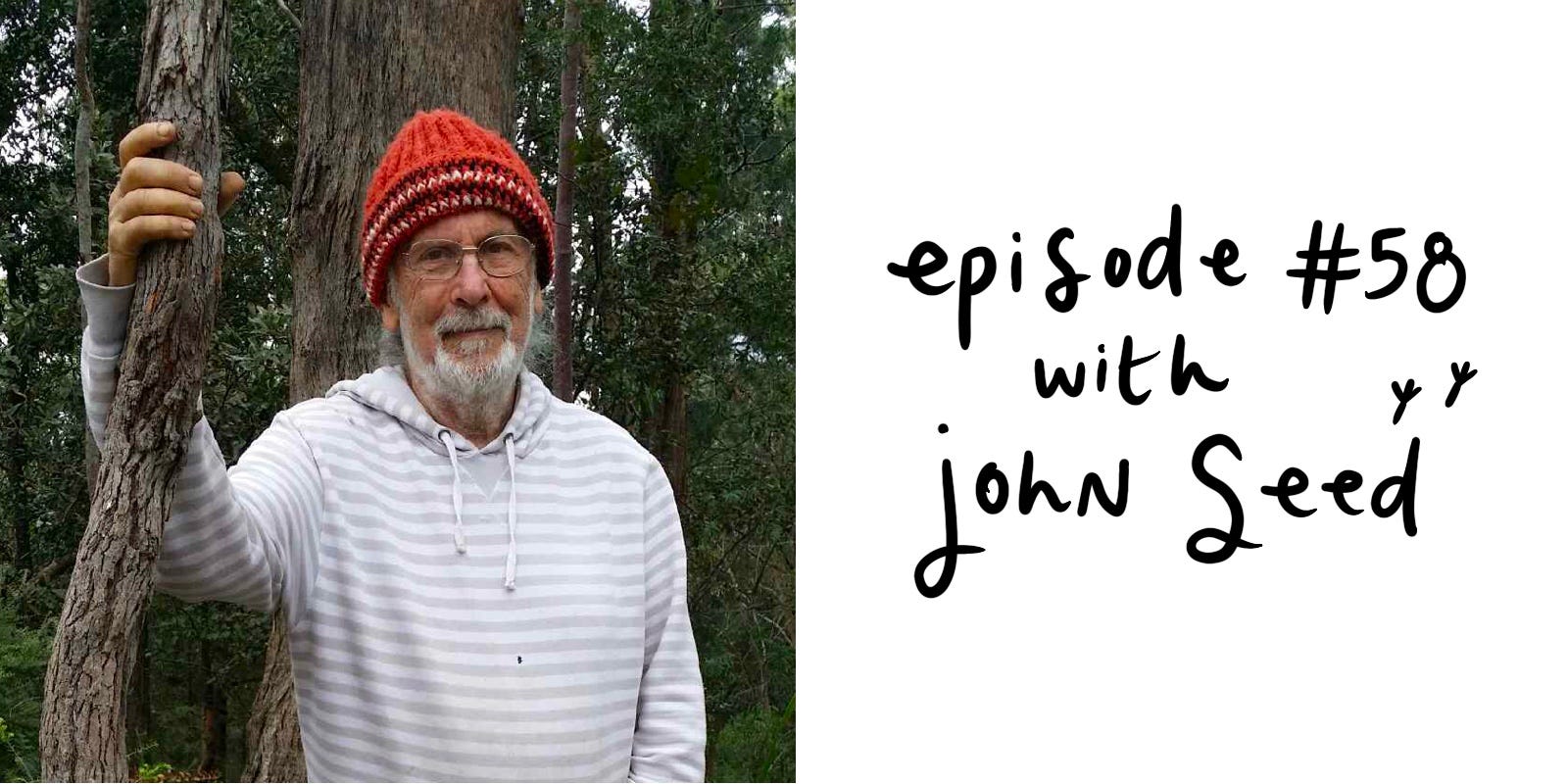
I’ve just released an interview with John Seed, deep ecology elder and one of Australia’s most prolific rainforest protectors. Just last year at age 79 he was arrested for strapping himself to logging machinery in the Bulga State Forest, and has received an Order of Australia medal for his services to conservation and the environment. I almost died from the honour of speaking with John, but held it together long enough to record a one hour conversation about hearing nature’s call, finding purpose in The Great Turning, and re-membering, with love and wonder, our ecological selves.
🦉 You can listen on Apple, Spotify or wherever podcasts hoo-hooot.
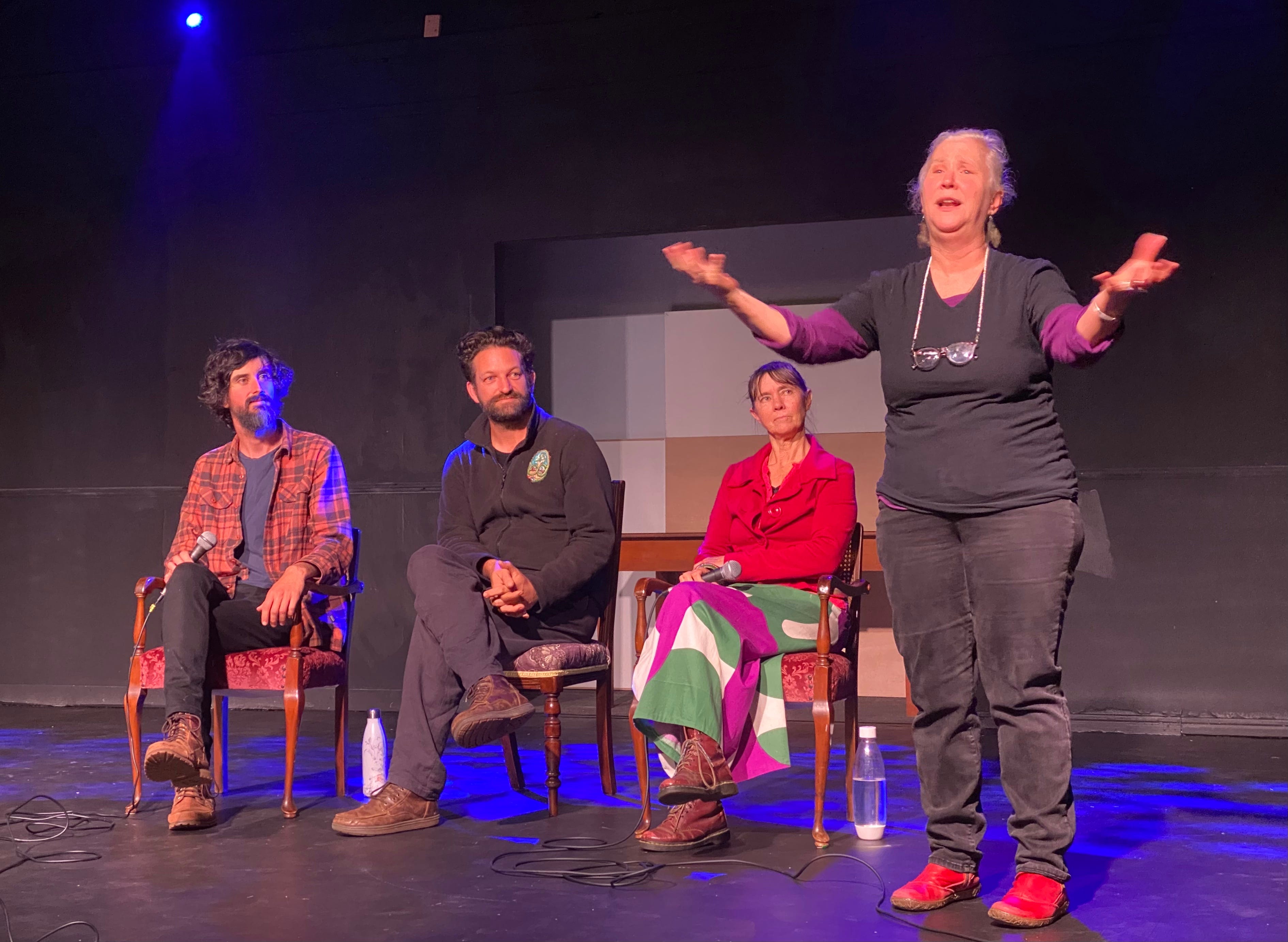
In other news, we have two more screenings of The New Peasants happening at Crystal Waters Eco village and Northey Street Farm in Brisbane. The latter will be outdoors amongst the cabbages on a giant inflatable screen, fun! Jord and I would love to pied currawong ya there.
“The sense impressions of one-celled animals are not edited for the brain: ‘This is philosophically interesting in a rather mournful way, since it means that only the simplest animals perceive the universe as it is.”
Annie Dillard, Pilgrim at Tinker Creek
Thanks for reading Catie of the Southern Wild! This post is public so feel free to share it.
No posts
Comments
Nothing yet. Say the first thing.
Sign in to join the conversation.