
Let’s get this out of the way first.
I have 8k Substack subscribers and 21k Twitter followers. I’m in the top 25% on OnlyFans. If that seems impressive to you, keep reading. If you know that’s what miserable failure looks like, you’re probably good. Close the tab.
My expertise is that no one is more motivated to understand an industry than a mofo who can’t hack it, but keeps trying.
Also, celebrity culture raised me.
Some of you learned to read with Hop on Pop.
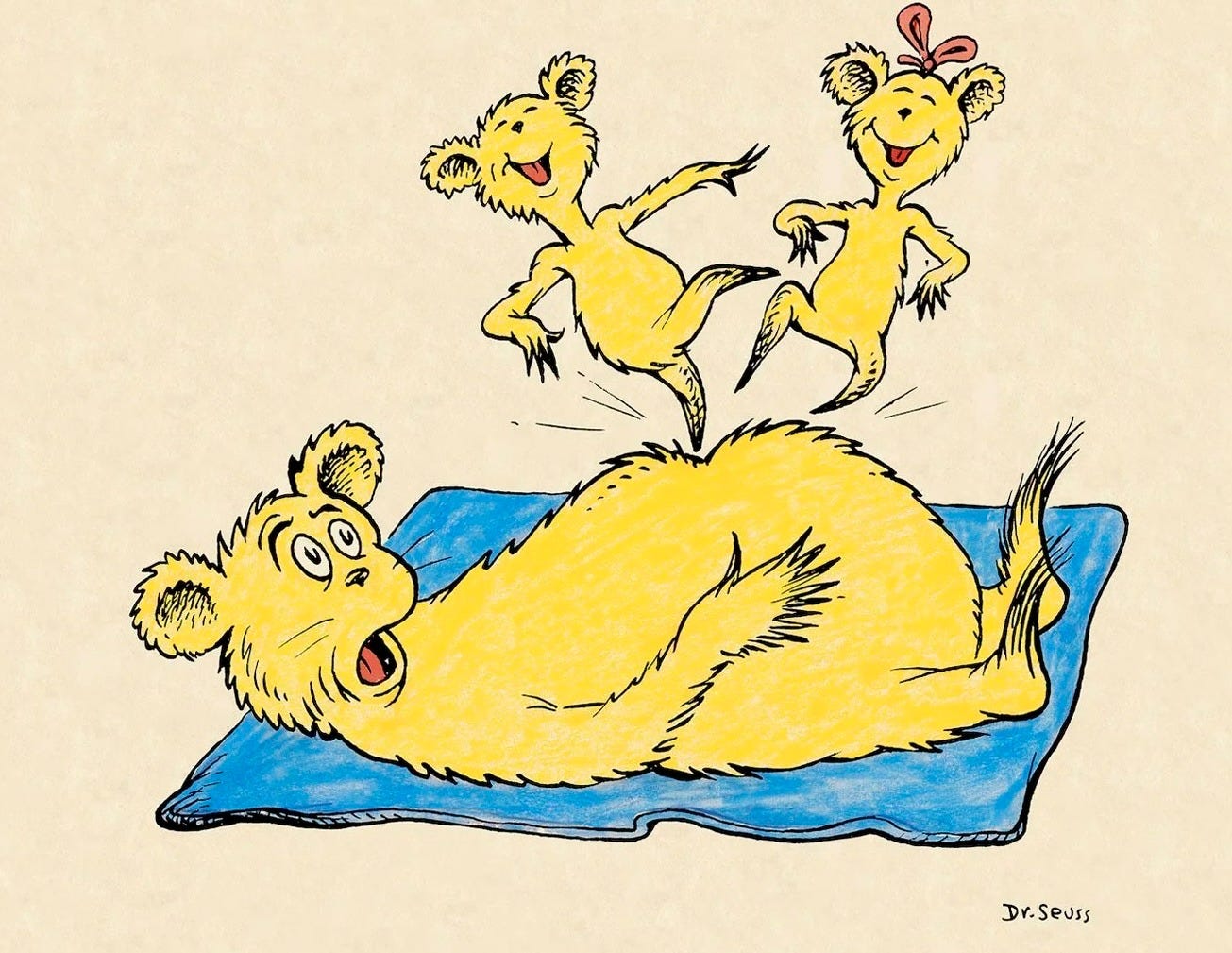
I sounded out something a little more sophisticated.
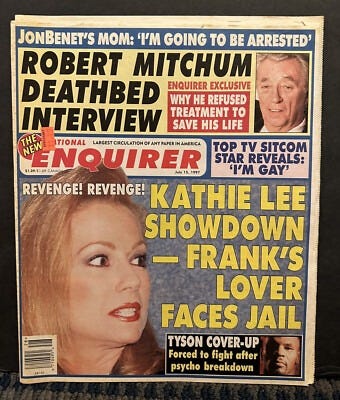
In other words:
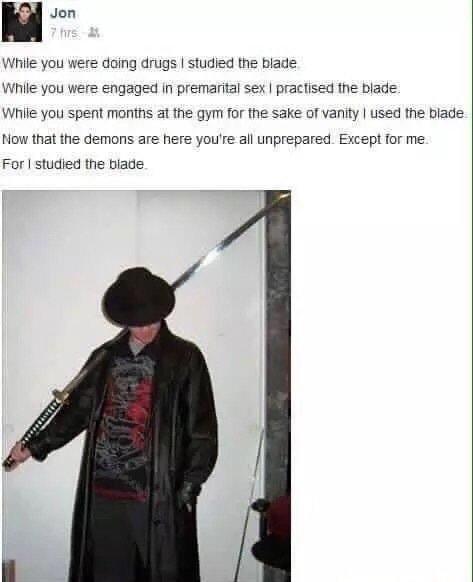
I studied the tabloids long before the word “influencing” even entered the lexicon. Reality television was my babysitter. I read Go Fug Yourself while pretending to work at my first office jobs.
The first thing you need to know about making “influencing” your full-time job is that none of us are making any (real) money.
Influencing is a multi billion-dollar industry. In 2023, 27 million Americans made money from posting internet content.
From the outside, it looks really fun. That’s why so many people, especially youngsters, want to be influencers.
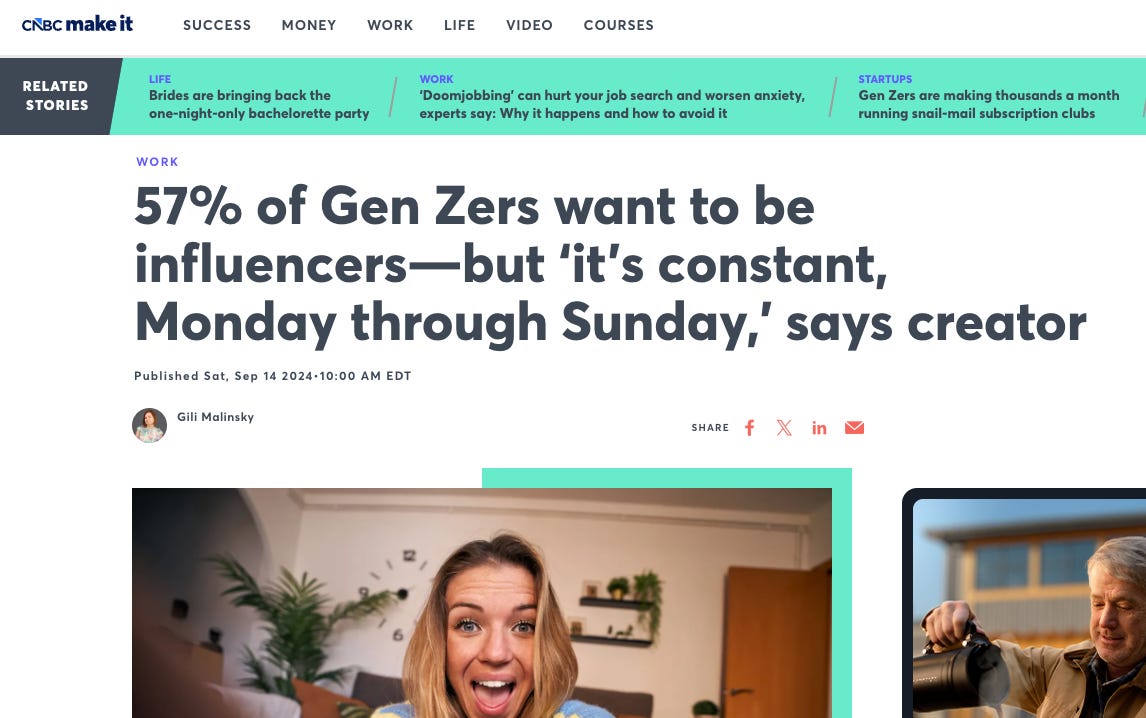
The Atlantic just reported that Arizona State University’s journalism school is set to offer a bachelor’s degree in content creation.
What most people don’t know is that, when you look at the universe of folks who have monetized their online presence in any way, the vast majority earn far below the minimum wage on a per-hour basis.
A very small number of extremely successful creators dominate every single platform. Literally upwards of 90% of all dollars collectively earned goes to the top 1% of YouTubers, OnlyFans models, Twitter monetized accounts, Substackers, etc.
Simply put, it’s more profitable for platforms to show users content from creators who are already successful than to take a gamble on a creator who may or may not take off. This leads to earnings so lopsided that what top-tier influencers earn makes United States executive compensation appear sane and fair by comparison.
Someone once said that the only thing you need to make a full-time living off influencing is 1,000 dedicated fans. If 1,000 people pay you $10 per month to create your creations, that’s a pretty good living.
The first challenge is that $120,000 per year only sounds like a lot. However, most platforms take ~20% off the top. Now you’re down to $96,000. This is still above area median household income for a lot of the US. Then you have to pay another ~20% in self-employed taxes. That takes you down to $76,800. And that assumes your business doesn’t have any expenses. But lights, cameras, travel, self-funded health insurance, etc. don’t pay for themselves.
So that’s the first problem with the 1,000 dedicated fans idea. The bigger problem, by far, is that some percentage of that fanbase will not remain equally dedicated to you forever. No matter how amazing you are, you’ll always steadily lose paying fans. They’ll get laid off, change credit card providers, grow out of your subject matter, lose interest in your journey, etc. It’s not personal. It’s just how life works. Influencers have to plan around this.
The way to survive is to ABC: Always Be Capturing.
In the world, at any one time, some tiny, infinitesimal percentage of mofos would ever, in a million years, even consider paying you for the crap you create. Again, this is not personal.
“What people are willing to pay for” and “what has value for humanity” are different, often mutually exclusive, categories. People are willing to pay podcast hosts to describe gruesome murders but won’t pay a local newspaper to send a reporter to uncover municipal fraud. When I’ve explained that gruesome murders are extremely rare and have no direct impact on your life but local government mismanagement is nearly ubiquitous and has a huge impact on your actual lived experience, people just tell me to shut up.
Even worse, an influencer’s potential paying fans are scattered about. There is no one room you can go in, or ad you can buy, to let all of them know that you exist.
Ideally, your niche is so well-served and well-defined that you can easily get in front of everyone who cares about it. Let’s say you host a relationship advice podcast. With enough money, you could let the vast majority of the relationship advice podcast listening audience know that you exist by buying ads on every other ad-supported relationship advice podcast.
The first problem is that this would cost you a ton of money. Worse, most of it would be completely wasted. Some percentage of listeners don’t want to start a new show right now. By the time they do, they’ll have forgotten about you. Some of them won’t like the sound of your voice. Also, relationship advice has subgenres. If your podcast isn’t the right subgenre, most of those folks are also going to be out immediately.
That plan also fails to get you in front of people who don’t like – or don’t know they like – relationship advice podcasts as a genre, but might like yours.
That’s why the cheapest, fastest, most reliable way to keep new subscribers and fans coming your way is to get a lot of free attention from the normiest, middle-of-the-road people possible.
And the cheapest, fastest, most reliable way to get mass normie attention is to get them to hate-share your content. This is literally how Andrew Tate built his business.
Love also works, I’ve heard. But it’s much harder and more expensive.
“In an oversaturated market, rage bait is the last sure way to get attention, despite the way it alienates people over the long term,” wrote Ellen Cushing in the Atlantic.
Happy people close the app and go outside or call a friend. Angry people stay and scroll and argue. That’s why the algorithms aggressively promote content that ticks you off.
This is obviously problematic for social trust, civility, and robust institutions. It also incentivizes an increasingly fetid informational environment.
That’s part of why I’m not more successful. I don’t want to be part of the problem.
I’m simply too morally upright and altruistic to not be poor.
Well, that and the haters.
Not only is trying to be loved harder and more expensive, but no one achieves it universally. Certainly not forever. Dolly Parton herself has haters.
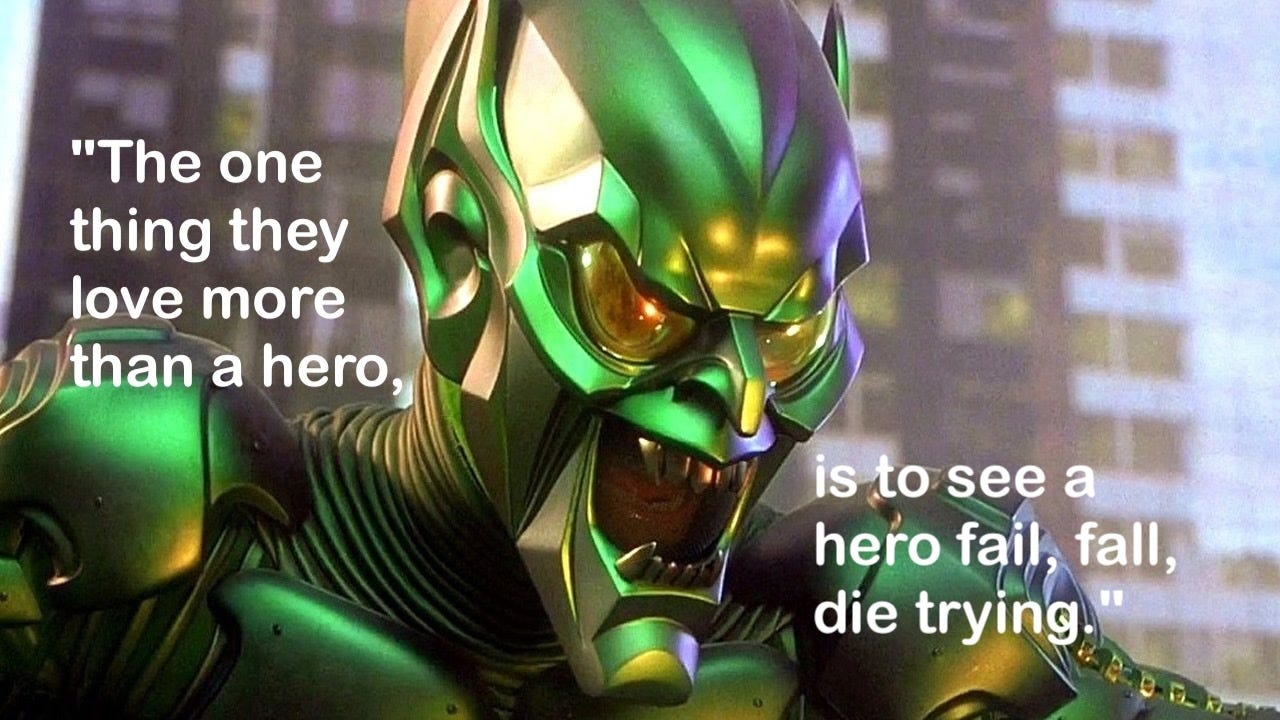
Positive normie attention always comes with negative attention from antisocial losers. And the internet is disproportionately populated by, definitionally, the people who are the most “online.” And those people, research and lived experience will tell you, are disproportionately hateful, antisocial losers.
And listen, some of my best friends are hateful antisocial losers who hate my content and strongly disagree with my takes. Antisocial losers who have interesting takes on my content are some of my favorite readers. But those folks are hard to find without also getting far more super boring takes on my content, along with death threats and the occasional horde of bot accounts making my account basically unusable for a few days.
I don’t know who said this, but I believe it very strongly. The best is to be rich, and not famous. After that, to be neither. But the worst is to be famous, but not rich.
But neither altruism nor haters can really, truly explain my failure to fully launch, influence-wise. No, the real reason is that mama needs a freakin break.
If you haven’t caught on yet, let me just spell it out. I’m a messy bitch who lives for drama.
Obviously, I only really started paying attention to an influencer named Jen Hamilton when her husband and baby daddy decided to drop a divorce-causing bomb at almost the exact moment her latest, and unrelated, book published.
https://www.facebook.com/share/r/1Bds1tvAwf/?mibextid=wwXIfr
What most people don’t realize, or think about, when they’re contemplating influencer-hood, is that Jen’s soon-to-be wasband left her with two bad choices.
Most people, even most influencers, are not going to be able to post normally through a divorce.
Here’s what food YouTuber Carla Lalli told The Cut about her decision to give that a go:
I’ve been doing this a long time, and as a high-summer Leo, my ego is robust, but there were plenty of times when I truly could not stand myself or my performance … In 2023, when my marriage broke up and I had to stay in (goofy, upbeat) character for the sake of my and my family’s privacy — that was brutal. I was living a lie, projecting an inauthentic version of myself. The conflict between the person in reality and the performer ate away at me.
Imagine doing that when as much of your content is about yourself as it is about food (or, in Jen’s case, nursing).
So, Jen had to choose:
Stop posting new content
Post through it
Option one would have created its own drama. Unless the divorce was also coming with a career pivot off the internet, she was gonna have to address the drama eventually either way.
Carla Lalli is talking to the Cut to promote her new cookbook, which is also a divorce memoir. Christian influencer (and former pastor’s wife) Jen Hatmaker tried to hide her divorce for a while, and then published her own divorce memoir, called Awake. I almost wish my own divorce had happened more recently, and had been way more dramatic, so I could cash in.
The die-hard fans simply require the dirt.
The longer an influencer delays the inevitable, the more work she creates for her later self. While she’s not posting, or posting boring stuff, the algos stop showing her videos. Her less diehard fans (meaning, most of them) lose interest.
Influencers do not get time off. Even for hip surgery:
When an influencer is finally ready to address the drama and start posting again, she must slowly re-build her audience and attention back to pre-break levels. And that’s assuming audience tastes and/or algorithmic preferences haven’t meaningfully shifted.
Option two, transparency, is also risky.
Divorce, as you may know, is a pretty emotional, polarizing topic. It attracts a lot of attention and speculation. A lot of people (me) who weren’t necessarily paying attention to an influencer’s nursing/cute husband/sweet kiddo videos are now glued to our screens waiting for more of the mess to come out.
We aren’t the same audience you’ve had in the past. Some of us are, shall we say, into conflict. Maybe we like divorce content because we ourselves are divorced and relate. Maybe our low agreeableness could have had something to do with our divorces. Who knows.
The great thing is that you’re performing your divorce in front of a bunch of new, conflict-happy people while being in one of the most vulnerable places of your life. You are, probably, not performing at your best. If you were ever going to step in it, royally, now is the time.
That’s why I’m so obsessed with Jen Hamilton.
She’s giving a master class in influencing.
Even I, at first, was like, “Jen, baby. Girl. Take a break.” Me, famously petrified of ever oversharing or looking bad or saying the wrong thing.
But baby girl is actively redefining “posting through it.”
Instead of making bad and alienating comments and then doubling down, Jen is turning coal into diamonds. She’s raising money to help women leave abusive situations. She’s being real and transparent without overtly throwing anyone under the bus. She’s just… classy as hell.
She also clearly has an incredible team around her. And she is, just as importantly, actually letting them help.
In between videos of her crying and hugging her chickens, someone was re-posting old videos and promoting the book. She’s now shaking her ass, literally, and celebrating her wins. She’s also mourning her losses. And she’s doing it all with us, in real time.
It’s all so well-handled, in fact, that a tiny, horrible thought occurred to me. You know how sometimes celebrities “start dating” each other right when a new project needs attention?
To be clear! I do not think Jen Hamilton timed her divorce announcement to maximize book sales. First of all, she’s more than savvy enough to realize that the best time to announce would have been right before pre-sales, which are extremely important to achieving best-seller status. Second, she hit the best-seller list anyway. She has no need for a messy, public divorce.
The other thing I’ll say about influencing is that it’s addictive as heck. Attention feels good. Adrenaline feels good. Posting gives me a lighter version of the brain chemicals I get from performing in public. But I don’t have to put pants on or leave my condo. That’s why celebrities can’t seem to put their phones down sometimes, even when it would clearly benefit them and their careers.
I totally understand how audience capture happens, too. I seem to be too disagreeable to let any particular segment of my audience sway me in any particular direction. But, again, the name of the game is attention. And the people who are most online are the worst people alive. You do the math.
Successful influencers aren’t going to talk about this stuff. First, because it’s clearly not holding them back. Second, because no one really likes to hear anyone else complaining, least of all a richer and more famous person.
Unsuccessful influencers are probably more willing to talk. But, definitionally, few are listening. And it’s still a bad look. Instead of out-of-touch and ungrateful, they look like they’re blaming other people and bad systems for their failure. Which, fair. But being unattractive doesn’t make me wrong.
I am, at my core, extremely grateful to you for buying so much time to write this newsletter. And to the algorithms that brought you to my shores. And, if I were in charge, there are a few things I’d change about the whole setup. But, in the meantime, I’ll just keep occasionally writing about it.
No posts
Comments
Nothing yet. Say the first thing.
Sign in to join the conversation.