
“As the family goes, so goes the nation, and so goes the whole world in which we live.” So said Pope Saint John Paul II in a homily in Australia forty years ago, and they’ve certainly been borne out in more ways than one. Not only is the state of the family a harbinger for the direction of society, it is also a sacred and holy entity designed by God himself. The ecclesia domestica, as St. John Chrysostom first referred to it in the fourth century, or the “domestic church,” is a sacred vessel in which vulnerable humans are loved and cultivated into Christians and citizens.
These days? Not so much.
Not only has the family come under assault through modern ideologies that strike at the very heart of family bonds, but now politics is causing familial crack-ups. Quite literally, people are ending their family relationships over political disagreements. “No contact” is the expression. It’s…insanity.
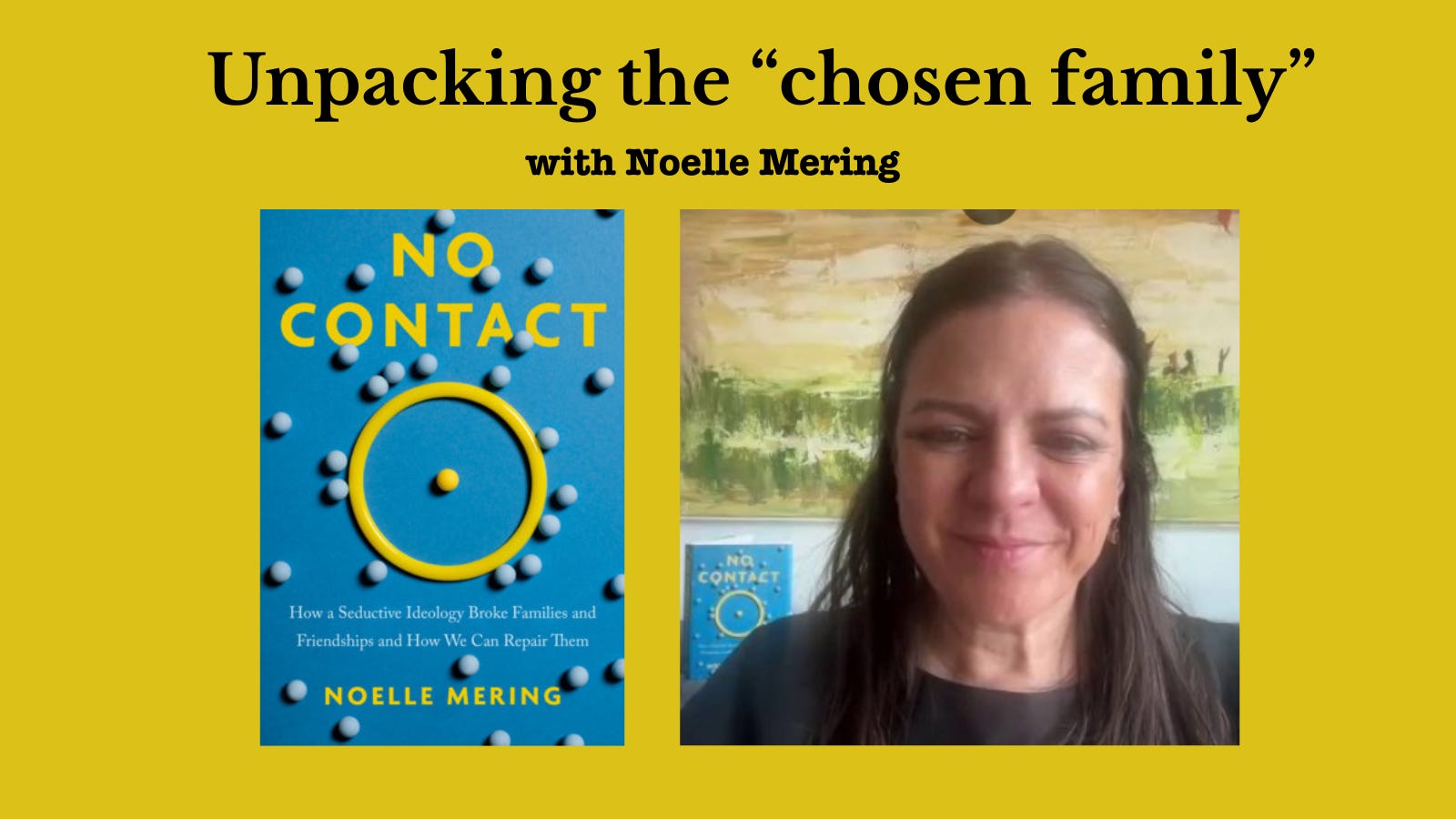
Last week we were joined on Conversations with Consequences by the Ethics and Public Policy Center’s Noelle Mering to discuss her new book, No Contact: How a Seductive Ideology Broke Families and Friendships and How We Can Repair Them, on this very phenomenon and what it means for our society. She writes:
“Family estrangement – or going no contact – isn’t a new phenomenon. But in recent years it has gained significant visibility. Unlike previous decades when estrangement was often shrouded in shame and secrecy, today it’s more openly discussed and sometimes celebrated as an act of courage and self-care, calling into question long-held social norms and beliefs about the importance of family.”
Mering pointed first to “online culture” as a major factor to blame. “We can’t underestimate how much the online culture has really formed this younger generation,” she said on the podcast. On TikTok, for example, “there’s a real prevalence of pop psychologists who are offering what seems like a caring presentation, an invitation, for their viewers to examine their lives and their families for points of ‘toxicity,’ often in their parents.
These videos, she points out, “often get millions, sometimes billions of views,” are seductive, and combined with “a real currency of victimhood” confuse people into thinking they’ve actually been “victimized by their family.”
The problem with therapy culture
Therapy culture is very much to blame as well, watering down the definition of trauma from long-held very real traumas that are grounds to separate from family such as abuse, into viewing almost everything through “a lens of harm.”
She likens the phenomenon to an autoimmune disorder. Whereas a healthy immune system detects real harm, the no contact phenomenon, which is most certainly a contagion being fueled by online culture, the family immune system is now attacking itself, its own “flesh and blood.”
We discussed mental illness, and the fact that for the longest time, the field of psychology has had a well-established understanding spelled out in the practice of cognitive behavioral therapy that confronting one’s fears or anxieties in small doses helps to slowly diminish the perceived sense of threat. As Jonathan Haidt and Greg Lukianoff lay out in their book The Coddling of the American Mind and in their subsequent writings, young people are being taught to run from the perceived threat, quite literally by shutting down conversation, which magnifies the threat and exacerbates conflict.
Now it has reached the point where people will cut ties with family rather than listen to their point of view on a contentious issue. It’s psychology turned on its head, and it is tearing society apart and destroying the field of therapy, which is still a very much needed outlet for those suffering from true trauma and mental illness, another outcome we discussed on the show.
The “empowerment delusion”
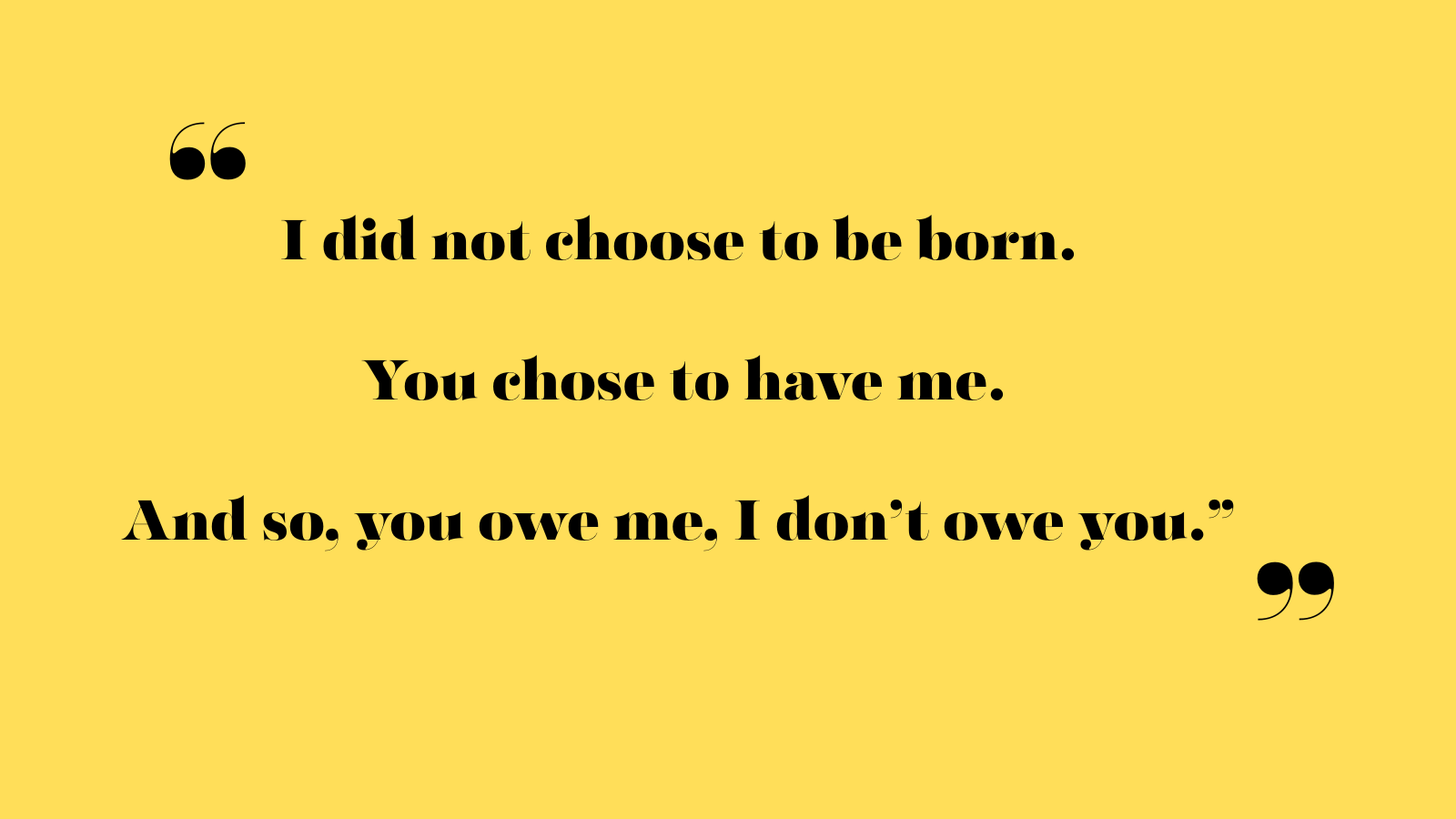
It’s a rich conversation, worth a listen in its entirety. We discuss “the empowerment delusion,” or the sense borne out of radical individualism that breaking family bonds is an act of empowerment as well as the nihilistic roots of a no contact movement, in which young people quite literally say “I did not choose to be born. You chose to have me. And so, you owe me, I don’t owe you.” And we delve into the way the no contact movement is profoundly un-Christian, in that it is quite literally an inversion of the Fourth Commandment’s call to honor one’s father and mother. And we cover the normalization of divorce, which signals to society that abandoning or rupturing a family is a valid choice.
Noelle’s book is a must-read, especially for those affected by the no contact movement. She offers advice to break the cycle, such as striving to “never communicate out of a place of deep emotion” and calls on “parental nobility” to “take the higher road” which can help to break the “bad feedback loop.”
You can buy the book here and listen to our full conversation here. Reclaiming the family, and society by extension, from the no contact contagion, begins with educating ourselves about it and how it takes root in the ecclesia domestica.
Comments
Nothing yet. Say the first thing.
Sign in to join the conversation.