
Iodine is a nutrient that most everyone is deficient in. Iodine deficiency is a contributing factor to a chronic Health Crisis in America.
In this article, I want to walk you through how iodine was quietly removed from our food supply, how it was replaced with bromide, why thyroid and cancer rates exploded afterward, and why two brave physicians—Dr. Guy Abraham and Dr. David Brownstein—put iodine back on the map. We’ll also talk about how many organs depend on iodine, how it supports apoptosis (the clean, intelligent death of cancer cells), how it protects the thyroid from radiation, and why standard medical training is almost completely silent on this life‑saving mineral.
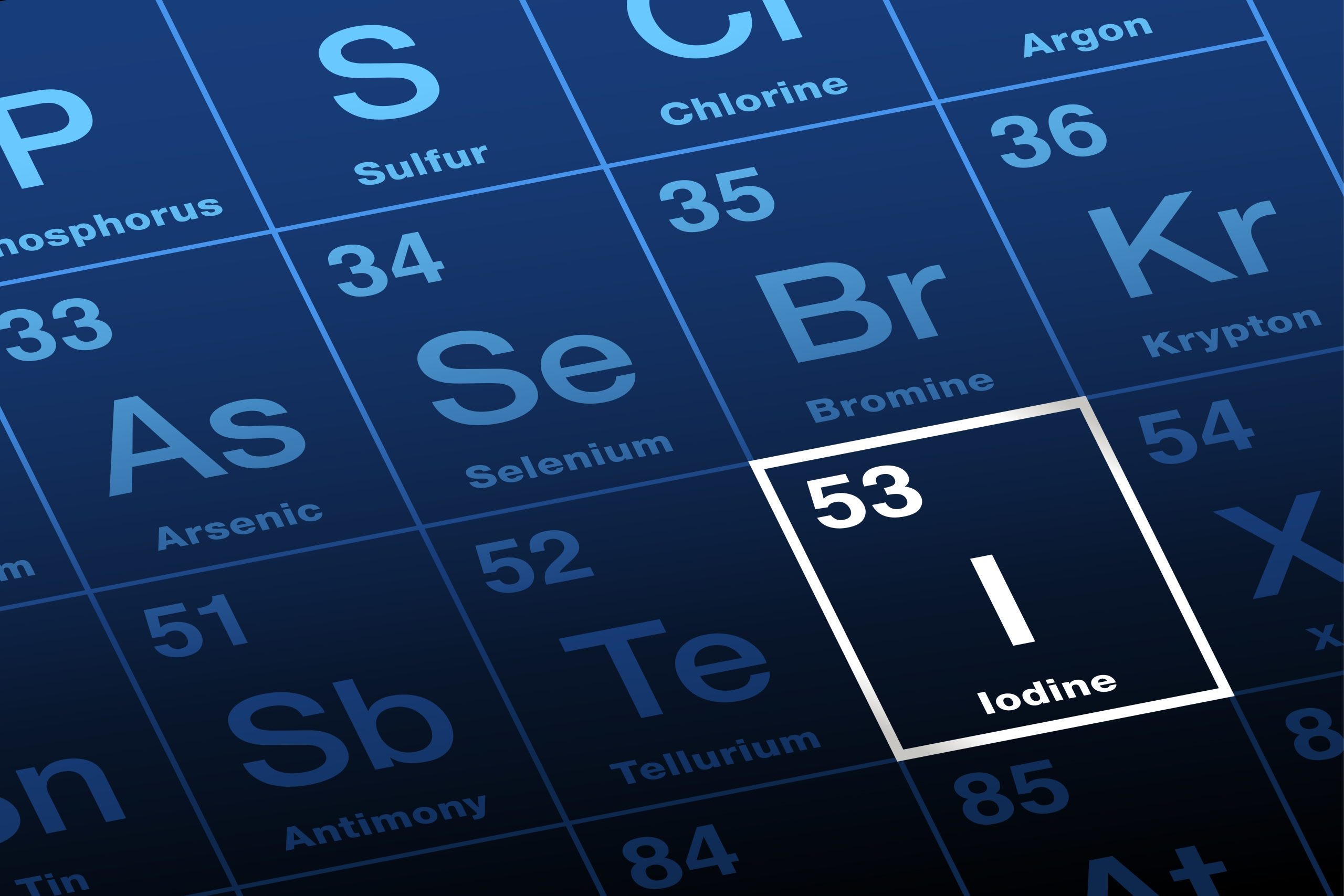
In the 1800s, doctors noticed something simple but profound: areas far from the sea had shocking rates of goiter and cretinism (severe developmental delay in children), while coastal areas did not. When iodine was discovered and then added to the diet, goiters shrank and cretinism plummeted. Iodine became one of the earliest “public health miracles” because it allowed the thyroid to make hormones properly, and those hormones are critical for metabolism, brain development, and overall energy.
By the 1920s, adding iodine to table salt almost wiped out goiters in the United States. For decades, iodine was respected, used, and uncontroversial. It was just assumed that we needed it—and that we were getting it.
Here’s the part almost no one talks about: for many years in the mid‑20th century, iodine was not only in salt, it was also in our bread. Commercial bakers used iodate and iodide compounds as dough conditioners. This did two things:
It made the dough stronger and whiter.
It unintentionally turned bread into a major iodine source.
Back then, one or two slices of bread could quietly give you around the Recommended Dietary Allowance of iodine for the day. So you had iodized salt plus iodine‑conditioned bread, and many people were unknowingly protected from deficiency.
In the 1960s–1970s, a perfect storm hit:
People were told to cut down on salt (ironically the main vehicle for iodine).
At the same time, manufacturers started removing iodine from flour conditioning.
Instead of iodine, they introduced potassium bromate, a bromide compound, to “improve” dough.
Bromide is from the same halogen family as iodine. It competes with iodine in the body. It can sit in the same receptors and transport systems that should be reserved for iodine. So not only did we lose a source of iodine, we added a direct iodine antagonist into our daily bread.
This shift was never broadly announced to the public. No one told families: “Hey, we quietly took iodine out of your food and replaced it with a chemical cousin that fights with iodine and may contribute to cancer and thyroid disruption.”
After iodine was quietly removed from bread and salt intake was demonized, population iodine levels dropped dramatically. Urinary iodine testing—how we measure iodine status in large populations—showed a significant decline from the 1970s into the 1990s. At the very same time, thyroid disorders began climbing:
Hypothyroidism and Hashimoto’s have become almost “normal” in women.
Thyroid nodules and goiters are increasingly common again.
Thyroid cancer rates have risen several‑fold since about 1970.
Is this all “just a coincidence”? Or did we literally pull the foundational nutrient for thyroid health out of the food supply while adding a halide toxin that competes with it? Many experts believe the pattern is too strong to ignore.
Dr. Guy E. Abraham, an OB‑GYN and researcher, looked at the tiny Recommended Dietary Allowance for iodine and simply asked: “Is this enough for the entire body—or just enough to barely prevent goiter?”
He developed what he called “orthoiodosupplementation,” arguing that the whole body, not just the thyroid, needs much higher iodine levels. Here are some key pieces of his work:
He proposed that the human body as a whole needs milligram amounts of iodine, not just micrograms.
He used a 24‑hour iodine loading test: patients took a known dose of iodine/iodide and he measured how much they excreted in the urine to assess whole‑body saturation.
He found that people held onto large amounts of iodine initially—indicating deep deficiency—and that only after reaching sufficiency did their bodies begin to excrete most of the dose.
Clinically, Abraham reported improvements in thyroid symptoms, breast issues, metabolic problems, and detoxification of toxic halides (bromide and fluoride) when higher‑dose iodine was used safely and monitored. His work challenged the idea that iodine is dangerous at anything above trace levels and reframed it as a universal nutrient for the entire body.
Dr. David Brownstein, a holistic MD, took Abraham’s work and brought it to the public in a big way. In his book “Iodine: Why You Need It, Why You Can’t Live Without It,” and through thousands of patients in practice, he paints a clear picture: we are living through a widespread iodine deficiency crisis, and it is silently fueling thyroid disease, hormonal chaos, and cancer risk.
Some key pillars of Brownstein’s message:
Iodine is essential for far more than thyroid hormone production.
It has powerful antibacterial, antiviral, antiparasitic, and anticancer properties.
Many chronic issues—including fibrocystic breast disease, ovarian cysts, prostate problems, and fatigue—are linked to low iodine and toxic halide overload.
In his clinical experience, restoring iodine levels (with proper co‑factors and monitoring) can calm the thyroid, soften fibrocystic breast tissue, improve energy, and even help the body push out bromide and fluoride stored in tissues.
Iodine is not just for the thyroid: the whole‑body iodine story
We’ve been conditioned to think iodine is only about the thyroid. The reality is, iodine receptors and iodine uptake show up almost everywhere. Here are some of the key organs and tissues that rely on iodine:
Thyroid: Uses iodine to produce T4 and T3, and to protect itself from oxidative stress.
Breasts: Concentrate iodine, and deficiency is strongly associated with fibrocystic changes and increased breast‑cancer risk.
Ovaries and uterus: Use iodine in hormone regulation; deficiency links to cysts and dysfunctional bleeding patterns.
Prostate: Responds to iodine status; low iodine is associated with abnormal proliferation.
Stomach and GI tract: The gastric mucosa and salivary glands take up iodine and use it as a local antimicrobial and protective factor.
Brain and nervous system: Iodine is critical during development and continues to influence cognition and mood in adults.
Immune system and thymus: Iodine helps white blood cells mount an effective oxidative burst against pathogens.
When you think of iodine as a global, system‑wide nutrient—like vitamin D or magnesium—the symptom picture of deficiency becomes easier to understand. You don’t just get a “thyroid problem”; you get hormonal chaos, immune weakness, cysts, fatigue, brain fog, and impaired detox.
One of the most fascinating areas of iodine research is its relationship with apoptosis—our body’s elegant system for identifying and dismantling damaged, precancerous, or cancerous cells.
Certain forms of iodine and iodinated lipids (such as iodolactones) can:
Trigger programmed cell death in abnormal cells.
Slow or stop proliferation in cancer cell lines.
Do this while sparing healthy cells.
In thyroid cancer cell studies, radioactive iodine (I‑131,) which used to be a standard treatment for Thyroid Cancer, doesn’t just “burn” tissue; it also changes gene expression toward more apoptosis and less proliferation. Non‑radioactive iodine and iodide appear to have their own anticancer signaling roles, especially in breast tissue. This is why Brownstein refers to iodine as a “universal anti‑cancer agent” when the body is truly sufficient.
From a naturopathic lens, iodine is not just about making hormones—it’s about giving your cells the intelligence they need to decide which cells stay and which cells go. That is the essence of cancer prevention.
We’ve all seen iodine used topically as an antiseptic—painted on the skin before surgery, used in wound care, and used in gargles and nasal sprays. That same broad‑spectrum antimicrobial power is part of why internal iodine sufficiency matters so much:
Iodine can inactivate viruses, bacteria, and fungi on contact.
White blood cells use iodine to generate reactive species that help kill pathogens.
Deficiency can blunt the immune system’s ability to control chronic infections.
This is why clinicians using iodine often see improvements in chronic viral issues, recurring infections, and overall immune resilience once iodine stores are restored.
One of the most widely accepted uses of iodine—even in conventional medicine—is radiation protection. When a nuclear accident happens, the first thing governments rush to distribute is potassium iodide tablets. This is exactly what the Japanese government did after Fukishima. Why?
Because when the thyroid is saturated with stable iodine, it has no room left to absorb radioactive iodine isotopes from the environment. You’re essentially “filling up the parking lot” so radioactive iodine has nowhere to park. This dramatically reduces the risk of radiation‑induced thyroid cancer.
That same principle applies to medical exposures that involve radioactive iodine. A chronically iodine‑deficient thyroid is like a sponge—it will soak up more radioiodine and hold onto it longer.
This is exactly why I have a stockpile of Iodine supplements in my “survival kit” at all times. If, God forbid we are exposed to radiation, I have enough to give to close family members and friends. Of course it is best to NOT be iodine deficient in every day life.
DISCLAIMER: Do not supplement with iodine on your own. You must work with your health care provider. Request a full thyroid panel, which includes TSH, Free T4, Free T3, Anti-TPO Antibiodies and Anti-Thyroglobulin Antibodies. These blood work markers can determine if you have Hashimotos, Hyperthryoid, Hypothyroid, or Graves disease. The blood work results will help your health care professional guide you on iodine supplementation. You can also request an “Iodine Challenge” test from your health care provider.
While iodine deficiency has been increasing, bromide exposure has, too. Bromide shows up in:
Flour and baked goods (as potassium bromate, in some countries and products).
Certain soft drinks (historically as brominated vegetable oil).
Some medications, hot tubs, and other chemical products.
Bromide competes with iodide for transport into thyroid and breast tissue. It can sit in the same “parking spaces” that iodine should occupy. Not only does this worsen iodine deficiency at the tissue level, it also brings its own toxicity: bromide has been linked to goiter, thyroid hormone disruption, neurological symptoms, and cancer in animal models.
High‑dose iodine therapy, as used by Abraham and Brownstein, often causes a marked increase in urinary bromide excretion—evidence that iodine is literally pushing this toxic halide out of the body.
Why most medical doctors are not taught this
Here’s one of the most important pieces of this puzzle: most conventional medical doctors are not trained in nutrition or micronutrient‑based protocols.
Many medical schools offer only a handful of hours of nutrition education in all four years of training.
Those hours often focus on calories, basic macronutrients, and extreme deficiency diseases—not therapeutic dosing, cofactors, or detoxification of halides.
The curriculum is heavily weighted toward pharmaceuticals and acute care, not prevention and foundational nutrient repletion.
So when you walk into a typical office and bring up iodine beyond “you have normal TSH,” you’re stepping outside what they were actually trained in. It’s not that they’re malicious; they often just haven’t been given the tools or the framework to think about iodine as a global, detoxifying, anticancer, antiviral, whole‑body nutrient.
This is why voices like Dr. Abraham and Dr. Brownstein have been so disruptive—and so badly needed.
We are living in a time where:
Iodine has been quietly removed from foods that used to give it to us.
Its competitor, bromide, has been added instead.
Environmental toxins and radiation exposure are higher than ever.
Thyroid disorders and hormone‑driven cancers are exploding.
And the average doctor has not been trained to even ask the iodine question.
Reclaiming iodine is not about mega‑dosing blindly. It’s about:
Testing, not guessing.
Respecting iodine’s power, using the right forms and cofactors.
Understanding halide detox (bromide, fluoride, chloride).
Supporting the organs that depend on iodine: thyroid, breasts, ovaries, prostate, immune system, brain, and more.
Disclaimer: The information in this article is not meant to treat, cure or diagnose. Work with your health care practitioner to determine if your iodine needs.
Reference
Leung AM, Braverman LE. “History of U.S. Iodine Fortification and Supplementation.” Nutrients. 2012;4(11):1740–1746.
https://pmc.ncbi.nlm.nih.gov/articles/PMC3509517/Leung AM, Braverman LE. “History of U.S. Iodine Fortification and Supplementation.” PubMed record.
https://pubmed.ncbi.nlm.nih.gov/23201844/Meletis CD. “Iodine: Health Implications of Deficiency.” (Review on systemic effects of iodine deficiency and thyroid disease.)
Journal listing and abstract available via: https://journals.sagepub.com/“The Prevention of Iodine Deficiency: A History.” Thyroid (official journal). 2023.
https://journals.sagepub.com/doi/10.1089/thy.2022.0454“Iodine: Health implications of deficiency.” Ovid / Sage listing (overview of deficiency, thyroid cancer, and systemic impact).
https://www.ovid.com/journals/jebcam/pdf/10.1177/2156587211414424~iodine-health-implications-of-deficiency“Iodine-131 treatment of thyroid cancer cells leads to suppression of proliferation and induction of apoptosis via BTG2-mediated pathways.”
https://pmc.ncbi.nlm.nih.gov/articles/PMC5264532/“Iodine Supplementation and Monitoring to Ensure Patient Health and Safety.” Journal of Restorative Medicine.
“Salivary iodide status as a measure of whole body iodine.” PubMed record.
https://pubmed.ncbi.nlm.nih.gov/38287697/
Dr. Guy Abraham / Orthoiodosupplementation
Abraham GE. “Iodine: The Universal Nutrient.” Orthoiodosupplementation paper (Iodine Research).
http://www.iodineresearch.com/ortho_abraham.htmlAbraham GE, Flechas JD, et al. “Orthoiodosupplementation: Iodine sufficiency of the whole human body.”
Semantic Scholar record:
https://www.semanticscholar.org/paper/Orthoiodosupplementation:-Iodine-sufficiency-of-the-Abraham-Flechas/412e5db6b960f0604892afAbraham GE. “The Concept of Orthoiodosupplementation and Its Clinical Application.” (Iodine Study series PDF).
https://www.wondrousroots.org/_files/ugd/a7455d_b07226fe5ca64790906ec5810810f9dd.pdf
Dr. David Brownstein and clinical iodine work
Brownstein D. Iodine: Why You Need It, Why You Can’t Live Without It. 5th ed.
Official listing: https://www.drbrownstein.com/shop/p/iodine-why-you-need-it-why-you-cant-live-without-itBrownstein D. Iodine: Why You Need It, Why You Can’t Live Without It. (Book overview and reader excerpts).
https://www.goodreads.com/book/show/6399174-iodineBrownstein D. “Iodine: Why You Need It, Why You Can’t Live Without It” – Audio interview / episode summary.
https://eatfor.life/why-you-cant-live-without-iodine/“Iodine: The Universal Anti-Cancer Agent | David Brownstein MD.” (Video lecture).
Brownstein D. eBook store listing and description of iodine’s broad roles (cancer, detox, immune).
https://drbrownstein.directfrompublisher.com/catalog/book/iodine
No posts
Comments
Nothing yet. Say the first thing.
Sign in to join the conversation.