
When I was in high school, a man named Larry Evans came to speak to us about The Mill Hunk Herald. It was a western Pennsylvania quarterly in circulation between 1979 and 1989, and Evans was the founder and editor. Like here in East Liverpool, western Pennsylvania was chockablock with folks who worked at the steel mills and that was the magazine’s intended audience.
The Mill Hunk Herald was named for these men — they were almost exclusively men — who were often referred to as mill hunks. The mill, of course, referred to their workplace and hunk (sometimes hunkie) was short for Hungarian or really, anyone of eastern European origin who’d left their homeland to find work here in the United States.
Hunkie and hunk used to be derogatory, and this man told us that he’d decided to try to turn the phrase into something positive, rather than a slur. Hungary, after all, had been invaded and near ruin multiple times over the centuries, but it was the only one of the countries in eastern Europe which had been itself (that is, Hungary, and not carved up or taken over for any significant period) since 1000 CE.
Western Pennsylvania, and the Pittsburgh area specifically, is rightly known for its oddball regional words, accent and more. Plenty of Scots-Irish settled there over the years, but the aforementioned influx of eastern Europeans — in combination with the regional isolation via Mount Washington and the three different rivers — acted both to incubate these dialectical oddities, and to protect them from being diluted. In May 2006, in fact, the New York Times published an article about regional American accents and dialects. In it, the writer called Pittsburgh “the Galápagos Islands of American dialect.” It’s not an exaggeration.
Here in eastern Ohio and just south of us in West Virginia’s Northern Panhandle, we have many of the same oddball language bits and bobs. We’re only about 45 miles from Pittsburgh and had many of the same population characteristics, though we were perhaps heavier on folks coming from England because of our potteries. Lots of people came here from especially the Staffordshire region, which was known worldwide for its ceramics industry. My own great-great-great-grandparents Jabez and Sarah Vodrey came here from that area in the 1830s, and I grew up knowing perhaps a dozen older people with very strong English accents.
Here’s a good selection of our oddball words, phrases and habits.
Agin it
Against it.
“They want to go roller-skating, but I’m agin it.”
Anymore
Nowadays, currently.
“She wears those shoes all the time anymore.” It’s also pretty common to add “those same” or “that same” as a modifier to the object in the sentence. That would be: “She wears those same shoes all the time anymore.”
Askeered
Scared. I am hard-pressed to remember ever having heard someone in the area say skeer for scare; it seems to exist mostly, if not wholly, in past tense.
Beat on
To urge or encourage with such frequency and enthusiasm as to make an utter annoyance of yourself.
“She keeps beating on them to make a decision.”
Brang
Past tense of bring, and used about as frequently as brought. Fun fact: it’s also a very old Scots word referring to a whale carcass.
“She brang the car back yesterday.”
Buggy
The cart you use in any store to lug around the stuff you’re buying.
Cat ice
I can’t remember the last time I heard someone use this phrase, but I think it’s charming! It refers to ice that’s so thin and newly formed that it would break even under the gentle pressure applied by a cat pressing its paw to the surface.
Cheese worms
The nutritionally bankrupt snack that other folks might call cheese puffs or cheese doodles.
Chimbley
Chimney.
Color
This is a pronunciation issue. Around here, lotsa folks pronounce color as keller (as in Helen). It’s to the point that many years ago, Ex and I hosted a party and he wanted to invite his good friend and co-worker Sally Keller. Or was it Sally . . . . CULLER? He had no idea. Remember: GOOD FRIEND AND CO-WORKER. As we were being fancy and mailing paper invitations, he had to call her and find out. No way was I making that call (turns out her surname was Culler).
Crawdad, crawdaddy
A crayfish. If you’re unfamiliar, this looks like a miniature lobster. They are abundant in creeks and streams around here. The name “crayfish” is Anglicized from the French term for the animal, which is écrevisse. Some folks locally also call these mudbugs.
Crayon
Another pronunciation issue. Around here, this is typically pronounced like a cross between cran and crown. Between color and crayon, imagine in kindergarten a local teacher saying, “OK, grab your crowns because we’re going to keller!”
Crick
Creek or stream.
Doll baby
Others call it just a doll or maybe a baby doll, but around here, it’s often called a doll baby.
Drug up right
Reared properly by parents and family.
“Great manners, that kid. He was obviously drug up right.”
A corollary to this was that if some adult said to you, “Yer ma didn’t teach you no manners!” or the same in the form of a question, the only proper response was, “We didn’t have no ma, we was too poor!”
Duster
A goner. This can vary in intensity of meaning from someone who just lost at poker to the body in the casket.
Farwood
Firewood. People say it and often spell it this way.
Feature
Imagine, envision.
“I can’t feature taking a two-year old on a cruise.”
Flars
Flowers. This can be anything from jewelweed growing along the roadside to a formal wedding bouquet. James Thurber — an Ohioan himself, from Columbus — once wrote of an annoying acquaintance, “For one thing, she pronounced flowers ‘flars’ and I couldn’t let it slide.” Similarly, a shower is a shar, power is pahr, etc.
From off
Not local. This could mean anywhere from the other side of the state to the other side of the world.
“They’re from off, so they had no idea where the museum is.”
Git at me
Get at me. Stay in touch: call me, text me, send me a postcard from your vacation.
Git
Get.
Golly boy
Any man, young or old, who doesn’t have much in the way of brains or conversational skills.
Good for the industry!
In a ceramics-steeped town like East Liverpool, this is what you say when you accidentally break a plate or mug. Not, “Damn it!” or “Butterfingers!” Nope. You say, “Good for the industry” because when you replace the broken item, you’re supporting a local pottery.
Grinny or grinnie
Chipmunk.
Hard by
Beside; right next to.
“The shed is over there, hard by the hedges.”
Het up
I still use this from time to time. It’s a Scots-Irish variation on “heated up” — meaning angry, upset, irritated.
“I’m trying not to get all het up just because they changed the location.”
Hire it done
Pay someone else to do a task.
“My knees are too bad to take care of the lawn, so I’m gonna hire it done.”
Hoopie
When I was a kid, my sense was that this was something of an insult, but it’s since been transformed into a badge of honor for referring to folks from northern West Virginia. According to WVEncyclopedia.org, Hoopie is a “usually good-natured name” for folks who live in West Virginia’s Northern Panhandle, the very tip of which is a 10-minute drive away just across the Ohio River from eastern Ohio.
East Liverpool was long a national powerhouse of potteries, for many decades supplying about half of the nation’s ceramics. Ceramics were transported out of East Liverpool and Newell, West Virginia via barge. The ware would be packed into wooden barrels and cushioned with layers of straw. Hoopie became a reference to the West Virginians who helped to build the barrels, via their skill fashioning the narrow, green wood hoops (typically willow saplings) that held together the wooden staves.
(Imports have pretty much decimated the local pottery industry over the last half century, but we’re all thrilled that the Fiesta Tableware Company — formerly the Homer Laughlin China Company — is still thriving over in Newell, West Virginia.)
Hoover, sweeper
Any vacuum cleaner. People around here will often say that someone who was really, really hungry Hooverized a meal.
Hork
To steal.
“My bike is gone! Someone horked it!”
I allow
This means, “I reckon so” or “I think you’re right.”
I have my faced fixed
Used in discussing what you’d prefer to do or have, which has somehow been stymied by other people, poor timing, etc.
“Too bad they only had potato salad — I really had my face fixed for macaroni salad.”
Jaggers, prickers
Jaggers and prickers are thorns; jagger bushes and pricker bushes refer to any plant with thorns.
Jeet jet?
“Did you eat yet?”
Kennywood’s open
Kennywood is a much-beloved amusement park in Pittsburgh, and this phrase is a polite way of alerting someone that their fly is unzipped. I didn’t hear this frequently growing up, as it’s more of a Pittsburgh thing, but every now and again, someone would use it.
Kill
Kiln. Ceramics are, of course, fired in kilns and English-speakers the world over pronounce the “n” at the end of the word. Not in East Liverpool; we pronounce it “kill,” likely because that’s how it was pronounced by the English folks who largely populated the potteries way back when.
Masonary
Masonry.
Minutes over miles
If you’re giving someone directions, you say, “It’s maybe 40 minutes southwest of here.” You would virtually never say, “It’s maybe 25 miles southwest of here.”
Near on
Almost; nearly.
“Look how dark it’s getting out there! It’s near on bedtime.”
Nibnose
Someone who won’t mind their own business and doesn’t respect others’ privacy. In western Pennsylvania, this is generally called being nebby, but just a few miles west here in eastern Ohio, it’s being nibby or being a nibnose.
On line
In a store, a movie theater, etc., many folks here would say that you’re waiting on line, though you’re technically in a line. This isn’t the same as being online.
Out backa
Behind or beyond.
“You can’t miss it — it’s out backa the church on 4th Street.”
Padiddle
A car with only one working headlight. If you’re with your sweet patootie in the car at night and one is heading towards you, you both call out, “Padiddle!” and then you have to give each other a smooch. Hey, I don’t make the rules.
Pop
Any carbonated drink. Probably from the sound made when opening the can.
Reesie’s
If you’re from here, you know better than to call them Reese’s Peanut Butter Cups. It’s Reesie’s. Obviously, then, it’s Reesie’s Piecies (spelling of the last word here determined according to individual whim).
Redd up
Clean or organize. This is an Old English word formerly meaning to free, save or rescue.
“He knew I was coming over, so he said he’d redd up the house ahead of time.”
Set-to
Tiff or disagreement. Not quite an all-out fight; more like a spat.
“They’re OK now, but they had a little set-to over the game rules.”
Sucker
Lollipop.
Sugar
Diabetes. It’s not unusual to hear someone around here talk about being diabetic in these terms: “I gotta be careful with desserts. I got the sugar.”
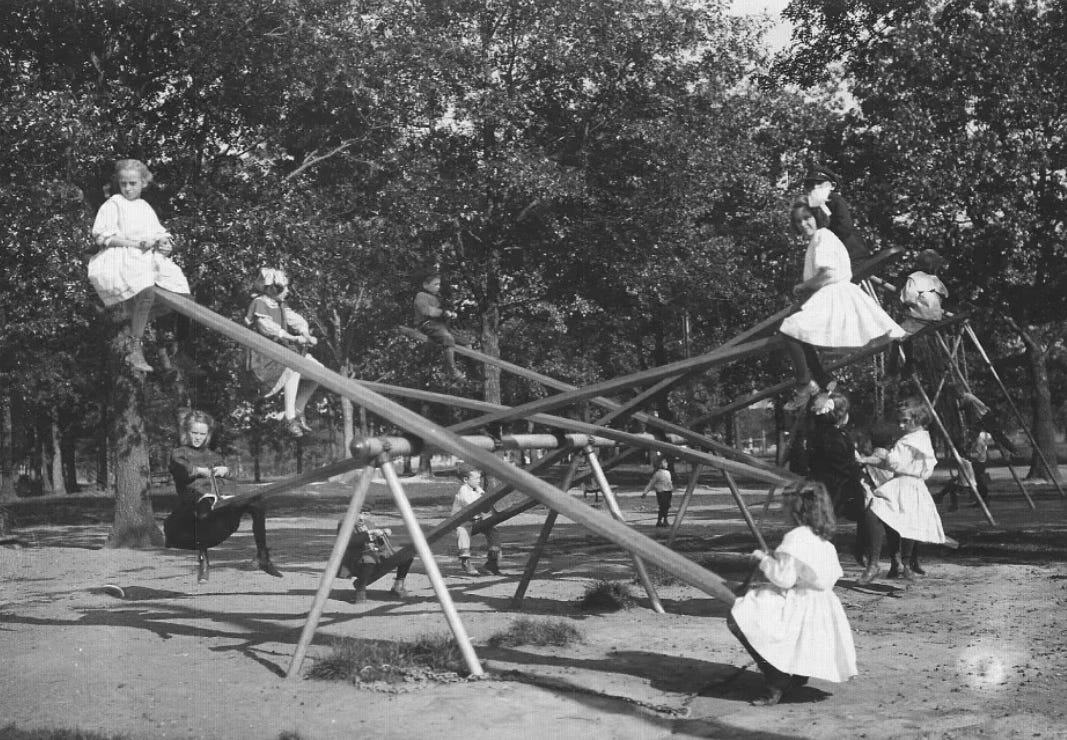
Teeter-totter
A see-saw. Some of my childhood friends called it a see-saw, but most of us called it a teeter-totter. See-saws have a truly intriguing and mysterious linguistic background. Some possibilities:
1) The word is an Anglicization of the French phrase ci-ça, which translates literally to “this-that.”
2) The motion of a see-saw or teeter-totter is somewhat akin to that of someone sawing wood. As the French word for saw is “scie,” perhaps see-saw derived from scie-saw.
3) Finally, since both participants on a see-saw go up and then down, the name may simply be a shortened version of “I see you; I saw you” referring to the alternate rising and falling of both people.
To be
As in, the absence of the phrase “to be.”
“That table leg needs [to be] fixed.”
“The twins’ hair needs [to be] brushed.”
Twiced, twicet
Twice (and sometimes once = oncet or onced, though this is less common).
Up yonder
Generally higher in elevation than where you are, and farther away. Stars are up yonder, but a hawk perched in a tree a few dozen yards from you can also be described as up yonder.
Whole ‘nother
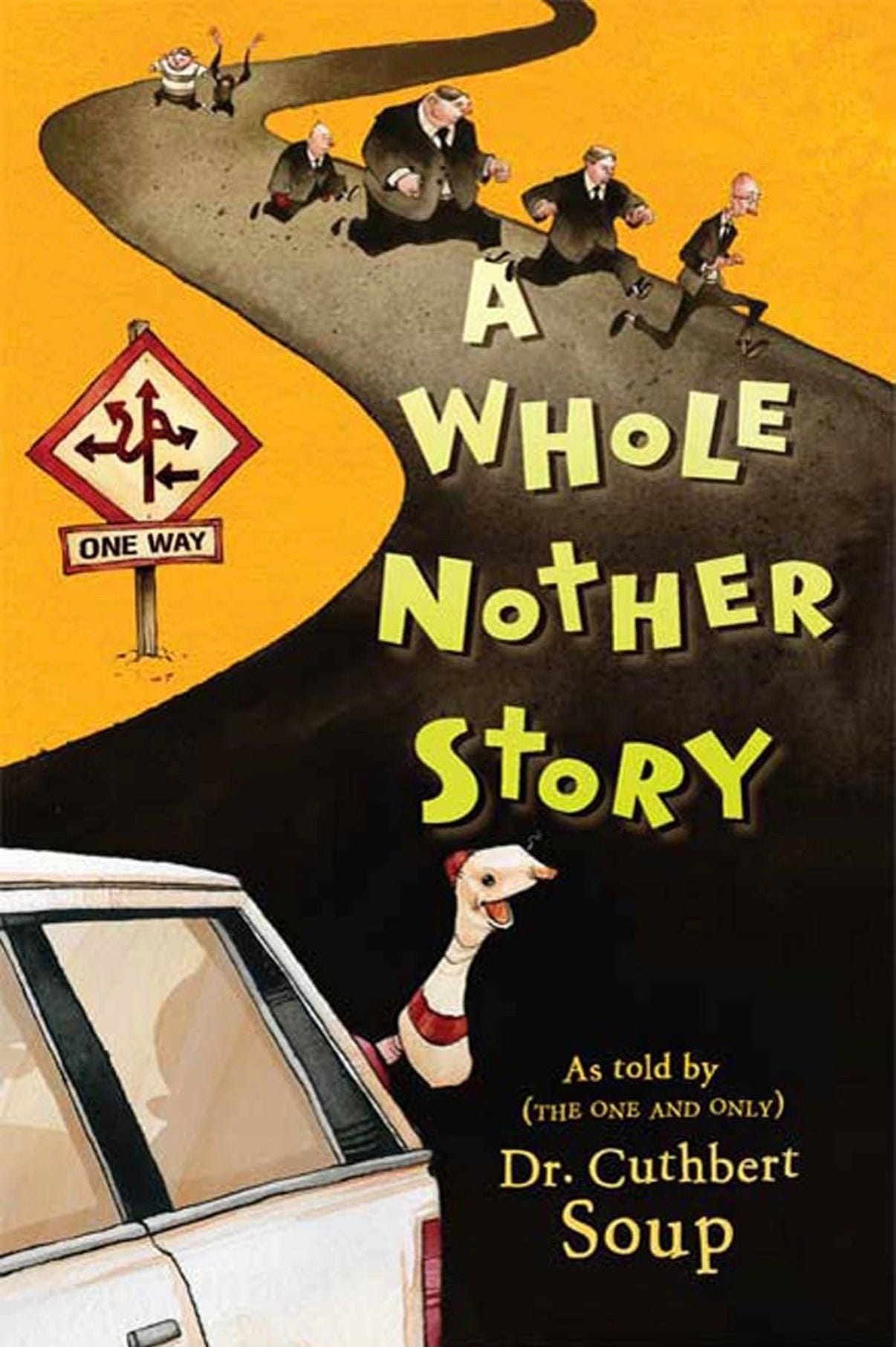
An entirely different or separate thing. Throughout my childhood, I thought this was just a local phrase. Imagine my shock when I saw “Star Wars” in 1977 at the local drive-in! Luke Skywalker is talking with his Uncle Owen about applying to the Imperial Academy. Uncle Owen is agin it (see above) because Luke’s help is needed on the farm. Owen counsels Luke to apply after the harvest and Luke slumps and responds, “But then it’ll be a whole ‘nother year before I can go!” I was astonished that this phrase was in use on an entirely different planet. And there are actually a couple of children’s books using the phrase in the title!
Woppy-jod
Crooked; badly done; out of alignment.
We feel that many words would feel less lonely if we helpfully added additional letters, so we go right ahead and do it. Adding an “R” where none is required is common practice here. When I was a kid at the local YMCA summer camp, the head of the camp was telling a ghost story one night around the campfire. I can’t recall the precise details of the story, but I’ll never forget how he memorably described one character follering the other feller up the hill. Locals also often say “warsh” for “wash.”
Same goes for adding an S to just about anything that appears to be somehow unfinished without it — plural or possessive, we don’t care. So it’s everything from a regular ol’ grocery store — Krogers/Kroger’s, instead of the correct Kroger — all the way up to fancy-shmancy stores like Tiffanys/Tiffany’s, instead of the proper Tiffany.
Related: turning a short “I” into a long “E,” which means pronouncing “dish” and “fish” as “deesh” and “feesh.” And we decided long ago that no matter what the anatomy involved is, wasps, bees and hornets don’t sting you; they bite you. I mean, all right-thinking folks know this!
* * *
My books are all available on Amazon except for the most recent one. All the Frogs: Laughing While You’re on the Dating Apps is available only via yours truly, by sending $25 and your mailing address to Venmo @VodreyBooksEtc. That covers the book, shipping, etc. I’d be much obliged if you’d share this essay. Thanks for reading, and please consider subscribing!
No posts
Comments
Nothing yet. Say the first thing.
Sign in to join the conversation.