
While researching a paper on the effect of closing oil and gas production on the UK economy, I encountered a troubling case: a titanium dioxide plant in the UK that had been driven out of business by the UK’s high energy costs and other environmental regulations, as well as cheaper imports from China. But there may be another reason for its demise: the EU’s precautionary principle.
Titanium Dioxide (TiO2) is a white, opaque, highly reflective pigment. It is primarily used in paints, paper and plastics; sunscreens (to physically block UV light); toothpaste and makeup; tablet coatings; photocatalysts; and electronics. Titanium Dioxide (E171) is also a food additive used in chewing gum, confectionery, and bakery products.
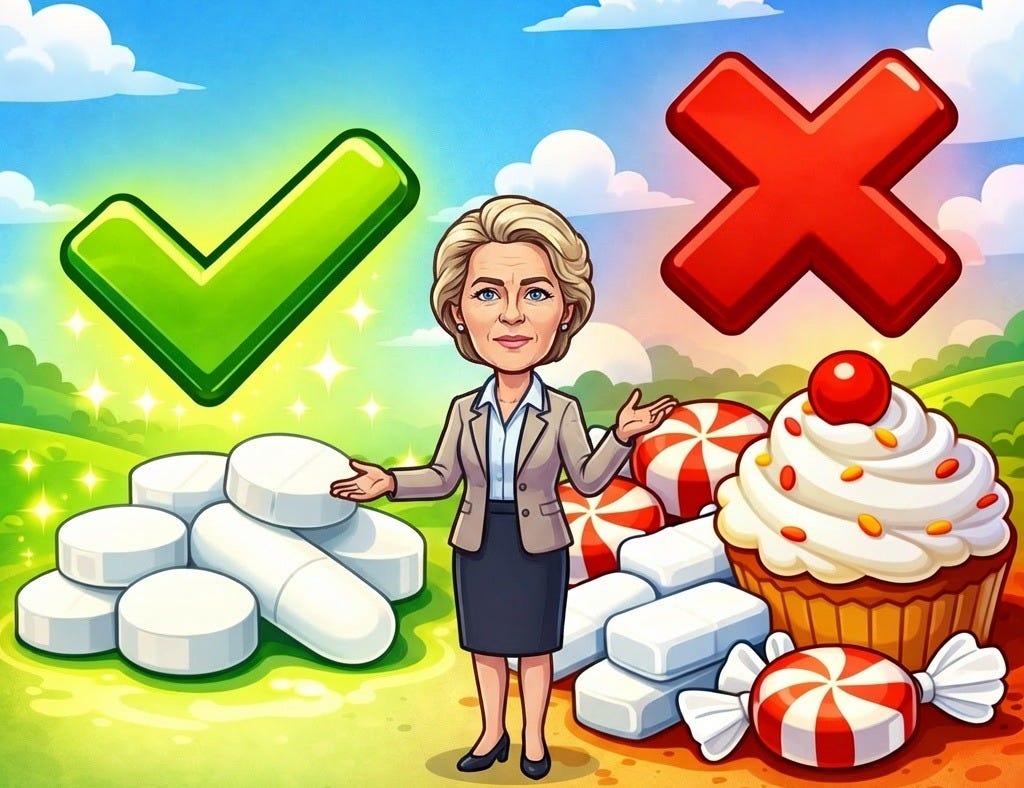
But the EU banned its use in food in 2022 after EFSA concluded that it could no longer be considered safe due to ‘uncertainties’ about genotoxicity. It is still in use in the UK and the US. The US limits its use in food to 1% of the food’s weight.
The EU and the UK examined the same scientific evidence on titanium dioxide (E171), but they reached different regulatory conclusions because they follow different risk‑assessment philosophies and have different criteria for banning a food additive.
Under EU law, if there is scientific uncertainty and a substance might pose a risk, then regulators ban it first and ask questions later. Even when the substance has been widely used for many years, as in the case of titanium dioxide. This is a core feature of EU food‑safety legislation. And under the Reset, these people will soon be making UK food regulations!
UK food regulations use a “risk‑based” rather than “hazard‑based” approach. The UK tends to regulate based on demonstrated risk, not theoretical hazard, and on the probability of exposure, not just the possibility. This is a more sensible regulatory system than the EU’s precautionary principle.
The European Food Safety Authority (EFSA) conducted a 2021 study into titanium dioxide and concluded that it could not rule out the genotoxicity because the evidence was insufficient to ensure safety. That was enough for the EU to apply the “precautionary principle” and ban its use in food in the EU and in all imported foods. Hence, Regulation (EU) 2022/63 prohibited titanium dioxide (E171) as a food additive.
The EU is so cautious that it has also banned the use of Titanium Dioxide in Animal feed, even though this is not one of its regular uses. It is only used by researchers as a marker in digestibility studies, not as a nutritional ingredient. But still, as a precaution, the EU has Regulation (EU) 2021/2090 denying the authorisation of titanium dioxide (E171) as a feed additive for all animal species.
The UK’s Food Standards Agency (FSA) also conducted a review of Titanium Dioxide using the same evidence as the EFSA. The FSA did not believe that the evidence justified a ban because the uncertainty regarding genotoxicity was insufficient to demonstrate a real risk, and the available data did not show harm in humans. Instead of a ban, the FSA wanted more research before changing the law. How sensible.
Any food product sold in the EU must comply with EU food standards, regardless of how absurd. We will soon be allowing these nitwits to make UK rules. If they had scientific evidence that it was harmful, fine. But they don’t. They banned it as a precaution.
Titanium dioxide has been widely used in food, confectionery, and tablets since the 1960s. One would have imagined that if it were damaging DNA, someone would have noticed by now. To add to the EU’s stupidity, Titanium Dioxide will still be permitted in the EU for use in pharmaceutical tablets, where it is used not just as a colouring agent but also to protect tablets from light and to improve durability and shelf life. So maybe they aren’t so worried after all.
Incredibly, the reason for this EU cognitive dissonance is even more perverse: the European Medicines Agency (EMA) does not apply the precautionary principle; its decisions are based on scientific evidence and on whether the benefits outweigh the risks. The EMA concluded: ‘There is no immediate safety concern for patients, and removing TiO₂ from medicines could compromise drug quality.’
So banned in chewing gum but not in aspirin…Hmmm. Precaution, not so much.
Meanwhile, under the reset, food manufacturers in the UK will have to alter their recipes and find other ingredients that produce the same effect, but don’t scare the Luddites in the EU. They will also have to test that the end product tastes the same and that its appearance appeals to consumers. All of this takes time and money. But those costs will not be borne by the EU bureaucrats nor by the lazy UK politicians who want to pass their jobs to the EU without first checking how many stupid rules the EU has implemented since we left.
Why would any sensible government allow the technophobe department of the EU to make UK food and agricultural standards? These people should be nowhere near our regulations. The UK Food Standards Agency and its science-based decision-making should not be replaced by the EFSA and the precautionary principle.
Stop the Reset.
No posts
Comments
Nothing yet. Say the first thing.
Sign in to join the conversation.