
Below is a continuation of the how-to-write-a-novel series I’ve been posting here since last summer. If writing a novel is something you want to do, maybe these other posts could help—
I’ve been trying to write this post about how and when and why to ask for feedback on a writing project, but a few things have gotten in the way, mostly the manuscript I’m still chipping away at, and the fact that my habits around getting feedback on my writing have changed a lot over the years. I’ve been trying to remember what I used to do when I was a younger writer, and why I do things differently now.
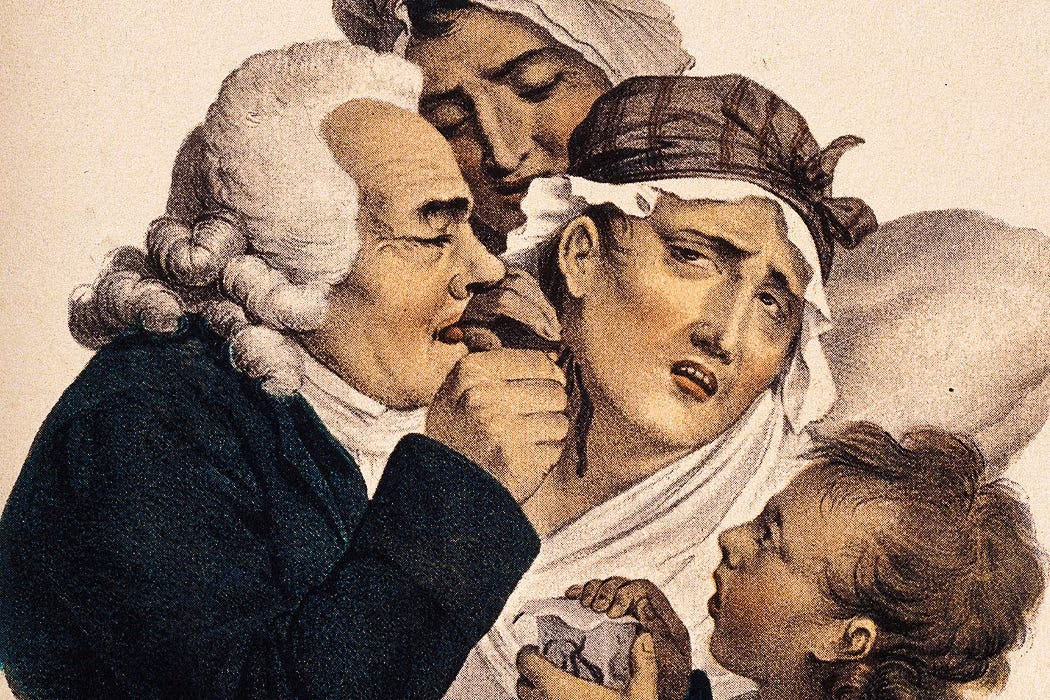
(For some reason, sharing writing projects with friends reminds me of the Victorian practice of using leeches for various ailments, hence the above image.)
With the first novel I published, Nobody Is Ever Missing, I had to do an email autopsy to discover that, yes, I did give a draft of that novel to at least three writer friends who all wrote both poetry and prose. I’ve never written poetry with any seriousness, but I feel like poets and visual artists tend to give the most useful and yet totally unexpected advice. They have a way of finding undertones in a text that the rest of us mere mortals can’t quite name or see.
I must have talked to my friends about the draft in person, though, because I don’t have any of their notes in my emails. I remember them all being super supportive, as friends usually are. The main thing I think I was asking them was, Is this a thing? And the general response they gave me was probably, Yeah, could be! Maybe it wasn’t super helpful on a textual level, but I was still trying to echolocate in the project.
When I first began writing what became that novel, however, I thought I was writing short fiction, so I published at least a few pieces of it online back when there were all those lo-fi, tiny, & wonderfully alive lit magazines all over the internet. (RIP Elimae!) So that was a form of feedback— or rather, it opened me up for feedback from people I didn’t know. We used to just email strangers on the internet because we’d read their tiny story on a tiny blog and loved it— do people still do that? I don’t know where the young-young writers are publishing fiction online anymore, but I can’t underscore enough how the 2007-2011ish blog, small press, and online lit mag world pushed my writing in the most lasting and important ways.
I wrote that first novel in the years after I’d finished an MFA in creative nonfiction. Doing an MFA, at least for me, was a funhouse mirror of feedback, so much feedback, and so much conflicting advice, that I felt in some ways that I had less of an idea of what kind of writer I wanted to be when I left. I think what had actually happened is that my previous certainty about what I wanted to write and why I wanted to write it had fallen away under scrutiny— there was something more honest I had to discover once the degree was done.
But I had chosen to study nonfiction partially out of my early 20s belief that there were lots of very specific things I needed to learn about writing nonfiction while the writing of fiction (which I was doing mostly in secret since I was a kid) seemed to be something I would either get better at doing over time, or eventually stop doing. There was something about the fiction writing process that seemed uniquely private and un-learnable. (I have more complex feelings about writing education now.)
I don’t know if any of that was true, even back then, but it felt true at the time. I don’t know if I learned anything specific about writing a good essay—all my work was very bad at the time—but I’d like to think the lessons landed deeper and maybe I’m still learning them now.1 The whole time I was there I felt like a total idiot who had gotten a scholarship for this program for no good reason at all, but a few months ago I came across the essays I used to apply to the program, and while they’re not at all excellent, they were much more promising and alive than anything I wrote while I was actually in the MFA. Maybe sometimes we have to get worse at writing before we can get better.
The essays I wrote in college got me into graduate school, I think, for two reasons. One was that they displayed a kind of urgency and useful ignorance; I wrote them all in the aftermath of Hurricane Katrina in New Orleans, when I was twenty, twenty-one, and I didn’t realize I wasn’t an investigative journalist. The other reason was that I had a great editor and teacher, Martin Pousson, who would mark up every single line of every single essay I wrote for a year and a half. He could unpack a 5 page draft for like 2 hours, raising a million new questions and giving me plenty of things to go read and learn from.
A lot of people go to MFAs out of this belief that we need feedback about our writing in order to get better. There is some truth in this—as you don’t want to get trapped in your own self-feedback loop—but there’s also some risk when it comes to showing your work to other people. Martin took giving feedback to a fine art; I don’t know anyone who can read a text the way he can. Lord knows that over 2 years in an MFA, you’ll probably phone it in sometimes, but getting or giving half-assed feedback feels pretty terrible.
And yet! Well-timed feedback from a trusted source can be absolutely invaluable in your writing process.
But when is it a good idea to get feedback on a novel manuscript? What about a story, an essay? When is it maybe a bad idea to ask for advice on your work? And how do you know what kind of advice to seek out?
Who is a good source of feedback on a manuscript? How might early readers change or challenge your process? Is it possible that certain kinds of feedback could totally ruin a manuscript for the writer? Or is the ruinability of a manuscript a sign that the project was doomed anyway?
All of the above will be addressed below, but first,
I used to know this writer who once sent me a manuscript he’d just written. I mistakenly assumed he wanted to know what I thought of it as a work-in-progress. After all, he’d just written it. The ink was barely dry.
Naturally, I had notes! There were parts of the plot that simply did not add up, and areas that felt emotionally vacant. It was a cool concept, a solid first draft, but I thought he would probably want to revise a little.
Turns out he did not want my opinion, unless my opinion was that it was the best thing I had ever read in my life. I soon learned he never wanted anyone’s opinion about anything he’d ever written because in his estimation no one knew how to write his work better than he did.
At the time—almost done writing my second novel—I was still encumbered by the idea that I needed other people to confirm that something I had written was working or not working, accomplishing its goals or falling flat. I did not feel like I could judge my work totally on my own, because there were things I’d written that I thought might be mediocre, but then turned out to have real meaning to readers, and there were things I’d written that I thought were pretty great that turned out to fall apart under the slightest outside scrutiny.
But this dude2 wasn’t asking for my advice about the work— he just wanted me to appreciate the fact that it was already, in his estimation, fantastic, and definitely done. He never, as a rule, asked anyone for advice on his writing.
And the thing is— this is not an entirely incorrect position to take! No one can fix your work for you. No one can tell you what to do with your manuscript. No one knows your end goal better than you do.
But that is not what getting feedback is about.
You don’t seek out a reader’s response on your work because they are an authority, but because you are ALSO not an authority on your work, as much as it may sometimes feel like you are.
By the end of writing a draft of something, you should be pretty clear about some of your intentions for the text. You should have an idea of what its underlying, subtextual topics are. It’s important that you don’t go seeking someone’s feedback on your work before you’re clear about those goals.
The work itself is the authority on itself; not the writer, nor the reader.
But you also have to remember that you are the most contaminated reader of your own work, even though you are the only one who can write it. You know both too much and too little. You might be very proud of something you’ve written that will ultimately be useless to other people, or you might be a bit confused about something you’ve written that will have real utility to other people. There are the intentions you have for the text as its writer, but fiction has a way of creating it’s own agenda, outside your control or awareness, and usually you need another pair of eyes to see those other forces at play.
Feedback is not a perfecting process, but rather an exploratory process of figuring out what your options really are and to erode your own certainty about how things MUST be in this piece of writing. Probably the most meaningful guidance you will ever get in your writing life will take years to actually show up in the process.
When I was a younger writer, it was hard for me to understand or even see my writing at all until someone else had seen it; over time, I have a better eye for seeing my own work for what it is, for getting a manuscript closer to becoming itself before I bring it to other people, but I know I still need my first readers and editors to accomplish what I’m trying to accomplish.
Here’s what I feel like I know about who/when/how/why to seek feedback after about 20 years of getting and giving various kinds of feedback, and producing a not small amount of work that’s been greatly helped (and sometimes totally stymied!) by that feedback—
Comments
Nothing yet. Say the first thing.
Sign in to join the conversation.