
Most of us think of time the same way. Like a highway - with a beginning behind us and an end somewhere up ahead. We’re born at one end and die at the other. Everything in between these bookended, universal experiences goes in one direction.
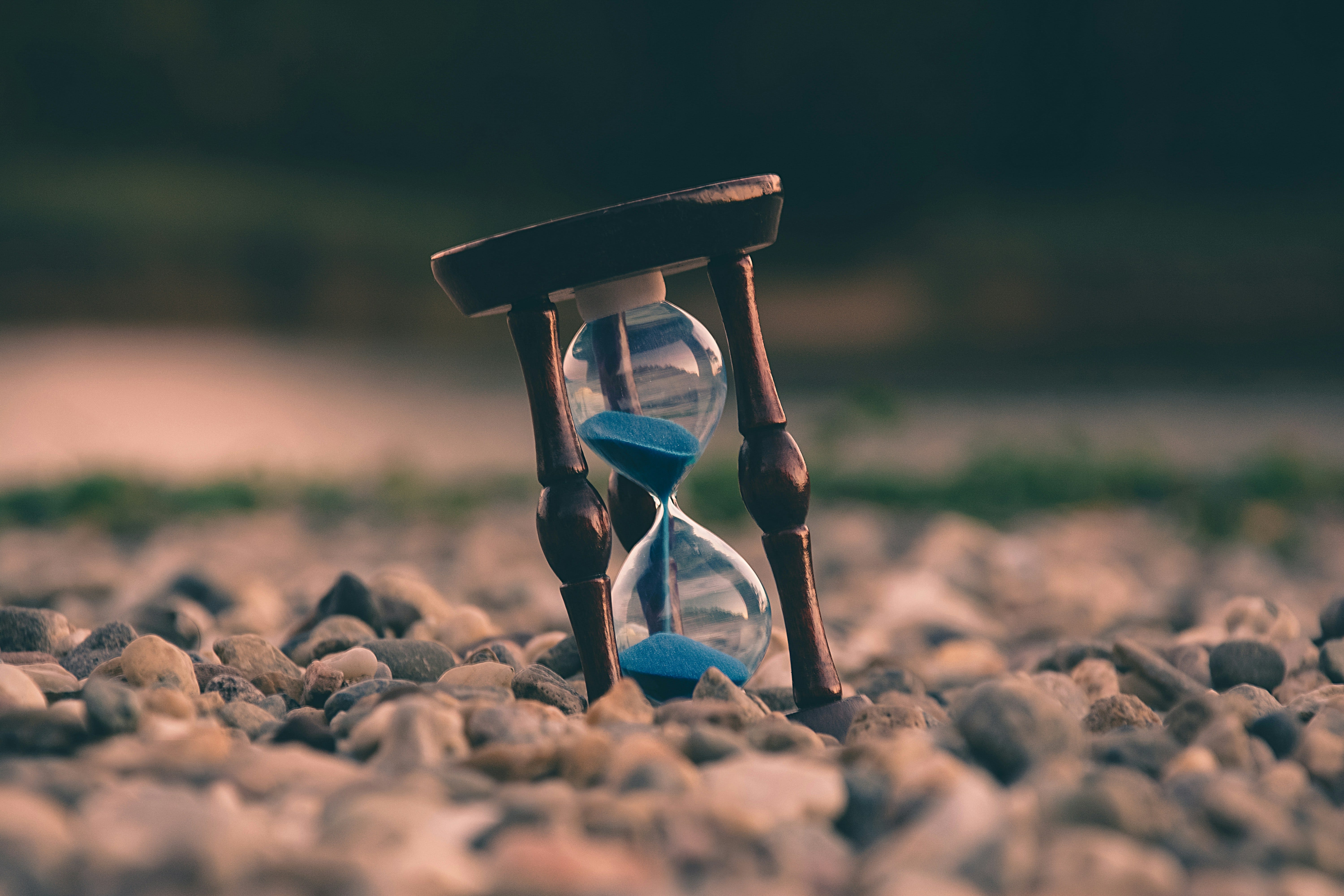
It seems intrinsic, this natural picture of time. The truth that we live every day. We wake up in the morning – that’s the beginning of the day – and go to sleep at the end. A reliable rhythm.
Then I’ll travel or meet a careseeker from another culture who reminds me that this idea of time is just that. An idea. And it’s one that not everyone shares. Our American or European-descended idea of time isn’t the law of the universe. Plenty of people, across plenty of centuries, looked at time and saw something completely different.
I can’t help but think about how much this highway or arrow-shaped idea governs the way we talk about dying. We speak of someone “running out of time,” or a life “cut short,” or the end “approaching.” Like we’re driving a car somewhere with no exits and death is like a brick wall up ahead. A structure where the road just stops. A “dead” end.
Good lord, no wonder it frightens us. Who wouldn’t be afraid of crashing into this inevitable, immovable object?
But after talking with clients and their loved ones who live outside that metaphor, I’ve started to see and learn about other ways of holding time.
For example, in many indigenous traditions, there’s a concept sometimes called the Dreaming or Great Circle. It’s difficult to translate, since it isn’t really a “time” as colonial culture sees it. It’s better understood as an ongoing dimension that underlies and interweaves with everyday life. Ancestral lives aren’t sealed off behind us. The “past” is a layer of reality still active in the land, in ceremony, and in the world as we’re living it right now.
Hindus and Buddhists picture time as a wheel. Ages rise and dissolve and rise again. Our soul’s story doesn’t end; it turns the way seasons do. Endings, in that frame, are also beginnings.
There’s a beautiful finding from linguists who studied how the Aymara people of the Andes talk about time. They gesture toward the front of their body when thinking about the past. That’s the part we can see. The future is toward the back, the part we can’t see. That’s the reverse of our American habit of picturing the future “ahead.” And when I sit with that reversal for a moment, it makes a strange kind of sense: we see the past clearly, the way we see what’s in front of us. The future remains genuinely unknown.
It’s common to think of “linear time” as scientifically accepted while cyclical, layered, or non-flowing time is a poetic alternative. Woo-woo talk or psychedelic speak. But let’s consider modern physics for a moment.
Einstein’s theory of relativity showed that there’s no single universal “now.” Two people moving at different speeds can genuinely disagree about which of two events happened first, and neither is wrong. Many physicists today take the “block universe” idea seriously. That’s the idea that the past, present, and future all exist together. Like a DVD containing every scene of the movie, rather than the story being thought into existence one frame at a time.
Einstein himself, while consoling a grieving friend, called the distinction between past, present, and future “a stubbornly persistent illusion.”
Most of the central equations of physics work exactly the same whether time runs forward or backward. The sense that time flows in only one direction doesn’t come from anything fundamental, just the tendency of heat and energy to disperse. The same reason a broken water glass never reassembles itself.
Some physicists working on the deepest theories of the universe have suggested time itself isn’t a basic ingredient of reality at all. It’s something that emerges from other processes as we go along. A conclusion not so far removed from what indigenous cultures arrived at – just without a particle accelerator.
Here are some ways to picture nonlinear or cyclical time, moving from everyday to more mind-bending:
Spring always “returns”; it doesn’t just happen once. Many cultures (Hindu, Maya, ancient Greek, Aboriginal Australian) built cosmologies where history itself loops through ages rather than marching in a straight line toward some endpoint.
A clock face is literally a circle. 12:00 comes back around every day - the device we use to track “linear” time is built on a loop.
Rain becomes river becomes ocean becomes vapor becomes rain again. Nothing about it is a straight line from A to B; it’s a loop with no true start or end.
Tree growth circles the trunk, year after year, building outward in rings we can count.
Some theories propose that the universe expands, collapses, and “Big Bangs” again - endlessly repeating.
Time bends and stretches depending on speed and gravity. A twin on a fast spaceship ages slower than the twin who stayed home. That alone breaks the “time is a straight arrow” intuition.
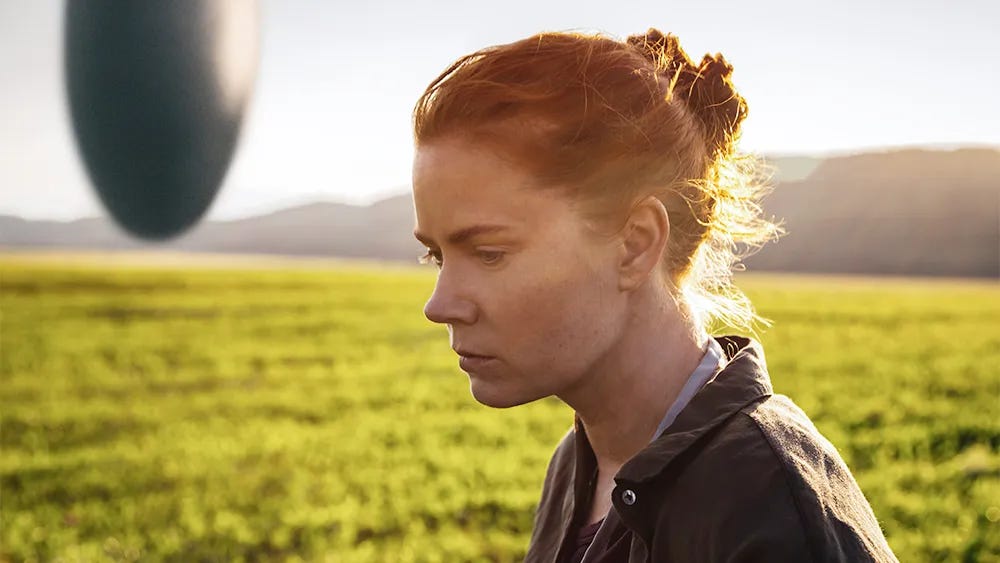
Movies like Groundhog Day or (my favorite sci-fi story) Arrival are popular because they let people feel nonlinear time (living a day over and over, or experiencing past/future simultaneously) without needing to understand physics.
Ever notice you “always” end up in the same kind of relationship, or the same argument at Thanksgiving? I often see life as a spiral, like we come back to the same lessons, but (hopefully) at a different level each time.
Almost every myth follows a circular “hero’s journey” (anyone see The Odyssey?) leave home, transform, return. That structure resonates because it mirrors how people actually experience growth: not a straight path, but a loop that brings us back changed.
None of these are right or wrong. After all, that’s not really the point. Chasing a single correct model of time is a waste of…time. Every culture has had to imagine for themselves - and imagination, once we notice it, is routinely revised.
So here’s an idea, from a death doula’s perspective. This is especially for my readers who’ve had to think hard about endings lately, your own or someone else’s. Let’s try on a different picture of time.
What if the people we’ve loved and lost aren’t behind us on a road, growing smaller in the distance? What if they’re folded into a present that keeps recurring, the way a season folds last year’s rain into this year’s?
Thanks for reading A Death Doula's Substack! This post is public so feel free to share it.
What if our own ending isn’t a wall, but a threshold? A much bigger room, one whose far side we can’t see yet.
I don’t know what happens at the edges of our lives. Nobody does, and I’d be suspicious of anyone who claimed otherwise. But not-knowing doesn’t have to be dark or foreboding. Instead, it can be awe-inspiring. We allow curiosity to take the place of certainty. After all, end-of-life, of all subjects, is a place for open minds.
We just have to be brave about it.
So let’s try this: the next time we notice that we’re thinking of time as a straight line running out, let’s gently ask ourselves, “What if it isn’t?” What if it’s a wheel, spiral, or wide field we’re standing in the middle of rather than a highway we’re driving down?
We don’t need an answer. Just the question, and a willingness to let it sit. Reminding us to stay a little more awake to the mystery we’re all moving through.
Comments
Nothing yet. Say the first thing.
Sign in to join the conversation.