
A rusty old chain-link fence stretches up alongside my house. Sometimes I wonder if I should just take it out.
Two years ago, I was out on Cape Cod meeting a friend for lunch when my tenant called: Someone in a pickup truck had veered off the street into the fence, destroying an electric meter on the side of the house. The fence slowed the pickup’s trajectory; the house itself wasn’t touched.
My tenant got the driver’s name and plate number and I called the police, who tracked him down and filed an accident report. I had the fence repaired. It was a first world problem: I own a house. It’s an asset. I do what I can to protect it. The fence remains.
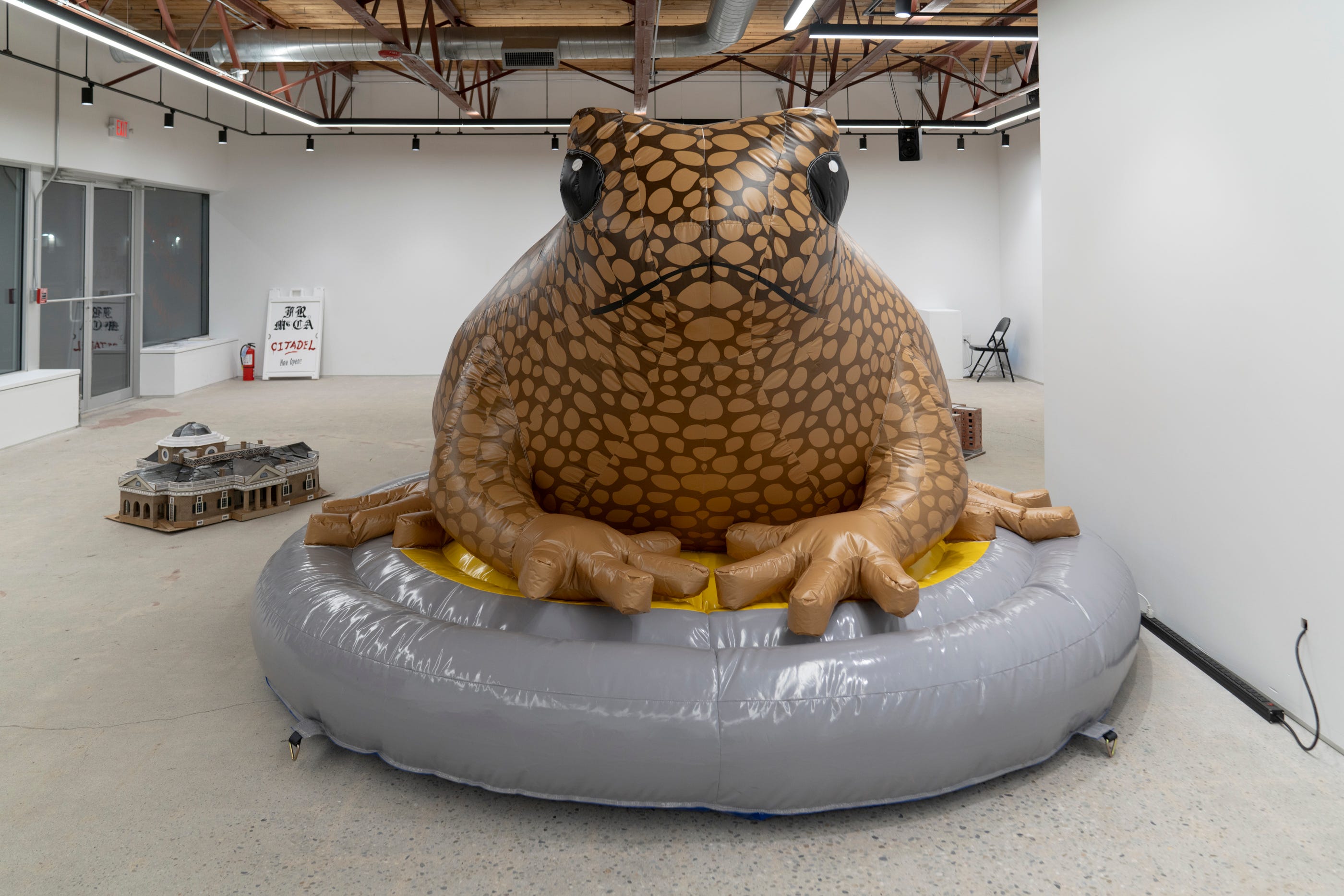
How high are your fences? How strong? And what, exactly, do they protect? CITADEL, an exhibition curated by Cory John Scozzari at Fall River Museum of Contemporary Art through July 19, examines some of the slippery power dynamics between what’s inside and what’s outside our walls, what we protect and who we defend it from, and what all that protection can do to a person – let alone a society. Cory is director of Cordova, an art space in Barcelona.
A citadel is a walled fortification within a city. The Kremlin is a citadel. The Acropolis was a citadel. We can see museums as citadels of culture, universities as citadels of education. Those within are arbiters of how a society runs and what it values. But symbols of power and strength inevitably also point to vulnerability. President Trump now plans to permanently fence off Lafayette Square across the street from the White House. The more walled off we become from one another, the more exposed we feel – and the more frightened and angry.
Comments
Nothing yet. Say the first thing.
Sign in to join the conversation.