
Back in 2019, I finished a manuscript, Communion: A Memoir of Family, Secrets, and Love. I’ve changed in so many ways since I finished it that my story now feels less and less like who I am. I thought it would be fun to post it with my video commentary from today, and tag it This is not my story. I’ll be posting it every now in then, in rotation with other Sunday essays about art and life.
Communion delineates how I grew up in a box of my own making, hemmed in by fears and self-limiting beliefs about what I did and did not deserve. I needed to write it to break out of that box. In the videos, I consider how we escape old limitations, how they continue to cycle through us, and how I work with them. I hope you’ll find it a fun, relatable read.
The first installment took my family to a Midnight Mass officiated by Father P. when I was 11 and brining in deep cynicism. The second was the origin story of my parents’ marriage, and the lie that brought them together. In the third, they have three children, and I have my first sense of myself as a separate being from my family at three years old. The fourth installment is a juicy one: My mother falls for Father P. and my parents split. Sort of. My siblings and I knew Father P. as a friend, but my mother never acknowledged he was her lover.
In the summers, you’ll read in chapter five, my mother’s friend Mrs. G. became a point around which we could occasionally kindle as a family. In chapter six, as I got past elementary school I began to feel the emotional weight of all our family secrets, even though I wasn’t in on all of them.
Now, for chapter seven.
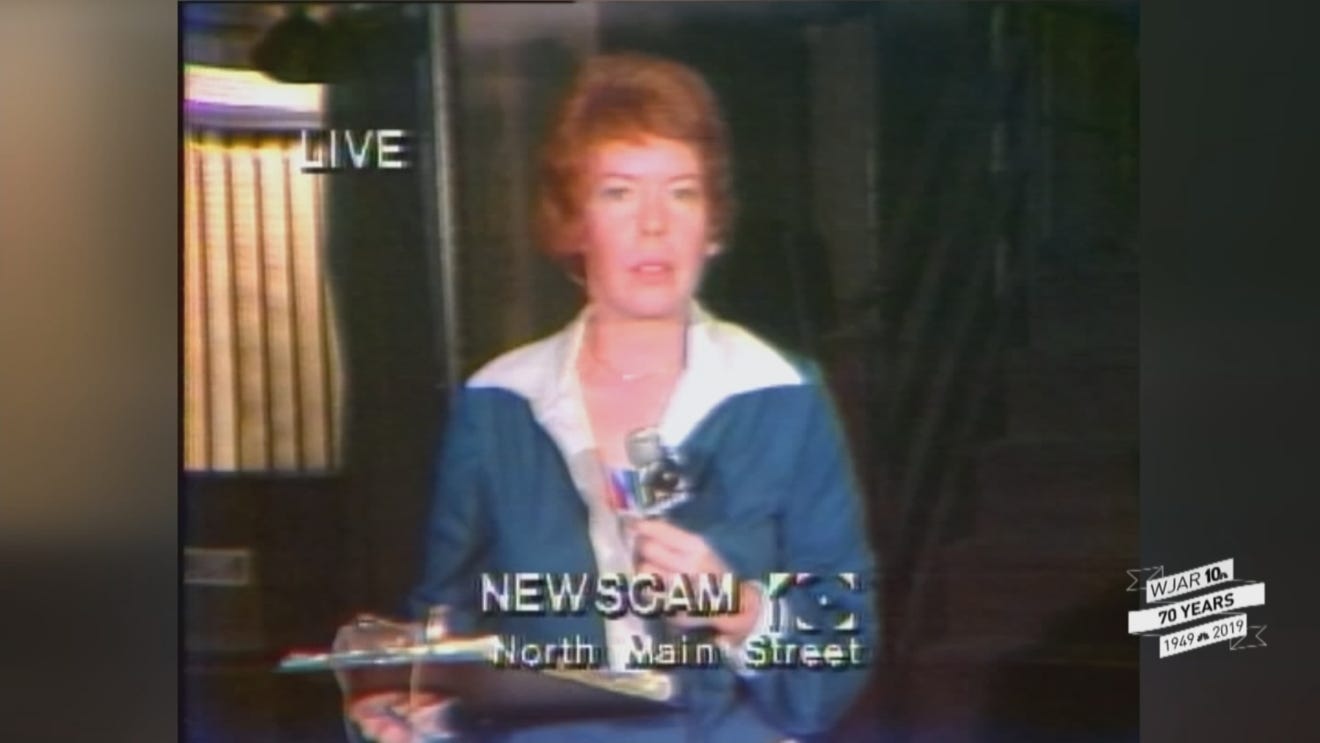
We were all up in Rhode Island after Christmas when John turned the news on our 13-inch black-and-white television. Dad was reading the paper, Beth and I were deep in our books, and Mom stepped out of the kitchen, drying her hands on a dishtowel. We looked up.
Sara Wye, the noon news anchor on Channel 10 in Providence, was interviewing polar bears, the swimmers who run into the brutally cold sea on New Year’s Day.
“Are you marginally sane, or what?” she asked them.
We all laughed. Every one of us, together. I sensed a warm, electric crackle in the room. How frighteningly blunt Sara Wye was! How clever!
That was the Christmas we’d gone to the Midnight Mass Father P. held at Iona College. I had turned a perilous corner from open-hearted child to cynical pre-pubescent. Much of the time my family spent together we spent in separate corners. But in Sara Wye, we found a unifying force.
Sara didn’t look like the other anchors. She was clean, but not sterile. She was never perky, despite her snub nose. She was probably only five feet tall, compact but not, like many female reporters, sliver-thin. We suspected that her hair, a pale gray on our screen, was red. Best of all, she had her off days, which we could spot.
“How was Sara today?” Mom asked one day the following summer.
“She looked a little bloated,” John observed off-handedly.
John and Beth had close friends at school, so their attention was often elsewhere, but by middle school my own close ties had eroded. Other family members had connections, desires, and obligations outside of our home, but my main focus remained the family, which felt staticky and fractured. Except in electric moments like the ones Sara sparked.
I think now about the face we presented as a family, and the layers of doubt, shame, and secrets that lurked behind it. I felt all that in my body then but had no words for it, just longing and an increasing unsettledness.
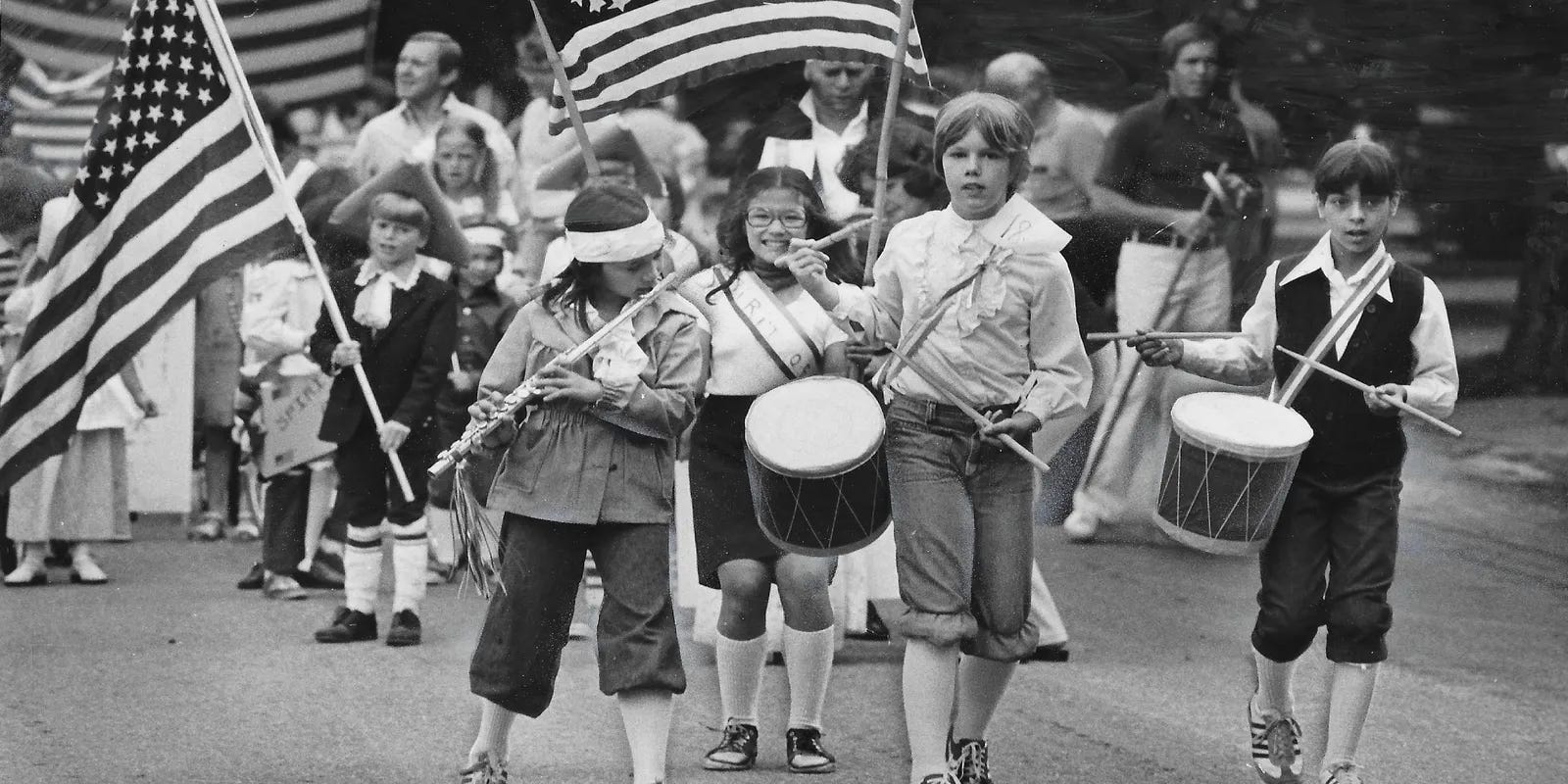
The summer before I went into seventh grade, Sara Wye and Salty Brine, a jocular local DJ, were to be the grand marshals of an early Bicentennial parade in Charlestown.
Comments
Nothing yet. Say the first thing.
Sign in to join the conversation.