
Well-preserved Renaissance Revival buildings survive in nearly every European city that prospered in the late nineteenth century. Most accumulated them piecemeal over decades, interwoven with earlier and later eras. What’s uncommon is some 600 of them across 51 blocks, all erected in a single six-year burst.
In June 1888, high winds fueled the “Great Fire” that swept through Sundsvall, Sweden, destroying nearly the entire wooden town in hours and leaving roughly 9,000 people homeless. It was the city’s fourth major fire. With a clean slate, the new city plan called for wide boulevards and parks as fire breaks. Wooden buildings were banned downtown in favor of brick and stone.
Sundsvall was one of Sweden’s wealthiest cities, flush with timber barons, bankers, merchants and shipping magnates. Their wealth and insurance money funded a nearly limitless building boom. Driven to outdo one another, they commissioned Sweden’s best architects and craftsmen to rival the grandest buildings of Vienna and Berlin.
Few European cities preserve an entire downtown rebuilt in one campaign with such consistency of style and quality. More than a century later, Stenstaden (Stone City) still stands as a monument to both catastrophe and ambition.
An architectural treasure trove, Sundsvall is a real sleeper on the tourist circuits. Every photograph here was taken within a block or two of the same spot. The other 49 blocks are no less rewarding.
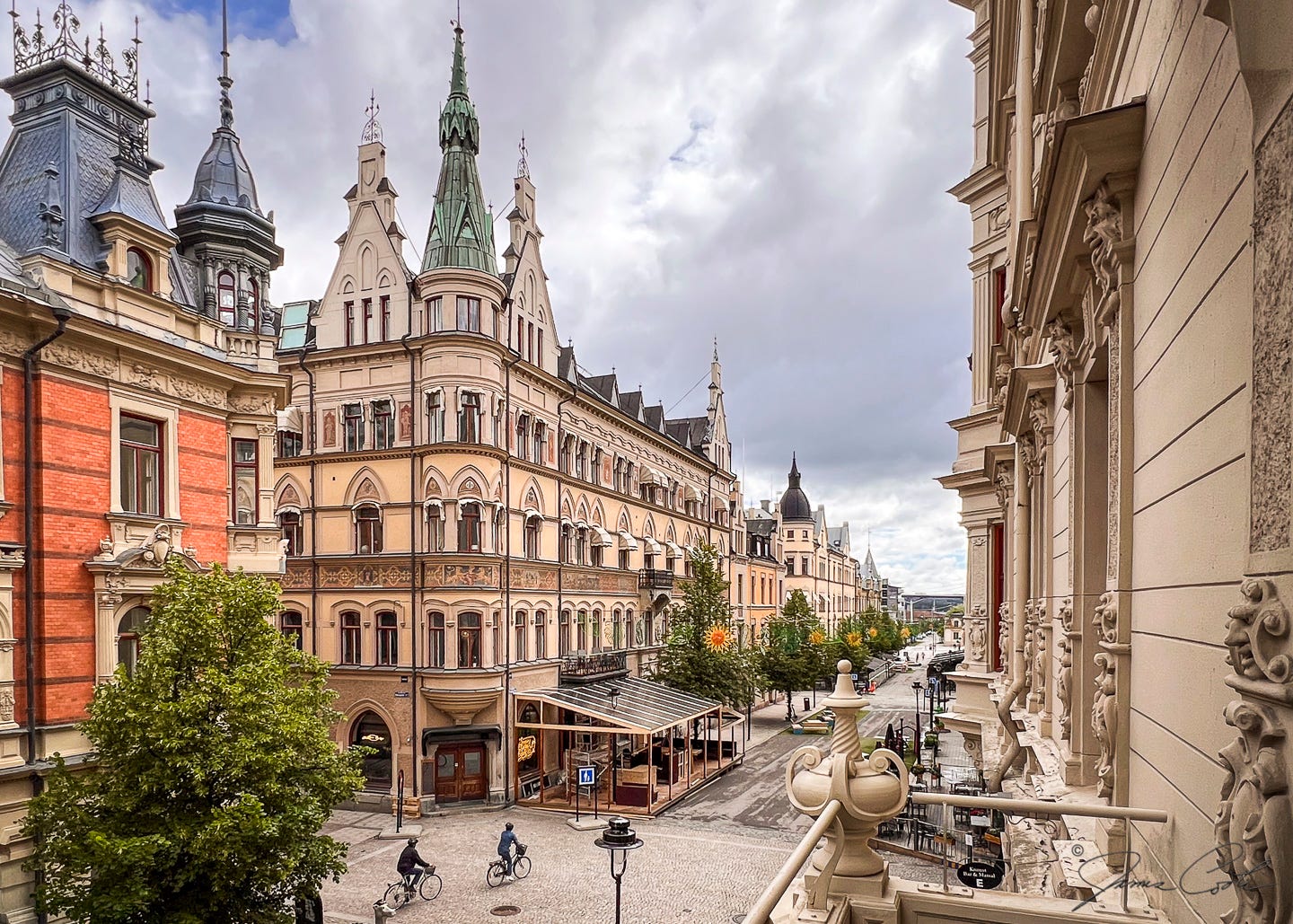
Completed in 1892, Dahlmanska-Nordlingska huset (the Dahlman-Nordling House) is a French High Gothic design by Gustaf Hermansson, an exception to the city’s prevailing Renaissance Revival. In 2020, the Swedish architecture group Arkitekturupproret voted it Sundsvall’s third most beautiful building.
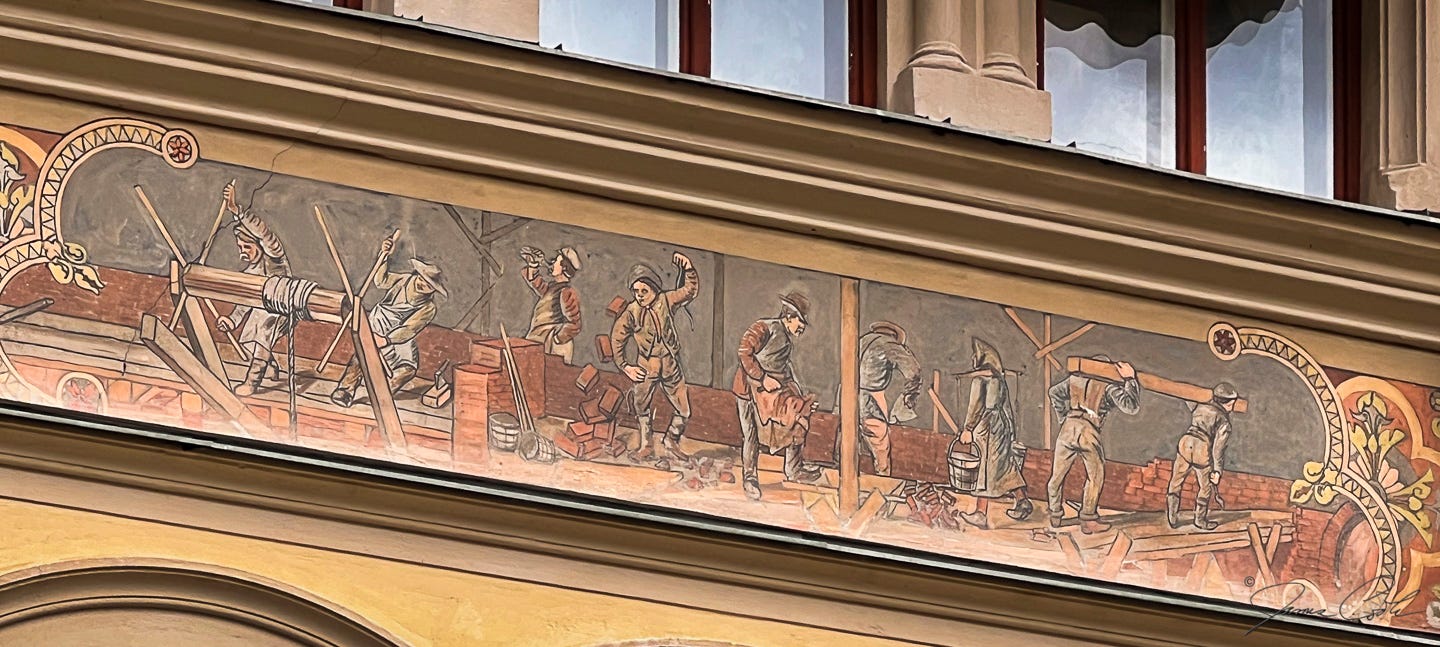
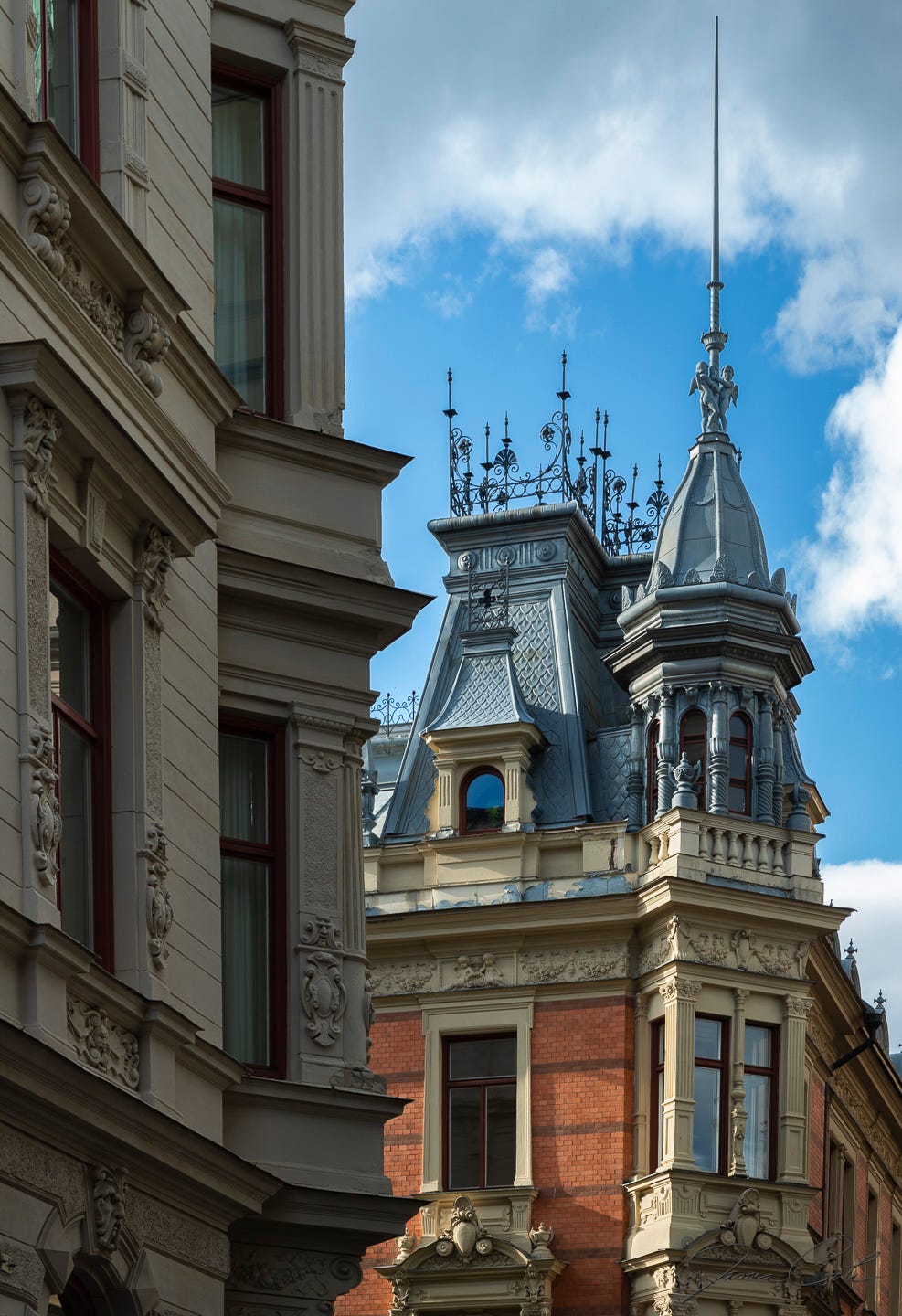
Sven Malm’s Blombergska huset (Blomberg House) juxtaposes warm, red face brick with crisp, yellow-plastered dressings that accentuate every window surround, pilaster, and cornice.
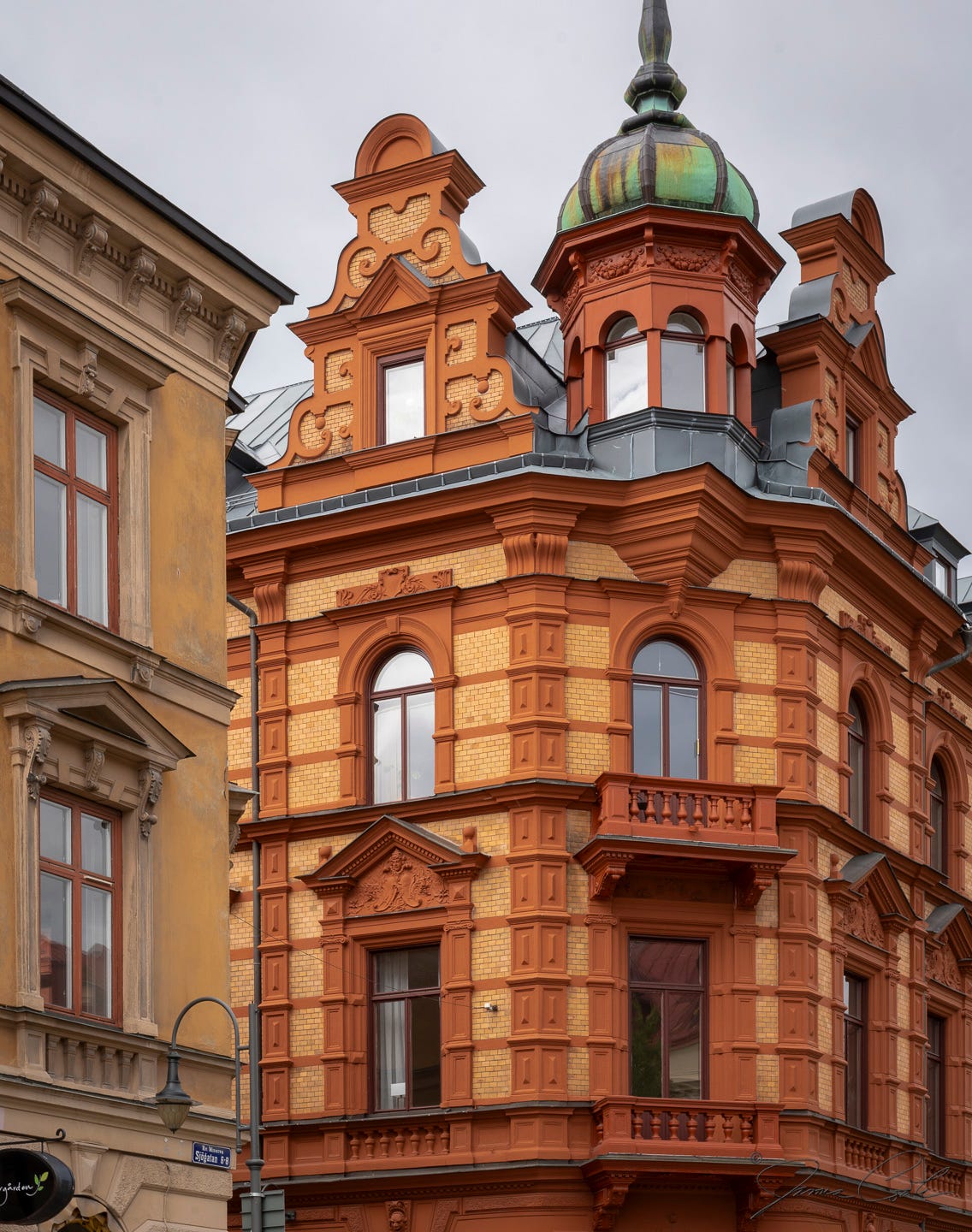
Also by Malm, a second Blombergska huset reverses the scheme to yellow brick and red trim, under an onion dome.
The Blombergska husen (houses) are named for Anders Johan Gustav Blomberg, although his wife inherited the plots. They had every modern convenience: running water, sewage, gas, electricity, and a bathroom.
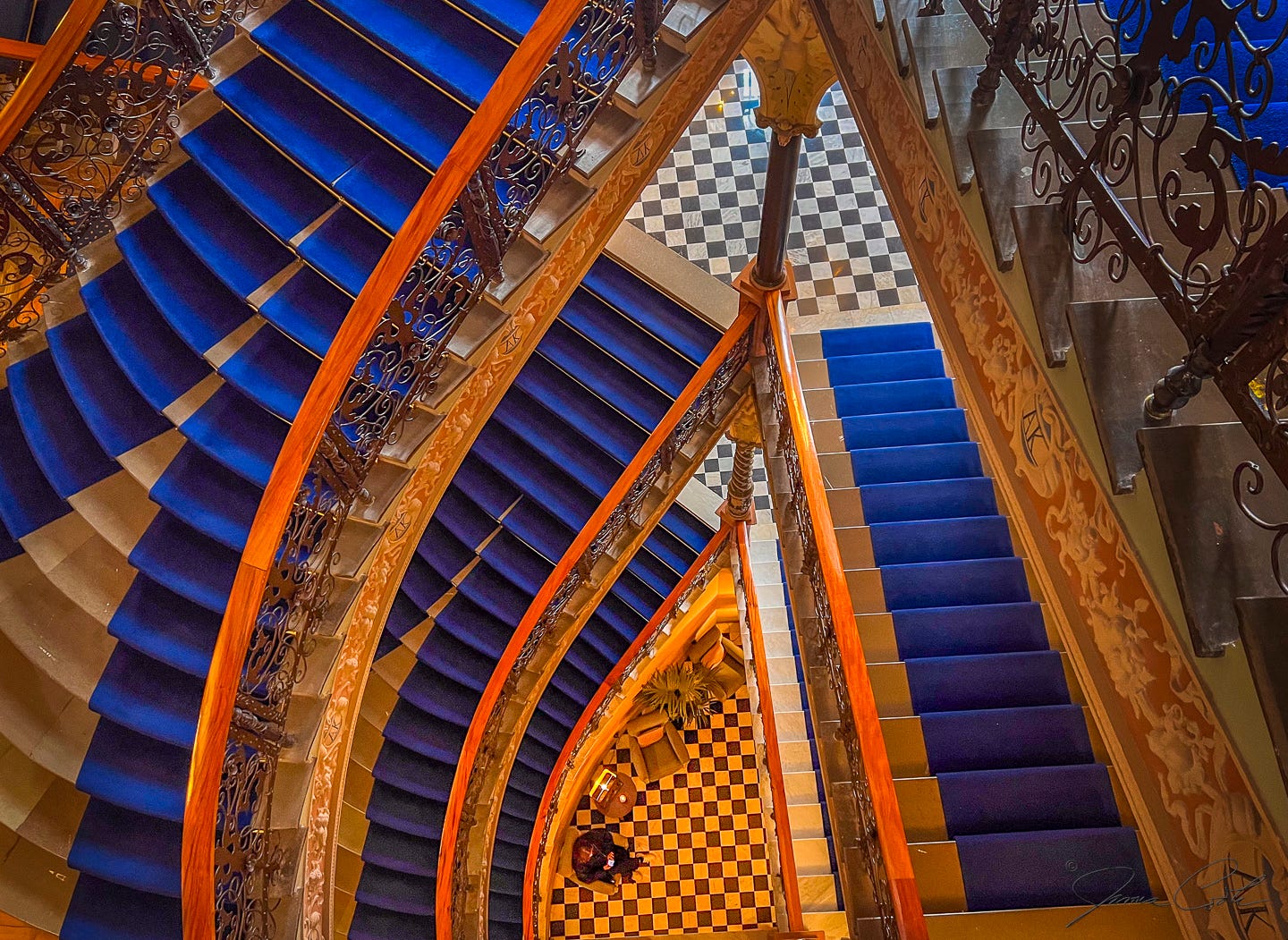
The Elite Hotel Knaust is another Malm work; like the Blombergska huset across the street, its stairway is a protected interior feature. Malm, later Sundsvall’s city architect, was so attached to the hotel that he moved in when it was finished and lived there until his death in 1895.
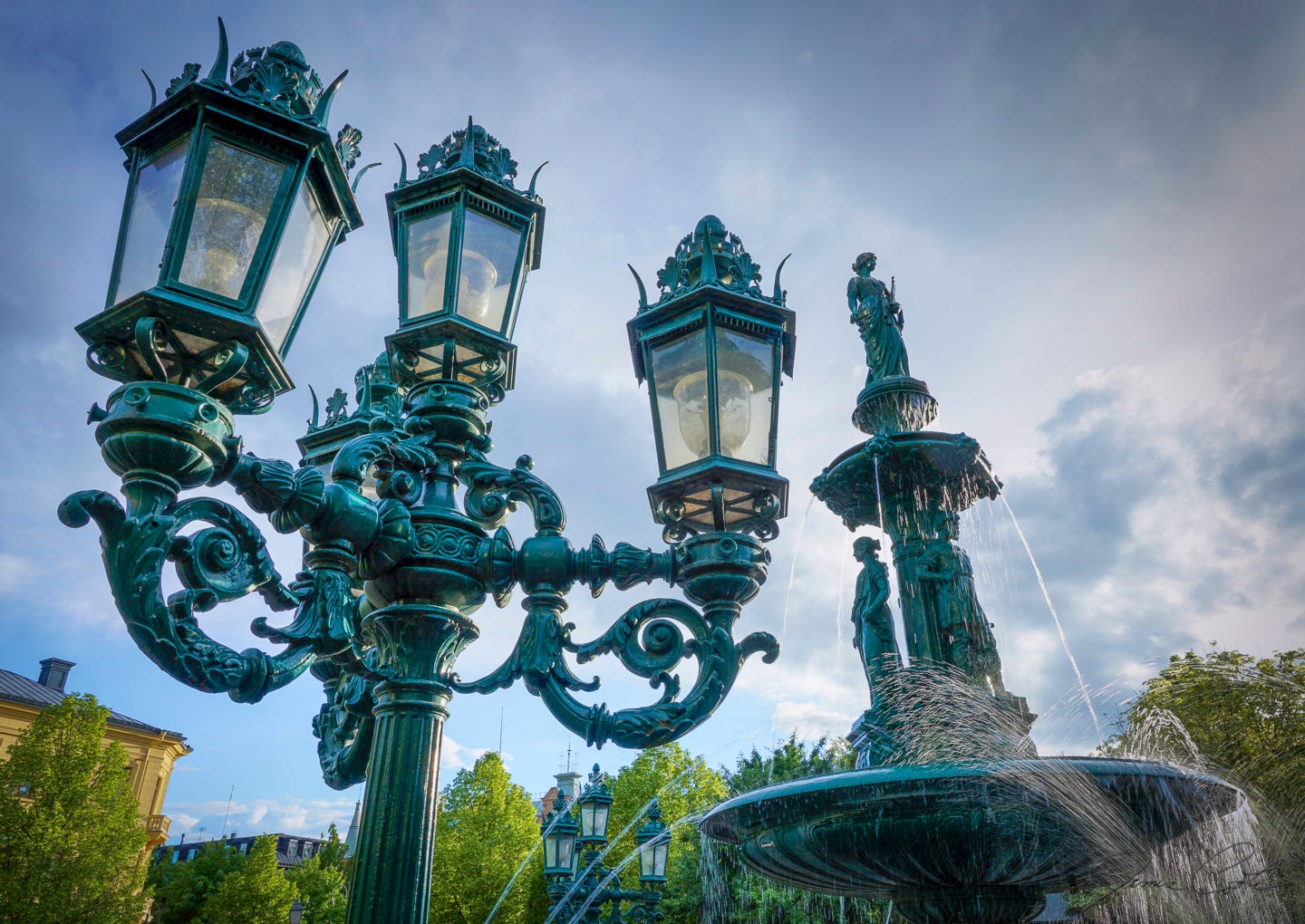
Public art was rare and prestigious in provincial Swedish towns, and the 1886 Vängåvan fountain was an unwitting prelude to Sundsvall’s ambition to present itself as cosmopolitan rather than remote and northern. The fountain and its cast-iron gas lamps survived the 1888 fire. Wary of open flames, Sundsvall became a European pioneer of municipal electrification, and the park’s lamps were soon converted to electric light.
Sundsvall was an unexpected discovery. My wife, Kat, and I were there to pursue her newly discovered Swedish roots in the nearby countryside, going back to the early 1600’s and a man named Gudmund Andersson and his family.
They had farmed at the village of Loning, alongside the Indal River, whose public forest was carved into five homesteads. One of these, a homestead with a small lake (tarn), was settled in 1778. It’s called Gudmundstjärn, taking its name from Gudmund Pärsson, who drowned in the small lake in 1694.
Five generations of settlers worked the farm from 1778 until the last farmer died in 1943. The following year, the family sold the land to what became the Sundsvall Municipality. The land and farm are preserved today as a government-listed building complex and nature reserve.
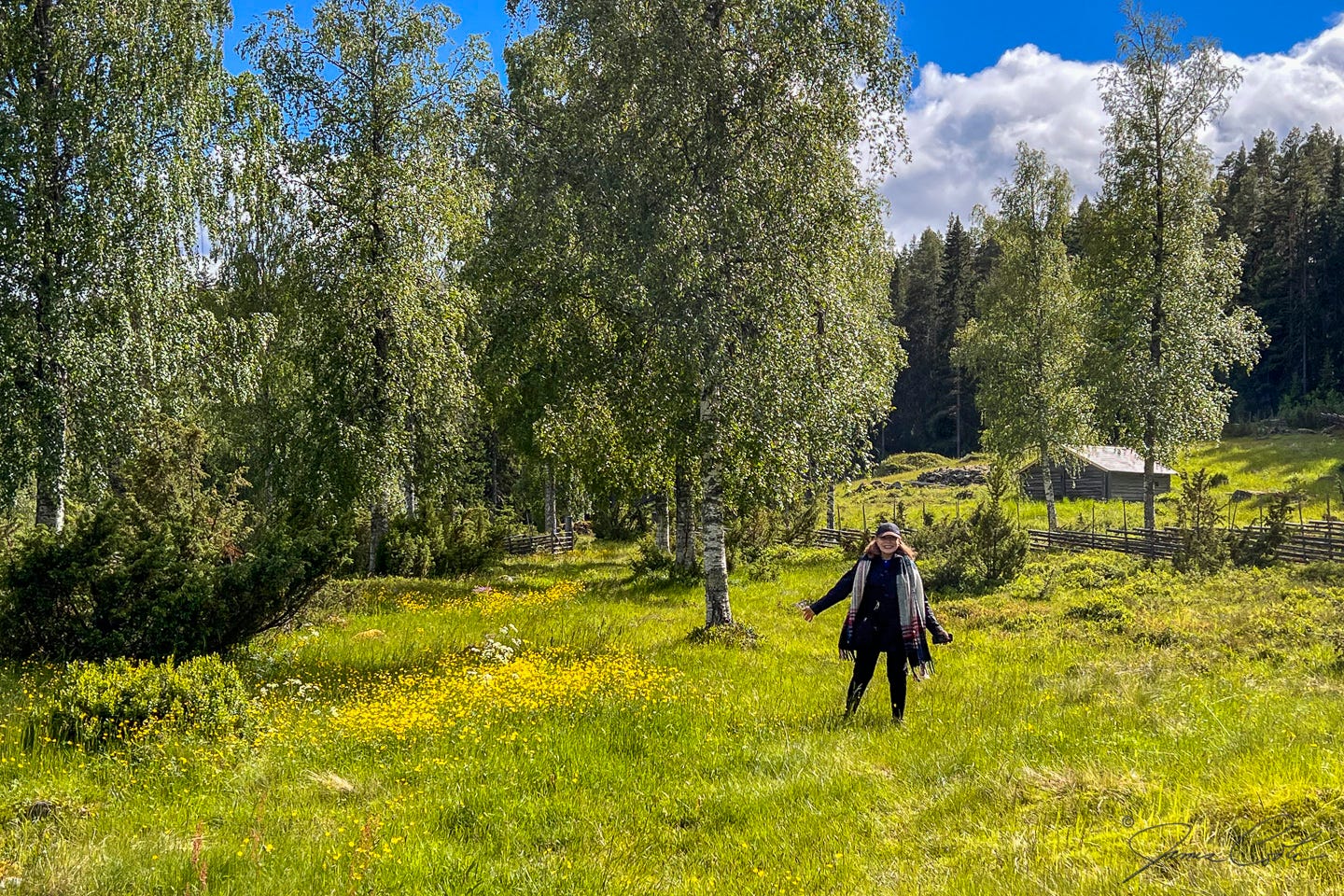
Gudmundstjärn offers a rare glimpse into the lives of these forest farmers, like Kat’s family, who shaped this landscape. For most of its existence it was self-sufficient, mostly cut off from the outside world and accessed only by foot trail. During the 1950s and 1960s, it sat empty and abandoned, rapidly decaying. Restoration began in the late ‘70s. Today it is a cultural-historical monument of national interest, an open-air museum of 19 buildings drawing 35,000 visitors a year to a 19th-century homestead preserved almost exactly as its last owners left it.
What a thrill it was for my proud wife to discover this part of her history. Because her father was adopted, she had no idea she was Swedish until DNA revealed her biological Swedish family and the great-grandfather who had emigrated from the area in 1888 to help settle Cadillac, Michigan. And what a pleasure for us to have discovered the intriguing and lovely city of Sundsvall, as well!
Comments
Nothing yet. Say the first thing.
Sign in to join the conversation.