
Across the UK, momentum is building behind a new era of nuclear power. Energy Secretary Ed Miliband hailed a “golden age of nuclear” backed by a landmark energy security partnership with the United States. This agreement should attract billions in private investment to power industry and data centres.
Developments from British and American companies like Rolls-Royce and Last Energy are already lining up projects. These developments are set to deliver thousands of skilled jobs. Centrica and X Energy’s £10bn deal could lead to the building of 12 advanced nuclear plants creating 2,500 jobs on Teesside and providing clean, homegrown energy for decades to come.
The PM recently created a Nuclear Regulatory Taskforce to capture this opportunity. Their interim report declared Britain’s nuclear regulation is not fit for purpose. The Taskforce was empowered to look at safety and environmental rules, but there was one area where they were forced to stay silent. Holyrood’s effective ban on the technology.
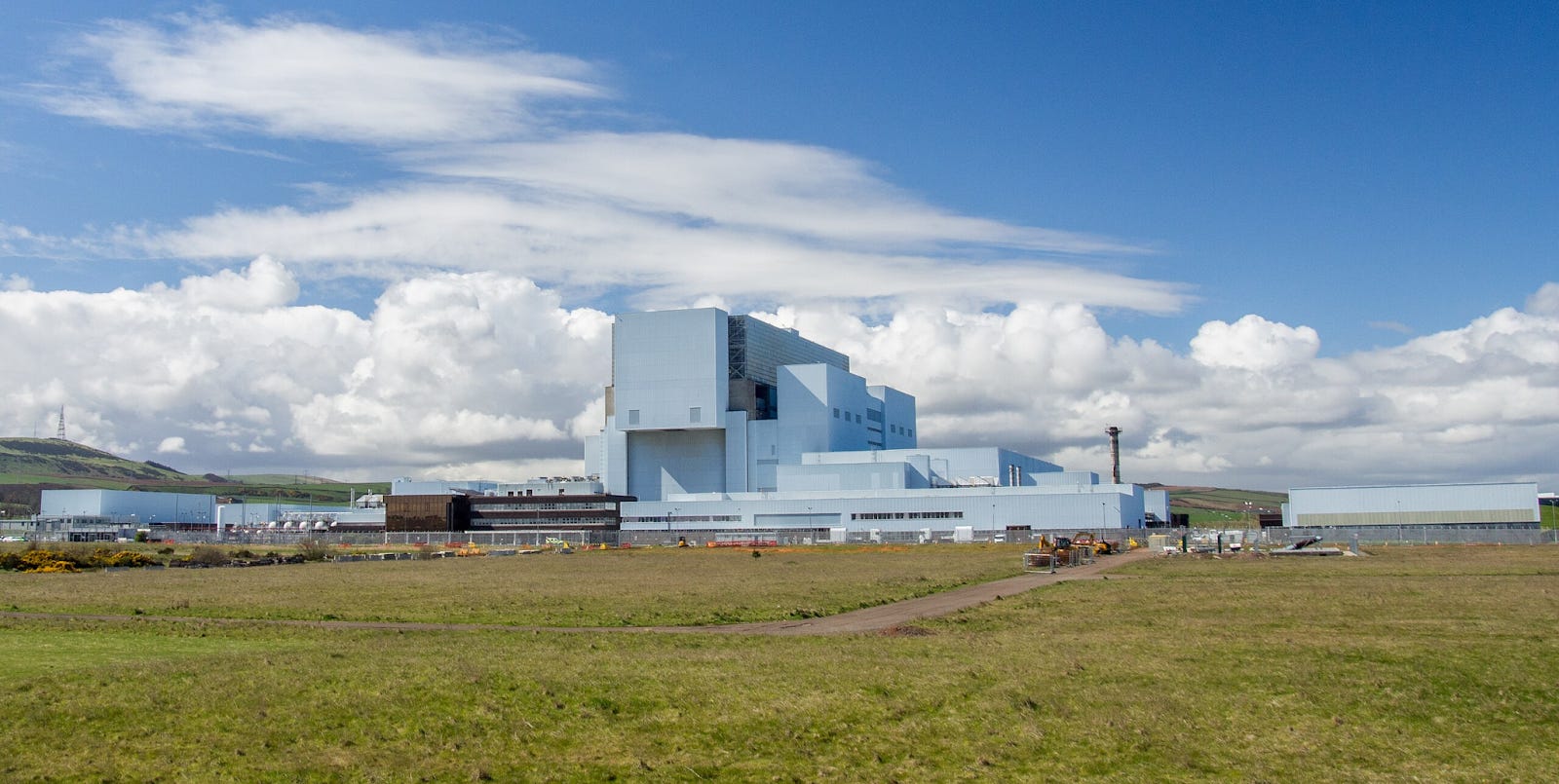
Scotland risks being left behind. While energy policy is set at Westminster, planning rules are devolved. The SNP government has used its planning powers to impose an effective ban on new nuclear construction.
This position is hard to defend. The SNP claims nuclear power is too expensive, but that’s hardly a matter for the planning system. DP World, Centrica, and Tritax are all investing in UK nuclear projects to power data centres and industrial sites, clearly nuclear being ‘too expensive’ isn’t deterring them. Nuclear costs aren’t fixed either. France and Finland have built reactors for half the cost of the UK. South Korea builds at a sixth of the cost.
Crucially, Scotland cannot rely on renewables alone. Even in one of the windiest countries in Europe, the wind does not always blow. When Torness shuts, Scotland will lose its last source of zero-carbon baseload power. Without nuclear, the backup will not be more wind farms or batteries, it will be fossil fuels or imports from Norway. Fossil fuel prices have fluctuated wildly in recent years, and amidst rising energy prices, Norway has been threatening to cut off their interconnectors and will likely seek renegotiation to secure higher prices. This is not energy security.
Nationalist politicians fall back on two arguments: nuclear is unsafe and nuclear is too costly. Both collapse under scrutiny.
On safety, the data is clear. Nuclear is one of the cleanest and safest energy sources available, safer on a deaths-per-unit-of-power basis than wind. Most of the fatalities associated with nuclear have come not from radiation, but from poorly managed evacuations, such as after Fukushima.
On cost, pointing to Hinkley Point C ignores international experience. France builds nuclear plants for half the UK cost; South Korea for a sixth. Regulatory reform and economies of scale can deliver affordable nuclear here too.
And nuclear vs. renewables is a false choice. We need both. Nuclear is reliable, compact, and provides power around the clock.
The SNP ban doesn’t just defy economic and engineering logic, it also defies public opinion.
A Britain Remade poll found 51% of Scots support new nuclear in Scotland’s energy mix, rising to 68% among those with an opinion. New nuclear is essential to meet the SNP’s own net zero target of 2045 according to 56% of those polled. Support for SMRs is even higher, with 77% of those expressing a view in favour of them.
Crucially, even those who voted SNP in 2024 are on board. A plurality of 47% believe nuclear is necessary to meet net zero and 56% of those who express a view back the construction of SMRs.
Scotland already has the sites and the expertise. Torness in East Lothian and Hunterston in Ayrshire have hosted nuclear power for decades. They have skilled workforces, grid connections, and community support.
We’ve consistently found that support for nuclear power is strongest in areas where stations already exist or existed in the recent past. Britain Remade has tapped into this by drawing large audiences to pro-nuclear events in former nuclear communities. Across these sites, we’ve found a deep local pride in their nuclear heritage. In Dunbar, near the Torness station, we packed a hall with residents calling clearly for new nuclear investment.
UK ministers have made clear that Torness and Hunterston are prime candidates for new nuclear power if the SNP lifts its ban. Gigawatt-scale plants would mean billions of pounds of investment and thousands of jobs. Even SMRs would deliver hundreds of millions in investment and hundreds of new jobs.
In other words, these sites are ready to go, if only Holyrood steps aside.
For years, the SNP’s nuclear ban didn’t matter. Westminster wasn’t building nuclear, so Scotland wasn’t missing much.
That era is over. Scotland faces a choice: embrace nuclear and share in the investment, jobs, and clean power, or stick with an outdated ban and watch opportunity flow elsewhere.
Investment is not just from taxpayers and bill payers. Technological progress means there are billions of pounds’ worth of private investment in SMRs available. This could power Scottish industry through the 21st century.
Torness alone has generated enough clean power to supply every home in Scotland for 36 years. Yet when it shuts, Scotland could be left with no nuclear power for the first time since 1959. At the very moment when nuclear matters most, the SNP want to lock it out.
A decade ago, the SNP’s nuclear ban was the equivalent of the London Borough of Lambeth declaring itself a ‘nuclear free zone’. Pointless, but largely costless posturing. Now Scotland is at risk of missing out on billions of investment. Scotland needs to change course, fast.
Support the campaign by signing Britain Remade’s petition here: Lift The Ban On New Scottish Nuclear Power
This piece was first published at Enlighten. Enlighten is a public policy institute that works to promote increased economic prosperity, more effective public services and expanded opportunities for all Scots. Learn more here: Enlighten - Scotland’s Independent Think Tank
No posts
Comments
Nothing yet. Say the first thing.
Sign in to join the conversation.